Sean Mcglynn

The lionising of Richard I over the centuries

From our UK edition

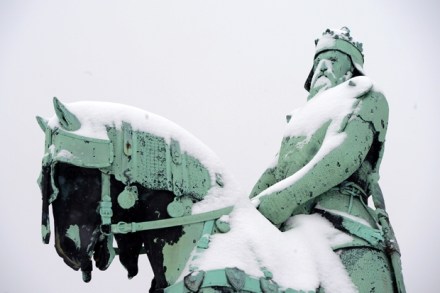
Today, a muscular Richard the Lionheart still sits manfully astride his warhorse, sword held aloft, outside the Houses of Parliament, courtesy of Carlo Marochetti’s 1856 statue of the Plantagenet king. Richard would have approved. As Heather Blurton points out in her livelybook, he was never shy of portraying himself as a valiant monarch – one who actively created his own legend. But first comes a potted history of the man. Incongruously, it is presented as an Introduction, though it accounts for about a fifth of this short book. It is no surprise that Richard achieved heroic status in his lifetime – much to his gratification. His life was packed with glamour, blood and brutality. But therein lies a problem: how to encapsulate this in a mere 30 pages? It’s a struggle.

Fraser Nelson, David Whitehouse, Imogen Yates, Sean McGlynn and Ruari Clark

From our UK edition

31 min listen

On this week’s Spectator Out Loud: Fraser Nelson reflects on a historic week for The Spectator (1:15); David Whitehouse examines the toughest problem in mathematics (6:33); Imogen Yates reports on the booming health tech industry (13:54); Sean McGlynn reviews Dan Jones’s book Henry V: the astonishing rise of England’s greatest warrior king (20:24); and Ruari Clark provides his notes on rollies (26:18).  Produced and presented by Patrick Gibbons.

The mystique of Henry V remains as powerful as ever

From our UK edition

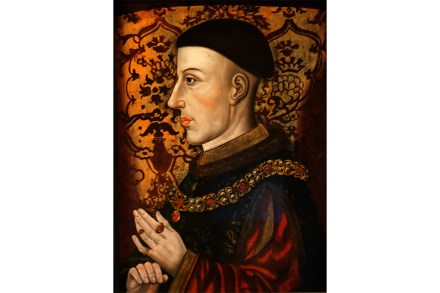
A rare portrait of King Henry V of England painted in the early 16th century shows him in profile. This unusual angle may have served two purposes. One was as a rather outdated emulation of Italian profile portraiture, with its blunt references to the might of imperial Rome; the other was to hide a disfiguring scar from a dangerous wound suffered at the battle of Shrewsbury in 1403. Henry was only 16 at the time of the battle, and it was a brutal way to earn his spurs. An arrow had penetrated his cheek six inches and lodged at the back of his skull. He was lucky to have survived both the wound and its treatment. But Henry was on the winning side; the defeated forces of Henry ‘Hotspur’ Percy were cut down ruthlessly.

Singeing the King of Spain’s beard was one provocation too many

From our UK edition

In the 1964 Hammer film The Devil-Ship Pirates, a privateer of the defeated Spanish Armada escapes the English fleet and puts in for repairs at an isolated coastal village whose inhabitants have not received news of the battle’s outcome. There the Spanish convince the villagers that Spain was victorious, and so impose submission on them. Historical verisimilitude was not exactly a priority. However, two weeks after the Armada was defeated in August 1588, a printer in Seville published glad rejoicings at Spain’s victory. The problems of extended lines of communications and poor intelligence bedevilled the Spanish throughout the whole enterprise, contributing notably to their defeat. The tale of the Spanish Armada is well known.

Henry VIII’s windfall from the monasteries was shockingly short-term

From our UK edition

In 1536 there were 850 monastic houses in England and Wales; just four years later they were all gone. The romantic remains of many of them still grace our landscape, Shakespeare’s ‘bare ruin’d choirs’ receiving more visitors today than the living communities did half a millennium ago. Now these visitors are primarily tourists and heritage lovers; then they were pilgrims, travellers, businessmen and, of course, those who toiled spiritually as servants of the Church, some more conscientiously than others. Monasteries were huge physically, commercially and spiritually; ‘they were never only scenery,’ declares James Clark in his new book: ‘Their profile defined not only a locality but sometimes a whole region.’ And they were ubiquitous.

Not such a hero: the tarnished legend of Robin Hood

From our UK edition

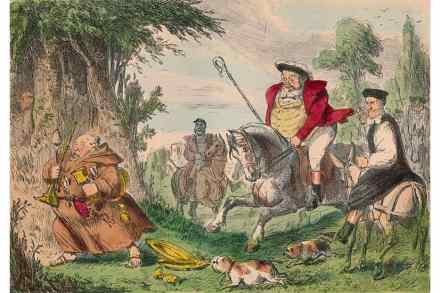
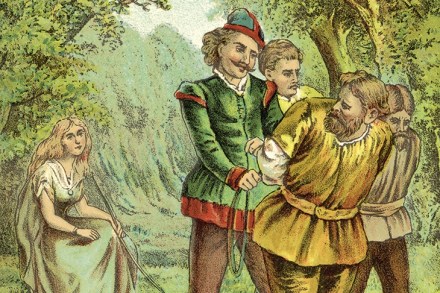
Britain’s two most famous legendary figures, King Arthur and Robin Hood, remain enduringly and endearingly elusive, and thus ever-fascinating: Arthur slumbering in the mists of nebulous Avalon, Robin as a hardy perennial somewhere deep in Sherwood Forest. Historians, folklorists, Eng Lit academics and cranks — the list is not mutually exclusive — enter these realms at their peril. When I did so a few years back, a headline in the Sun alarmingly proclaimed: ‘ROBIN HOOD FROM TUNBRIDGE WELLS, SAYS HISTORIAN.’ To put it mildly, that was a rather reductive and misleading summary of my research; but it certainly raised my awareness of being ambushed while ambling along the edenic Greenwood pathways.

MPs have reneged on Brexit, so what’s the point of voting?

From our UK edition

Katy Balls asks ‘Will there be an election?’ (16 March). That prompts the question: ‘To what purpose?’ Jeremy Corbyn may be ‘keen for an early election to break the deadlock’, but as the EU has repeatedly emphasised that its withdrawal deal is the only one on the table, how would Labour win a substantively better one than what’s already on offer? Besides, in the 2017 general election, more than 80 per cent of the electorate voted for parties promising to remove Britain not just from the EU, but also from its customs union and single market. Duly returned to the Commons, a majority of these MPs are now openly labouring to renege on their manifesto commitments and to thwart Brexit.

Why are people venerating Richard III? He was a murderous tyrant

From our UK edition

Imagine if the body of a notorious child killer was exhumed and that, during the week of its reinterment, 35,000 people thronged the streets of a major UK city to respectfully watch the passing of the specially designed coffin and, with hopeful hurls, bedeck that coffin with white roses. The funeral procession itself is led by two knights in full medieval armour. Then people queue for four hours to file pass the coffin in a cathedral while the prayers of the highest ecclesiastics of the land who officiate over the solemn, ceremonial proceedings are communicated across the country. Not very likely, is it? Well, that’s what has been happening this week in Leicester.

Lady of the English

From our UK edition

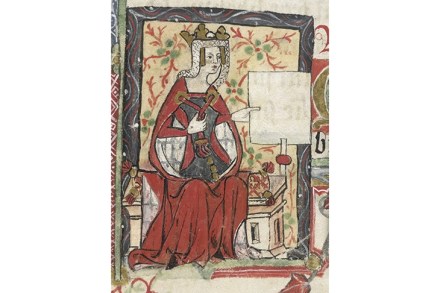
The Empress Matilda, mother of the Plantagenet dynasty, is the earliest queen of England who never was; by rights she should have been England’s first ruling queen four centuries before Mary. But she never sat on the throne. In this authoritative but accessible biography, Catherine Hanley emphasises the fortitude and steel of a woman who, as a child, experienced all the harshness of medieval diplomatic reality, having to learn and adapt to international power politics from a very early age. Born in 1102, she was only seven when her father, Henry I of England, arranged her betrothal to Heinrich V of Germany, 15 years her senior. The following year she was packed off abroad to complete her education and to prepare herself for her forthcoming role as empress.

A family at war | 20 September 2018

From our UK edition

Poor old Henry II: once fêted as one of England’s greatest kings, he has long been neglected. Accessible books on Henry were few and far between until, like the proverbial buses, three came along in fairly rapid succession. Richard Barber’s 2015 contribution to Penguin’s Monarchs series offers a concise and excellent summary of Henry’s reign; and now we have two more appearing almost simultaneously (though both curiously omit Barber’s work). Henry deserves the attention. As Count of Anjou, he wrested the throne of England from Stephen in 1154 after the exhausting civil war known as ‘the Anarchy’ when, a chronicle attests, ‘Christ and His angels slept’.

Great balls of fire

From our UK edition

Lionheart! Saladin! Massacre! There is no shortage of larger-than-life characters and drama in the epic, two-year siege of Acre, the great set-piece of the Third Crusade. But, as John Hosler relates in this accomplished study, there was so much more besides. Acre proved the strategic point for armies from across Europe, Syria, Egypt, Mesopotamia and the Maghreb; and the siege provided a kaleidoscope of competing ambitions, objectives and self-serving manoeuvrings amid the most arduous conditions, in which Bedouins ‘exchanged the severed heads of their victims with Saladin in return for robes and gifts’. The coastal city of Acre, in present-day Israel, was the first objective of the crusaders, as it would be their primary port for supplying the army.

Black prince or white knight?

From our UK edition

We cannot know for sure how Edward the Black Prince earned his sobriquet. For some it was the volatile mixture of his aggressive temperament and brutal conduct in war; for others it derives from his armour, as displayed on his tomb at Canterbury Cathedral. The cover of Michael Jones’s splendid new biography of this compelling warrior depicts the latter, with Edward arrayed in his suit of plate, his long moustache drooping over the mail of his aventail and the palms of his gauntlets pressed together in prayer, as if seeking God’s forgiveness for all the death and misery he has wrought in his bloody career. Jones convincingly argues that Edward should not be too readily condemned, as he often is by a more censorious modern age.

The Teutonic King Arthur

From our UK edition

Hitler, ever seeking to emulate strong German hero types (especially if their Christian name was Frederick), unsurprisingly named his great invasion of Russia ‘Operation Barbarossa’. It is in this context that the name — meaning ‘Redbeard’ — is best known today. Apart from that, a rather clunky eponymous Italian film from 2011 and a presence in the underground heavy metal music scene, awareness of the medieval German emperor outside of Germany and Italy is very limited. This owes much to the fact that John Freed’s biography is the first in English for half a century. A 700-page doorstopper, this impressive, learned book certainly makes amends for this previously serious oversight. Frederick was the most powerful figure in 12th-century Europe.

Pox-ridden and power-crazed

From our UK edition

Poor old Henry IV: labelled (probably unfairly) as a leper, but accurately as a usurper, he has been one of England’s most neglected monarchs. He is best known through his Shakespearean starring roles — which little resembled the real man, according to Chris Given-Wilson — and as the father of the ultimate warrior-king, Henry V, rather than in his own right. Ian Mortimer began redressing the balance in 2007; now Given-Wilson has produced this meticulous and definitive life of the troubled king for Yale’s ‘English Monarchs’ series. Though he was the son of John of Gaunt and his heir to the Duchy of Lancaster, England’s richest estate, Henry was not guaranteed an easy life of privilege.

The hardest man of all

From our UK edition

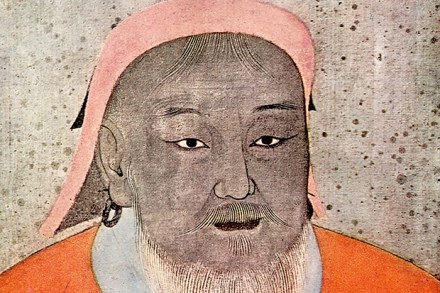
From the unpromising and desperately unforgiving background that forged his iron will and boundless ambition, Temujin (as Genghis Khan was named at birth) rose to build an empire that was to range from Korea and China, through Afghanistan, Persia and Iraq and eventually to Hungary and Russia, constituting the largest contiguous land imperium in history. His was an extraordinary, epic story and Frank McLynn does it full justice in a vivid, page-turning biography. The author portrays well the extreme hardship of the nomadic life for Genghis as boy and man on the arid Mongolian steppe, where temperatures range between 100 degrees Fahrenheit and minus 43, and where ‘one can be hit simultaneously by winds from the Siberian tundra and desert storms from the Gobi’.

The forgotten flowering of the medieval mind

From our UK edition

For those who imagine the medieval period along the lines of Monty Python and the Holy Grail — knights, castles, fair maidens, filthy peasants and buckets of blood and gore (you know, all the fun stuff) — Johannes Fried’s version may come as something of an aesthetic shock. His interests lie in the more rarefied world of theologians, lawyers and philosophers. So while the kings and emperors of the Middle Ages are afforded largely thumbnail sketches, it is the likes of Thomas Aquinas, Dante Alighieri, William of Ockham and Peter Abelard that attract Fried’s closest attention in his study of the ‘cultural evolution’ of the Middle Ages.

Britain’s own game of thrones

From our UK edition

Thank goodness for Game of Thrones. I think. Apparently it is inspired by the Wars of the Roses, drawing inspiration from the bloody, ruthless machinations of England’s power-brokers at the waning of the Middle Ages. Anyway, plenty of readers and watchers of George R.R. Martin’s work think that it is; what with that and BBC television’s recent The White Queen and She-Wolves series and (spot the marketing opportunity) the Shakespearean trilogy of, ahem, The Hollow Crown, undergraduates are queuing up for courses on this period of history. As I teach one, that has to be a good thing. Chuck ‘the Tudors’ into the title of your book and you’re on to a sure-fire winner.

Revolutionary in spirit

From our UK edition

A few years ago, a French reader congratulated me on my marvellous biography of Napoleon. Yes, I agreed, it’s a terrific read — an absolute blinder. But I had to be frank and reveal that, alas, I wasn’t Frank. I confess to being a little envious of my approximate namesake, Frank McLynn. A hugely successful popular historian who has the freedom to write on just about any subject he damn well pleases: Marcus Aurelius, the Burma campaign, the battle of Hastings, Jung, the Wild West. He even has a sideline on Hollywood greats. With some two dozen books to his name, he has clearly grasped the baton from Christopher Hibbert.

Forever waging wars

From our UK edition

Death by buggery. Death by castration. Even death by being scared to death. Or so we are led to believe for the Plantagenets’ world. They had a lighter side, too: Henry II employed a professional flatulist with the trade-name of Roland the Farter. The longest reigning royal dynasty in English history (1154-1399), the Plantagenets offer the glaring contrast between their even balance of outstanding kings and outstandingly bad ones; this adds to the already exciting dynamics of a dramatic period, captured to great effect in Dan Jones’s big book on a big subject. The Plantagenets were established on the English throne by the ‘incessantly busy’ Henry II.