Culture

Culture

The good, the bad and the ugly in books, exhibitions, cinema, TV, dance, music, podcasts and theatre.

Jaded and adrift: I Want You to Be Happy, by Jem Calder, reviewed

More from Books

Two people make an awkward stab at a relationship, even as both flounder under the realities of modern life. Yes, we’ve seen elements of I Want You to Be Happy before – and it even comes with an endorsement from Sally Rooney. But Jem Calder still succeeds in offering something fresh, and the novel stands on its own two feet as an intricate analysis of love in the 2020s. Chuck and Joey meet at a nightclub. He is in his thirties, recently single, with a steady job as a senior copywriter. She is in her early twenties and works as a barista. The chapters alternate between their perspectives as their relationship develops. It’s a very east London book. The couple’s dates include a trip to ‘an independent bookshop, whose branded tote bag they both owned’.

The world’s most beautiful man in a den of iniquity

More from Books

A photograph from the late 1960s shows a lavishly underdressed Marianne Faithfull sandwiched between Alain Delon, the most beautiful man in the world, and Mick Jagger, the second most beautiful man in the Rolling Stones. The gulf between these two indefatigable tombeurs is not merely sartorial. Delon wears a sharp suit, gun-metal grey, and a black tie. There are the makings of a master/servant dialogue here, for Jagger, far from mondaine, is gauche and scruffy with mismatched socks, no doubt counter-cultural. His picayune mis-demeanour, and his fitting up by bad apples in blue such as Pilcher of the Met, might have been a glitch, but it all turned out cosily parish-pump and, further, a great career move, assisted by William Rees-Mogg’s indignation. No one died in that Sussex cottage.

Mapping the Emerald Isle: Land, by Maggie O’Farrell, reviewed

More from Books

Maggie O’Farrell’s two previous historical novels, Hamnet and The Marriage Portrait, made her a household name. Land marks a return to her Irish roots: ‘Every family has its myths and ours was that my great-great-grandfather had worked on the early maps of Ireland.’ The year is 1865 and 31-year-old Tomás, a mapmaker, accompanied by his ten-year-old son Liam, is in the employ of the English redcoats and tasked with surveying and mapping Ireland from top to bottom, rocky outcrop to drumlin.

Signs of impending doom: The Given World, by Melissa Harrison, reviewed

More from Books

Melissa Harrison’s bestselling 2018 novel All Among the Barley, set in the early 1930s, was much concerned with the pace of change in the countryside. The interfering outsider Constance FitzAllen passionately advocated for tradition, while worn-down farmers welcomed any innovation that would ease their punishing workload. Almost a century later, in another fictional English village, change can be neither debated nor resisted. While Barley was narrated by an elderly woman looking back at her rural childhood, The Given World portrays a whole community, granting a chapter each to significant characters over six months, with birds, blossom and crops forming a restless backdrop.

The Panic of 1873 seems eerily familiar

More from Books

On 18 September 1873, the leading American bank Jay Cooke & Co collapsed after a disastrous bet on the railroad boom. Like the bankruptcy of Lehman Brothers in 2008, it was a watershed moment in an unfolding global financial crisis. Yet ‘the first Great Depression’, which lasted until 1896, is now mostly forgotten, despite some intriguing parallels to contemporary events and a fascinating dramatis personae, which includes the Rothschilds, Ottoman sultans and Otto von Bismarck. The Panic of 1873 and its aftermath took place in a period of financial globalisation and technological growth, with bond markets funding the epochal projects of America’s first transcontinental railroad and the Suez Canal. US railroads were the artificial intelligence investment of the day.

Will robots simply bore us to extinction?

More from Books

A few years ago, when ChatGPT and Claude were beginning to take off, some tech leaders seemed to develop a curious interest in oceanography. Consider, for instance, the Microsoft CEO Satya Nadella’s suggestion in 2023 that AI ought to be compared to a ‘tidal wave’; or Mustafa Suleyman’s book on AI, The Coming Wave (2024), in which the DeepMind co-founder talks urgently about an ‘impending deluge’ (while repeatedly warning us that the ‘wave is coming’, and, even more alarmingly, ‘the coming wave really is coming’). It didn’t take long for the analogy to spread. The IMF’s Kristalina Georgieva would liken the technology to a ‘tsunami hitting the labour market’.

The humiliating truth about the way we think

More from Books

Over the long span of human existence, different cultures have held varying notions as to how responsible we are for our own thoughts and beliefs. Before the dawn of the Abrahamic religions, and in places untouched by these faiths, it tended to be the rule that individual members of the group could only be understood as parts of the whole, or in the grander cosmic scheme of things. The ascendence of Christianity in Europe, with its idea of the indivisible soul, tilted matters more towards a belief in individual agency and accountability. This concept, secularised by Descartes, who gave us the commanding rational ego, has proved resilient ever since, despite the best efforts of Freud, neuroscience and gene selection theory to dethrone it.

Putin and Erdogan are playing with fire in the Balkans and the Caucasus

More from Books

There are 34 disputed territories in and around Europe. In some cases, two or more nations claim the same patch of land. In others, separatist governments demand their own sovereignty. Many of these disputes have a quaint, eccentric interest: Italy and France struggling over the summit of Mont Blanc; or Britain, Ireland, Denmark and Iceland arguing over the barren islet of Rockall. But a few of them – such as Cyprus, Kosovo, Nagorno-Karabakh and Transnistria – provide more urgent political challenges. As Hannah Lucinda Smith argues, these places are Petri dishes – experiments in populism, nationalism and covert conflict that are being repeated across the continent. Her book Hinterlands explores several of these blind spots in most people’s mental map of Europe.

Wham! How George Michael shot to stardom straight from school

More from Books

It turns out that the writer Sathnam Sanghera, ‘The Boy with the Topknot’, has been a besotted George Michael fan since the age of eight, when he started listening to his older sisters’ Wham! records. This was an unusual thing to be as a Sikh growing up in Wolverhampton and it got him teased at school. But he stuck with it. So when a friend suggested that he write something fun to compensate for the years of heavy historical research he’d put into his excellent book Empireland, he decided to set off on a sort of pilgrimage in search of his dead hero. First stop was Mondial Cars, a showroom in Northwood, north London, which used to be the Bel Air restaurant, where the teenage Michael worked as a DJ.

The Battle of Cross Street: High and Low, by Amanda Craig, reviewed

More from Books

Writing a state-of-the-nation novel that is also tense and funny is no mean feat, but that’s what Amanda Craig seems to have accomplished in High and Low. Ambitious and far-reaching, ittakes not a scalpel but a machine gun to the issues of modern city living, leaving no target safe. Set on a north London street over the course of a single day, it compresses time and space, which, together with its plethora of characters, gives a feeling as oppressive as the city itself. Cross Street houses a cosmopolitan mix of the privileged and the poor. Prospect Park and the Cross Estate are both metaphorical and geographical parallels, rubbing together while rarely intersecting. Alongside these highs and lows, Craig focuses on the world of the writer.

The wonder of nature’s ability to heal itself

More from Books

A decade ago, I planted 12 acres of trees in a field that had proved unsuitable for productive grazing. The trees themselves are doing well but the most remarkable change has been the increase in birds, invertebrates and flora. Each year brings new species, new levels of abundance. It has been very satisfying and strangely quick. We’re encouraged to think that the planet’s natural processes work if not always at a geological pace, at least not in the instant reward timeframe that characterises our own brief lives. In Nature’s Echo, the leading ecologist Thomas Crowther takes this capacity for nature’s rapid recovery as one reason why we should temper pessimism about environmental catastrophe.

Insufferable martinet or inspirational hero? Field Marshal Montgomery was both

Lead book review

To begin at the beginning: the title. ‘Unbeatable, Unbearable’ is supposedly Winston Churchill’s opinion of Bernard Montgomery – that in defeat he was the first, and in victory the second. Gary Mead acknowledges that it is merely ‘attributed’ to Churchill. According to the late Richard Langworth, the unrivalled curator of Churchillian wit and wisdom, it and the rather more grandiloquent ‘In defeat, indomitable; in victory, insufferable’ are widely bruited about but are not in the Churchill canon. Does it matter? We can be confident that the other major Allied figures of the second world war who dealt with Monty – Alanbrooke, Eisenhower and Ismay – would not have disagreed too much.

Portrait of an addict: Keshed, by Stu Hennigan, reviewed

More from Books

In the tradition of literary lowlifes and lushes as conceived by Charles Bukowski or Jean Rhys, Keshed is a story about an alcoholic, with a distinctive 21st-century, northern English working-class setting. Formally inventive, the ‘now’ sections of the novel are not sentences but strings of words, effective and short: ‘Rancid liquid squirting chin soggy torso peristaltic rush rapid.’ One such section opens the book, setting the uncompromising tone. The protagonist, Sean (‘He was pissed when I met him and he hasn’t changed’), a bright, charismatic lad from an unnamed small Yorkshire town, has been to university in Manchester where he drank heavily. He then moved back home, and we meet him working as a plasterer, living to get smashed.

Reading between the lines: the power of the unsaid

More from Books

This is the kind of book I wish I had the chance to sit down and discuss with the author. It is accessible without sacrificing academic rigour, astute and ingenious in its close readings and balances breadth with depth admirably. But why on earth does it have a singular title, given that the whole thrust of the argument depends on silence being a multifarious phenomenon? The reader encounters the enigma of silence as rapture, failure, slyness, avoidance, challenge. Silence is both built into literature and a kind of enwrapping, enclosing ocean, out of which words will emerge and back into which they will sink, rather like the primordial chaos at the beginning of Genesis. Speaking or writing about silence is inherently paradoxical. Many years ago I interviewed A.S.

Caroline Aherne’s comedic genius is much missed

More from Books

Who do we have on television now, or even on social media, who can unmask pomposity and self-obsession quite like Caroline Aherne did in the guise of Mrs Merton? What sitcom since 2010 is as original – and as British – as The Royle Family, always near the top of any best British sitcom list? This July marks the tenth anniversary of the death of Aherne. Given the popularity of The Mrs Merton Show, The Royle Family, which ran for 15 years, and her characters on The Fast Show (not least Poula Fisch, the weather girl who can only announce one type of weather), it’s perhaps odd that this is the first ever biography. It quickly becomes evident why. Aherne is not the easiest subject: having been hounded by the press, she was not fond of giving interviews.

How the 18th-century Panopticon inspired today’s giant distribution hubs

More from Books

The future of work is increasingly on our minds. Now that AI is coming for our jobs, will we end up supervising or being supervised by it? One way of spending the time freed up by smart tech is to read Control Science, an economic history showing how work rules were established and have since come to dominate our lives. The book’s timeline covers the past 400 years, its settings ranging across the world from North America to Europe to Japan and back to the US. A historian of labour, Henry Snow dissects four entrenched ideas: that society is a mere collection of individuals; that they are solely driven by selfishness; that they are therefore incapable of self-administered planning; and that ‘everything is – and should be – a market’.

A family affair: Love Lane, by Patrick Gale, reviewed

More from Books

The title of Patrick Gale’s latest lyrical novel alludes both to its central theme of the hidden, winding paths of love and also to the street by Wakefield prison where two characters, Mike and Pip, live. They are fictional renderings of the author’s grandparents – the names and address are real. In Love Lane, just as he did in his 2015 novel A Place Called Winter, Gale draws on his own history to frame a question about a family secret and then uses fiction to create a rendering of a possible truth. He develops the story of Harry Cane, who, in the earlier novel, we discovered was a gay man, blackmailed out of a privileged life in England and banished to the Canadian Prairies at the start of the 20th century.

The vexed relationship of Winston Churchill and George V

More from Books

It is ironic that although Winston Churchill revered the concept of monarchy – his wife Clementine joked that he was the last believer in the Divine Right of Kings – half of the six monarchs under whom he served had anything but reverence for him.  He never met Queen Victoria, who signed his officer’s commission but died when Churchill was 26. He had a complicated relationship with Edward VII. As Prince of Wales, in 1876 Edward had been blackmailed by Winston’s father Lord Randolph Churchill, and had later slept with Winston’s mother, Jennie Jerome, after Lord Randolph’s death.

Why should it be shameful to study the Classics?

More from Books

Mary Beard opens this book with a recollection of her first meaningful encounter with the ancient world. It was 1960, and she was five years old, visiting the British Museum with her mother. Peering into one of the glass cases, she spotted an unassuming, oddly triangular loaf of bread from ancient Egypt. Seeing her struggle to obtain a better view, a curator lifted the object out. ‘Never under-estimate how powerful the simple act of unlocking a museum case can be,’ Beard reflects 66 years on. She describes Talking Classics as ‘more a memoir than a thesis’, but it is also a thought-provoking meditation on wonder. It was thauma, she reflects, that Aristotle held responsible for sparking philosophical thought to begin with.

The indomitable spirit of the Wigmore Hall

More from Books

If you’ve ever strolled to the Wallace Collection or hurried to an appointment in Harley Street, fled an overcrowded Selfridges or sat on a sunny bench in Cavendish Square Gardens, you’ll probably have walked past the Wigmore Hall. It’s easy to miss – a wrought-iron canopy and a small mosaic embedded in the pavement the only signage. But this ‘modest building tucked away behind a busy London shopping street’ contains multitudes. Now celebrating its 125th birthday, it has been variously described as ‘London’s most sumptuous temple of music’ and the symptom of a ‘faded, bombed-out world’; ‘a place where it was possible to experience the exotic, unfamiliar and bizarre’ and one filled with ‘too many dull concerts and too many indifferent debut pianists’.

The short, eventful life of George Forster – explorer, naturalist and revolutionary

Lead book review

George Forster (1754-94), the German-Polish polymath, was in every sense a late Enlightenment prodigy. He was just ten years old when he accompanied his father, Johann Reinhold, on a scientific expedition to Russia and still in his teens when he sailed with him on Captain Cook’s epic three-year voyage to Antarctica and the Pacific islands. The ensuing book, A Voyage Round the World (1777), largely written by George, became a classic. It established him as one of the most significant naturalists and travel writers of the age, leading to him being elected a Fellow of the Royal Society aged just 22. He was also a very young polyglot, having learnt German, French, English and Russian by the age of 12. (He later added Dutch, Italian, Spanish, Portuguese and Swedish, as well as Latin.

Another heroic freethinker is wiped from Russian history

More from Books

It sometimes seems that those people chosen to be subjects for biographies are drawn from a strictly limited cast. Every few years, another book about Tolstoy, Dickens or some other great literary figure comes along to make library shelves groan further. At a recent talk given for a new biography of George Orwell, I asked the author why he had felt a need to add to the pile, given the plethora of perfectly good existing ones. ‘Because OUP commissioned me,’ was the answer. I didn’t buy the book. So how refreshing that Miranda Seymour should choose an absolute unknown to write about, whose life was genuinely interesting and surprising.

The punishing gluttony of Georgian high living

More from Books

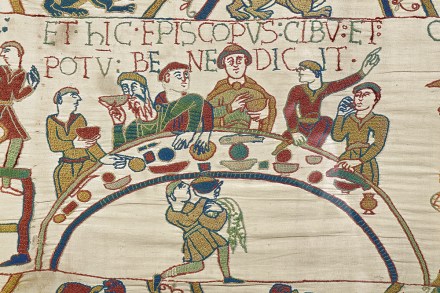
Georgian dining, if you were wealthy, was an incredible experience. Everything, from the location to the furniture, was carefully planned and meticulously executed to really hammer home the taste, status and impeccable education of the host. This was of course regardless of the actual likings, wealth and intellectual leanings of the party-giver. One of the delights of Amy Boyington’s book is the descriptions of the many, frequently ghastly, aristocrats whose country pads feature. There are murderers, adulterers, gluttons and spendthrifts. They did eat well, though. The Country House Dining Room is a Yale publication and, as such, can be expected to err toward the academic and the artistic.

Highland noir: The Grey Coast; The Serpent; Blood Hunt, by Neil M. Gunn, reviewed

More from Books

Before he died in 1973 at the age of 81, Neil Gunn was arguably Scotland’s greatest living novelist, a leading figure in its literary Renaissance and the author of 28 books (most famously his bestselling 1941 maritime epic The Silver Darlings). Now, to mark the centenary of his first novel, The Grey Coast, the independent Sutherland-based publisher North House Press is reissuing three of his works in nice clothbound editions. Taken together, they give an impression of his versatility and shortcomings.

A weary trek in the steps of Garibaldi and his Redshirts

More from Books

By the time he died in 1882 at the age of 74, Giuseppe Garibaldi had freed the Italian peninsula from its abhorred Habsburg and Bourbon rulers and united all Italy under the liberally inclined House of Savoy. With his whiskery good looks and wardrobe of red blouses, he was the ideal vehicle for romantic notions of free nationality. When he visited London in 1864, crowds flocked to greet the Risorgimento liberator as he got off the train at Nine Elms. A new football club, Nottingham Forest, adopted Garibaldi red as its colour and a ‘squashed fly’ biscuit was named after him. In Queen Victoria’s estimation, though, Garibaldi was an outlaw figure who threatened to subvert the established order. ‘Garibaldi – thank God – is gone!’ she declared on his departure.

It’s grim up north: Malc’s Boy, by Shaun Wilson, reviewed

More from Books

Shaun Wilson’s latest novel gets going with a childhood recalled like James Joyce’s Portrait of the Artist as a Young Man, and it is one marred by violence. Oh here we go again, I thought, as the young Shaun is thumped repeatedly by his enraged father Malc. Every novel I review these days seems to be about a working-class lad with a violent father from, say, north of Birmingham. I braced myself and thought of the immortal Bacon parents in the comic magazine Viz whose main purpose in life is to thrash their young son half to death in every issue. (Auberon Waugh, late of this parish, once said that it was impossible fully to understand Britain without reading Viz, and he was right.