Jude Cook

Ghastly middle-class materialism: The Quantity Theory of Morality, by Will Self, reviewed

From our UK edition

In ‘Ward 9’, the central story of Will Self’s lauded debut collection, The Quantity Theory of Insanity (1991), it is posited that a society can only contain a finite supply of sanity, and that when it comes to marbles we’re all playing a zero-sum game. His latest novel suggests a limited amount of morality must exist in a world where the avaricious prosper and the meek inherit the debts of those who live unscrupulous lives. In the milieu of the book, these debts are mainly school fees, coke bills and the cost of renting an Italian villa for two weeks every summer.
Driven to extremes: The Rest of Our Lives, by Ben Markovits, reviewed

From our UK edition

In a break from his tetralogy about the Essinger family, and following on from The Sidekick (a kind of Humboldt’s Gift with basketball), Ben Markovits now takes us on a road trip across America. The Rest of Our Lives explores marital breakdown, betrayal, the empty nest and a myriad mid-life malaises, including life-threatening illness. It’s quietly enthralling and full of the small epiphanies that more maximalist writers wouldn’t deem worthy of notice. When Amy Lanyard has an affair with ‘a guy called Zach Zirsky whom she knew from synagogue’, her husband Tom, a legal professor, vows to leave the marriage after their daughter Miri turns 18.

The first Cambridge spy: A Fine Madness, by Alan Judd, reviewed

From our UK edition

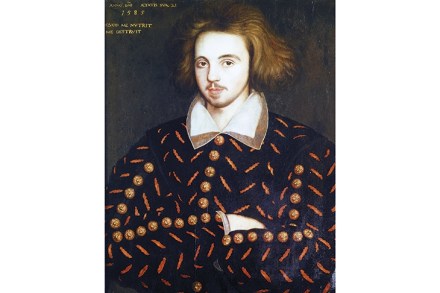
For his 15th novel, the espionage writer Alan Judd turns his hand to the mystery of Christopher Marlowe’s death. The result is never less than engrossing, with Judd putting the scanty known facts about the great playwright to ingenious use. The story is narrated from the King’s Bench prison by Thomas Phelipps 30 years after Marlowe’s fatal stabbing in a Deptford rooming-house brawl. Phelipps is good company, a master cryptographer and key employee of the spy-master Francis Walsingham, yet a self-proclaimed ‘simple man’ who yearns to marry and settle down. These contradictions help make him as fascinating as the mercurial Marlowe, who he’s sent to recruit at Cambridge. Phelipps immediately senses that Marlowe needs ‘protection from himself...

The soldier poet: Viva Byron!, by Hugh Thomson, reviewed

From our UK edition

In 1821, while Byron and Shelley briefly shared what they high-mindedly called an ‘artist’s colony’ in Pisa, along with Mary Shelley and Byron’s current squeeze Contessa Teresa Guiccioli, they both impulsively decided to commission the building of boats in order to explore the gulf of La Spezia. While Shelley, in deference to his friend, named his Don Juan (the boat in which he would perish, aged 29, the following year), Byron christened his The Bolivar,in honour of Simon Bolivar, who was then attempting to liberate South America from the Spanish. No stranger to noble causes, Byron would eventually go off to support the Greek War of Independence, dying ignominiously, aged 36, just two years after Shelley.

The pitfalls of privilege and philanthropy: Entitlement, by Rumaan Alam, reviewed

From our UK edition

Money can’t buy you love, the Beatles sang. But that doesn’t matter so much if you’re not interested in love, like Brooke Orr, the 33-year-old heroine of Rumaan Alam’s fourth novel, Entitlement. In contrast to Alam’s wildly successful, lockdown-resonant Leave the World Behind, the latest book is set in 2014, during the era of ‘Obama’s Placid America’, a world depicted as a virtually frictionless pre-Trump utopia in which ‘black, gorgeous, serious, passionate’ young women such as Brooke can thrive. When she leaves her teaching job and joins the charitable Asher and Carol Jaffee Foundation – started after the benign octogenarian billionaire Asher Jaffee lost his daughter – she realises that money is where her heart lies.

Repenting at leisure: Early Sobrieties, by Michael Deagler, reviewed

From our UK edition

Garlanded with praise from Percival Everett (‘the real deal’), Michael Deagler’s debut novel Early Sobrieties arrives with a fully formed literary voice best described as hysterical understatement. ‘Like all histories,’ Deagler’s twentysomething ex-alcoholic protagonist Dennis Monk tells us early on, ‘my family’s seemed composed of a series of recurring mistakes that, while theoretically avoidable, tended nevertheless to repeat themselves.’ Back living with his folks in suburban south Philadelphia after seven years of solid boozing, Monk is at leisure to repent his former life – a narrative of ‘utter shock and tragedy, a knee-capped bildungsroman’. The hysteria, while always close to the restrained surface of the prose, never quite breaks through.

Hanif Kureishi – portrait of the artist as a young man

From our UK edition

If any novelist, playwright or screenwriter of the past 40 years could be called ‘a writer of consequence’, to use the literary agent Andrew Wylie’s term, it would be Hanif Kureishi. While not shifting units on the scale of his near contemporaries Ian McEwan, Martin Amis and Salman Rushdie, Kureishi’s cultural influence – through his explorations of race, class and sexuality in novels such as The Buddha of Suburbia and films like My Beautiful Laundrette – is inestimable. In this first major biography, Ruvani Ranasinha tracks Kureishi’s progress from his birth in Bromley in 1954 to a Pakistani father and English mother, through his glittering, always provocative career, to the recent accident which rendered him unable to walk or use his hands.

The difficulties faced by identical twins

From our UK edition

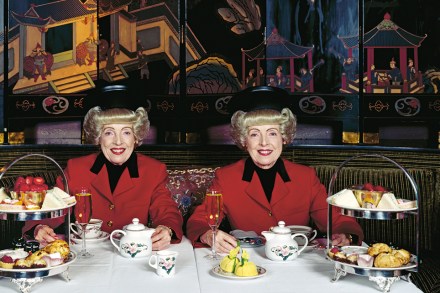
Despite being a twin myself, I wasn’t necessarily disposed to love William Viney’s Twinkind, a book for which the phrase ‘lavishly illustrated’ might have been invented. Much writing on twins intended for the general reader (including recent fiction such as Brit Bennett’s bestselling The Vanishing Half) has been produced by non-twins, or writers who have twins in their family. The emphasis is often on how twins appear to the singleton majority, lazily depicting them either as freaks of nature or prodigies of psychic connection. Indeed, Twinkind’s visual component seems to be asking the reader to look at twins from the outside, while its title appears to encourage us to see twins as a species apart.

Unholy row: The Choice, by Michael Arditti, reviewed

From our UK edition

Michael Arditti’s 13th novel The Choice is full of tough moral conundrums. The central dilemma facing Clarissa Phipps, the rector of St Peter’s Church in Tapley, Cheshire, is particularly knotty. Should she remove the church’s panels depicting a troublingly sensuous Eden, painted by the degenerate artist Seward Wemlock in the 1980s, or leave them to stand? Can, in short, an artist’s life ever be disassociated from their work? This is a hot potato, one with which Arditti grapples using endless reserves of theological nuance. By juxtaposing Clarissa’s choice with others she has to make in her life (and the original choices made by Adam and Eve in eating the forbidden fruit), he amplifies the moral complexities behind our hardest decisions.

The lady vanishes: Collected Works, by Lydia Sandgren, reviewed

From our UK edition

‘When someone leaves, existence splits into a before and an after.’ Lydia Sandgren’s epic, multigenerational saga explores both these existences within the Berg family in a novel that won Sweden’s August Prize in 2020 before going on to sell more than 100,000 copies in Sweden alone. Rakel Berg is only 11 when her mother, the historian and translator Cecilia Berg, disappears without trace, leaving her publisher father Martin to bring up her and her brother Elis in a Gothenberg suburb. Fast-forward 15 years, and Martin is still living alone, visited by his children and haunted by Cecilia’s ghost.

A treasury of wisdom about the writing life

From our UK edition

In the penultimate entry of Toby Litt’s A Writer’s Diary, an autofictional daily record of a writer named Toby Litt (which first appeared from Substack), he admits he began the project wanting to write ‘the best book that has ever been written about writing – about the physical act of writing, and the metaphysical act’. He may not have succeeded (Norman Mailer’s The Spooky Art might fit this description), but substitute the word ‘living’ for ‘writing’ and he might be closer to an apt summary. It’s an extraordinary record of life’s minutiae, oscillating from the trivial to the transcendent, often on the same page. Which isn’t to say the book doesn’t contain a treasury of wisdom about the writing life.

Planning a New Jerusalem: The Peckham Experiment, by Guy Ware, reviewed

From our UK edition

The Peckham Experiment was a radical, if earnest, initiative begun in 1926 in which working-class families were given access to physical activities, such as swimming, as well as workshops and a shot at cultural betterment. It’s into this rather worthy scheme that identical twins, the subjects of Guy Ware’s novel, are born: Charlie and JJ, the offspring of communist parents, who are later orphaned during the Blitz. Both go on to long careers in housing, and the book tracks their progress, alongside themes of ownership and exploitation, against the backdrop of key events in postwar British history. The novel begins on the eve of JJ’s funeral, with Charlie struggling to write a eulogy for his 85-year-old brother.

Inside New India: Run and Hide, by Pankaj Mishra, reviewed

From our UK edition

The first novel in more than 20 years from the essayist and cultural analyst Pankaj Mishra is as sharp, provocative and engagé as you’d expect. An exploration of Narendra Modi’s autocratic, Hindu-nationalist New India seen through the progress of three graduates from the prestigious Indian Institute of Technology, it’s also reassuringly rich in characterisation and the sheer sensory overload of modern life. Narrated by Arun Dwivedi to an initially unnamed interlocutor, the book follows his journey from poverty to modest success as a translator in Delhi, while his feckless friends Aseem and Virendra make it big in America. A desire to escape ‘the material deprivations and the moral shabbiness...

Eliminate the positive: Come Join Our Disease, by Sam Byers, reviewed

From our UK edition

Sam Byers’s worryingly zeitgeisty second novel, Perfidious Albion, imagined a post-Brexit dystopia dominated by global tech companies, corrupt spin doctors, shady think tanks and the corporate manipulation of government. So far so true — were it not for the current pandemic, one might call him a soothsayer. His third, aptly titled novel, Come Join Our Disease, dispenses with the crystal ball and instead explores the fear that the internet, despite its boons, is making us all ill. The pestilence, in this instance, is virtual. Byers’s heroine is Maya, a homeless woman once ‘peripherally employed’ in the tech world, now staying in a geographically indeterminate encampment.

The children’s hour: first novels brim with close family observations

From our UK edition

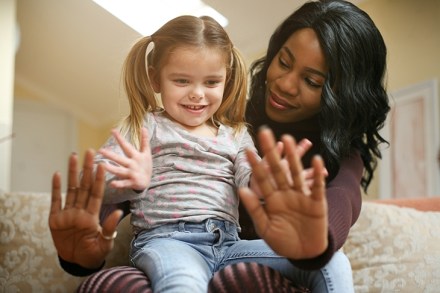
Kiley Reid’s Philadelphia-set debut, Such a Fun Age (Bloomsbury, £12.99), is a satire on white saviour syndrome, woke culture and virtue-signalling motherhood. That it manages this balancing act with such political finesse and humour is testament to the powers of its author, who, like her heroine Emira, the 25-year-old black baby-sitter, spent time nannying for white families. When Emira’s boss Alix calls her at a party and asks for some emergency childcare (after Alix’s home is egged, as a result of a racist gaffe made by her TV anchor husband), Emira drops everything. Short of money, about to lose her health insurance, she takes Alix’s daughter Briar to a ‘super-white’ store, where she’s accused of kidnapping the child.

A sea of troubles | 4 July 2019

From our UK edition

Andrew Ridker’s The Altruists (Viking, £20) is a Jewish family saga of academic parents and grown-up offspring. From this rather careworn material he manages to wring a spry comedy of parental failure and romantic misadventure. Arthur Alter is a terrible father, an ‘emotional cheapskate’ who attempts to bring his estranged children Ethan and Maggie together for a weekend in St Louis, with the ulterior motive of getting his hands on their inheritance. Unsurprisingly, he was excluded from his wife’s will, as he was sleeping with a much younger German medievalist throughout her final illness.

A banquet of delights

From our UK edition

While the short story is currently under-going one of its periods of robust, if not rude, health, its two dominant modes — the classical or Chekhovian, and the postmodern or experimental — have become harder to define, with authors happily borrowing tricks from both approaches. None of the collections here can definitively be confined to either camp, and this should be celebrated. William Boyd’s decision in The Dreams of Bethany Mellmoth (Viking, £14.99) to jettison conventional character names is gently experimental, if not always successful. From the start we encounter exotics such as Ludo Abernathy and Arkady Lemko. Later, there’s a Zack, a Moxy and a Sholto. Later still, a Max Bassman, a Jurgen Kiel and (boldly) a Raleigh Maltravers.

Appointment with death

From our UK edition

It’s reassuring that of Ed Docx’s three admirably eclectic, though sometimes uneven, previous novels, Let Go My Hand most resembles the capacious, Booker long-listed Self-Help. Like that book, this is fiction with heft and moral nuance; a novel that gets its hands dirty in the soiled laundry basket of family secrets and resentments. As such, it’s his most universal, moving and resonant work to date.

Nine angst-ridden men

From our UK edition

‘Insufficiency’ is a favourite David Szalay word. The narrator of his previous novel, Spring, suffered from ‘insufficiency of feeling’; in this new collection of carefully juxtaposed tales, a Scottish ne’er-do-well adrift in Croatia decides his smile is ‘insufficient’. Szalay’s dissections of masculinity can produce wonders from such banal anxieties. Over 400 pages, he goes to town on nine specimens of the male gender, only surfacing to spit out the bones. While the stories aren’t linked by characters, they trace a rough chronological arc through a man’s life, skipping the mewling infant and whining schoolboy.

The heavens are falling

From our UK edition

The dystopian novel in which a Ballardian deluge or viral illness transforms planet Earth has become something of a sub-genre, and Clare Morrall’s astute and vigorously imagined novel follows on from the best of them, such as Margaret Atwood’s MaddAddam trilogy and (most recently)Emily St John Mandel’s Station Eleven and Antonia Honeywell’s The Ship. Intriguingly, the future that Morrall imagines very much resembles the past. Following 50 years of climate catastrophe, and the spread of the population-depleting Hoffman’s disease, the only hope for humanity’s survival is to find ways of ‘living with the weather’, or learning ‘skills that don’t depend on failing technology’.