William Dalrymple

William Dalrymple: The Golden Road

From our UK edition

50 min listen

My guest on this week’s Book Club podcast is the historian William Dalrymple, whose bestselling account of ancient India’s cultural and economic influence, The Golden Road, is newly out in paperback. He tells me why the ‘Silk Road’ is a myth, how Arabic numerals are really Indian – and how he responds to being Narendra Modi’s new favourite author.
How a humiliating defeat secured Britain its empire

From our UK edition

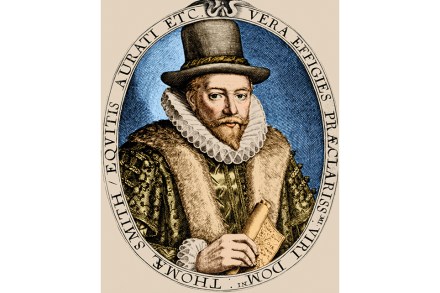
Beneath a flinty church tower deep in the Kent marshes, ‘among putrid estuaries and leaden waters’, lies a monument to an Elizabethan man of business. It is not much to look at. David Howarth calls it ‘second rate... dull’ and ‘strangely provisional’, despite its expanse of glossy alabaster. Moreover, the name of the man commemorated will ring few bells, even among historians. But it is the only memorial erected to one of the most important men in English history. Sir Thomas Smythe was perhaps the greatest businessman in Elizabethan England. He not only founded the East India Company; he also played a leading role in several other significant commercial and pioneering proto-colonial ventures of the age.

The forgotten masterpieces of Indian art

From our UK edition

As late as the end of the 18th century, only a handful of Europeans had ever seen the legendary Mughal capital of Delhi, which, within living memory, had been the largest, richest and most spectacularly beautiful city on earth, twice the size of London and Paris combined. But after a century of anarchy, Delhi was not what it once was. By 1805, it lay half-ruined and sparsely populated, ruled by a blind Emperor from a crumbling palace. Delhi’s ruins bewitched the young artist James Baillie Fraser when he arrived in the 1810s from Calcutta. Fraser was already planning two series of aquatints, one on Calcutta, the other of the Himalayas.

As English spread over the subcontinent, India lost forever its rich Persianate literary heritage

From our UK edition

In the seventh century, the Chinese Buddhist monk Xuanzang made an epic journey through the Gobi desert and over the Himalayas to the holy places of Buddhism in India. On the way, he noted to what extent the world he passed through was dominated by Indic ideas, languages and religions. ‘People of distant places, with diverse customs,’ he wrote, ‘generally designate India as the land they most admire.’ The account that Xuanzang wrote of his journey, Buddhist Records of the Western World, makes it clear that the places he saw on his 17-year, 6,000-mile pilgrimage looked to India as the centre of world learning.

Algeria reminds us that the current of colonisation doesn’t always run just one way

From our UK edition

As you glide in to land at the airport outside Algiers, the landscape resembles that of Tuscany: a coastal plain laced with vineyards giving way to low hills filled with chequerboards of olive groves and slopes of newly harvested wheat fields. Beyond rise blue mountains with windbreaks of holm oaks where storks glide into land on their nests atop the minarets of the village mosques. It was while walking in these hills, a week into our Algerian holiday, that we came across a most unexpected discovery. On the lee of a slope overlooking the old Roman town of Tiddis, we found a large round burial monument that looked a little like a miniature version of the drum of Castel Sant’Angelo in Rome, originally built as the tomb of Hadrian.

Bloodbath in the Punjab

From our UK edition

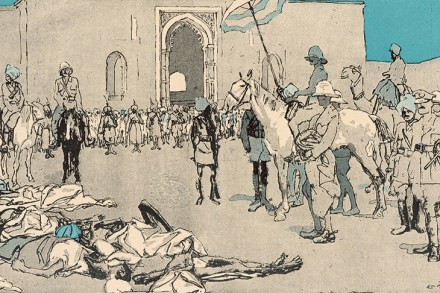
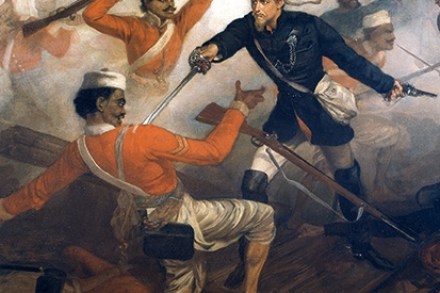
On 10 April 1919, the peppery governor of the Punjab, Sir Michael O’Dwyer, ordered the immediate arrest of two leaders of the Indian National Congress in Amritsar. Doctors Satyapal and Kitchlew were both gentle, Cambridge-educated medics who had responded to Gandhi’s call for non-violent resistance to British rule, satyagraha. O’Dwyer took the view that their actions were treacherous and seditious. Like Gandhi and many other Indian political leaders, Satyapal and Kitchlew had responded dutifully when the first world war broke out; out of the one million Indians who volunteered, half had come from the Punjab. It had been expected that after such unprecedented loyalty, Britain would reward India with Dominion status and a degree of self-government.

Nancy Hatch Dupree, 1927-2017: the preserver of Afghan culture

From our UK edition

Nancy Hatch Dupree died in Kabul on Sunday, 10 September.  Nancy Hatch Dupree is sitting in the Gandamak Lodge, the Foreign Correspondents hang-out in Kabul. Most of the other diners, and almost all those propping up the bar, are shaven-headed, gym-going young men in their twenties and thirties: a scrum of adrenalin-surfing hacks and cameramen who grew up watching movies like Salvador and The Year of Living Dangerously and who now fill the bar room with their tales of derring-do in Helmand and close-shaves in Lashkar Gah. None of them, however, have half as good a seem of stories as this tiny, bird-like 86 year old woman, picking at her burger at the corner table.

Ripping yarns

From our UK edition

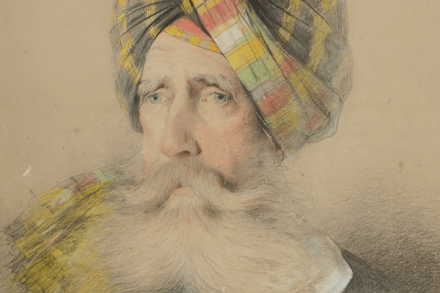
In the 1860s, when British visitors first began to explore the high altitude pleasures of Kashmir, it was not just the beauties of the valley and the cool, pellucid waters of the Dal Lake which took their breath away. Living there was a legendary relic of an earlier age, who quickly became an object of pilgrimage for the curious sahibs puffing away at their cheroots on the sundecks of the houseboats. Alexander Gardner was, in the words of his latest biographer, John Keay, ‘a beturbaned colonel of uncertain nationality with a chequered past and a hole in the throat’.

Divide and quit

From our UK edition

In 1929, when Edwin Lutyens handed over the newly completed building site of New Delhi to the Viceroy, Lord Irwin, many believed he had created a capital for a British empire in India that would last if not 1,000, then at least 100 years. It was, as Lord Stamfordham wrote, ‘a symbol of the might and permanence of the British empire’ that had been commissioned specifically so that ‘the Indian will see for the first time the power of western civilisation’. The plan of New Delhi was deliberately intended to express the limitless power of the Viceroy. In the words of Sir Herbert Baker: ‘Hurrah for despotism!

In the footsteps of Marco Polo: the journey that changed William Dalrymple’s life

From our UK edition

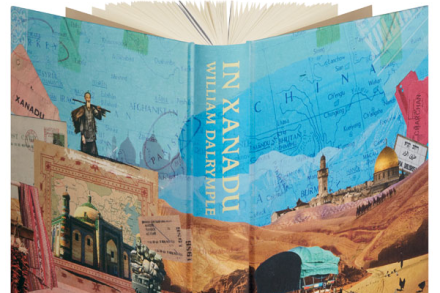
This is the introduction to the 25th anniversary edition of William Dalrymple's first book, In Xanadu: A Quest At the end of the windy, rainy April of 1986, towards the end of my second year at university, I was on my way back to my room one evening, when I happened to trudge past my college notice board. There my eyes fell on a bright yellow sheet of A4, headlined in capital letters THE GAILLARD LAPSLEY TRAVEL SCHOLARSHIP. It hadn’t been a good week. I was 21: broke, tired of revision for exams and already longing for the holidays.

British India — the scene of repeated war crimes throughout the 19th century

From our UK edition

‘Sometimes, strolling through the ruins of earlier civilisations, we idly wonder what it must have been like to live through the end of one of them,’ writes Ferdinand Mount at the end of The Tears of the Rajas. ‘Now we know for ourselves.’ This is a long, wonderfully discursive and reassuringly old-fashioned book which tells the story of the British in India through the lives of one British family — the author’s ancestors, the Lows of Clatto in Fife. The Lows also happen to be the ancestors of Mount’s cousin, David Cameron. The action opens in 1805, in the aftermath of the Second Maratha War, when the East India Company had established its dominant military position through most of the Indian interior.

William Dalrymple’s notebook: How I lured Jhumpa Lahiri and Jonathan Franzen to Jaipur

From our UK edition

In 2004, ten days after I moved my family to a new life in India, I gave a reading at a small palace on the edge of the ‘pink city’ of Jaipur. Fourteen people turned up, of whom ten were Japanese tourists who had got lost. The next year, I helped organise a modest literary programme of 18 authors. Two failed to arrive, but with the aid of my co-director, Namita Gokhale, we gathered a respectable audience of nearly 100. Eight years later, however, by some strange yogic sleight of hand, the Zee Jaipur Literature Festival has shape-shifted into the largest free litfest in the world and the largest literary event in the entire Asia-Pacific region.

‘I was detained as a potential suicide bomber’

From our UK edition

To the Lahore Literary Festival. As I cross the border from India, Pakistan is experiencing an unprecedented wave of sectarian violence: 400 Shias have been killed in bomb attacks this year, while more than 150 houses and two churches belonging to the Christians have been burned in mob attacks. Yet Pakistan always manages to stumble on. Sixty-five years after partition, Lahore still feels like Delhi’s sister city, and is much more like my adopted home than either Madras or Calcutta is. Moreover, there are some hopeful signs. Zardari’s government is about to complete its term in office — the first time in the country’s history that an elected government will manage to do so — and the literary festival itself is a huge success.

Diary – 14 February 2013

From our UK edition

The Jaipur Literature Festival, which I help to direct, has in just six years grown like some monster from an Indian epic. Each year it doubles in size and we struggle to keep up with the vast crowds who come to hear our authors speak. We’ve also inspired nearly 40 daughter-festivals across South Asia. The great Bombay poet Javed Akhtar aired a theory about why the region has suddenly taken to literature like this: ‘We abandoned language and arts in the last 40 years,’ he said. ‘We wanted cars and fridges. Now today’s generation takes them for granted. They want something else. They want arts and literature.

Goa’s two cultures

From our UK edition

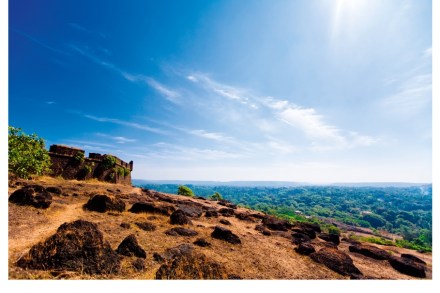
The best view of the Goan coast can be seen from the topmost turret of the ruined Portuguese fort above Chapora. From the dark upper slopes of the Pernem hills down to the level ground of the coastline stretches mile upon mile of banana and coconut groves, the deep green of the palms offset by the white sand of the shore and the foam of the breaking rollers. In the palm groves you can just see the toddy tappers throwing ripe king coconuts down from the treetops. Further up the beach, lean fishermen are beaching their catamaran-canoes on the sandbanks. From these dugouts,a crocodile of women carry panniers of freshly caught fish to their huts. Most people who come to Goa do so for the beaches and a bit of winter sun.

Ignore the hype: Syria shouldn’t be demonised

From our UK edition

In the autumn of 1994 I was looking at Byzantine churches on the Syrian-Israeli border for my book From the Holy Mountain. Tele­phoning home, I heard that one of the broadsheets had run a series of prominent stories claiming that Syria was mobilising its troops for an invasion of Israel. The paper described the roads jammed with Soviet-built tanks heading for the Golan Heights. As I happened to be in the area concerned, I could see that the story was completely false: the only movements I could see were of donkeys carrying olives from the harvest to their villages. Yet the story continued to run for several issues, before being dropped without explanation.