Andrew Barrow

Paradise or prison?

From our UK edition

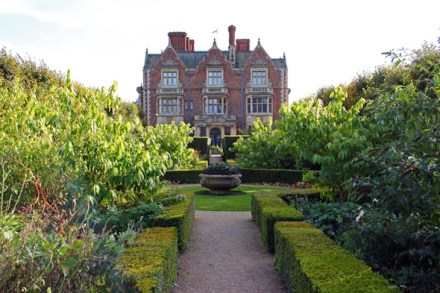
This daintily dress-conscious and rewardingly heavyweight novel is set mainly in a half imaginary stately home in Oxfordshire. The story begins in 1663, jumps forward to modern times and then back to 1665. On all occasions, our attention is less on the actual house, Wychwood, than on the power of nature, whatever’s left of the surrounding primeval forest, ornamental lakes-in-the-making, majestic vistas and, above all, the ‘monstrously expensive’ wall or ‘the great ring of stone’, built, or being built, around its park. Those featured include the original landscape designer Mr Norris, his silk-coated, high-heeled employer Lord Woldingham and later the silk-and-chiffon-clad Rossiters, who rule the roost in the 1960s.

Thoroughly modern Melanie

From our UK edition

This exhilaratingly lowbrow first novel concentrates on money and lust or, to put it more bluntly, sex and the City. Its young heroine or chief victim — or is she actually the villain? — has already joined an investment bank and had her first one-night stand a few minutes before this savage saga begins. Melanie is in her early twenties: a beautiful, sexy, grumpy, materialistic, high-octane whizz-kid who hated Christmas Day even as a child. As we soon learn, she’s far keener on sex than romance and makes no secret of her addiction to alcohol. But that’s only half the picture.

Among the snobs, slobs and scolds

From our UK edition

The author of this jam-packed treasure trove has been a film critic at the New York Times since 2000 and is also professor of film criticism at Wesleyan University. As if these platforms weren’t enough, he’s now written a book about the tangled worlds of films, books, music, paintings and criticism, dragging in Aristotle, Pope, Plato, Matthew Arnold, Isaiah Berlin and millions of others — but not, alas, my former next-door neighbour, the wonderfully controversial Brian Sewell. Crammed in alongside George Orwell’s ‘All writers are vain, selfish and lazy’ and H. L. Mencken’s ‘Literature always thrives best in an atmosphere of hearty strife,’ the author’s own views often hit hardest.

A tale of cloaks and daggers

From our UK edition

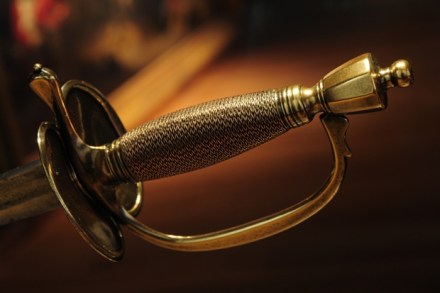
You don’t need to know the opera Tosca to understand and enjoy this book about Puccini’s most notorious villain, Vitellio Scarpia, portrayed on stage as a ‘sadistic agent of reaction’, a cut-throat murderer who enjoys drinking his victims’ blood from their skulls and, as one of my opera-loving Kensington pals puts it, ‘not a nice bloke at all!’ In fact you may not even recognise him in these pages. Here Scarpia appears as an all-round human being, kind-hearted, handsome, likeable, occasionally lonely, even destitute, who also just happens to be a brilliant swordsman and man of action. Brought up in Sicily, his first act of daring is to rescue a girl who has been captured by Barbary pirates, even if it means stabbing her lover in the stomach.

Carrying on regardless | 25 June 2015

From our UK edition

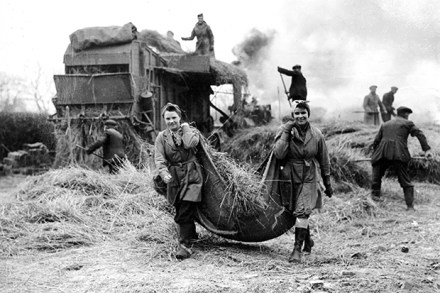
This big, bristling, deeply-furrowed book kicks off with a picture of the British countryside just before the second world war. Apparently we then grew only 30 per cent of our food, horses did most of the work and a lot of the land, criss-crossed by empty roads featuring the occasional pony trap, had been abandoned to weeds and brambles. Move on a year or two and millions of acres had been brought under the plough. Tennis courts, golf courses, railway embankments, school playing fields and even the lawns of large houses had been turned into vegetable plots or corn fields. Barbed wire blocked the beaches, church bells only rang to warn of imminent invasion and ornamental church gates had been carted off to be turned into tanks.

Why prefabs really were fab

From our UK edition

Sir Winston Churchill did not invent the prefab, but on 26 March 1944 he made an important broadcast promising to manufacture half a million of them to ease the new housing emergency caused by enemy bombs and the continued growth of inner-city slums. He went on to claim that these easy-to-assemble, factory-made bungalows would be ‘far superior to the ordinary cottage’. Readers of this richly illustrated, hard-hitting little book will find that Churchill was right. The new prefab — an early prototype immediately went on show at the Tate Gallery, of all places — did not meet the approval of George Bernard Shaw, who called it ‘Heartbreak House’ and that ‘Damn Tin Can’ — but seems to have been hugely enjoyed by most of those lucky enough to live in one.

Falling in love with birds of prey

From our UK edition

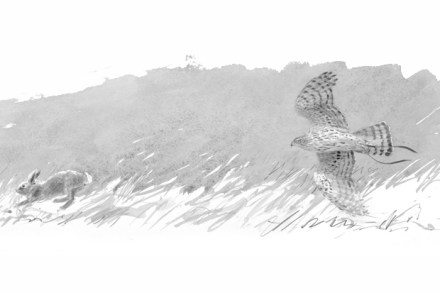
Is it the feathers that do the trick? The severely truculent expressions on their faces? Or is it their ancient origins? Or the places where they live? Whatever their secret, birds of prey have exercised an extraordinary hold on human beings for tens of thousands of years. In the bad old days, their fans ranged from ancient Teutonic kings to Hitler’s right-hand-man Hermann Göring. Today, it seems to be artistic types and country-lovers who keep the flag flying. Or, do I mean keep the tail feathers fluttering? In this exhilaratingly honest and passionately broadminded book, the poet and Cambridge academic Helen Macdonald combines her ‘sorry story’ of hawk addiction with the similar trials and tribulations suffered by the great T.H.

Chaplin & Company, by Mave Fellowes – review

From our UK edition

The unlikely heroine of Mave Fellowes’s Chaplin & Company (Cape, £16.99) is a highly-strung, posh-speaking, buttoned-up 18-year-old with the unhelpful name Odeline Milk. Utterly friendless, she dislikes both humans and animals, but she has one huge, far-reaching private passion. She wants to be a mime artist — like the great Marcel Marceau. To launch her career, she has sold her mother’s house in Sussex and bought a scruffy old canal boat called Chaplin & Company, currently moored in Little Venice. In the flashbacks that follow, we learn about Odeline’s miserable childhood — albeit lit up by a few eureka moments — along with the history of her new floating home and the past lives of her immediate neighbours on the canal.

Bird Brain by Guy Kennaway

From our UK edition

Basil Peyton-Crumbe is a multi-millionaire landowner. An embattled man known to all, even his dogs, as ‘Banger’, he claims to have despatched at least 41,000 pheasants with the cheap old 12-bore he’s had since childhood. Shooting pheasants, he believes, is ‘an exquisite accomplishment’, as complex as writing a sonata or designing a cathedral. On the first page of this bloodthirsty novel, Banger’s trusty old gun explodes in his hands and blows half his head off. No one seems particularly upset. Not his half-brother William, who succeeds to the estate, and certainly not his Springer Spaniel, Jam.

Tears of laughter

From our UK edition

At first glance, these books have an awful lot in common. Indeed, all three might have been produced by the same self-centred chatterbox, so similar is the slightly manic, self-consciously jokey, self-interrupting, lower-middle class vernacular in which they are all written. Fluent, full of ideas and, above all, conversational. All three authors treat their imaginary readers like members of a live audience. ‘Sorry, I’m rambling,’ confesses Jo Brand at one point. ‘Tear this bit out and use the pages to make paper aeroplanes or something,’ advises Jack Dee at another trick moment.

Blood will out

From our UK edition

This brilliantly murky novel describes a nightmarish ten days in the life of a famous, highly successful but deeply dysfunctional family. The action takes place in prisons, mental hospitals, nursing homes — and the House of Commons. Involved in this brutal tale are three tall, handsome, Old Etonian brothers — a Labour MP, a stinking rich criminal prosecutor and a rather wayward journalist — and their more downmarket adopted brother who’s become a Catholic priest and a diminutive sister called Portia, devoted to helping poor, uneducated Mexican peasants. The parents are out of the picture but very much in the story. The father, a lawyer raised to the peerage, has lately become a victim of Alzheimer’s.

A female Colossus

From our UK edition

During the post-war years, the author of this book was a much-talked about variety artiste, famous for breaking ten-inch nails, bending steel bars in her teeth and throwing Bob Hope over her shoulder. Billed as the Mighty Mannequin, Joan Rhodes enhanced her appeal by looking and dressing as if she had stepped out of the chorus line — at the height of her fame she had a 20-inch waist — and accompanying her feats of strength with plaintive little odes delivered in a girlish voice which apparently made her sound ‘like the bleedin’ Queen’.

Under the shadow of the Minster

From our UK edition

Listing page content here This heavy, clanking, finely wrought adventure story is set mainly on or around York station in the winter of 1906 and washed down with handfuls of soot, clinker, ‘bacon and eggs and related matters’ and, I would estimate,  some 90 pints of Smith’s ale. The Lost Luggage Porter is Andrew Martin’s third novel about a train-spotterish railwayman called Jim Stringer, whom we first met in The Necropolis Railway and then saw struggling on the footplate in The Blackpool Flyer.

Lady into urban fox

From our UK edition

This is a thoroughly rotten book, a squelchingly well-researched period piece with sex, lust, over-ripeness and what one character calls the ‘odour’ of the scholar permeating every paragraph. It is also, let me quickly add, a remarkable tour de force, jam-packed with poetry, verbal fireworks, vitality and charm. Set during the overheated summer of 1784 and composed entirely of letters and diary extracts, A Factory of Cunning describes a visit to London by a foreign lady calling herself Mrs Fox. On the first page, this tricky character asks one of her correspondents, ‘Does all mankind wish me harm?’ but rapidly reveals herself to be hell-bent on corrupting innocent lives and seeking out people, as a form of sport, to kill or ruin.

Seeing off six monarchs

From our UK edition

This beguiling little book, nostalgically illustrated with faded family snapshots, describes the long and arduous life of a tortoise who died earlier this year at Powderham Castle near Exeter, aged 160. According to the blurb, Timothy survived six monarchs, two world wars and many generations of the family who looked after him. The story that unfolds is one of the most deceptively sentimental and carefully contrived I have ever read. It chiefly concerns not so much the tortoise as the ups and downs of the Earls of Devon, family name Courtenay, and their successful fight to keep Powderham Castle and its estate going through thick and thin. The reptile quietly residing all along in the castle’s rose garden is sometimes dragged into the story by the skin of its teeth.

Heirs and graces

From our UK edition

This provocative, titillating and seductive novel is about upper-class affectations and ‘the mystery of unearned greatness’. It focuses on a network of rich, blue-blooded and slightly dim grandees which apparently stretches ‘far beyond national boundaries’. Snobs describes in forensic detail a world where duchesses are ‘taken in’ to dinner and desperate, social-climbing women feel deeply ashamed that they never ‘came out’. Can such people still exist? Can this fascinating story really be set in modern times, or at least in the late 1990s? A few contemporary references to Volvo estates and Partridge’s upmarket food stores are not enough to convince me.

The Dutch manipulator of the Pelvis

From our UK edition

Behind many great stars of stage and screen lurks a mysterious, sometimes sinister manager figure, minder or mastermind, whose precise role in their protégé’s life, especially in terms of creative input, may be hard to define. Richard Burton’s career was kick-started by the Welsh schoolmaster whose surname he took. Tommy Cooper’s affairs were handled for years by a character called Miff Ferrie who lived in Eaton Square. My fragile friend Michael Barrymore was frogmarched to precarious stardom by his amazing wife Cheryl. And even poor little Tom Thumb had the great P. T. Barnum to give him stature.

The way to the tomb

From our UK edition

This queer, black novel is mainly concerned with the special funeral train service which once plied between Waterloo Station and Brookwood Cemetery in Surrey. Its hero is an intensely innocent young railway apprentice, who dreams of becoming an engine driver 'of the better sort', and its villains - or so it seems - are a bunch of hard-bitten, foul-mouthed colleagues who are apparently up to something dark and dirty. Set during the closing months of 1903, this book is, as its publishers rightly claim, 'fabulously rich in atmosphere and period detail', but this backdrop material is so skilfully woven into the story that it comes across as playfully invented rather than laboriously researched.