Culture

Culture

The good, the bad and the ugly in books, exhibitions, cinema, TV, dance, music, podcasts and theatre.

Getting their kicks on Route 66

More from Books

In 1973, four years before he disappeared down the Star Wars rabbit hole, George Lucas directed the film American Graffiti, eulogising his days as a teenage car fanatic in Modesto, California; parking at drive-ins, hot-rodding and cruising for dates. This vanished world was only a decade away —‘Where were you in 62?’ said thepublicity — the equivalent of someone today getting dewy-eyed about 2007. Yet the clashes and strife of the late 1960s in mainland America and the deepening quagmire of the Vietnam War had already made those days look like an age of lost innocence.

As full of grief as age

More from Books

Why are rehearsal diaries so compelling? One approaches them with cynicism and then ends up reading with racing heart through to the early hours, hurtling with a shared terror towards the described first night. First and foremost, there is the gossip, the sense of being behind closed doors, and gaining off-guard glimpses into the nature of those who are frequently well-fortressed. The character of this gossip changes markedly as the actor-diarist grows older. In youth it is all about which tearaway deals the best cocaine to enable company shagging: in age it morphs into which besuited figure makes the most ruefully telling remark at the latest in a series of memorials for fallen comrades.

Wading to extinction

More from Books

Mary Colwell, a producer at the BBC natural history unit, is on a mission: to save the British curlew from extinction. Yet there is a key moment in this readable, highly informed and heartfelt book, when its author shows you the scale of her challenge. It is at the beginning of her 500-mile trek across Ireland, Wales and England to raise the flag for the totem bird. She goes to a school in Ballinamore in the heart of rural Ireland — where curlews would once have been abundant — and is asked to address a classroom of 17- to 18-year-olds. The pupils are taking their final exams in agriculture and the environment. Yet not one of them has even heard of a curlew, let alone seen one or listened to its heart-piercing spring vocalisations. These are the future farmers of Ireland.

Free-wheeling flakiness

More from Books

Early on in his introduction of nearly 60 pages, Owen Hatherley writes: ‘I find the Britain promised by Brexiters quite terrifying — xenophobic, paranoid, enclosed, pitifully nostalgic, cruel. But in much of the country that landscape never went away.’ One’s heart sinks. This isn’t even polemical; it’s just silly. The introduction, subtitled ‘What is a European city?’, continues to push the line until something like a position is reached: Britain is awful, Europe is wonderful. I was reminded of certain of my French, Italian and German friends who are excited by the new horizons of living anywhere but in their own homelands, which they find every bit as stultifying as Hatherley does his.

Fish in troubled waters

More from Books

‘Help!’ I thought, when I read the Author’s Note. ‘It’s about salmon, and I hate fishing.’ But by the first page I was hooked. Adam Weymouth writes well. He is poetic, but also precise. His subject is the return of the ‘king’ salmon to their birthplace and final destination, the north ridge of McNeil Lake in Canada. These fish are many pounds of muscle, toned from years of swimming headlong into Pacific storms, and their flesh is as red as blood. They force against the Yukon’s current, shouldering their way upriver, setting their fins like sails. Eventually they will push thousands of miles into North America’s interior. They will reach mountain lakes; they will reach the clouds.

From New York to the New Hebrides

More from Books

Publication of a debut novel is an experience comparable with the birth of a first child. Literary gestation is normally a longer process, and delivery of a book is more deeply fraught. Here is some evidence that the labour can be worthwhile. Asymmetry (Granta, £14.99) by Lisa Halliday, a young American now living in Milan, is a lopsided triptych of admirable erudition and stylishness — in effect, two novellas and a short story: a Manhattan romance, an Iraqi reminiscence of the devastation of Baghdad, and a BBC interview on Desert Island Discs. In the initial, most enjoyable episode, Alice, an assistant editor of a New York publishing house, would like to move to Europe to write.

Keeping Faith

More from Books

It’s because it’s the land of the loner that the United States is so loved or loathed. Yet to me the most beguiling novels that have zipped across the Atlantic in the past half-century or so are mostly about groups, specifically groups on campus, usually a rather classy campus at that. Mary McCarthy’s Group were at Vassar; Donna Tartt’s The Secret History is set in an elite liberal arts college in Vermont. Even The Catcher in the Rye, though legendary as a portrait of moody adolescence, is also a brilliant picture of life at the sort of college Salinger himself went to. But no novelist I can think of has majored on the group portrait with quite such verve, wit and sympathy as Meg Wolitzer.

Women on the warpath | 31 May 2018

More from Books

In a 2013 interview with a Canadian newspaper, Rupert Thomson acknowledged the strange place he occupies in the literary world. ‘If I had a dollar,’ he mused, ‘for every time I’d heard someone say, “Why aren’t you more well known?...”’ Looking back on his reviews, you can certainly see what he means. For more than 30 years, virtually all his novels have been not only warmly acclaimed; they’ve also been greeted with the sadly inaccurate declaration that now, at last, he’s bound to achieve the wider fame he deserves. But, as Thomson also acknowledges, in the past decade those missing dollars have taken on a less metaphorical significance.

Suits you, sir

More from Books

The tailor’s art is a triumph of mind over schmatte. Not just in the physical cutting and stitching, but in the faith that style makes content. This, not the question of which way you dress, is the secret compact between tailor and client. ‘Every faculty of his soul, spirit, purse and person is heroically consecrated to this one object, the wearing of clothes wisely and well, so that as others dress to live, he lives to dress,’ Carlyle wrote of the dandy in Sartor Resartus. Tommy Nutter was one of Tommy Carlyle’s dandies, a ‘clothes-wearing man’ and a ‘poet of the cloth’. From 1969 to 1976, Nutter bestrode the world of tailoring like a Narcissus. Though he could barely manage a backstitch, his designs rewrote the book on male style.

Rough justice

More from Books

Asked how he achieves the distinctive realism for which his novels and screenplays are famous, Richard Price, that sharp chronicler of the American underbelly, tends to cite Damon Runyon’s biographer Jimmy Breslin, who said that Runyon ‘did what all good journalists do — he hung out’. Set in the brutal confines of the Stanville Women’s Correctional Facility, and, through flashback, in the equally unforgiving milieu of San Francisco’s Tenderloin, Rachel Kushner’s third, extraordinarily accomplished novel, The Mars Room, glows with the kind of authentic hyper-detail only a good deal of hanging out can capture. Whether she’s describing the ‘clammy fingers of fog...

Been there, done that

More from Books

Lucky bastard. Such are the words that come constantly to mind while you’re reading Clancy Sigal’s two volumes of posthumously published autobiography. Blacklisted as a (self-confessedly lousy) actor for refusing to name names in the McCarthy era, working as the agent for the likes of Peter Lorre, Rod Steiger and — sigh — Barbara Stanwyck in 1950s Hollywood and freelancing on Fleet Street in countercultural London (including reviewing films for The Spectator), Sigal was at the centre of every piece of action going. Should Black Sunset and The London Lover ever be gathered into a single volume (perhaps taking Sigal’s earlier memoir, Going Away, along for the ride), ‘Been there, done that’ would make a good catch-all title.

Lone and level sands

Lead book review

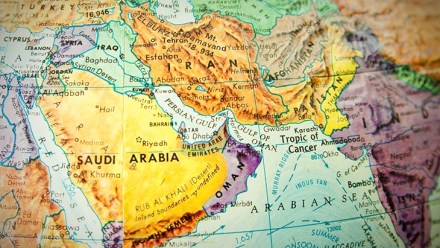
Here’s a treat for desert lovers. William Atkins, author of the widely admired book The Moor, has wisely exchanged the dank, wind-lashed chill of Britain’s moorland for eight of the world’s fieriest deserts, from the Empty Quarter of Oman and Egypt’s Eastern Desert to the Taklamakan in China and an unlikely stint at Burning Man in America’s Black Rock Desert. It’s not entirely clear what prompted these particular journeys or this specific quest. We learn in the second sentence that a long-standing girlfriend has gone to live and work abroad and Atkins is not going with her; so perhaps a retreat into the desert is the wholly appropriate response in a travel writer searching for new territory to furrow.

Romancing the stone wall

More from Books

We all tell stories about ourselves, every one of us. ‘I’m a useless cook.’ ‘Spiders don’t scare me.’ Not all these stories are true, but then self-perception has never held much truck with truth. Our stories are our own,to hold, repeat and believe in. But what if your story isn’t your own? What if you start out on life’s journey and discover that your story is, in fact, someone else’s? This deeply unsettling scenario provides the driving narrative to this confessional, heartfelt, if somewhat scatty memoir. Whitney Brown was, as we’re frequently reminded, an A-star student, a valedictorian. Growing up in small-town South Carolina, she was the kid deemed ‘most likely to succeed’. But at what? There’s the rub.

Fingers on the nuclear button

More from Books

In 1983, Soviet spies skulked in our midnight streets to check the lights were out. The Kremlin, convinced the West was planning nuclear war, launched Project RYAN, whereby agents watched for signs of impending attack. One was that lights would burn all night in government buildings, as fiendish mandarins drew up the war plans. It didn’t occur to them that lights might indicate nothing more than cleaners on a late shift. Soviet paranoia was such that they saw menace everywhere, and agents, eager to please Moscow, reinforced this fear. ‘The more alarming the reports, the more the agents were congratulated for their diligence.’ RYAN became self-fulfilling.

The tough guy of Israeli politics

More from Books

Benjamin Netanyahu is one of the most unloved and unlovable figures in Israeli politics, a solid finish in a competitive field. Yet when it comes to polling day, his Likud party watches ‘Bibi’ pull off another win. Many consider him venal, duplicitous, arrogant, vain and loutish. His opponents have even worse things to say. Israeli elections were once decided on the question of socialism vs. capitalism, and later peace vs. security. Today Israelis are divided over whether Netanyahu is a bastard or a necessary bastard. Anshel Pfeffer belongs to the former camp. His new biography, Bibi: The Turbulent Life and Times of Benjamin Netanyahu, is a forensic character study of Israel’s first native-born prime minister and of the Israel he has birthed across 12 years in power.

Wells of silence

More from Books

Someone has gone to a lot of trouble choosing the jacket cover of Robert Hilburn’s authorised biography of Paul Simon (reproduced right). It is both flattering and enigmatic, which is entirely appropriate, given its contents. Half of Simon’s features are lost in a shadow cast across his face — again, entirely appropriate, as Simon wrestled with Hilburn for more than two years, determined to ensure his true self remain partly or wholly in the shadows. One can’t help wondering why thesinger-songwriter even agreed to sit for what the jacket copy assures us was 100 hours of interviews; or, indeed, what happened to the other 99.

All their wits about them

More from Books

From Aphra Behn to Virginia Woolf, women who make a living by their pens have frequently felt the need to announce their singularity; to be, as Mary Wollstonecraft announced, ‘the first of a new genus’. Each of the women in Michelle Dean’s survey of mostly American essayists, reviewers and novelists had to defend her right to debate, critique and observe. The lives of Sontag, Arendt, Parker, West, Didion, Ephron and others are woven into a thick braid running the length of the 20th century and into ours. It’s not quite a group biography, but more a study of how their lives and work dovetailed with each other and with the major political and cultural movements of the era.

The murderous past

More from Books

How can you defend a man you hate? John Fairfax, in his Blind Defence (Little Brown, £16.99), explores this dilemma. Diane Heybridge is found dead in her London flat. She was poor, working-class, without much of a future to look forward to. But did she take her own life, or was she murdered by her callous, jilted partner, Brent Stainsby? Into the fray steps William Benson, an ex-con, a murderer himself, now turned maverick barrister, a person the press and the public love to hate. With his legal partner Tess de Vere, he takes on Stainsby’s case and finds himself defending a man that nobody likes, and that Benson himself despises. As the true and hidden nature of the victim’s life is uncovered, the moral fog turns even murkier.

Trigger-happy madcap

More from Books

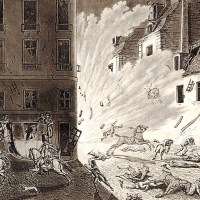
This is a biography that begins with a bang, swiftly followed by puddles of blood, shrieks of ‘Murder!’ and a chase through the foggy streets of Victorian London. On 8 December 1854, a French émigré was walking through Fitzrovia, close to the heart of radical London, having recently left a pistol-shooting range in Westminster. He had a companion: a mysterious woman with a letter in her pocket and unknown intentions in her heart. It was a cold, wet night. At just past eight o’clock, they arrived at 73 Warren Street, a narrow town house near Tottenham Court Road, where George Moore (a soda water manufacturer who had employed the émigré as an engineer) lived, and were shown into the plush parlour to wait for him.

Winged messengers

Lead book review

Even the most cursory glance at the classical period reveals the central place that birds played in the religious and political lives of the two key Mediterranean civilisations. Their gods, for example, were often represented in avian form, so that the Athenian currency bore an owl image, which was intended as a portrait of the city’s patron, Athene. ‘Owls to Athens’ was a proverbial expression, much like ‘coals to Newcastle’. From North Africa to the shores of the Black Sea there are still Greek temples dedicated to Zeus that are topped by weathering stone eagles as symbols of their supreme deity, while the imperial legions of Rome fought under an eagle standard for much the same symbolic reasons.

Olga Tokarczuk’s ‘Flights’ wins the Man Booker International Prize

The Polish novelist Olga Tokarczuk and her translator Jennifer Croft last night won the £50,000 Man Booker International Prize for the novel Flights (published here by the excellent and discriminating small press Fitzcarraldo Editions). The judging panel was chaired by Lisa Appignanesi and consisted of Michael Hofmann, Hari Kunzru, Tim Martin and Helen Oyeyemi. Ms Appignanesi said of the result: ‘Our deliberations were hardly easy, since our shortlist was such a strong one. But I’m very pleased to say that we decided on the great Polish writer Olga Tokarczuk as our winner: Tokarczuk is a writer of wonderful wit, imagination and literary panache.

Barometer | 17 May 2018

Barometer

Gammon vs gammon Controversy raged over whether calling an angry, white, right-wing man a ‘gammon’ is racist. The insult is first recorded in Charles Dickens’s novel Nicholas Nickleby in 1838.   But what of people really called Gammon? — There are about 2,500 Britons with that surname, which originated in Cornwall. Their politics are not all right-wing: in the 2017 Cornwall county council elections a Jacquie Gammon stood for the Lib Dems. — In the US, two Gammons are recorded as delegates at National Conventions: Lemuel Gammon representing Colorado for the Democrats in 1916 and Gussie Gammon representing North Carolina for the Republicans in 2008. — Not all Gammons are white: 7.3 per cent of those in the US are African-American and 2.

The right stuff | 17 May 2018

Features

To some, Tom Wolfe’s death might seem a greater loss for readers on the right wing of American culture and politics, since he viewed himself as a conservative, very much in keeping with his upbringing in the Richmond, Virginia, of the 1930s and 1940s. His gentleman’s manners and soft-spoken demeanour recalled another era — a class-defined and racially segregated world of courtliness and formal collars. Wolfe famously picked on liberal targets throughout his remarkable career: his most savage satires addressed the pretensions of leftish icons from Leonard Bernstein to, most recently, Noam Chomsky.

Turns out life’s not so easy – just look at Ulysses S. Grant

Columns

When Winston Churchill was at the nadir of his career, he wrote a biography of his ancestor, the Duke of Marlborough. In his wilderness years he needed to be reminded that even the greatest men of destiny go through periods when it all seems pretty hopeless. ‘Every taunt, however bitter; every tale, however petty; every charge, however shameful, for which the incidents of a long career could afford a pretext, has been levelled against him,’ Churchill wrote. Those Blenheim Palaces and Finest Hours: they don’t just give themselves away, you know. I wish someone had told me this when I was younger. Unfortunately, like many of us, I suffered the misfortune of having parents who kept telling me how very special I was.

A brave, bold failure

More from Books

In the high summer of 1944 the Allies achieved their major victory in Normandy with the closing of the German pocket centred on Falaise. By the end of August, Paris had been liberated, and the Wehrmacht was apparently in full flight; Brussels fell to the Allies in early September. For many, the end of the war in Europe was in sight — perhaps by Christmas that year. But Allied success brought serious logistical problems: supplies were still having to be landed on the Normandy beaches and transported forward along increasingly distant lines of communication.

Prejudice and Popery

More from Books

Once won, rights and freedoms are taken for granted. We all find it difficult to imagine life before the Married Women’s Property Act, when everything belonging to a wife — goods, chattels, children — automatically became the sole property of her husband. Those born since the 1960s can’t really envisage what it was like for practising homosexuals in those days. By a similar token, the mind can scarcely take in the fact that in Penal times, Catholics could not buy or sell land; or that it was an imprisonable offence for Catholics to run a school. It was a legal offence to dress as a monk or a nun out of doors.