Culture

Culture

The good, the bad and the ugly in books, exhibitions, cinema, TV, dance, music, podcasts and theatre.

Obsession and obfuscation

More from Books

The target audience for David Peace’s new novel appears almost defiantly niche. Certainly, any readers in the embarrassing position of not being entirely up to speed on the life and works of the Japanese writer Ryunosuke Akutagawa (1892–1927) seem destined — even intended — to find Patient X a less than alluring combination of the tediously baffling and the bafflingly tedious. Peace’s fact-based fiction has always demanded a fair amount of patience and concentration, with obsession serving as both his subject matter and his method.

The Great War, viewed from all sides

More from Books

The historiography of the Great War is stupendous, the effects of the conflict being so far-reaching that even today historians are finding angles hitherto unexplored that they can make books out of; or, at the lower end of the scale, they are content to retell the old story in a different way. What we have been short of in the English canon is a view of the war not just from the other side, but from all sides: it was, as Colonel Repington termed it, ‘the first world war’, and not simply four years of carnage between the British and the Germans. Jörn Leonhard’s epic and magnificent work — unquestionably, for me, the best single-volume history of the war I have ever read — tries, with some success, to embrace everything.

A love letter to France

More from Books

When John Julius Norwich was a boy, his father was British ambassador in Paris.School holidays were spent in the exceptionally beautiful embassy which had been purchased by the Duke of Wellington from Pauline Borghese. He would mix dry martinis for Jean Cocteau, and sing songs to the dinner guests which he had been taught by his father’s mistress, the poetess Louise de Vilmorin, who got on famously with his mother, Diana Cooper. It makes you long to have been there. This warm, delightful short history of France, aimed convivially at the general reader, is his love letter to the country he knew so well: and, he writes, most probably his final book.

Surviving Mao’s China

Lead book review

Rao Pingru is 94, and a born storyteller. His gripping graphic narrative weaves in and out of the violent, disruptive upheavals that marked China’s transition in the 20th century from an immemorial, apparently immutable imperial past to its current uneasy truce with the technology, morals and politics of the Western world. He was born in Nancheng, a city virtually unchanged in seven centuries since the end of the great Song dynasty. The first painting in this book shows Pingru himself as a small boy kneeling to knock his head on the floor in a traditional kowtow, performed at the foot of the man who had come to teach him to write. In ancient China, calligraphy embodied continuity, discipline, the accumulated wisdom of civilisation itself.

In search of Pygmalion

More from Books

In 1994, Matthew De Abaitua, an aspiring writer and student on East Anglia’s Creative Writing MA, applies for a job as Will Self’s amanuensis. The first interview is preceded by Self passing De Abaitua a tobacco pouch and a large bag of weed, with the instruction: ‘Make something out of that.’ In the second, they meet at Self’s remote cottage and fire an air rifle at whiskey bottles. Matthew is 22, and spent his previous summer working as a security guard in Liverpool; Self is 33, has just published My Idea of Fun and appeared on the famous ’93 Granta list, and is a well-respected author embracing a mad, bad and dangerous to know persona. De Abaitua is not merely an assistant.

Spectator Books: How Britain Really Works

In this week's Books Podcast I'm joined by Stig Abell -- editor of the Times Literary Supplement, sometime LBC talk radio host, former managing editor of the Sun and (once) the youngest ever director of the Press Complaints Commission -- to talk about his new book How Britain Really Works: Understanding the Ideas and Institutions of a Nation. Stig talks about Britain's magnificently chaotic hodgepodge of institutions, his own unusual career, how the press is doomed, being a "centrist dad", the joys of PG Wodehouse -- and his first and only encounter with Richard Desmond.

Cricket, unlovely cricket

Features

In 2005 I published a book called The Strange Death of Tory England, and a long article called ‘Cricket’s final over’, lamenting the decline of the game. The book appeared shortly before an election in which, although Labour easily kept its majority, the Tories gained seats, presaging a great revival, or so Charles Moore later claimed while genially deriding my book. The piece on cricket appeared, with even more faultless timing, in the September issue of Prospect, at the very moment when England had just regained the Ashes, with the victorious team, including a gloriously hungover Andrew Flintoff, touring London in an open-topped bus and inevitably bidden to meet Tony Blair, while a wave of enthusiasm swept the country.

Adrift in Tokyo

More from Books

Before her death two years ago, Yuko Tsushima was a powerful voice in Japanese literature; a strong candidate for the Nobel. The New York Times rated her ‘one of the most important Japanese writers of her generation’. Tsushima relentlessly quarried her damaged life for her work: she was brought up by her mother after her writer father committed suicide. Abandonment is a recurring theme in her 17 novels, her protagonist often a single mother, as was Tsushima. Joltingly honest, she doesn’t spare herself or her readers. Territory of Light charts a pivotal year in the life of a vulnerable young woman and toddler daughter — both unnamed — adrift in a hostile 1970s Tokyo.

The man who kept re-inventing himself

More from Books

When Romain Gary, a courageous and much decorated pilot in the RAF’s Free French squadron, was presented to the Queen Mother shortly after the second world war and asked about his background he apparently chose to remain silent. ‘Pour ne pas compliquer les choses,’ was his own version of the one-sided exchange. Gary, born Roman Kacew to Jewish parents probably in Vilna in 1914 and educated in Nice where he was taken as a teenager by his ambitious actress mother, was constantly re-inventing himself.

A year full of birds

More from Books

Deborah Levy draws her epigraph for The Cost of Living from Marguerite Duras’s Practicalities: ‘You’re always more unreal to yourself than other people are.’ Practicalities (1987) is a series of interviews Duras gave to a young friend with all the questions left out and the interview format effaced. Levy’s book is, similarly, one side of an intense conversation about life, love, power, home-making and writing. Her interlocutors, many of them dead but still living through their words and work, include Simone de Beauvoir, Louise Bourgeois, Emily Dickinson, Barbara Hepworth and Elena Ferrante. Levy is a playwright and novelist whose Swimming Home (2012) and Hot Milk (2016) were shortlisted for the Man Booker Prize.

Blood and bile

More from Books

Are books becoming an adjunct to TV? Both of these are good reads, but both feel influenced by — and yearning for — television. Medieval Bodies could be the script for a landmark BBC Four series, while the author of How to Behave Badly in Renaissance Britain came to prominence as farthingale consultant on programmes such as Tudor Monastery Farm. She can tell you everything you never wanted to know about codpieces. Medieval Bodies skips between English, Welsh, Hebraic and Islamic medicine with ease, touching on caliphs and kings, Mamluks and djinns. One gem here is the inventor Ismail al-Jazari, the Heath Robinson of 13th-century Baghdad.

Millions of shattered lives

More from Books

The fateful day five years ago began like any other for the family. A pot of black tea with cardamon seeds sat on the table as Sara roused her youngest children and prepared them for school. But there were tiny clues. Leila, just turned 16 and wearing a floor-length dress, unusually offered to help. Her older sister Ayan appeared from her bedroom with a suitcase, which she said was being lent to a friend. Before they left, Leila whispered to each of her parents that she loved them. The pair did not return after school. Sara tried to call them, but their phones were switched off. She knew they were good girls, however; it was their brother, slipping away from his Somali heritage, that was her source of concern.

A decade in crisis

More from Books

‘I voted to stay in a common market. No one ever mentioned a political union.’ It is the complaint of an entire generation — the generation, by and large, that switched its vote between 1975 and 2016. It is also, as Robert Saunders shows in this eloquent history of the earlier poll, based on a false memory. Anti-Marketeers in 1975, especially Tony Benn and Enoch Powell, constantly talked about ‘our right to rule ourselves’. Supporters of the EEC, for their part, were never happier than when lecturing voters about the benefits of swapping theoretical sovereignty for actual power. But the voters — empirical, practical, Anglo-Saxon — wanted examples. Abstract nouns like ‘sovereignty’ left them cold. What did sovereignty mean?

Shades of Lord of the Flies

More from Books

Gina Perry is the eminent psychologist who blew apart Stanley Milgram’s shocking revelations from his 1961 research. Milgram had caused a sensation by alleging that 65 per cent of volunteers had been willing to inflict painful, dangerous electric shocks on others. He drew direct analogies between this ostensible blind obedience to commands to inflict pain/harm on others and that of Nazi functionaries. Perry found that Milgram had misrepresented his results: in fact, 60 per cent of his subjects had disobeyed instructions and refused to continue; while those who had, were pressed into doing so despite protests, sometimes being ordered 25 times to keep going, or told lies, such as that the recipient of the shocks was fine. Others had suspected throughout that the experiment was a hoax.

Feminist firebrand

More from Books

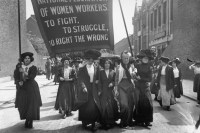
The suffragettes are largely remembered not as firestarters and bombers but as pale martyrs to patriarchy. The hunger artists refusing the rubber tube; Emily Wilding Davison dying under the King’s horse. We forget their destructive acts aimed at men and property; we remember the more sex-appropriate self-destruction. Fern Riddell’s flawed book is intended as a corrective. Its subject, Kitty Marion (born Katherine Marie Schäfer in 1871 in Germany), was one of the suffragettes’ most prolific and dedicated practitioners of political violence: possibly a member of Christabel Pankhurst’s elite terror cell the Young Hot Bloods, undoubtedly an arsonist and a very effective one, the veteran of multiple imprisonments and force-feedings.

Making feathers fly

Lead book review

They don’t look like a natural pair. First there’s the author, Kirk Wallace Johnson, a hero of America’s war in Iraq and a modern-day Schindler who, as USAID’s only Arabic-speaking American employee, arranged for hundreds of Iraqis to find safe haven in the US. In the process, he developed PTSD, sleepwalked through a hotel window, flung himself from a ledge and plunged, nearly, to his death. Then there’s the stranger-than-fiction Edwin Rist, a brilliant young flautist who, on a pitch-black night nine years ago, in pursuit of an obsession with rare bird feathers, risked years in jail in one of the most brazen and bizarre museum heists ever accomplished. Yet Johnson and Rist are made for one another. Within pages I was hooked. This is a weird and wonderful book.

How dumb is this list of ‘Top Twenty Books By Women That Changed The World’?

It always seems to be the way that when attempts are made to promote the life of the mind, they end up being particularly dumb. An instance, today, comes with the publication of a clickbaity list of the 'Top Twenty Books By Women That Changed The World', a promotional stunt ahead of Academic Book Week next week. We’re all encouraged to pile on the hashtag #acbookswomen and cast our votes – though the website as far as I can see doesn’t contain a mechanism to vote and the visitor has to guess at the books on the shortlist by squinting at a series of thumbnails of the covers. Anyway I got a press release so I have a head start.

A deep malaise

More from Books

Here is a detail that says a lot. In the French translation of this latest book by the Israeli historian Shlomo Sand, the title was followed by a question mark. In the English translation there isn’t one. The author is making a statement, not asking a question. The French intellectual is dead, finished, a thing of the past. If this is supposed to be polemical, it is an epic failure. Even if Paris still retains its unique aura, everyone knows that it no longer rules the intellectual and artistic world: the likes of Zola and Sartre seem to have produced no weighty legitimate heirs. So what will The End of the French Intellectual tell us that we haven’t already heard?

Spectator Books: the pleasures and perils of translation

In this week’s books podcast, we’re using the occasion of the Man Booker International Prize shortlist to talk about the pleasures and perils of literature in translation. I’m joined by Boyd Tonkin, a former chair of the International Booker and author of the forthcoming The 100 Best Novels In Translation, and Frank Wynne, whose translation of Virginie Despentes’s Vernon Subutex 1 appears on this year’s shortlist. They tell me how to really annoy Milan Kundera, about why the best author to translate is a dead author, how the UK fell into “the parochialism of large nations”, and how a translator saved Italo Calvino from himself. Do give it a listen.

Plucky young rebel

More from Books

Pippi Longstocking is a nine-year-old girl who lives alone with a monkey and horse in a cottage called Villa Villekulla at the edge of a village close to the sea in an unnamed part of Sweden. She is a tender-hearted braggart, brilliant but unlettered, with a punning, pulling-the-rug wit. She lives as she likes — sleeping with her shoes on the pillow is something children always remember about Pippi, along with the carrot-coloured plaits at right ankles to her freckled face and her superhuman strength. Pippi burst upon the world in 1945 and her main adventures were over by 1950 — a few later books elaborated on scenes already laid down.

Alternatives to God

More from Books

K. Chesterton, in one of his wise and gracious apothegms, once wrote that ‘When Man ceases to worship God he does not worship nothing but worships everything.’ John Gray, one of the most pernickety and carnaptious of contemporary philosophers, presents here a kind of taxonomy of not atheism, per se, but of the vacuums and nothings into which the loss of belief has rushed. It is, as one would expect, an exhilarating read. The title winks to Empson’s Seven Types of Ambiguity, and he appears as one of the figures in these essays. One might think that atheism is a fairly simply proposition. There is no God.

Debs, dances and big-game hunting

More from Books

Anglea Huth, the broadcaster and author of some 18 books, has now written her memoirs, Not the Whole Story. And though it may not be the whole story, what a story it is. Huth is the daughter of the actor Harold Huth and the flighty Bridget Nickols, who had an amitié amoureuse with the King of Portugal and several affairs. Huth’s enjoyably monstrous grandmother, with a penchant for couture, a private account at the Bank of England and the world’s most valuable pearl, is vividly described. Once, in the V&A, she found a magnificent collection of... dozens of pieces in all, hand-cut glass that slightly pricks your fingers. Each piece was engraved with a VR; it had been made to celebrate Queen Victoria’s Silver Jubilee.

The billionaire’s toy box

More from Books

Today’s VHNWI wants a PRSHLS. That’s Very High Net-Worth Individual and Partially Reuseable Super Heavy Lift System. Or, in the demotic, the rich want space rockets. ‘It’s not rocket science’, people say when describing the technique of making, say, an omelette — even if making an omelette requires a certain deftness of hand and nice judgment. So what is it? Rocket science is a mixture of ballistics, aeronautics, chemistry and computation, now cocktailed with extreme wealth, galactic obsessions and a faraway look in the eye. Once, the prerogative of the rich was to assault the environment with fast cars, burning oil and cruelly crushing molecules of air as they progressed.

Paved with good intentions

More from Books

As a schoolboy, I used to go round to my best mate Mike’s home. It was a good place: a cosy first-floor flat beneath the big, tiled, pitched roof, an anthracite stove in the kitchen. It faced onto a green and had a long garden at the back. It had a parade of shops nearby and a primary school. I didn’t know then that it was on a council estate or that the more tightly packed newer housing developments nearby were private. These were just places where people I knew lived. Mike’s estate was (and is, for it still exists) a version of the ‘municipal dreams’ that John Boughton describes in his detailed history of social housing in the UK.

Lone Star individuality

Lead book review

The subtitle of Lawrence Wright’s splendid God Save Texas (‘A Journey into the Future of America’) would be alarming if I found it entirely convincing. It’s hard to imagine a future where the Catholic Texan spirit of individualism would seriously overwhelm Yankee Puritanism, however mutated. In New England it’s about hard-earned old money shrewdly invested. In Texas it’s about striking it rich on a hunch, and new money rashly spent. There are contradictions in Texas which allow you to select almost any argument you like from her. She is beautiful and she is barren; corrupt and honourable. Whatever you want to say about her, she will supply abundant evidence.

Great expectations | 12 April 2018

More from Books

In a 1974 interview celebrating the quarter century since the publication of her classic The Second Sex (1949), Simone de Beauvoir recalled a eureka moment in which she saw that ‘to change the value system of society was to destroy the concept of motherhood’. That ‘value system of society’ rested on what she saw as enforced maternity, whereby women — whether through physical, psychological or social pressure — were pressed into humiliating servitude, a world of narrowed horizons and debasing physical shame.