Culture

Culture

The good, the bad and the ugly in books, exhibitions, cinema, TV, dance, music, podcasts and theatre.

Sins of the fathers | 13 December 2018

More from Books

‘To have a father is always big news,’ according to the narrator of Sebastian Barry’s early novel, The Engine of Owl-Light. Stephen Dedalus puts it differently in Ulysses: ‘A father is a necessary evil.’ But later, he qualifies this: ‘Paternity may be a legal fiction. Who is the father of any son that any son should love him or he any son?’ Colm Tóibín has repeatedly squared up to fathers as well as mothers in his own work (a dead father haunts the family in Nora Webster, and fatherhood is a central theme in The Heather Blazing). His new book takes on the theme of fatherhood in relation to three great Irish writers, supplying a scintillating new perspective on each.

Words to rally and inspire

Lead book review

It was a surprise, on reading Speeches of Note, to find myself laughing and chuckling at the speech of a Kentucky congressman of whom I’d never heard on a subject of little interest to the rest of the world. Yet it is such a gem of effective persuasion, brilliant construction and escalating hilarity that I happily went over it again. The speaker was James Proctor Knott in 1871, opposing the use of federal land in his district for a new railroad that would terminate in the backwater of Duluth. He did so by means of an exaggerated and sarcastic description of the wonders of that little town.

The Books Podcast: why runners up are more interesting than those who come first

In this week’s books podcast I talk to the great trivia expert Mark Mason about his new The Book of Seconds: The Incredible Stories of the Ones Who Didn’t (Quite) Win. Here’s the Christmas present for all the Tory frontbenchers in your life. Who remembers the Christmas number two in the pop charts? Who got silver at the Olympics? Who was the second man to walk on the moon? Mark — my second choice of guest for this week’s podcast — masterfully pulls together the psychological and social implications of not quite cutting the mustard.

Vanished without trace Zoë Apostolides

More from Books

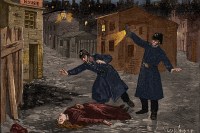
From Colette to Rudyard Kipling, celebrities flocked for front-row seats at the 1921 trial of Henri Landru, the notorious ‘lonely hearts’ killer. By the time he was apprehended, France’s answer to Jack the Ripper had swindled his way to contact with almost 300 women, using a variety of aliases, and murdered ten of them at his country pied-à-terre outside Paris. A century later, the suicide of Rey Rivera at the Belvedere Hotel in Baltimore created no such sensation except in the minds of conspiracy theorists and those who missed him, but the two stories reveal more similarities than might be expected. Trawling through 7,000 pages of archive material, Richard Tomlinson’s account spans many years, witness statements, forensic records and court documents.

A nation of beggars and plutocrats

More from Books

Picture India in 1991. You need to make several trips to Delhi and wait three years to import a computer. Coca-Cola is contraband; there is a 22-month waiting list for a car, and an interminable queue for admission to the exclusive club of telephone owners: there are only five million active connections in a country of 900 million people. Post-colonial India elevated suspicion of private business into a public virtue. But with the collapse of the Soviet Union, which maintained a vital $6 billion trade relationship with India, the rhetoric of economic self-reliance and political non-alignment became insupportable. All that stood between India and bankruptcy when the government was compelled to throw open the economy in the summer of 1991 was $2 billion.

Flights of fancy | 6 December 2018

More from Books

In the opening pages of Turbulence, a woman in her seventies, who is visiting her sick son in Notting Hill, thinks how easy ‘it was, these days, to acquire a plane ticket’. Instead of a ticket to take us around the world, we have David Szalay’s novel, which takes us across continents in a series of 12 connected stories. The chapter headings are the acronyms of international airports; thus the first chapter is LGW-MAD and the last BUD-LGW. Each episode arises from a personal connection to a character in the previous one. Szalay might have been conscious of Forster’s dictum: ‘Only connect the prose and the passion.’ He is a clever craftsman.

A hero to worship

More from Books

If you don’t know who Lionel Messi is you won’t enjoy this book much. If you do, you probably will. But if you know who Messi is and you’ve got at least a 2:1 in English, comp. lit. or similar, you are going to absolutely love it. This is definitely one for the football aficionado as well as for fans of fine writing. Messi is an Argentinian footballer who’s played for Barcelona for his entire professional career. He’s short. He’s modest. And he never takes a dive. Apart from his appalling tattoos, he’s the very opposite of what you might expect of the modern footballer — an Argentinian Roy of the Rovers.

The pursuit of beauty

More from Books

Michelangelo seems never to have travelled to Turkey to advise the Sultan on a bridge to span the Golden Horn, but he was asked to provide an architectural drawing after the design of his great rival, Leonardo da Vinci, was rejected. An ‘Author’s Note’ to this enigmatic novella references a sketch attributed to Michelangelo ‘recently discovered in the Ottoman archives’, together with a list purporting to be an inventory of possessions he left behind. From these intriguing if flimsy historical traces, Mathias Enard imagines the 30-year-old Michelangelo in Constantinople in 1506, transfixed by the majestic city and its captivating people, but baffled by court ritual and the scale of the engineering problem at hand.

Too clever by half

More from Books

This book — the title is from Pasternak —is billed as ‘literary fiction’. The narrator, a Russian gambler and drinker who has settled in the West, leaves his rich American wife of two decades when he falls hard for a Russian prostitute he meets in London (‘the first and last love of my life’). Andrei Navrozov has worked as an editor and journalist (he has written for this magazine) and published several books, including a poetry collection with the same title as his new volume. As the subtitle indicates, he and his narrator are keen on self-deprecation — a sure sign that one thinks oneself frightfully clever.

Family favourites | 6 December 2018

More from Books

There’s no shortage of magical rings in the children’s canon, the sort of things that usefully make you invisible or beautiful. But rings that can turn objects into a pile of excrement are something else. So one warms to Bianca Pitzorno’s Lavinia and the Magic Ring, translated from the Italian by Laura Watkinson (Catnip, £5.99) whose heroine, an orphaned match girl, is given one. Her subsequent adventures have more than a touch of Roald Dahl, being illustrated by Dahl’s co-creator, the ever fabulous Quentin Blake. The sublime Judith Kerr is 95 and razor-sharp with it. Her latest, Mummy Time (HarperCollins, £12.99), is about the wonderful adventures, real and imagined, of a little boy in a park while his mother is on her mobile phone to a friend.

Bodies pile up

More from Books

A young girl finds the body of her nanny, brutally murdered, and the barely moving form of her mother, a second victim of the attack. The perpetrator of these deeds is the child’s father, who manages to flee the country and has never been seen since. This is the wound at the heart of Flynn Berry’s A Double Life (Weidenfeld, £14.99). Adulthood has given Claire Spenser no respite from her pain. Haunted by the horror she witnessed as a child, she now obsesses over every scrap of information about her father. She investigates his close friends and family, suspecting them of helping him to escape trial. But this isn’t a quest for revenge, more a personal search for justice, and above all, understanding.

Our greatest ambassador

More from Books

In her 66 years on the throne the Queen has represented Britain on official visits to at least 126 countries or territories, some of them many times. Robert Hardman has had the idea to write about her reign, and about Britain, through these myriad voyages. He is right to call his book Queen of the World. There is no other. He quotes Neil MacGregor, now the director of Berlin’s Humboldt Forum, pointing out that the Queen has officially entered the German language. The correct word for ‘queen’ used to be ‘die Konigin’; but now German grammar lists a new entry ‘die Queen’ and states: ‘There is no plural.

A death-haunted world

Lead book review

‘A is for Amy who fell down the stairs/ B is for Basil, assaulted by bears...’ The Gashlycrumb Tinies, an alphabet in dactylic couplets of the surreal fates visited on a succession of blameless tots, is probably Edward Gorey’s best-known work — and that work forms a pretty coherent whole. Dozens and dozens of tiny booklets, almost all intricately hand-crosshatched in black pen, darkly spoofing established genres, set in a Victorian-Edwardian world of sighing flappers, funerary urns and decaying stately homes. They are filled with surreal menace and random violence or moral horror — much of it offstage — and always played for laughs. The dreamlike, associative drift of Gorey’s work — is that an umbrella or a bat?

Why King trumps Carney in the battle of the governors

If they were former Manchester United players, Booker prize nominees, or members of Oasis, the acrimony and arguments might be fairly run of the mill. Among current and former Governors of the Bank of England it is, to put it mildly, a little unusual. And yet Mark Carney now finds himself under sustained attack from his immediate predecessor Mervyn King over how it should handle our departure from the European Union. And in that battle of governors there can surely only be one winner – and it isn’t the incumbent. In a piece for Bloomberg, King, who served with distinction at the Bank from 2003 to 2013, takes apart Theresa’s May’s exit deal in ferocious detail.

Offstage dramas

More from Books

It is, proclaimed Charles Wyndham in 1908, ‘an institution alien to the spirit of our nation’. The alien having long since landed, it’s easy to snicker. After all, what would English (British? — that’s another question) theatrical life be without the National? It has become crucial to the way audiences think about themselves — and imagine what they might become. Wyndham was partisan: he was an actor-manager. But as Daniel Rosenthal’s absorbing collection of letters to and from people at the theatre makes apparent, he was not alone. He still isn’t.

Singular narrative voices

More from Books

The large number of novels written in the first person would suggest it’s an easy voice to pull off: that the closeness of ‘I’ to ‘me’ means it can be accessed by the novelist without much difficulty. But in fact, the writer must come up with a legitimate reason for why a character is giving a first-hand account of their experience. For fiction to thoroughly convince the illusion needs to be seamless — and if for a second the reader is jolted out of the narrative by wondering why this person suddenly decided to tell me this story, then the author has failed. It is a voice that must justify its own existence. Why else are so many first-person narrators writers themselves?

The great Chinese power grab

More from Books

Five years ago President Xi Jinping gave a speech in Kazakhstan, launching the ‘Silk Road Economic Belt’, a wildly ambitious set of Chinese-backed infrastructure projects stretching through the steppes of central Asia to the Baltic Sea. Hundreds of billions of dollars later, this project more than any other has come to define China’s radical ambitions to upend a world order long dominated by Americans and Europeans. In 2015, Peter Frankopan, a dashing Oxford academic, wrote The Silk Roads, a weighty and widely acclaimed history of the ancient trading routes that once linked China to the world. It became a bestseller, partly because Frankopan, unusually for an academic, knows how to tell a yarn.

Telling tales | 29 November 2018

Features

Germaine Greer described biographers as ‘vultures’. I prefer to think of myself as a version of Philip Marlowe or Sam Spade: vultures hunt by instinct but the two private investigators went after secrets with deliberate foolhardy masochism. It’s human nature to want to know more about the writers we admire — but what you discover isn’t always pleasant. Most recently, I completed a life of Ernest Hemingway. It was a joy to write mainly because after reading thousands of unpublished letters I felt relieved at having been spared an encounter with the living ‘Papa’. I knew of his reputation as a fibber but I was astonished to find that from his teens onwards he was pathologically incapable of distinguishing fantasy from truth.

Courage and conviction

More from Books

When Britain finally lowered the flag in the Iraqi city of Basra in 2007, the army’s top brass valiantly claimed that they were leaving it to ‘self-rule’ rather than all-out anarchy. Despite the militiamen in the streets and the mortars in the skies, this was what success looked like in Iraq they told the invited press pack. Nobody really believed them, of course; but only Marie Colvin of the Sunday Times could actually prove them wrong. Ignoring the ceremony invites, she donned an abaya and went into Basra to report unembedded, the first western correspondent to dare to do so in nearly two years.

In a vale of tears

More from Books

Shakespeare’s Rape of Lucrece is a puzzling and often terrible poem. Lucrece, the devout wife of Collatine, is raped by Tarquin, the son of the king of Rome. Her suffering inspires a revolution led by Brutus, and this is the beginning of the first Roman republic. It’s a rich myth of sex and politics, and Lucrece’s (or Lucretia’s) story was told by Ovid and painted by Rembrandt. Shakespeare returns to the episode in several plays, notably Cymbeline. But in the poem, written in early 1594, he apparently struggles to find the emotion and drama. Perhaps he was simply young; this was early in his career, and he is still learning. Perhaps it was too pragmatic; the poem is an attempt to secure aristocratic patronage from the Earl of Southampton.

Clouds, storms and swirling stars

More from Books

The 20th-century painter Balthus once suggested that the author of a book about him began with the words: ‘Balthus is an artist about whom we know nothing; now let’s look at his works.’Actually, there are many important figures about whom we know nothing, or at least very little. Giovanni Bellini is a case in point. Information we don’t have about him includes when he was born, and even whether he was the younger sibling of Gentile Bellini — as is usually assumed — or in fact his uncle. The discovery a while ago of a Latin poem suggesting that in old age this artist of tranquilly thoughtful saints and Madonnas was in the habit of sleeping with a handsome young man has only complicated matters, though it does enliven his image.

A chain, but no barrier

More from Books

On 26 August 1880 Henry Russell consummated his marriage in an unusual way. He was, to his own mind, married to the Vignemale, the highest French peak in the Pyrenees, and, wishing to spend the night with his beloved, he climbed to the 10,820ft summit and got his servants to dig a trench, bury him under earth and stones, wrapped in his sheepskin sleeping-bag, and leave him to the darkness. He survived and wrote of this night: ‘It seemed as though I had left the earth.’ Russell is one of the oddballs with whom Matthew Carr’s book teems. Another is Sabine Baring-Gould, the author of ‘Onward, Christian soldiers’, who in 1848 visited the Algerian emir Abd-el-Kader, imprisoned by the French in the château at Pau.

The threat of the Black Shorts

More from Books

In 2016, inspired by reports that Donald Trump’s butler had recommended the assassination of Barack Obama, Ben Schott wrote a scintillating squib, published in these pages, about Trump meeting Bertie Wooster. As he later noted in a diary column, it gave him the idea of writing a new Jeeves and Wooster novel. Predictably, reassuringly, soothingly, Jeeves and the King of Clubs returns us to such idyllic haunts as Bertie’s flat in Berkeley Mansions, the Drones Club and Brinkley Court, Aunt Dahlia’s pile in Worcestershire, and to the company of the furious Sir Watkyn Bassett and his whimsical daughter Madeline, who is yet again engaged to Roderick Spode, 7th Earl of Sidcup. It would appear to be the summer of 1939.

Pure and mostly simple

More from Books

A long and messy business is how the chef Rowley Leigh explains his preferred way of eating. Picking at a crab, for example, or eating raw young broad beans straight from the pod. He applies the same phrase to cooking. That too is messy, but not all the recipes in his new book take ages to make. Long, I thought as I gratefully lapped up Leigh’s wisdom, applies more to the time needed to become not just a fount of knowledge but also a man of very good tastes. You could include grumpy in the title of A Long and Messy Business (Unbound, £25); but I trust the advice and judgment of grumpy (not angry, mind) cooks. It is a great cookbook, as much for what irritates Rowley as what doesn’t.

All heart, trust and gut feeling

Lead book review

‘To me, he was sort of like a unicorn,’ writes Mrs Obama, looking back on her courtship days with Barack. He was affectionate, loving, secure and brainy. Very brainy. ‘He consumed volumes of political philosophy as if it were beach reading.’ He was laid back but his sense of purpose was strong. ‘Barack was serious without being self-serious. He was breezy in his manner but powerful in his mind. It was a strange, stirring combination.’ In a languid late-night moment, she asks a penny for his thoughts. ‘Oh, I was just thinking about income inequality.’ This book takes you right back to those days when we all fell in love with Obama.

Books Podcast: Lee Child on Reacher, revenge, and writing without a plan

“I wondered what would happen if you made Goliath the hero…” In this week’s books podcast I’m talking to the thriller writer Lee Child about the latest in his phenomenally successful Jack Reacher series, Past Tense. Lee tells me why you can’t have a knight-errant in Europe any more, about writing without knowing what happens next, Reacher’s trouble with women, why he can never remember his own titles -- and why liberals love reading about bad guys getting punched in the face. Plus: how he rumbled Robert Galbraith as woman.

Tudor England’s other Bess

More from Books

Bess of Hardwick — who died Elizabeth Talbot, Countess of Shrewsbury — was a remarkable and fascinating woman. The wife of four men, builder of four houses, and by her death the second richest woman in the country, the exceptional Bess has attracted many biographers. Kate Hubbard’s new book differs from these by examining Bess’s life as a ‘builder within the context of the Elizabethan building world’. It is, consequently, part biography and part building history, considering along the way the erection of Elizabethan prodigy houses, such as Longleat, Theobalds, Wollaton (‘a monstrous building, heavy and hectic, overcrowded with ornament, overwhelmed with glass’), and, above all, Bess’s Hardwick New Hall.