Jamie Bartlett

How the world’s biggest crypto-scam targeted British Muslims

From our UK edition

Back in 2016, thousands of Brits thought they’d struck gold. Word was spreading through WhatsApp and Facebook groups about an exciting new crypto-currency called OneCoin. It was rumoured to be the next Bitcoin – that strange digital currency that had been shooting up in value and minting millionaires. OneCoin’s founder, a Bulgarian-German businesswoman called Dr Ruja Ignatova had impeccable credentials – a degree from Oxford and a stint at the respected McKinsey’s. OneCoin, Dr Ruja said, was the ‘Bitcoin Killer', heralding a financial revolution and, if you got in early, a unique new investment opportunity.

What Rory Stewart and Donald Trump have in common

From our UK edition

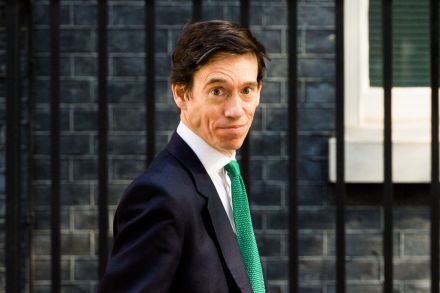
What the hell has got into Rory Stewart? The man’s everywhere, outstretched phone in hand, like an Instagram influencer on the edge, asking people to come and talk to him about Brexit. He’s at the Lewisham market by the stinky fish! No wait – now he’s on a train to Wigan. Now he’s talking Dari in Barking; now he’s in Kew Gardens searching for a Brexiteer. But wait: he’s on the move again, chatting in a taxi! Then to Borough Market, filling the tiny screen with his distinctive features. He has more energy than the rest of his rivals put together, and is even making arch-careerist Boris Johnson look indifferent about the leadership contest.   This is all very smart.

The Met Police’s sinister facial recognition trial should worry us all

From our UK edition

We are extremely good at accusing others of doing the very thing we excel at. A case in point: we rightly criticise the Chinese government with its dystopian surveillance and social score systems, when we are considering building something similar. In a recent episode of BBC Click, journalist Geoff White followed the police’s pilot of live facial recognition technology. (The Metropolitan Police are running a number of pilots). In one chilling moment, a man walked past the facial recognition cameras and covered his face. The police stopped him, forced him to uncover and then took a photograph of him anyway. ‘This gives us grounds to stop and verify him,’ one officer said.

How we lost to Big Brother

From our UK edition

There is a trend in non-fiction — in fact my editor has been on to me about this lately — to reveal things. Apparently, readers like to feel they’ve got the inside track, even when there are no secrets to uncover. Perhaps this drove Yasha Levine to call his new book Surveillance Valley: The Secret Military History of the Internet. It promises to shine a light on the close and ongoing relationship between state surveillance and Silicon Valley. There are two problems with this. First, most of it is not secret. Second, I don’t think it’s right.

How social media turned us into a nation of pub bores

From our UK edition

Opinions are like social media accounts: approximately 2.7 billion people have one. I’ve no problem with people having an opinion of course. Quite the reverse: a nation without opinions is one without thoughts, ideas or morals. But over the last decade something has changed. We’ve always had opinions but now we feel compelled to share them with the world. And that is a problem. A few years ago, I had opinions about everything. I had strong views on Peter Mandelson and BSE and Sierra Leone and 7/7 and the price of bus fares and Uri Geller’s friendship with Michael Jackson. But none of these opinions were good enough to share in public, much less put down in writing and publish to potentially everyone on the planet. I was perfectly happy with that, too.

Finally, politicians have realised how to hold Facebook to account

From our UK edition

This week, the Digital, Culture, Media and Sport Committee looking into fake news convened for a special session. For the first time since 1933, when the joint committee on Indian constitutional reform included parliamentarians from India, politicians from nine other countries joined Damian Collins and other MPs to cross-examine Facebook and others. A couple of days earlier, Collins had used an arcane parliamentary procedure to send a representative of the sarjeant at arms to a hotel room in order to squeeze documents from an app developer who made software to locate Facebook photos of people wearing bikinis. (You read that right). This, it seems, is what it takes to hold large international tech firms to account these days.

Nick Clegg is perfect for Facebook

From our UK edition

In his brilliant insider-account of his time at Facebook, Chaos Monkey, Antonio Garcia Martinez describes the process of ‘onboarding’. It’s the quasi-religious ceremony of inducting new staff into the company. “Whatever you learned at your previous job” Martinez was told, “whatever politics and bullshit you’re bringing with you, just leave all that shit behind.” I doubt Nick Clegg will do the same when he takes up his new role as Facebook’s head of global affairs. I’m guessing that his politics and bullshit is the reason he got the job.   While his reputation was – slightly unfairly – damaged by the student fees debacle, Clegg is someone with pretty solid liberal credentials.

Why Labour’s new video should worry the Tories

From our UK edition

Last week, the Labour Party released a video called Our Town. It is a genuine piece of art, which shows that Labour takes the medium of video seriously. The Tories need to take note. It’s not impressive because of the message itself, since the message itself is familiar: we’re going to kick-start the economy, we’re going to create decent jobs, we’re going to magic-up smaller class sizes. Everyone says that. No, it’s a piece of art because of how it’s produced. Every medium of communication has styles and modes that suit it – the medium is the message, as Marshall McLuhan famously once said. Video, as an audio and visual medium, trades on emotional resonance, feeling and mood. Our Town takes those features seriously.

Lucy Powell’s bill is the wrong way to tackle online hate

From our UK edition

Politicians and the internet still don’t seem to get on. Yesterday Labour’s Lucy Powell put forward a bill proposing two peculiar new suggestions for tackling online hate: first, that moderators and administrators (the people that run online groups and forums) be held legally responsible for what’s posted in their groups. Second, that the name of any large Secret Facebook group, and the number of members it has, be made public Powell has pulled together an impressive array of signatories, including David Lammy and Jacob Rees-Mogg. It’s nice to see that bi-partisanship is still alive and well, even if the proposal itself is completely unworkable. I understand the aspiration – we need to stem the flow of online hate, and make tech companies more accountable.

It’s time to stop the digital mudracking

From our UK edition

What do Jeremy Corbyn, Stormzy, film director James Gunn and former Gay Times editor Josh Rivers all have in common? Answer: in the last year or so, they've all been publicly shamed for things they’ve posted online in the past. They’ve all been victims of the lazy new political attack technique: the digital mudrack. One of the more interesting changes in politics is the fact most of us now have a public record of every idiotic thing we’ve ever tweeted, posted, uploaded or said. This, of course, is a giant honey pot for political research teams, time-squeezed journalists and the endless horde of social media users who shark around the net looking for reasons to be outraged.

Turn off and tune out

All good non-fiction writing shares certain characteristics: consistent economy, upbeat pace and digestible ideas that logically flow. Tech writers have an additional challenge, however, of combining all this with boring technical detail. How to explain the mechanical stuff without being either too dry or too simple? What’s the reader’s likely level of knowledge? These questions can eat an author up. I imagine science writers have the same difficulty, but this problem weighs especially on tech writers, because the composition of a piece of software, an encryption standard, or a machine-learning algorithm has a direct bearing on how it works and therefore how it affects the world.

Not so fast

From our UK edition

I’m losing my patience. Not so long ago I’d happily wait ten minutes for a bus, or even whole days for the next instalment of my favourite television programme. It didn’t seem to bother me in the slightest that my holiday photos would not be seen until I’d picked them up from the chemist. I even went to the library to get information from an encyclopaedia. Life, in short, used to be a waiting game, and patience was not just a virtue but a habit. Now I wonder how I survived in a world without Google Maps, Uber or smartphones with in-built cameras. The whole direction and purpose of modern life, at least on the surface and for those well-off enough to benefit, is to make everything frictionless, personalised, easy. Click a button, a taxi turns up to your house.

Ireland’s abortion vote and the wild west of online adverts

From our UK edition

It’s sometimes hard to know who’s really behind decisions at big tech firms. It could have been the PR team (‘we don’t want more negative press’), the policy team (‘the luddites in parliament want to regulate us’) or the engineers (‘we can’t stop it’). Whoever it was, a couple of weeks back both Google and Facebook announced measures to prevent foreign interference in tomorrow's Irish referendum on the eighth amendment, which effectively outlaws abortion. Facebook is only allowing organisations based in Ireland to run ads about the subject; Google’s gone one further and banned them all.   I suspect it was a rare instance of everyone agreeing.

The joy of GDPR

From our UK edition

Happy GDPR week everyone! This Friday, the General Data Protection Regulation comes into force, the most ambitious data privacy ruling since, well, ever. I’m not going to go through the specifics – there are plenty of vastly overpriced seminars for that – but it’s basically about giving EU citizens more rights and control over their personal information, info on how and why it’s being collected and used, and the chance to opt out if they want. Some of this was already in law – but now there are monster fines if companies don’t comply.  You will probably know it from those endless emails.

Why politicians love to blame an algorithm

From our UK edition

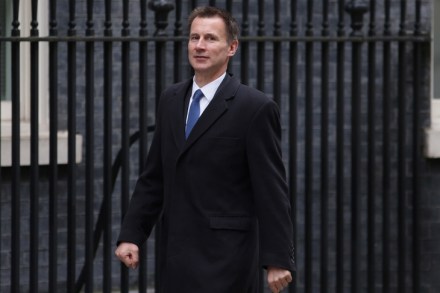
Jeremy Hunt as Home Secretary said something very important by mistake. He told the Commons in May 2018 that ‘a computer algorithm failure’ meant 450,000 patients in England missed breast cancer screenings. As many as 270 women might have had their lives shortened as a result. This point hasn't received the analysis it deserves. Scores of women died sooner than they should have done, because of an algorithm. He’s probably right, you know. It really could have been a computer model to blame here. But that’s obviously unsatisfactory, since we need humans to hold to account when things go wrong. Let’s say it was a poorly programmed algorithm – who’s at fault? The tech guy who wrote it, years ago?

The Facebook scandal exposes our politicians’ technical illiteracy

From our UK edition

Imagine a world in which all politicians were computer scientists. What a dreary dystopia that would be. It’s hard to think of anything worse than a nation ruled by people with PhDs in machine learning.   That said, politicians do need to know something about the digital world. It’s no longer good enough for our elected representatives to feign technical illiteracy, throw up their arms in defeat, and ask the office twenty-something to fix it. Every professional thinks politicians are clueless about their particular area of expertise – doctors complain that MPs are medically illiterate, teachers moan that they don't get pedagogy and so on.

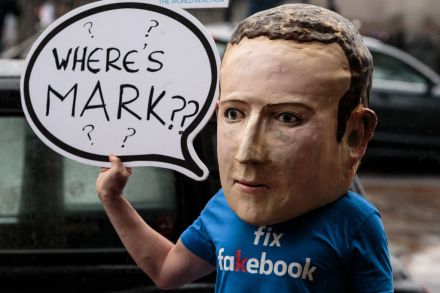
Mark Zuckerberg’s ‘team’ are the real losers of the Facebook hearing

From our UK edition

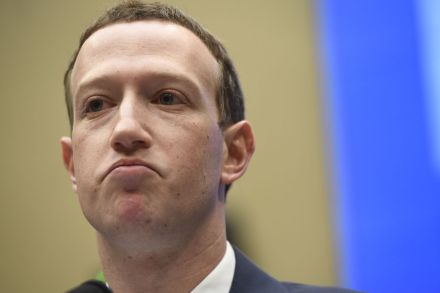
Right now, in some tasteful open plan office in California, Mark Zuckerberg’s ‘team’ is hard at work. Or at least they should be, because they have a lot to do. When he wasn’t trying to explain the 101 basics of how the internet actually works, Zuck was telling senators that his team would look into the details, and would be in touch.  The reason he was there at all, subjecting himself to five gruelling hours of intensive and sometimes wildly misdirected questioning, was to reassure three groups of people: Facebook users, who need to know Zuck cares about privacy. Investors, who need to know the company is dealing with the crisis. And finally the politicians themselves, who are wondering if more rules and laws are needed to tame the giant.

Big data is watching you

From our UK edition

From the outside it all looked haphazard and frenzied. A campaign that was skidding from scandal to crisis on its way to total defeat. That’s not how it felt inside the ‘Project Alamo’ offices in San Antonio, Texas where Trump’s digital division — led by Brad Parscale, who’d worked previously with Trump’s estate division setting up websites — was running one of the most sophisticated data-led election campaigns ever. Once Trump’s nomination was secured, the Republican Party heavyweights moved in, and so did seconded staff from Facebook and Google, there to help their well-paying clients best use their platforms to reach voters.

The Cambridge Analytica row shows politics moving in a disturbing direction

From the outside it all looked haphazard and frenzied. A campaign that was -skidding from scandal to crisis on its way to total defeat. That’s not how it felt inside the ‘Project Alamo’ offices in San Antonio, Texas where Trump’s digital division — led by Brad Parscale, who’d worked previously with Trump’s estate division setting up websites — was running one of the most sophisticated data-led election campaigns ever. Once Trump’s nomination was secured, the Republican Party heavyweights moved in, and so did seconded staff from Facebook and Google, there to help their well-paying clients best use their platforms to reach voters.

Facebook’s enemies are relishing Mark Zuckerberg’s troubles

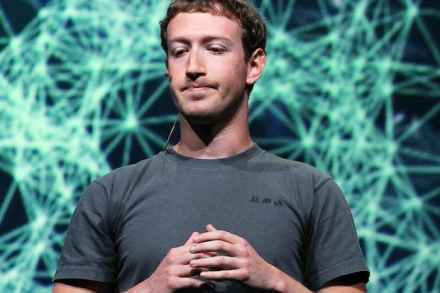
Zuck speaks! He’s finally responded to the Cambridge Analytica debacle. To be honest, I could have predicted almost word-for-word this evening’s statement: It wasn’t really our fault; it was mostly their fault; we’re a little bit responsible (‘front-up’ I can imagine a comms person insisting); and here are the steps we’ve taken. In fact, we’d already taken most of these steps in 2014, when all this happened. I sensed a weariness to it. He concluded his penultimate paragraph with the phrase ‘going forward’, which is usually a sign someone’s out of ideas. Still, and I can’t quite believe I’m writing this, I almost feel sorry for Mark.