Culture

Culture

The good, the bad and the ugly in books, exhibitions, cinema, TV, dance, music, podcasts and theatre.

Books Podcast: what modern Bibles get wrong

In this week’s books podcast, my guest is Robert Alter - who has just published the fruits of decades of labour in the form of his complete new translation of the Hebrew Bible into English. Acclaimed for his Bible translations by Seamus Heaney, John Updike and Peter Ackroyd, Prof Alter tells me how Biblical Hebrew really works, what can and cannot be preserved in translation - and why, as he sees it, nearly every modern translation of the Bible gets it catastrophically wrong.

An eye in the storm

Lead book review

Ernst Jünger, who died in 1998, aged 102, is now better known for his persona than his work. A deeply confusing and controversial figure who loathed democracy and glorified German militarism, yet despised the Nazis, he not only bore witness to the industrial flesh-mangles of two world wars, but almost the entirety of the 20th century. His writings and insights have long earned him sage status in Germany. This, the first publication in English of his diaries from 1941–45, heightens his complexity but also makes him a more rounded figure.

Life at the Globe | 17 January 2019

More from Books

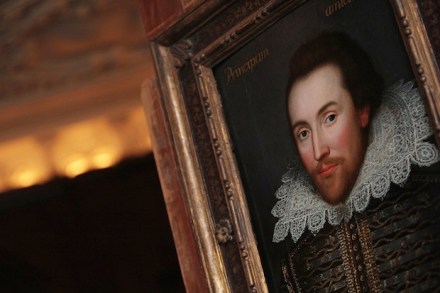
    IN ASSOCIATION WITH THE PRINCIPAL PARTNERS OF SHAKESPEARE’S GLOBE’S 2019 SUMMER SEASON One of the things about Shakespeare that always makes you marvel is how insistently he speaks to the present moment — any present moment you choose. Academic literary critics wince when you start bandying around phrases like ‘eternal truths’, so let’s just say Shakespeare has a way of chiming with current events. The Globe’s Richard II opens next month, the first in that chain of history plays that continues with Henry IV parts one and two and culminates with Henry V, all of which are part of the summer season.

The journalist as sleuth

More from Books

Despite being well-travelled as the BBC’s world affairs editor, John Simpson doesn’t roam far from home in his spy thriller, Moscow, Midnight (John Murray, £20). Life and art intermingle, in both subject matter and character. The hero is named Jon Swift, a veteran journalist bristling under new media regimes. When government minister Patrick Macready is found dead — presumably from a solo sex game gone wrong — Swift takes it upon himself to clear up a few loose ends. Soon he’s under investigation himself, ostracised, and journeying to Moscow to work a connection to a number of Russians who have met similar ‘accidental’ fates. Swift is cynical, unreconstructed in his view of women, a bit snobbish at times.

Behind the top 20

More from Books

This is a story of resurrection. A mere three decades ago, club football in England was a professional game largely and listlessly run by amateurs. Fans shuffled in decreasing numbers to obsolete stadia redolent of pie and pee. Lives were lost in the tragedies of Bradford, Hillsborough and Heysel. The sport was scarcely entertainment; it was certainly not a business. Yet today the Premier League is the world’s richest sporting brand. How this happened is a tale told with much verve and some wit by two experienced sports journalists.

Water, sky, wind and cold

More from Books

Dystopian fiction continues to throng the bookshelves, for all the world as though we weren’t living in a dystopia already, and the latest entrant to the glum-futures category is John Lanchester’s The Wall, about which much can be divined from a glossary of the capitalised nouns that throng it from the title onwards. The Wall encircles the perimeter of a fortified Britain. The Change has caused the sea level to rise, transforming the world forever. The Defenders, a national service now demanded of all young people, protect the Wall. The Guards patrol the coastal waters in boats, the Flight in planes. The Others want to get over the wall from outside, by violence or stealth. The Breeders make babies, which most people won’t do any more.

The human chimera – part lion, part goat

More from Books

Richard Wrangham embraces controversy, and appears to enjoy munching apples from carts he upsets himself. While his new book seems to be the history of an amalgam of moral and political virtues and vices, its thesis is actually the large claim that these have evolved; and he has no compunction about writing that the foundation stone of good behaviour is the possibility of capital punishment (against it though he is in today’s world). It’s not just that the logic of his argument requires this hypothesis; he has found examples of premeditated (‘proactive’), co-operative (‘coalitionary’) killing in the Pleistocene record, providing an empirical basis for his claims about our evolution. Chimpanzees have (reactive) murderous rages.

A serious tease

More from Books

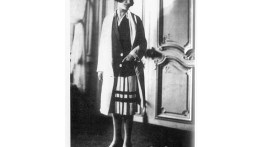
Is there anything one can never laugh about? A question inevitably hanging over humour writing, it’s best answered by the masters of the genre who, rather than inventing jokes (a skill many possess), notice life’s winks and chuckles and tease them out of their surrounding matter, even if the latter happens to be of grave concern. Teffi was one of those writers. Born in 1872 in St Petersburg, by her early twenties Nadezhda Lokhvitskaya was a housewife with three children stranded in a provincial town; by her early thirties she was back in the capital, a literary celebrity writing for various publications under a snappy pseudonym, her witticisms quoted ‘in the streets, in trams, in clubs, in living rooms, at student gatherings’.

Music and revolt

More from Books

On 13 August 1977, a demonstration by the National Front was routed in the streets of Lewisham by thousands of anti-fascist activists. The latter’s elation palled, however, when they saw the evening news frame the event as a battle between rival extremists. Among the critical voices were Labour’s deputy leader Michael Foot and the Daily Mirror, which branded the anti-fascists ‘as bad as the National Front’. The NF’s opponents learned a valuable lesson at remarkable speed. Just weeks later, they launched the Anti-Nazi League at the House of Commons, with Neil Kinnock and Peter Hain on the steering committee and a medley of celebrity supporters that included Iris Murdoch, Brian Clough, Melvyn Bragg, Dave Allen, Warren Mitchell and Prunella Scales.

Their finest hour

More from Books

On 22 January last year, the entrance whiteboard at London Underground’s Dollis Hill carried a brief factual statement: On this day in history On the 22–23 January 1879 in Natal, South Africa, a small British garrison named Rorke’s Drift was attacked by 4,000 Zulu warriors. The garrison was successfully defended by just over 150 British and colonial troops. Following the battle, 11 men were awarded the Victoria Cross. A female passenger complained that it was ‘celebrating colonialism’. The board was wiped clean and a suitably opaque quote from Martin Luther King substituted: ‘We are not the makers of history. We are made by history.

Voices from the recent past

More from Books

Interviews, like watercolours, are very hard to get right, and yet look how steadily their art has become degraded and under-appreciated. Each and every Shumble, Whelper and Pigge in our media fancies that an interview can be tossed off: you need only switch on the microphone and let the person speak. Radio is the worst culprit. John Fowles was on a US book tour when the announcer muddled his notes and introduced him as ‘the singing nun of Milwaukee’. Inevitably hitting the wrong note, too many interviewers rely on the rickety scaffolding of the unpublished novelist, seizing on, say, their subject’s white socks, and then truffling up some unpalatable morsel from their past with which to spring an ambush — resulting in a locked jaw that no road drill could unclamp.

Trysts among the trees

More from Books

In this current era of identity politics and a more fluid approach to gender and sexuality amongst a younger generation, it’s somewhat surprising to be reminded that there remains one letter in the ever-shifting LGBT acronym that is still considered something of an unspoken taboo: male bisexuality. One only has to count the number of, say, professional sportsmen who admit an attraction to men as well as women to see how far there is still to go. Luke Turner makes no secret of his bisexuality, and is all the better a person — and a writer — for it.

Good and evil on an epic scale

More from Books

David Keenan’s debut novel, This is Memorial Device, about a small town in Lanarkshire and its post-punk scene, showed that it wasn’t easy being Iggy Pop in Airdrie. For the Good Times, his second, set in 1970s Belfast, shows that it isn’t easy being a Perry Como-loving one of the boys in the Ardoyne. In NI parlance, Sammy McMahon and his three friends are connected. This involves participation in punishment beatings, arms raids, killings, explosions and internecine feuds. But Sammy and his friends are not paramilitaries of the type you might imagine — the guerrilla ideologue or the Donegal tweed-wearing killer. This lot, travelling around in a van decorated with a painting of Mickey Mouse, tend more to a Mafioso wiseguy and Droog mutation.

Life at the Globe

More from Books

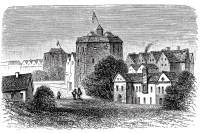
  IN ASSOCIATION WITH THE PRINCIPAL PARTNERS OF SHAKESPEARE’S GLOBE The Globe was the occasion of drama before the first line was even spoken from its stage. In the snowy winter of 1598, three days after Christmas, Shakespeare and his colleague Burbage resolved a falling-out with the landlord of their then Shoreditch theatre in the liveliest way possible. Noting that the landlord owned the ground on which the theatre stood but not, technically, the theatre itself, they showed up mob-handed with ‘swords daggers billes axes and such like’, pulled the theatre down beam by beam, loaded it on to wagons and headed south.

More scenes from my life with Francis Bacon

More from Books

The case of Michael Peppiatt is a curious one. He first met Francis Bacon when he was an undergraduate at Trinity Hall, Cambridge, and visited Bacon for a student magazine. Something clicked and Bacon became his sugar daddy, immediately and for ever, though Peppiatt has said that no sex was involved. One can see what Peppiatt got out of Bacon: not cash per se, but many opportunities for money, an entrée to the great art world, a raison d’être for his pen, as well as free entertainment on a lavish scale. This he acknowledges gratefully. But what Bacon got out of Peppiatt is never quite clear. It certainly helped that Peppiatt was young, bright, and could match Bacon’s drinking. He must also have been attractive in an obliging, even submissive way.

The making of a monstrous metropolis

More from Books

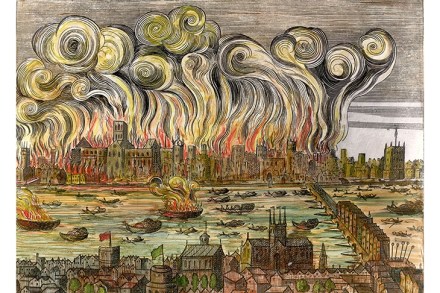
When Bishop Guy of Amiens looked across the Channel in the 11th century he saw ‘teeming London [which] shines bright. A most spacious city, full of evil inhabitants, and richer than anywhere else in the kingdom’. Well, plus c’est la même chose. Even then those Mammonic associations were already old. Over 300 years earlier the Venerable Bede had called London an ‘emporium of many nations who visit it by land and sea’ — a place of markets and mints, of North Sea slave-traders and missionaries seeking martyrdom east of the Rhine, of wine and wool merchants trying to make ends meet. The hubbub and hum of the city had begun. London of the early middle ages has — like much early medieval history — often been ignored.

From Access to Youth

More from Books

The mid-term elections in the US, when Democrats took over Congress, were hailed as a victory for ‘progressives’, while David Cameron once claimed to be a ‘progressive conservative’. Well, progress towards what exactly? ‘It is certainly significant that nearly all political tendencies now wish to be described as progressive,’ wrote the cultural critic Raymond Williams, ‘but it is more frequently now a persuasive than a descriptive term.’ Quite. That is taken from the seminal 1976 lexicon of political terms, Keywords:  A Vocabulary of Culture and Society, in which Williams traced the tangled history of words from ‘anarchism’ to ‘welfare’.

Little shots of sedition

More from Books

In this handsomely illustrated book Tobie Mathew makes a case for the lowly postcard’s role in the politicisation of pre-revolutionary Russia. Cheap to produce, easily transported and hidden, and conveying a simple graphic message, picture postcards were ideally suited to anti-government agitation. Too dangerous to post, these little shots of sedition were preserved and shared for years in the postcard albums that were a feature of any polite drawing-room and increasing numbers of peasant huts and workers’ barracks. Before 1905 revolutionary groups printed postcards abroad and smuggled them into the country, simultaneously spreading their message and raising funds.

Homage to catatonia

More from Books

As a boy Josh Cohen was passive, dopey and given to daydreaming. Now a practising psychoanalyst and a professor of literature with several books to his name, he retains ‘a long and deep intimacy with lassitude and aimlessness’. Cohen believes the special affection reserved for pop culture’s fictional slackers, slobs and reverists — think Jeff Lebowski, Homer Simpson, Snoopy — suggests that humans are fundamentally inclined towards idleness: people are ‘as much given to saying no as to saying yes, as much to rest as to motion, as much to being as to doing’. Not Working: Why We Have to Stop explores the relationship between inertia and the life of the mind by revisiting the lives and works of several giants from cultural history.

Everyone’s a victim

More from Books

From the very first pages of Among the Lost, we’re engaged, and compromised. Estela and Epitafio are our main anchors, their experiences and relationship driving the story’s developments, but these magnetic central characters are people-traffickers and kidnappers, capable of startling violence and dehumanising cruelty. And truly, they’re very much in love. For most of the novel, Estela and Epitafio are apart, having left the jungle clearing where the book opens to drive their respective consignments of human cargo to their destinations. Theirs is a single story — what happens to one has consequences for the other — told along parallel tracks.

Theatre of war

More from Books

There was a time when you read French literary novels in order to cultivate a certain kind of sophisticated suspicion. Post-modern writers like Robbe-Grillet, Ricardou and Perec were hyper-aware of the political and philosophical problems underlying traditional realist narratives. They produced novels that were as much critiques of novel writing as they were actual stories with actual characters. Nowadays, however, one might go to the French section of a bookshop looking for something more Balzacian. One might read Houellebecq for his excoriating critiques of our political culture, or Édouard Louis for an exposé of the prejudices fostered by French working-class life.

The ballad of John and Anton

More from Books

Tom Barbash’s dark and humorous second novel takes a risk by combining invented and real characters. I feared nagging doubts about what was ‘true’.  However, it absolutely succeeds. Set in 1979–80, the alluring (fictional) Winter family attend parties with neighbours like Betty Bacall or John and Yoko. They all live in the Dakota building — the Upper West Side landmark built to resemble ‘a Habsburg castle’ and populated by New York luminaries. ‘A malady shared by a lot of the building was that of being famous’ and Dakota etiquette demanded that even the legendary be treated as normal.

With Friends like these…

More from Books

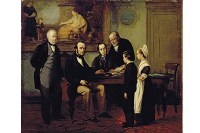
The ultimate driving force of William Penn’s adult life is inaccessible, as the Quaker phrase ‘Inner Light’ suggests. While a young man administering the family estates in Ireland, Penn experienced ‘convincement’, another Quaker term for what other Dissenters called conversion. But while these experiences were inward and personal, they had public consequences. Since they were potentially available to anyone, they brought in their wake a tendency towards egalitarianism, manifested in plain speaking, pacifism, and a refusal to swear oaths or doff one’s hat. These outward manifestations of private experience inevitably caused ructions in the hierarchical social structure of 17th-century England.

Where three empires met

Lead book review

Norman Stone has already written, with a brilliant blend of humour, understanding and scepticism, histories of the Eastern Front, Turkey, Europe between 1878 and 1919, both world wars and the Cold War. A history of Hungary is his latest book. He has one qualification increasingly rare in England. As polyglot as an educated archduke, he knows Hungarian in addition to German, French, Russian and Turkish. Moreover, he has been visiting Hungary for more than 50 years, since he first went as a student in the dark days of 1962. He has returned many times — his Hungarian improved in a communist prison and he reported the fall of the communist regime in Budapest in October 1989 — and now lives there part of the time.

Books Podcast: Jonathan Ames – from memoirs to graphic novels

In this week’s book’s podcast my guest is Jonathan Ames, a writer who has produced everything from memoir (Adventures of a Mildly Perverted Young Writer) to TV writing (Bored To Death), graphic novels (The Alcoholic), pitch-black noir (You Were Never Really Here), Wodehouse hommage (Wake Up, Sir!) and now, in The Extra Man, a comic novel riffing on Henry James. We talk about why he calls so many of his characters “Jonathan Ames”, how he goes about his work, and whether — as a man who has become synonymous with “overshare” — he can ever quite retreat into the background.

The Green Room, Spectator USA’s Life & Arts podcast: Anarchy and Empire with Robert Kaplan

This week, I’m casting the pod with author and foreign policy analyst Robert Kaplan. At the end of the Cold War, the United States was both the most powerful country in history and without a challenger. Since them, however, America's reach in foreign policy has consistently exceeded the grasp of its bureaucrats and elected politicians. Qualified and influential people still tell us that Russia cannot remain a global player and Iran cannot become one, because their economies are based on hydrocarbons and are relatively small. So how is it that Russia and Iran achieve their goals, while the United States flounders? As Robert Kaplan explains, the failures of American foreign policy are caused by the convergence of factors domestic and foreign.