Colin Greenwood

Colin Greenwood: How to Disappear – A Portrait of Radiohead

From our UK edition

33 min listen

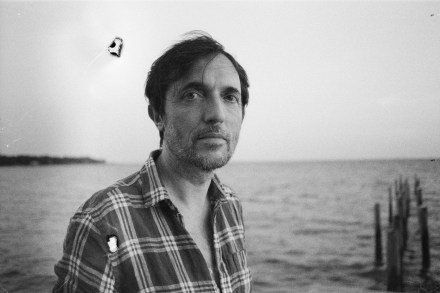
Sam's guest on today’s Book Club podcast is the musician, writer and photographer Colin Greenwood, who joins me to discuss his new book of photographs and memoir How To Disappear: A Portrait of Radiohead. Colin tells me about the band’s Mr Benn journey, photographing what you want to see… and what it takes to make Radiohead open a gig with 'Creep'. Produced by Patrick Gibbons and Oscar Edmondson.
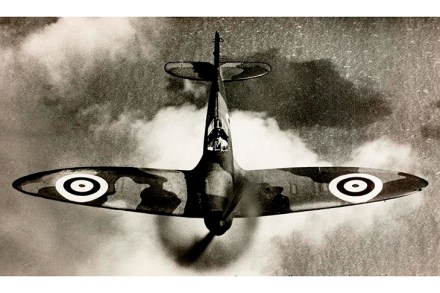
The power behind The Few: Rolls-Royce’s Merlin engine

From our UK edition

Eighty years ago this summer Britain was facing its greatest moment of peril as Göring’s Luftwaffe attacked airfields, cities and convoys in a prelude to invasion. Nazi plans for us included all able-bodied men being sent to slave labour camps on the Continent. Thanks to the bravery of the RAF and the brilliance of their flying machines, the Battle of Britain saw Hitler beaten back in the first aerial campaign in history. Graham Hoyland has written a stirring account of how these hand-wrought machines, geared for speed and encased in elegant airframes such as the Supermarine Spitfire’s ‘symphony of ellipses’, delivered us in 1940.

Would you kill for a cup of coffee?

From our UK edition

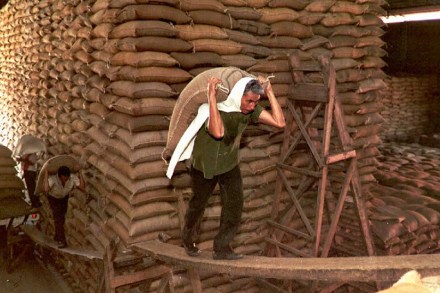
In the winter of 1939, at the San Francisco Golden Gate trade fair, an advertorial film called Behind the Cup told the story of El Salvadorean coffee, from seed to cup. America was the world’s biggest consumer, drinking nearly 60 billion cups a year. It opened with a picturesque image of local Indians in traditional costume dancing under the Santa Ana volcano. A trade commentator intoned: Far to the south, high in the mountains of Central America... studded with volcanic peaks, rich in tropical grandeur... Here at the beginning of the coffee season we find gaiety and laughter. Bankrolled by the coffee planters, it portrayed a Potemkin village of plantation life.

The Great Barrier Grief — and countless other marine disasters

From our UK edition

In the last, wrenching episode of BBC’s Blue Planet 2, there’s a distressing moment when a young Australian diver, expert in his patch of the Great Barrier Reef, admits ‘I cried in my mask’ as he swam over an ossuary of recently bleached-out coral bones. Professor Callum Roberts’s memoir of a life devoted to the study of our oceans, and in particular their coral reefs, is a ravishing, alarming account of these underwater palaces of wonder, and the existential threat they face from humanity and our warming climate. Reefs take up just 0.1 per cent of our planet’s surface, yet provide home and breeding grounds for more than a quarter of all sea life. They are also the canaries in the carbon dioxide coal mine.

First-class air mail

From our UK edition

Growing up as a rootless army brat in bases home and abroad, I would listen in appalled delight to my parents’ record of Tom Lehrer singing ‘Poisoning pigeons in the park’: ‘When they see us coming the birdies all try and hide/ but they still go for peanuts, when coated in cyanide.’ Now, I have lived in the same house for 20 years, determined to stay put, and every year a brace of feral pigeons join me by nesting under the eaves of my porch. In Homing, Jon Day takes on the humble racing pigeon to ask just what home is, how we establish it, miss it and depart and return to it. He elevates this heroic bird to its rightful place in natural history and our history too, and celebrates its shared instinct with us for home.

How long, cold winters created the ‘mercantile capitalism’ of today

From our UK edition

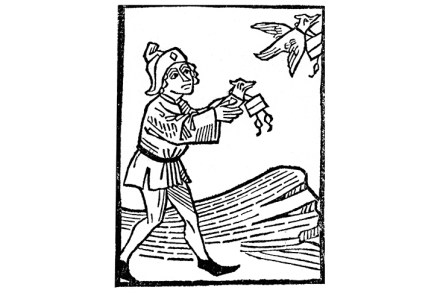
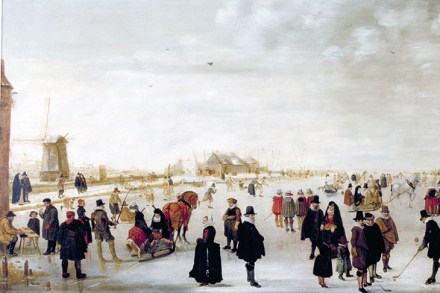
At a dinner recently I was told the story of a Canadian billionaire (now defined in banking circles as someone withmore than $500 million in liquid assets) who is building an escape destination from the oncoming climate apocalypse: an ersatz Versailles, with two runways, deep in the thawing Canadian tundra. Four hundred years earlier, the world faced a different meteorological crisis. Temperatures plummeted by around 2° C, and summers zig-zagged between floods and droughts, possibly due to variations in solar and geothermal activity. Harvests were cut short, rivers and seas froze over as the climate changed with a biblical ferocity. Birds, frozen on the wing, were said to have plummeted from the sky.

‘God has abandoned us’

From our UK edition

At a dinner recently I was told the story of a Canadian billionaire (now defined in banking circles as someone withmore than $500 million in liquid assets) who is building an escape destination from the oncoming climate apocalypse: an ersatz Versailles, with two runways, deep in the thawing Canadian tundra. Four hundred years earlier, the world faced a different meteorological crisis. Temperatures plummeted by around 2° C, and summers zig-zagged between floods and droughts, possibly due to variations in solar and geothermal activity. Harvests were cut short, rivers and seas froze over as the climate changed with a biblical ferocity. Birds, frozen on the wing, were said to have plummeted from the sky.

A pawn in a deadly game

From our UK edition

On 7 November 1938, the 17-year-old Herschel Grynszpan walked into the German embassy in Paris. Claiming to have secret papers, he was shown into the office of an embassy secretary, Ernst vom Rath. Drawing a tiny revolver — the price tag still attached from that morning’s purchase —  he fired five shots, shouting: ‘You’re a filthy Kraut, and in the name of 12,000 Jews, here is your document.’ Two of the bullets struck Vom Rath, who died two days later. The previous month, close to 18,000 Polish German Jews had been dumped by train on the Polish border. Among those  rounded up in Hanover for the Aktion were Grynszpan’s family: his parents Sendel and Rivka, his brother Mordecai and his sister Berta.

Frozen in time

From our UK edition

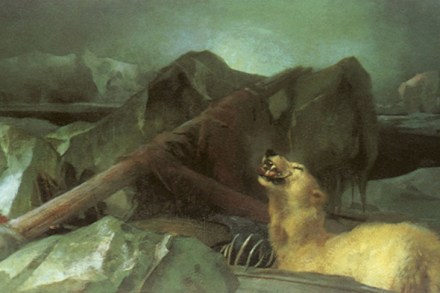
In May 1845, HMS Erebus and her sister ship HMS Terror set sail for the Arctic, never to be seen again. Erebus, named after a Greek god of darkness, was herself cast into oblivion for the next 170 years, until she was found in 2014, by sonar, submerged off the Arctic coast of Canada. Immediately after her disappearance, ten years and £28 million (in today’s money) were spent looking for her. It was during a golden period for British exploring, between the end of the Napoleonic Wars of 1815 and the Crimean War of 1854, with a Royal Navy that had shrunk from 145,000 men to 19,000. Instead of fighting battles, it was now battling the elements, in the cause of scientific discovery and imperial expansion.