Daniel Grant

The dodgy world of posthumous art works

From our UK edition

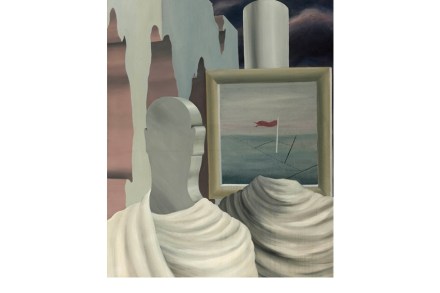
What does an artist do with work that isn’t quite up to his or her standards? Throw it out? Frank Stella and Robert Rauschenberg both tried that, putting artworks they didn’t like out with the trash, only to find them on sale in galleries a few years later. Some artists preemptively destroy works they don’t like. 'There's enough bad art in the world,' Indiana painter Charles Mundy said. 'I want to spare the public bad art, especially if it's mine.' The solution for most artists is just to keep their misfires in storage, which only postpones a decision.
Bare and authentic or full and fake? The dilemma of preserving writers’ houses

From our UK edition

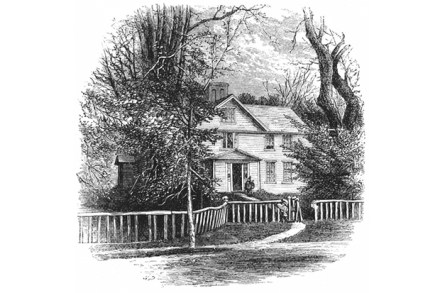
Every year, tens of thousands of visitors flock to the Mark Twain House in Hartford, Connecticut, in order to see where he lived and wrote. Many famous writers’ homes are preserved for visitors, some of whom are devoted readers (and some who know they are supposed to read his or her books). Twain, we can imagine, sat in that chair while writing Huckleberry Finn. However, only a small portion of the objects one sees were actually there when the writer lived in the house. Most of the original pieces were either sold off or dispersed to family members. The cost of building this 1874 house and furnishing it, in fact, was too much for Twain, and he and his family needed to sell most of it and move abroad in 1891.

Are rugs becoming the new must-have art objects?

From our UK edition

Tapestries once had a place of honour in fine art, but that was during the Middle Ages and the Renaissance. Oil paintings, for a time, were viewed as the poor man’s tapestry. Now, that equation may be turning round. ‘Tapestries serve a lot of purposes,’ said Donald Farnsworth, president of Magnolia Editions, which has produced tapestries for artists such as Chuck Close, April Gornik, Alex Katz, Ed Moses, Gerhard Richter, Kiki Smith, William Wiley and others. ‘They absorb sound and add warmth to a room.’ But can they also be taken seriously as works of art? They are certainly priced like them.

Why on earth paint portraits in the age of photography?

From our UK edition

‘Everybody faces rejection,’ the portrait artist Aaron Shikler said. He should know, having had three official White House portraits of former President Ronald Reagan rejected — one was too large, one was too casual and one ‘they just didn’t like it’. The commission finally was given to a different artist. Don’t feel too sorry for him. His posthumous portrait of President John F. Kennedy hangs in the White House along with those of First Ladies Jacqueline Kennedy and Nancy Reagan, and he has also painted likenesses of US senators, Supreme Court Justices, cabinet officers, socialites and people who just had a lot of money. Still, fame and past successes don’t make one immune from criticism.

Bring in the lawyers

From our UK edition

When collectors want to purchase an expensive work of art, they contact their lawyers to write up a contract with the dealer, spelling out pages of contingencies and indemnity clauses. ‘We have a steady stream of business writing agreements for collectors and galleries,’ said Jo Backer Laird, a Manhattan arts lawyer and a former general counsel at Christie’s. ‘We didn’t see much of this just ten years ago.

The only way is up | 22 October 2011

From our UK edition

Homes may continue to lose value, the euro becomes shakier by the day, the unemployed stay unemployed and even the Chinese economy shows signs of overheating, but the international art market seems to know only one direction: up. For the first half of 2011, Christie’s sold $3.2 billion in fine and decorative art (an improvement of 25 per cent on 2010), while its rival Sotheby’s auctioned items worth $3.4 billion (up 38 per cent on the previous year). The bubble appears to be far from bursting, and the autumn sales promise to provide plenty of entertainment for those who like to see big prices on both sides of the Atlantic.

American view – Sword of controversy

From our UK edition

‘I’ve refused to become a prisoner of “Piss Christ”,’ said the photographer Andres Serrano, referring to his 1987 photograph of a crucifix submerged in a glass filled with urine. ‘I’ve refused to become a prisoner of “Piss Christ”,’ said the photographer Andres Serrano, referring to his 1987 photograph of a crucifix submerged in a glass filled with urine. But the fact remains that he has become a very wealthy prisoner of that work.