Connie Bensley

Tina

From our UK edition

Dearest, I’d love to have your Tina to stay — what are aunts for? — but I’m not sure if it can be managed just now. I know you’d like her to have a change of scene after that business with her maths tutor (has he gone back to his family now, by the way?) And I really admire her for being a vegan and only eating that food beginning with Q which I could never find round here. She was so animated at that party of mine she turned up at, and I’m sorry she lost her nose studs. The broken glass was no problem, just a stitch or two. It’s such fun having a young person around: but, alas, I’m expecting the decorators any day now. Such a shame. But do let’s keep in touch.

Losing a Crown in the National Portrait Gallery

From our UK edition

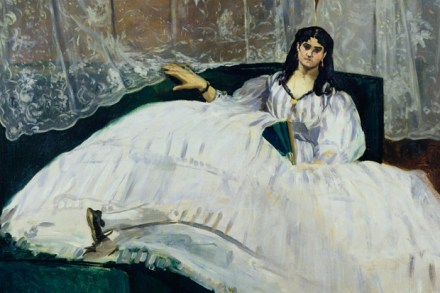
The cafe was full of connoisseurs of the scones. As he bit into his flapjack a sinister uncoupling took place and he felt the crown of a tooth jerk free — to be rescued behind a discreet paper napkin. Now the geography of his mouth was unfamiliar, harsh and sharp. No wonder those Tudors in their portraits kept their mouths shut. No white-clad guru for them, injecting, probing, drilling and finally murmuring: One more rinse for me please. No, they had to make do with white paint, and opium, and hiding unfortunate swellings under a generous ruff.

Sharing the Dog

From our UK edition

The Dog share didn’t work out well in the end. For a start, Dog — no mean manipulator — cadged extra rations in Home A, so that Home B was obliged to act the disciplinarian. Then there was the quasi-polite dispute about the missed flea drops and the bitten house-guest. Goodwill flagged, and it was decided to scrap the whole idea, and arrange for Dog to live in Home A or Home B. But which? The arrangement — something like an episode of adultery — had begun with elements of euphoria but later suffered painful side-effects.

December

From our UK edition

The ferns around the badgers’ sett are dying down, and fine webs fret the brambles. By late afternoon the moon will glint on foxes’ eyes and owls rehearse sepulchral cries, and then the badgers start to rise like shadows from the ground.

Heron

From our UK edition

Walking to the bus stop after a hospital visit, in an unfamiliar, dusty suburb, I pass a small park on the left with a stream which dives under the road, and here only a few feet away, by the water, is a heron — surely larger than life and with each feather accurately modelled. I think how grateful we should be that some municipal person has commissioned this work of art and placed it where it can give pleasure to passers-by. But startlingly a breeze flutters the bird’s feathers, and it slowly turns its head, so that we find ourselves gazing at each other. It is so exciting that I want to stop someone and share this marvel but no one is handy, and in the end I calm down and walk to the bus stop like someone just having an ordinary day.

New Neighbour

From our UK edition

The trellis between her garden and her new neighbour’s garden is heavy with passion flower, honeysuckle and roses, so that only rare glimpses can be seen through it — a blue flower, a splash of grass, a dark cuff. She calls out politely to welcome him to the neighbourhood. Weeks later, she calls out to him again and, slowly, emboldened by invisibility, she hears herself offering confidences — her fears, guilts and indecisions. It must be like a confessional, only sunnier and without penances. She thinks she hears him breathing attentively, but then there is the muffled sound of his back door closing.

The Time of Shoring Up

From our UK edition

After the years at the gym, the diets and the supplements, he comes — nevertheless — to the time of shoring up. Now he is under the aegis of the Holy Trinity of Dentistry, Cardiology and Urology whose gods must be placated and obeyed. He turns towards his bathroom reflection, to assess the state of affairs: chest braced, mouth closed (pending the next dental refurbishment). Mercifully, the glass steams up, and his blurred gaze looks younger every minute.

On the way to Plumpton

From our UK edition

We pull up at Wivelsfield, under a blue sky, and glance out at the one figure on the platform: a mature, buxom woman in pink. Her arms are open wide, and a burly, moustachioed man climbs out of our carriage and gallops towards her embrace, burying his face in her yellow hair. When will they let go of each other? At last, she grasps his shabby bag, swings it over her shoulder, and off they march, trailing laughter; also disturbance — for some of us are looking a shade wistful as the train pulls out, soberly, to Plumpton.

Hermit

From our UK edition

Let’s celebrate the solitary meal: the serendipitous trawl through the fridge; the hopeful foray into the deep freeze, the obliging egg and — on a good day — the last hurrah of a cheesecake or a cold Jersey potato, pleading for release from its stiffening cocoon of mayonnaise. No waiting for a table here; all you need is your fork, your plate, your glass, and your scallop-shell of quiet.

Love-lies-bleeding

From our UK edition

Of course the bride’s dog came to the wedding and was allotted a chair at the top table at which he sat with a gloomy expression and a chewed satin bow. The groom fed him morsels of pheasant — laughing rather theatrically when his finger was nipped and the blood dyed his table napkin a shade to match the azaleas. A honeymoon is no time for blood poisoning. Surely it was sunstroke or an allergy to the spiky local fish? Excitedly aghast, the wedding guests re-assembled for the funeral. The dog was left at home but he didn’t seem to mind.

Message

From our UK edition

A tiny fly is moving over the page of my dull book this sultry evening, and it is my conceit that it has a message for me. It pauses on Rigoletto and, skirting pronouns and prepositions, lingers on the hyphen of orang-utan before a significant pirouette over rhubarb tart. When I wake up it is still there, making no sense at all. Cruelly, I close the book on it.

i.m. AMSTRAD

From our UK edition

Dear Lord Sugar, it’s been a sad week. A kind of bereavement, really. Today, a council employee in a yellow jacket climbed down from his municipal truck and flung into it my old friend of — what? — twenty years? We never needed passwords between us. It never told me bad news about my server or jumped off the edge of the screen or tried to sell me corduroy trousers or ham or celebrity gossip. It was like a butler: discreet, self-effacing. But at last it began to suffer touches of dementia. Sometimes, I told the council man, things have to die quietly and be eviscerated for the common good. He nodded deferentially, but raced off in an eye-watering flourish of exhaust.

For the Time Being

From our UK edition

Time slips away while we conjecture how to make best use of it. Waking late, the hours already sliding by, the day unplanned and shrinking. We’ll fill the time, anaesthetise the loss, The final hour will come and it will pass.

Don’t Look Back

From our UK edition

No, let’s not look at the old photographs any more: our hair was so full and shiny then, and anyway we can’t tell all those babies apart now. And who was the woman in the lace blouse sitting on our sofa, with that basilisk stare? I don’t remember ever seeing her before. Let’s put the albums back on the shelf and settle down with that serial killer thing on TV. That always cheers us up.

Wendy Cope on hating school, meeting Billy Graham and enduring Freudian analysis

From our UK edition

A surprise! I took this book from its envelope expecting a fresh collection of Wendy Cope’s poems, and opened it to find prose — a variety of memoirs, reflections, articles and letters. There are literary pieces on poets such as Anne Sexton and George Herbert, and her reviews from The Spectator when she was television critic here. She has been very keen on Molesworth since reading Down with Skool at 11, and thinks that it is salutary for a poet to be aware of the Fotherington-Thomas effect: ‘When I notice myself sounding like him, I try again’ — an excellent piece of advice for any poet to follow. The first part of the book is largely autobiographical.

Mr Dixon

From our UK edition

I can’t think of anyone else still alive who knew him, and could reminisce with me about his special kindness, his panache — (ice-white shirts, cufflinks which, looking back, were just a trace too gleaming) his well-known love of the stage and his dramatic tours round the domain he cherished — the Department of Dental Products. I think of him with affection, even love. He gave years of his life to sales graphs and managerial meetings. He settled me soothingly at my first typewriter and when we sat next to each other at the firm’s Christmas party, he said: Don’t call me Sir, we’re off duty now, and I think you need another mince pie.

Sometimes it’s Better to Give than to Receive

From our UK edition

I can see your teeth clench with rage at the gift I have pressed on you, which manoeuvres you into the role of grateful recipient of my unctuously offered, expensively wrapped and poisonously unwelcome offering. It’s hard to say if you are smiling or snarling as you turn to extol the wrapping paper.

The breasts that launched Les Fleurs du Mal

From our UK edition

This novel is based on the life of Charles Baudelaire and the relationship he enjoyed — or endured — with his Haiti-born mistress, his Black Venus, Jeanne Duval. We first see him in 1842, a young poet of 20, making his dandyish way through the slums of Paris to meet his friends at a cabaret theatre for an evening of wine and hashish. Here he will encounter for the first time his future muse. She is voluptuous, in a long red dress, singing risqué songs. In no time he is unlacing her boots and preparing to squander the legacy which he is shortly expecting. However, there are, as the author shows us, three people in this relationship, and the third one is Baudelaire’s mother.

A Short Attachment

From our UK edition

I was in love for a whole week after Episode One: Your voice so tender, so knowledgeable, your slender hands and feet. In Episode Two, doubts crept in. Were you hogging the camera or was it just that the camera loved your profile, your man-of-the-people T shirts, your breeze-ruffled hair? Episode Three opens with you on a hill top, gesturing. Sighing with relief, I know it’s over, because you now remind me of that Irishman I met in Soho, and we know how that turned out.

Forgiveness

From our UK edition

The bunting was hardly down, and the bones of the feast hardly buried in sand, when the prodigal son started to cause flurries of unease. He found the old place provincial; the servants over-familiar;  the close kin — well, he merely raised an eyebrow at the close kin. And yet, established in the best room, he showed no sign of leaving. His father gloomed round the fields; his brother kicked the cattle troughs. The voice of the fatted calf spoke to the father from the ground and his message was of forgiveness.  You can’t always get it right, it said,  and I bear you no hard feelings.