Culture

Culture

The good, the bad and the ugly in books, exhibitions, cinema, TV, dance, music, podcasts and theatre.

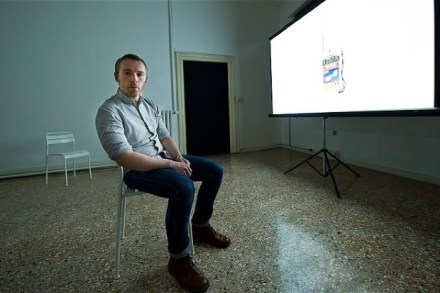
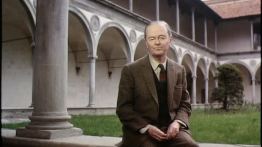
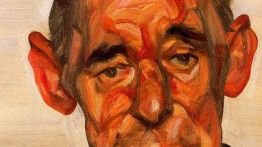
‘At last I wasn’t worried about making pictures’: an interview with Mark Shields

Arts feature

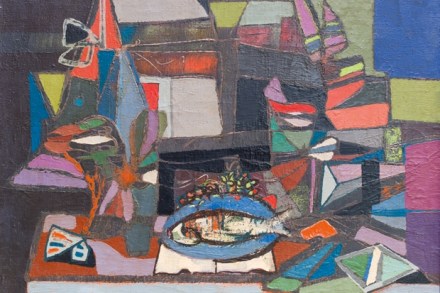
Mark Shields is a painter of considerable versatility and skill who is unable to rest on his laurels. Born in 1963 in Northern Ireland, where he still lives, he developed a powerful realist style that owes much to the Old Masters, and scored early success with meticulous portraits and still-life paintings. If he had been happy to continue in that vein, he would no doubt have made a very good, if safe, living, but ambition and self-questioning have led him on to develop new ways of painting and drawing, from mysterious, atmospheric landscapes and complex narrative pictures to large-scale pastel drawings on canvas.

Sir Paul McCartney’s media manipulation

Having been whole-heartedly hacked off during the phone hacking scandal, one assumes that Sir Paul McCartney has always been an advocate of high standards in journalism. Not so. While collecting a gong for songwriting at the NME Awards last night, the former Beatle admitted trying to slip fake stories past the music magazine: ‘One of the things we used to like to try and do was to plant a false story in the NME,’ he said. ‘We actually got in with 'George was Billy Fury's cousin', which he wasn't. Living on the edge, man, you know what I'm saying?’ Someone send for Leveson.

Let’s call a ban on Katy Perry. Why I’m siding with the mad mullahs.

Call me a fruitcake, but I am all for Islamic censorship when it comes to Katy Perry. In the last few days, there's been a terrible fuss about Perry's latest song, 'Dark Horse', because the video for it features an Arabic man wearing an 'Allah' pendant, who is burned alive. A bunch of angry Muslims, led by someone called Shazad Iqbal from Bradford, have campaigned against the video on the grounds that it was blasphemous. They launched a petition calling for the video to be removed from  YouTube, and got more than 60,000 signatures. The video has now been edited to remove the offensive pendant, and Shazad has declared a victory on behalf of the prophet.

Review: The Knight of the Burning Pestle, Sam Wanamaker Playhouse

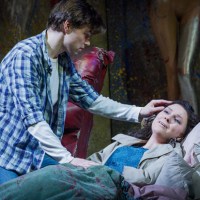
If Monty Python were working in 1607, they might have come up with something like Francis Beaumont’s raucous The Knight of the Burning Pestle. A parody of popular chivalric romances of the day, the play follows the adventures of Rafe, an oafish grocer’s apprentice who decides to dub himself “The Knight of the Burning Pestle”, or in modern English, “The Knight of the Diseased Penis”. Yes, this play is a three-hour syphilis joke. So it’s a curious choice for the first season of the Sam Wanamaker Playhouse at Shakespeare’s Globe, an indoor alternative to the longer-standing open air Globe.

Ethnic diversity higher in the City than the arts

That’s right. The evil scumbags who work in the City appear to be doing a better job at being modern and liberal than the state-subsidised art world. According to last year's Creative Skillset Employment Census, 5.4 per cent of those working in the arts were from the black or ethnic minorities. In the City, by contrast, figures from 2012 show that 30.5 per cent of employees were from the black or ethnic minorities. So the decades of smug hand-wringing, the diversity drives and ethnicity awareness classes, the form-filling and box-ticking, has produced an arts workforce that Enoch Powell would have been proud of: 94.6 per cent white.

Is Pussy Riot’s music actually any good?

Victims of state persecution, ambassadors for day-glo knitwear and wank fodder for beardy liberals the world over, the members of Pussy Riot have been filling both prison cells and column inches since 2012. In the process, they’ve also become one of the most famous bands on the planet. But let me ask you this – have you ever actually heard any of their music? And crucially, is it any good? Was it purely their politics that led the Cossacks to attack them with horsewhips last week, or is that just the way they do pop criticism in the Caucasus? We took to the internet to get some balanced and entirely un-facetious critical perspective.

The greatest recordings by the oldest pianists

Age has never been an impediment to great musicianship. YouTube is full of extraordinary late musical testaments from pianists who, refusing to retire, hit their stride in their eighth, ninth and, in Alice Herz-Sommer's unique case, tenth decades. Here is a selection of the finest: 1. Mieczysław Horszowski gave his first recital at the age of eight in 1900, his last at the age of 98 in 1991. He was present at the premiere of The Rite of Spring in 1913. He heard Busoni perform, played for D'Albert, Fauré and Saint-Saëns and was pals with Granados, Villa-Lobos and Szymanowski. His Chopin at the age of 98 in this Wigmore Hall recital is breathtaking: 2. Shura Cherkassky continued to give recitals until the year of his death at the age of 86.

RIP Alice Herz-Sommer

The 110-year-old pianist and oldest known Holocaust survivor, Alice Herz-Sommer, who was imprisoned in Theresienstadt concentration camp, has died. Her extraordinary life, which included childhood encounters with Gustav Mahler and Franz Kafka, latterly became the subject of several documentaries, the most recent of which, The Lady in Number Six, was this year nominated for an Oscar. A clip from it can be seen above.

Saturday night telly worth staying in for

If you don’t go out on a Saturday night, you stay in and imagine what it would be like to be out. And if you do that, there’s a chance you’ll find yourself in front of Take Me Out, the dating programme that airs on the ITV primetime slot once enjoyed by Blind Date. Last Saturday, incredibly, it completed its sixth series. Such is the Tinder-like trend for having dates brought to you, rather than actually having to go out to get them yourself. And what an eye-opener it is. Thirty women, apparently tailored by the same outfitter, totter down a staircase, and take up position behind thirty electric lecterns. One single man is then lowered onto the stage in the ‘Love Lift’, presumably because his feet are his best feature, and merit being seen first.

France’s cultural excess is immoral (but I still love it)

For a committed, if unsuccessful, capitalist, I enjoy French culture an embarrassing amount - every last state-funded drop of it. Give me five-act operas with cast lists the size of a small Chinese city, give me obscenely expensive works of public art, give me inhumane concrete estates, give me unintelligible modernist music and I’ll be drooling with pleasure all night. In fact, I'm seeing a five-act French opera with a cast list the size of a small Chinese city tonight in Bordeaux. That’s the kind of disgusting thing I like to do. In my defence, I am aware that what I am doing is immoral and what is being created should be consigned to hell.

Tutus, loo rolls and a roomful of balloons

More from Arts

A tip: go see Martin Creed’s retrospective at the Hayward in the company of a child. I didn’t, but I tagged on to a merry gaggle of five-year-olds being guided round by their mums. I watched as they pointed at the enormous rotating beam with a neon sign that reads ‘MOTHER’. ‘Jump up and touch it, Mummy,’ said one girl. As we carried on, we came across a machine playing rude raspberry sounds. Peals of laughter rang out. Nearby, a man was playing the piano slowly, semitone by semitone. The little girl in the tutu tapped him on the shoulder and asked if he was part of the show. He was, he said. Upstairs, the mothers heeded the warning suggesting those under 18 avoid the outdoor video installation.

When a Chinese and a Japanese visit Tokyo’s Yasukuni war shrine

Radio

What does freedom mean to you? That’s the question the BBC World Service has been asking of us through its season of programmes Freedom 2014. The Canadian astronaut Chris Hadfield (whose daily blog from space went viral) gave us a vivid and unusual image of what freedom, or rather the lack of freedom, looks like to him. While circling the earth in the international space station, he noticed that each time he went past the lights of Berlin were two different colours. After a while he realised this was ‘a poignant reminder’ of the city’s history; of its former lack of freedom; of how it had been divided by a wall for decades. The wall has been taken down, but the lights tell a different story.

You may be the Only One Left Awake at Only Lovers Left Alive

Cinema

Jim Jarmusch is the noted American ‘cult director’, and if you were to judge him solely on the basis of Only Lovers Left Alive you’d be minded to think the cult can keep him.  It’s a take on the vampire genre, which is fair enough, as who hasn’t had a go, but this is so lethargically meditative and so packed with pompous in-crowd references and such a monotonous yawn that if, by some miracle, you make it to the end, I should warn you there is every chance you will find yourself the Only One Left Awake. Poor you. Tom Hiddleston and Tilda Swinton star as Adam and Eve, which may mean they were the first people on the planet, or it may not mean that at all.

Four artists you ought to know — and a famous one you can know better

Exhibitions

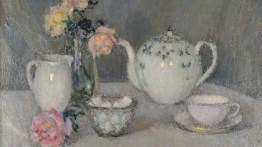
In this round-up of exhibitions in London’s commercial galleries, I feature three shows of little-known but mature contemporary British artists. There is a great deal of interesting and worthwhile art being made out there, but not enough of it comes to public attention. Most museums won’t show it, and there are only a handful of commercial gallerists who are prepared to back quality over proven popularity. In such a world, the quieter talents tend to get overlooked, so it is a particular pleasure to be able to draw your attention to the subtle small paintings of Liam Hanley (born 1933). Hanley paints in oil and draws in pencil on linen laid down on to paper.

Rigoletto in a gentleman’s club

Opera

So it’s farewell to the fedoras and adieu to the jukebox. After 32 years of service, Jonathan Miller’s Little Italy staging of Rigoletto has been given the heave-ho by English National Opera and replaced by a younger model. First seen and disliked in Chicago in 2000, then seen and disliked again in Toronto, Christopher Alden’s nearly-new production affords the London audience an opportunity to congratulate itself for being less conservative than the North Americans, thereby mitigating its customary fright at the provocations of Continental Regietheater.

What now for ENO?

Arts feature

It has been a bracing start to the year at English National Opera. David Alden’s production of Peter Grimes, praised to the skies for the musical performance under Edward Gardner, returned to the Coliseum. Next up is Rigoletto (reviewed on page 50), directed by Alden’s twin, Christopher. Then comes Rodelinda, in another new production (or co-production, as is often the way these days) by Richard Jones. Audiences will be particularly keen to see the Rigoletto, and not shy of making comparisons with the celebrated production by Jonathan Miller, which has finally been stood down after three decades. Hanging over everything, though, is the realisation that Gardner’s time at the helm is drawing to a close.

We watched the Brits so you didn’t have to…

It goes without saying that the Brits are not the draw they once were. But I was sick of being cynical about them. I sunk into my chair with the reservoir of alcohol I had bought and waited to witness something other than James Corden and mediocre musical performances. And did I? The fact that Ellie Goulding was named best British female solo artist should tell you everything. Of course I bloody didn’t. Unless you count David Bowie’s unionist shout out, delivered by a Kate Moss-shaped proxy, as inflammatory (it wasn’t), this junket was as boring and self-congratulatory as last year’s. And the year before. And the year before that. Compère James Corden did some things he thought people would find amusing. Which they didn’t.

Anything you can smash, I can smash better

Art is under attack. Another week, another expensive poke in the eye. Last Sunday, Miami artist Maximo Caminero destroyed a $1 million vase by Ai Weiwei in protest at the museum ignoring the work of local artists. Before this, there was Wlodzimierz Umaniec’s defacement of a Tate Modern Mark Rothko in the cause of 'Yellowism', which saw the  Pole jailed for two years. Then came the story of the kids caught clambering over a $10 million Donald Judd. It’s hard not to smile. The irony of it all is too delicious. An art form that has for 100 years demanded that practitioners shaft society’s norms is, in turn, having its norms shafted. The art establishment is being out-transgressed. We can't have that. Caminero’s case is instructive.

Give Steve McQueen a Nobel prize not an Oscar

Film critic Armond White has been booted out of the New York Film Critics Circle. Officially it was for heckling Twelve Years A Slave director Steve McQueen at a press conference. But they can’t have liked him telling the truth about the movie. Namely, that it’s crap. We should listen to  hecklers. Especially when they’re as serious as White. That they have to heckle their message is usually a sign that something is up. And something is up.  The consensus surrounding Twelve Years a Slave is getting unhealthy. For many the very act of telling Solomon Northup's story is enough to immortalise the film. No matter that the acting is one-note, the editing clumsy, the score criminal. Twelve Years is the first film to tell the real story of slavery.

this is a message

Poems

As I make my way to the greenhouses a seagull kills me in its pure white throat. Quiet in the tomatoes. Quiet among the beans. Soft dark patches where the rain leaks in. Can I come home? Has it been too long? Tall weeds growing through the coils of hose.

The Old Man Comes Out With an Opinion

More from Books

This long orchestral piece records a day the composer spent one summer meditating in Dibnah’s yard on the sounds of dereliction, or possibly the dereliction of sound: the settlement of rust, the flake and drift toward the earth of forged and hammered things, the creak of shiny flanges in the wind, and the occasional crash of martial metal as boys dribbled a biscuit box along between the ornamental tetanus hedges of Fred’s Versailles, parterres of ferrous oxide. Sometimes I wish that Fred’s new crush-compactor had crumpled the composer (violin solo) and his jalopy (piano, timpani) in one bright ingot, multicoloured foil (cymbals), and hoyed the lot in the canal (a genuine splash!, an hommage to John Cage).

How much does a degree improve your lifetime earnings?

What do you say to an arts graduate? Hamburger and fries, please. It’s an old joke but one that still rings true as students consider the value of a university education. A new survey from the graduate recruitment site Totaljobs.com today suggests that 40 per cent of graduates are still looking for work six months after graduating, whilst a quarter are still unemployed a year later. The news isn’t much for those who manage to bag a job – the latest ONS’ employment figures suggest that nearly half of graduates who have found work are in jobs that don’t require degrees. But even if the student of today takes the jump into higher education, should they consider how much going to university will affect their earnings over a working lifetime?

My night in Zambia with Ian Dury 

Low life

Every time I hear that song ‘Sex & Drugs & Rock & Roll’ played on the radio, I think, Lord, how I miss Ian Dury. Then I wish they’d play something other than that plodder, especially when there are so many great songs of his to choose from. Some people knew all the words to Dark Side of the Moon; others to Sergeant Pepper; but we knew all the words to New Boots and Panties!!. And what words! He was our poet laureate. Put that record on and everybody would sing their heads off, especially to ‘Billericay Dickie’. ‘I bought a lot of brandy/ when I was courting Sandy/ took eight to make her randy/ and all I had was shandy/ another thing with Sandy/ what often came in handy/ was passing her a ‘Mandy’/ she didn’t half go bandy.

So long, Scandinavia. Bonjour, Benelux! 

Television

So long, Scandinavia. Bonjour, Benelux! BBC4, your subtitle-friendly channel, has filled the hole left by Nordic-noir The Bridge with Belgian crime drama Salamander (Saturday). At first, I thought this might involve a series of murder mysteries set in Flemish country houses, all solved by a dapper English detective called Horace Parrot. Not to be. Salamander is a 12-parter that kicks off with a break-in at the very heart of evil, a private bank in Brussels. The robbery eventually lands incorruptible police investigator Paul Gerardi (Filip Peeters) in the midst of a dangerous conspiracy, as he is chased by all manner of crooks keen to protect secrets they’d kept in their safe-deposit boxes. Salamander, like its amphibian namesake, is a creation at once sleek and slow-moving.

Bury every copy of Monuments Men in mines across Europe, so George Clooney can try again

Cinema

You know that old quip ‘I’m not just a pretty face’? I always thought it was meant to be said tongue-in-cheek, with an undertone of self-deprecation. Surely it’s not for those literal instances when a really beautiful person does something really, really smart. It’s for when those of us on the middle-to-lower rungs of the loveliness ladder have flashes of minor inspiration. And so, ‘I’m not just a pretty face.’ Like a joke. Hahahahaha. But what would it mean if George Clooney — ol’ salt-and-pepper-spit-curl George — said ‘I’m not just a pretty face’? The reason I ask is that he, or at least the character he’s playing, does just that in his latest film The Monuments Men.

Bach is made for dancing

More from Arts

It appears that J.S. Bach’s music is to theatre-dance what whipped cream is to chocolate. Masterworks such as Trisha Brown’s MO, George Balanchine’s Concerto Barocco and a plethora of less-known, though equally acclaimed compositions owe a great deal to the giant of baroque music. Wayne McGregor is the most recent addition to this illustrious roster of successful Bach-inspired dance-makers with Tetractys —The Art of Fugue, which world-premièred last Friday. Set, as the title implies, to Michael Berkeley’s orchestration of The Art of Fugue, played on the piano by Kate Shipway, the new work stands out for the intensity of the dialogue between music and dance.