Fiona Sampson

Four female writers at the court of Elizabeth I

From our UK edition

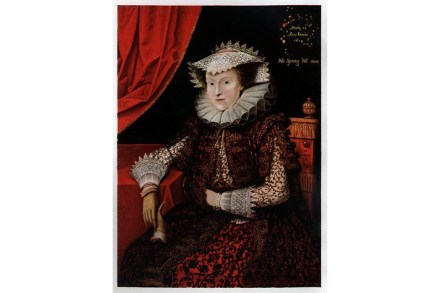
Almost a century ago, in A Room of One’s Own, Virginia Woolf claimed that if William Shakespeare had had an equally talented sister the obstacles to her sharing his vocation would have been insurmountable. Woolf’s argument that a woman needs ‘money and a room of her own’ in order to write proved persuasive. ‘Shakespeare’s sister’ has become a pop-cultural trope. So perhaps it’s unsurprising that the distinguished American scholar of the Renaissance Ramie Targoff should borrow the phrase for a study of four woman writers. Her title offers a shortcut to understanding how significant this immensely accomplished quartet is for readers and writers today. Not that Targoff’s elegantly readable, immaculately researched book needs any establishing gimmick.

When atonal music was original and exciting

From our UK edition

In the 1960s and 1970s, British music was transfixed by the Manchester School. Led by the composers Harrison Birtwistle, Alexander Goehr and Peter Maxwell Davies, this northern powerhouse of art music also included the brilliant pianist John Ogden and the conductor Elgar Howarth. All five had studied in the city in the early 1950s. Yet what united them wasn’t geographical happenstance but the embrace of what Robert Hughes famously called, writing on modern art, ‘the shock of the new’. It is a mark of the effectiveness of an artistic revolution when young radicals become the creative establishment Far from quaint regionalists, the Manchester School were radically anti-parochial. All enjoyed stellar international careers.

Walt Whitman’s poetry can change your life

From our UK edition

To describe a new book as ‘eagerly awaited’ is almost unpardonable. Yet Mark Doty’s What is the Grass: Walt Whitman in My Life is exactly that. It’s not just that Doty is an extraordinarily fine writer whose every word sings on the page. Poetry has a tendency to come into its own at exceptional times such as our own. William Wordsworth’s 250th anniversary has provoked media reflections on his consolatory power; a recently established Poetry Pharmacy is receiving attention; and social media brims with poems and poets attempting to make sense of what’s happening to us. Arguably there couldn’t be a more apt context for Doty’s book about his lifelong exploration of — and through — the great American poet Walt Whitman.

Back from the brink

From our UK edition

Hugo Williams’s wryly candid reports from the front lines of sex and family life are a perennial delight. Often timeless, they also frequently bring the styles and music of the 1950s and 1960s back to elegant life. These pleasures can be found once again in Williams’s new book, Lines Off; but this time they’re not unmixed. For, in the five years since his last collection, the poet’s worsening health has led him to undergo a kidney transplant. Now the ultimate subject has presented itself, and has resulted in some piercing testimony. Of course, it’s much more than testimony: Williams, who characterises writing a poem as being like sealing a roll-up with ‘that final twiddle and lick’, would never produce anything so po-faced.

Lost and found | 2 May 2019

From our UK edition

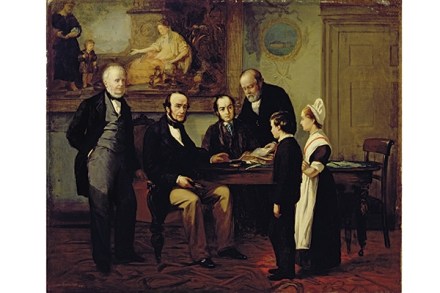
One of the oddest of Bloomsbury’s event venues must be the Foundling Museum. The handsome building on Coram’s Fields houses what remains of the London Foundling Hospital, which opened on the site in 1745. Its imposing rooms are lined with oil portraits of past patrons and among the artefacts on display is the original score of George Frideric Handel’s fundraising The Messiah, which he donated to the hospital. In the 18th century the Foundling Hospital was a fashionable cause, and the great and good flocked to associate with its charitable works. But some of the museum’s cases tell another story — the history not of great names but of the anonymous children of the desperate poor.

Feeling sorry for Frankenstein’s monster is hardly new

From our UK edition

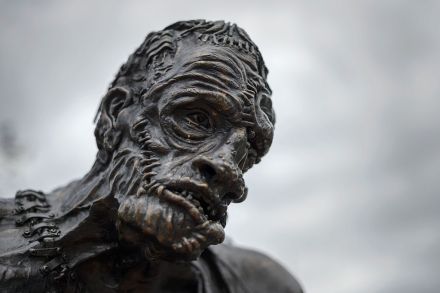
In the last couple of days my Twitter feed, always a cheerful place, has been more full of jokes than usual. The source of the mirth is Exeter University academic Nick Groom, and his ex cathedra pronouncements on Mary Shelley’s novel Frankenstein. According to Groom, it is possible – gasp – to read Frankenstein’s creature as a sympathetic character. Whatever next? Will the Times and the Sun hold the front page while Groom invites us to see Mr Darcy as sexy or, going out on a limb, Oliver Twist as an intensely sympathetic portrayal of an abused and abandoned child? Journalists have long rubbed their hands in glee at “don states the obvious” stories.

An uphill struggle

From our UK edition

‘It’s a grand thing to get leave to live’, perhaps the most famous line Nan Shepherd wrote, is carved in the slate paving of the Writers’ Museum’s Close in Edinburgh. But many who read it, either there or on the new Scottish £5 note, will be surprised to learn that it is not actually taken from The Living Mountain, the work that brought Shepherd posthumous fame beyond her native Scotland. Published in 1977, just four years before its author’s death, this book about the Cairngorms — part spiritual memoir, part nature writing — was written decades earlier, in the 1940s, but failed to find a publisher.

Småland

From our UK edition

Småland’s wooden cottages with sunflowers lack nothing. Brightly-painted, small in the distance like stories, they call the eye on and on. Their painted wood is clean as thought, as the clean-cut hearts let into their shutters.