Culture

Culture

The good, the bad and the ugly in books, exhibitions, cinema, TV, dance, music, podcasts and theatre.

Round-up of new opera

Opera

A mixed year so far for new opera. A few really dismal things have appeared from people who should know better. Did the world really need an operatic treatment of Dante’s Divine Comedy for orchestra and chorus? Louis Andriessen thought so; his La Commedia (2004–8) luckily only reared its drab head for one night at the Barbican. If you’re going to splurge as much money as opera often has to splurge, you have to ask yourself why. If you don’t, you create a situation in which operas come about merely because they can, often just to continue the tradition in the most inoffensive way possible. ‘Don’t mind me!’ says this kind of zombie opera.

Paranormal activity

More from Arts

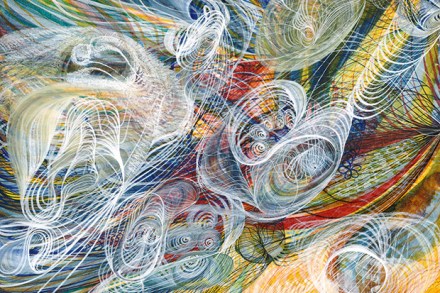
In 1896, a group of five young Swedish women artists began to meet regularly in order to access mystical zones beyond the confines of mundane everyday reality. Every Friday, they would gather in order to contact the incorporeal beings they called ‘spirit world leaders’ or ‘High Masters’; among these were five named Ananda, Clemens, Esther, Gregor and Amaliel. In 1904, during a séance, Amaliel instructed one of the artists, Hilma af Klint, to make paintings ‘on the astral plane’ representing the ‘immortal aspects of man’. Many of the results of this occult commission are on display in Painting the Unseen, a new exhibition at the Serpentine Gallery.

It’s not child’s play

Miscellaneous

Aldous Huxley observed that ‘Where music is concerned, infant prodigies are almost the rule. In the world of literature, on the other hand, they remain the rarest exceptions.’ This, he believed, was because good literature could not be written without experience of the outside world, while music was the art least connected with reality. ‘Like mathematics,’ he said, ‘it is an almost unadulterated product of the inner world.’ Musicians may dispute the last point, but the fact remains that musical and artistic ability can emerge with dizzying speed. When it does, the question is how best — and how far — to nurture it?

Welcome to Luvvie Island: a haven for virtue-signalling celebrities

It was six months ago this week when Nicola Sturgeon heroically admitted she’d be 'happy' to have a refugee move into her detached Glasgow home. That same rousing week last September, we were treated to the vision of Yvette Cooper 'bravely' holding up a piece of A4 paper with #refugeeswelcome scrawled on it. As he’s wont to do, Bob Geldof went one further, offering to put up three families in his pile in Kent and another in his London flat. Yet, to date, it seems that not a single refugee has been welcomed through the Chunnel and made it to Nicola’s nest, Casa Cooper or either of Geldoff’s gaffs. One wonders, why not?

Manon Lescaut is a shambolic opera – but the Met’s production is mainly excellent

Manon Lescaut Met Opera Live Puccini's Manon Lescaut is his first opera worth seeing and hearing, and marks an astonishing progress from what preceded it. But Puccini had yet to learn how to bully his librettists into producing the well-constructed dramas of his later operas, and for all its delights Manon Lescaut is a shambles. Richard Eyre has updated it to France in 1941, to stress the moral ambiguity of everything there and then, with occupying forces, indecisive leading characters, a general unease. That works reasonably well, though the real problem is that Puccini is uncertain about the motives of his central characters, especially Manon herself, who veers between helpless anxiety and ruthless scheming.

What’s love got to do with it?

More from Arts

The setting for Il tabarro, the first drama in Puccini’s 1918 triptych of one-act operas, is not the Paris of tourists and honeymooners, nor even the Paris of impoverished poets and painters. On a bend in the Seine a Dutch barge is moored at a soot-blackened wharf. A tableau of stevedores and seamstresses unfreezes. Sirens blast through the oily haze of muted violins. A tart touts for trade. There is no romance here: no first love, no new love, no true love. Just ordinary sadness and ordinary yearning: a marriage bruised beyond repair, a dead child kept alive in his father’s memory, and a futile and fatal affair. The first revival of Richard Jones’s Il trittico sees a new conductor at the helm, Nicola Luisotti, and several key cast changes.

Tragedy trumped by porn

Theatre

Big fuss about Cleansed at the Dorfman. Talk of nauseous punters rushing for the gangways may have perversely delighted the show’s creators but I’m firmly with the exiteers. This is barely a play and more a thin, vicious pantomime with an Isis-video aesthetic. The minuscule plot follows Grace (Michelle Terry) as she visits a prison hospital to receive news of a tortured relative. She’s immediately roped in as a victim and we’re treated to a sequence of gougings, knifings, electrocutions, rectal penetrations and tongue extractions which are bizarrely interspersed with scenes of lustful romance. Alex Eales’s design stands out.

Excess baggage

Opera

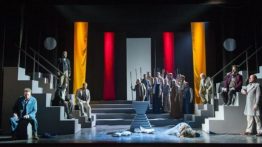
Near the end of Elena Langer’s new opera Figaro Gets a Divorce, as the Almaviva household — now emigrés in an unnamed 1930s police state — prepares to flee, the Countess announces that she intends to leave her trunk behind. It’s not the subtlest moment in David Pountney’s libretto. Any opera that sets itself up as a sequel to The Marriage of Figaro is already courting comparisons that are both completely unavoidable and massively unfair. When the production of Figaro is as good as this one, that baggage can become so heavy that it’s immovable.

Ticket to ride

Cinema

The latest film from the Coen brothers is a comedy set during the ‘golden age’ of Hollywood and in some respects it is utterly delicious. George Clooney wears what is effectively a leather miniskirt throughout, which may not be ‘age-appropriate’, as they say, but is wholly pleasing. (I was personally delighted, I must confess.) And Ralph Fiennes finally nails it comedically, which is a relief, as it’s been just so painful watching him try down the years. But the film is also troublesome, just as so many of the Coen films are troublesome. Why? Why this film, and what do they want us to take from it? Is it as inessential as it seems? The Coens always take you on a ride, you’re just never sure if you’re also being taken for a ride.

Sex on legs

More from Arts

That joke about the young bull who tells the old bull, ‘Hey, Dad, see all those cows — let’s run and get one of them,’ and the old one replies, ‘Let’s walk and we can have the lot,’ is of course far too politically incorrect to tell these days. But it did creep into my mind last week watching Birmingham Royal Ballet’s double bill of Frederick Ashton’s masterworks, The Dream and A Month in the Country. He’s the old bull, and after the Duracell rogering in Christopher Wheeldon’s Strapless the other week, the serene, sly, ceaselessly sensuous way Ashton seduces you in those ballets, with choreography that never stoops to representing sex itself, comes like a caress after a grunt.

Northern exposure | 3 March 2016

Television

Some things I have learned about Iceland after watching six episodes of Trapped (BBC4, Saturdays). 1. They seem to feel much the same way towards the Danes as the Irish or the Scots do towards the English. 2. Some typical Icelandic first names: Andri, Ásgeir, Dagný, Hjörtur, Hrafn, Þórhildur. But even if you did Anglo-Saxon at university and know what a ‘thorn’ looks like, they’re still pronounced nothing like they’re spelt. 3. They drink more coffee than booze, even at night. Only tourists, millionaires and politicians can afford alcohol. 4. If it weren’t for the excitement provided by the swimming-pool, the kids in remote Icelandic towns would die of boredom. 5. Everyone in Reykjavik is poncy, effete, synthetic.

Linked in

Radio

What makes the World Service so different from the rest of the BBC? I asked Mary Hockaday, the controller of the English-language service. And how does it justify the additional £289 million funding (spread over the next five years) which the Treasury granted it at the end of last year? Will that money, which could after all otherwise go to welfare or the NHS, be well spent? ‘News is our core,’ says Hockaday. ‘It’s all about the now.’ Which sounds a bit Day Today. Anyway, isn’t this what BBC News and Radio 4 do already? It’s not just about presenting the news, Hockaday adds, but putting it in context. This last bit the World Service certainly does better than anyone else.

The rite stuff

Arts feature

Religion remains a surprisingly popular subject for plays. It’s partly because there’s already a core of theatricality there, in the rituals, the dressing-up and the little shibboleths of piety. In one way or another, religion involves performing. And religion plays the role of Hogwarts in Harry Potter — an enclosed world, a game with rules. We know how a priest is meant to behave, so we can more quickly engage with a story about his or her struggles. Also, of course, big issues of moral principle and human frailty are close to the surface. But does theatre treat this subject with respect? Or does it tend to sneer at religion, to reinforce a largely secular audience’s prejudices?

This year’s Oscars was the biggest gathering of smug, self-important asses in living memory

The American comic Toby Muresianu put it best: last night’s Oscars felt like ‘three hours of being told to eat your vegetables’. If there has ever been a more grating gathering of smug, self-important asses keen to educate the TV-watching blob about Serious Stuff, then I’m struggling to remember it. Hollywood has clearly forgotten what its job is: to make us squeal and swoon, not raise our awareness about rape and paedophilia and the heat death of the planet and all the other misanthropic bilge the beautiful people spouted last night. Black people must have been counting their blessings.

Why I hate Adele’s vapid, deathless ballads

Music never dies, but if Adele makes another record, there is going to be a murder. Probably of me, by me, because I can’t take it any longer. Right now, there is no escaping her. In 2015, 25 was the fastest-selling album, ever, on both sides of the Atlantic. Her single ‘Hello’ was downloaded a million times in a week and was the most-streamed song in Spotify’s history. Last week, despite her meltdown at the Grammys, she swept up at the Brits. Which is stupendous news, if you, like everyone else, love Adele. But I don’t. I can’t. I won’t. I simply hate her. Or, rather, not her. But it – her music. When Coldplay was played this ubiquitously, at least no one ever admitted to being complicit.

You’ve been framed

Arts feature

‘I like ordinary people,’ says the extraordinary photographer Martin Parr, pushing a few high-concept smoked sprats around his plate at St John, the Smithfield restaurant. Parr is Britain’s best-known photographer, but he is no acolyte of celebrity. Like the Italian anti-designers, his Seventies contemporaries who wanted to dull the sheen of modernism by elevating the mundane (or valorising crap, as I would put it), he is a devotee of the ordinary. But is he celebrating the everyday or mocking it? He never quite answers, although he does say, ‘I enjoy the banal.’ Ask me and I’d say the banal is what we want to avoid. Since 2014, Martin Parr has been president of Magnum, the celebrated international photographers’ collective.

Hellzapoppin’

Exhibitions

The 20th-century painter who called himself Balthus once proposed that a monograph about him should begin with the words ‘Balthus is a painter of whom nothing is known. Now let us look at the pictures.’ But while Balthus may have felt that far too much was known about his private life, Hieronymus Bosch is an artist about whom we truly know if not exactly nothing then very little that is personal or revealing. He adopted his name from his native town, ’s-Hertogenbosch, where his death 500 years ago is marked by a superb exhibition. Bosch (c.1450–1516) was christened Jheronimus — alternatively Joen or Jeroen — van Aken, came from a family of painters and died, perhaps of an epidemic disease, aged about 65.

Just Williams

Radio

It’s tempting to believe that somewhere in the bowels of Broadcasting House in London the voice of Kenneth Williams is still roaming, rich, ribald and ever-so-fruity, ready to jump out and surprise us. He was just so unmistakable on air, both fantastically intimate with the microphone and very aloof, but never better than playing someone totally off-the-wall. The wireless was tailor-made to suit his temperament, which could be flamboyant and out-of-control and yet was also intensely private and controlled. Without him and his zany characters (he died in 1988, aged 62) radio comedy especially has never been quite the same, with no one to take on his mantle of absurdity.

Night moves

Television

The Night Manager (BBC1, Sunday) announced its intentions immediately, when the opening credits lovingly combined weapons and luxury items. ‘Blimey,’ we were clearly intended to think, ‘it’s a bit like James Bond.’ True, the main character works — at this stage, anyway — in the hotel trade rather than as a secret agent. Yet, when it comes to dress sense, being irresistible to the ladies and alternating between looking suave and enigmatically purposeful, Jonathan Pine (Tom Hiddleston) has little to learn from the great man himself. Pine was first seen heading to work in 2011 through an uprising in Cairo where dozens of extras were demanding the overthrow of President Mubarak.

…Long live ENO!

Opera

The three most moving, transporting death scenes in 19th-century opera all involve the respective heroines mounting a funeral pyre — partly, no doubt, a matter of operatic convention and fashion, but also recalling opera to its duty as a rite of purification. Berlioz’s Didon in Les Troyens, like her creator, is so relentless in her grasp of the truth that she fails to achieve anything but a vision of Carthage overcome by Rome, and ends in despair and execration. Brünnhilde in Götterdämmerung rides into Siegfried’s pyre in a state of ecstasy, imparted to the audience with all Wagner’s unlimited capacity for exaltation.

ENO must go…

Opera

Last week Darren Henley, chief executive of Arts Council England, revealed that opera receives just under a fifth of the Arts Council’s total investment in our arts organisations, which amounts to many millions of pounds. Yet it accounts for ‘between 3 and 4 per cent of live audiences in theatres’. How can these figures possibly be justified? Especially when the art form is so obviously a plaything of the wealthy. Once upon a time there was an organisation that had the intention of providing opera at reasonable prices to the less well-off. It was based in a poor part of London, where it pursued its ideals by presenting everything in English and emphasising the dramatic aspect of its chosen repertoire.

Kit-car Chekhov

Theatre

Director Robert Icke has this to say of Chekhov’s greatest masterpiece: ‘Let the electricity of now flow into the old thing and make it function.’ He uproots ‘the old thing’ from its natural setting and drops it down in no-man’s land. It all feels modern. Aircraft buzz in the heavy summer air. A thunderstorm sets off a car alarm. English names have displaced their Russian originals. Telegin has turned into Cartwright. The childless but priapic Uncle Vanya has been renamed after a latex prophylactic, Uncle Johnny. Perhaps appropriately. These alterations create huge uncertainties of class, location and era. Who are these Bohemian dropouts swilling vodka in a nameless English shire without even a broadband connection to beguile their titanic boredom?

Dying of the light | 25 February 2016

More from Arts

Finding St Peter’s is not straightforward. I approach the wrong way, driving up a pot-holed farm track between a golf club and a wood until a fly-tipped sofa blocks my way. Beyond the sofa, behind padlocked security fencing, stands an old stone bridge. Someone has sprayed ‘Go Home’ on the pillar. I prowl through the wood, hoping to find a way in, and scramble across a gorge to the rear edge of the building. More security fencing, through which I see tantalising glimpses of brutal, and brutalised, architecture. Two workmen appear, dressed like crime-scene investigators in blue hooded overalls, and I lean nonchalantly against the fence and talk about the site. I propose a quick tour of the interior but receive an emphatic response, ‘Not a chance, hen.

On the trail of Piero

More from Arts

Piero della Francesca is today acknowledged as one of the foundational artists of the Renaissance. Aldous Huxley thought his ‘Resurrection’ ‘the best painting in the world’. His compositions marry art and science with cool precision and a sophisticated grasp of perspective — he was, after all, a mathematician. But he was only rediscovered in the mid-19th century after centuries of relative obscurity. Following his death in 1492, his artistic achievements faded in the memory and he became known chiefly as a geometer (his numerous writings include an innovative treatise on solid geometry and perspective). This is not wholly surprising.

Sweet and sour | 25 February 2016

More from Arts

Dear, good, kind, sacrificing Little Nell. Here she is kneeling by a wayside pond, bonnet pushed back, shoes and stockings off, while she rests her blistered feet. She scoops a palm of water with cupped hands and tenderly washes those of her grandfather: her feckless, gambling, on-the-lam grandfather. It is an old Oscar Wilde chestnut, but one would have to have a heart of stone to look at William Holman Hunt’s portrait of Charles Dickens’s saintly ‘Little Nell and her Grandfather’ (1845) without laughing. Likewise Arthur Hughes’s ‘The Woodman’s Child’ (1860), a portrait of a tousle-haired country mite sleeping in the woods, attended by a squirrel and robin, their red coat and breast so sweetly matching her own little ruby socks.

Brothers grim

Arts feature

One of the more obscure winners in recent years of the Berlin film festival’s Golden Bear was a version of Shakespeare’s Julius Caesar by the esteemed Taviani brothers, Paolo and Vittorio. The film, called Caesar Must Die, consisted of prisoners staging the Roman drama in their own high-security jail in Italy. The most dedicated Shakespearean or, indeed, lover of Italian cinema will have found it quite hard to enjoy. It was a tough, depressing watch. But that’s the Berlinale all over. It favours a certain toughness and prides itself on films that engage politically, that are nakedly ‘art’ rather than obviously mainstream. Often it goes out of its way to be controversial. Berlin itself has long been controversial.

Internal affairs

Exhibitions

The ten vignettes that punctuate the white walls of the Ingleby Gallery invite us to step into the many-chambered mind of Andrew Cranston. These densely textured and patterned figurative scenes of obscure meaning enthrall, drawing the viewer into a peculiar realm of fantasy where tortoises crawl for ever and infants abandon their toys to stare out of viewless windows. Cranston’s painting is the kind that provokes extravagant responses from observers uncomfortable with art that refuses clearly to state its purpose. Read profiles of the artist and you will find much pontificating about ‘the despondent poetry of the creative process’, and so on. To my eyes, Cranston’s painting is about surface, colour and imagination.