James Woodall

Année érotique

From our UK edition

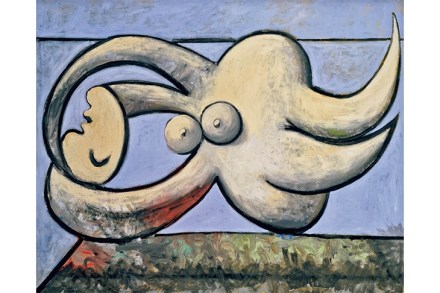
By 1930, Pablo Picasso, nearing 50, was as rich as Croesus. He was the occupant of a flat and studio in rue La Boétie, in the ritzy 8th arrondissement, owner of a country mansion in the north-west, towards Normandy, and was chauffeured around in an adored Hispano-Suiza. He stored the thousands of French francs from the sale of his work in sacks deep inside a Banque de France vault, like a ‘country bumpkin who keeps his savings sewn into his mattress’, someone once said. Married since 1918 to one of Sergei Diaghilev’s ballerinas, Olga Khokhlova, Picasso was coming to dominate the art world in a manner no painter has before or since — including, increasingly and importantly, New York. But by mid-1931, he had worries.
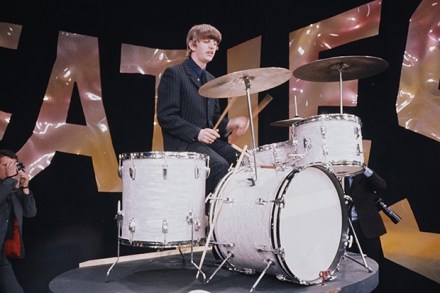
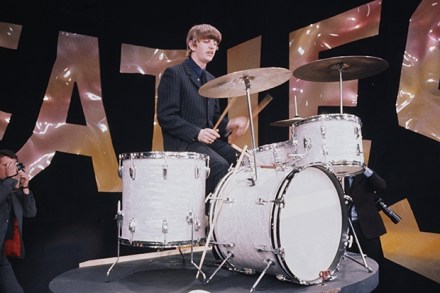
Ringo’s no joke. He was a genius and the Beatles were lucky to have him

From our UK edition

We’re closing 2016 by republishing our ten most-read articles of the year. Here’s No. 9: James Woodall on celebrating the musical contribution made by the forgotten Beatle: Ringo Starr ‘He was the most influential Beatle,’ Yoko Ono recently claimed. When Paul and John first spotted him out in Hamburg, in his suit and beard, sitting ‘drinking bourbon and seven’, they were amazed. ‘This was, like, a grown-up musician,’ thought Paul. One night Ringo sat in for their drummer Pete Best. ‘I remember the moment,’ said Paul, ‘standing there and looking at John and then looking at George, and the look on our faces was like ...what is this? And that was the moment, that was the beginning, really, of the Beatles.

1976 and all that

From our UK edition

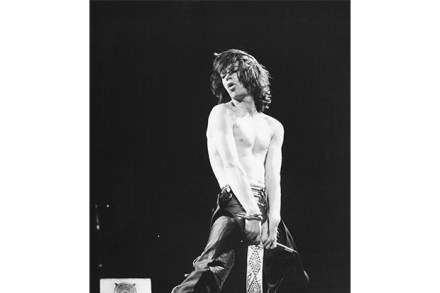
Forty years ago, I spent 14 hours in a large field near the A1 in Hertfordshire. I had just taken my O-levels, liked Be-Bop Deluxe, Genesis and Rachmaninov, and often danced my head off to The Who’s ‘Won’t Get Fooled Again’. I was confused about girls and worried that I’d chosen one wrong A-level (Ancient History). In the nation at large, Harold Wilson had resigned as prime minister in March. Under James Callaghan, Britain would wobble further into a strife that marked the late 1970s like a purulent eczema. Pop music would start, rather violently, to reflect it. In the polity these were not confident times. Friends had persuaded me to go and see The Rolling Stones, headlining at that year’s Knebworth Festival, a rock jamboree that had begun in 1974.

Spellbound | 2 June 2016

From our UK edition

Isabelle Huppert does nothing by halves. And she doesn’t, I think, care greatly for journalists. She expects them to ask stupid questions. Sitting before me in an airless room in the eaves of Paris’s Odéon-Théâtre de l’Europe, she is tiny, dressed entirely in black and more or less unsmiling. Lily-skinned, red-haired, and with a fabulous curl in her upper lip, she’s appeared in more than 100 film and TV productions. Ninety minutes after our meeting, she will be on stage. I sense she wants this interview over fast. But at the start she makes me, I must report, comatose with wonder. I have adored Mme Huppert on screen for three decades, in which she seems to have had barely a month off work. I am, pathetically, spellbound.

All the world’s a stage | 21 April 2016

From our UK edition

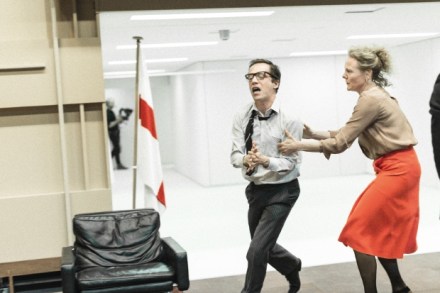
In this much-heralded Shakespeare anniversary year, one might expect a certain respect for the works to prevail. In Holland it’s different. Under the tutelage of a Belgian, Ivo van Hove, a huge slice of Shakespeare’s history theatre has been filleted for the stage into something that might sit nicely on HBO alongside Game of Thrones. It opens at the Barbican on 22 April, a day before the official Shakespeare-death day four centuries ago. And it’s all in contemporary Dutch verse — four hours of it... Kings of War starts with a photo, on a video-screen, of little Prince George. His infant form is followed in rapid succession by that of every English monarch back to Henry V. There, the display halts.

Brothers grim

From our UK edition

One of the more obscure winners in recent years of the Berlin film festival’s Golden Bear was a version of Shakespeare’s Julius Caesar by the esteemed Taviani brothers, Paolo and Vittorio. The film, called Caesar Must Die, consisted of prisoners staging the Roman drama in their own high-security jail in Italy. The most dedicated Shakespearean or, indeed, lover of Italian cinema will have found it quite hard to enjoy. It was a tough, depressing watch. But that’s the Berlinale all over. It favours a certain toughness and prides itself on films that engage politically, that are nakedly ‘art’ rather than obviously mainstream. Often it goes out of its way to be controversial. Berlin itself has long been controversial.

Starr quality

From our UK edition

‘He was the most influential Beatle,’ Yoko Ono recently claimed. When Paul and John first spotted him out in Hamburg, in his suit and beard, sitting ‘drinking bourbon and seven’, they were amazed. ‘This was, like, a grown-up musician,’ thought Paul. One night Ringo sat in for their drummer Pete Best. ‘I remember the moment,’ said Paul, ‘standing there and looking at John and then looking at George, and the look on our faces was like ...what is this? And that was the moment, that was the beginning, really, of the Beatles.’ I think Ringo Starr was a genius. The world seems to be coming around to the idea. Two months ago, he was finally accepted into the Rock and Roll Hall of Fame — the last Beatle to be inducted.