Culture

Culture

The good, the bad and the ugly in books, exhibitions, cinema, TV, dance, music, podcasts and theatre.

Florence | 31 March 2016

Notes on...

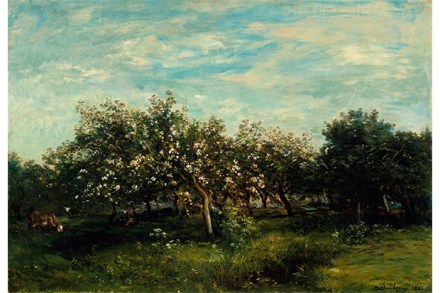
Once, it seems, Sandro Botticelli played a trick on a neighbour. Next door was a weaver who possessed eight looms. He and his assistants kept these in constant use, creating such a judder-ing racket that the poor painter was unable to concentrate on his pictures. Botticelli implored this fellow to reduce the noise, but to no avail. So eventually the artist carried an enormous rock on to his roof, poised so the slightest vibration would bring it crashing through the noisy weaver’s premises. The man then saw reason. You can easily imagine the problem today as you walk down Botticelli’s street, Via del Porcellana. It’s a long, narrow thoroughfare running down to the Arno, tightly packed with three- and four-storey buildings.

Black magic

More from Arts

Ballet’s romantic mantra could be summed up by John Keats’s ballad ‘La Belle Dame sans Merci’, in which a young man remembers his terrible encounter with a supernatural ‘fairy’s child’. Beguiled to sleep with this ravishing fantasy creature, he dreams of a ghostly corps of other chaps similarly beguiled, who warn him that she was a witch who would leave him forever haunted, sick and bereft. You can remodel this fantasy this way and that, switch the genders, reconfigure death, sleep and hallucination, and come up with Giselle, La Sylphide, Swan Lake, La Bayadère in the 19th century, and then find Fokine, Balanchine and Ashton developing it into the 20th in Les Sylphides, Symphony in C and Ondine.

Good clean fun

Cinema

I once forced some pals on a skiing holiday to spend an afternoon off the slopes watching Chalet Girl. Suffice it to say, I have a high tolerance for lowbrow ski films. So if saccharine tales about plucky Alpine underdogs really aren’t your thing you might want to give my views a miss — as you might Eddie the Eagle, a biopic so drenched in cheerful clichés about the British class system, the power of perseverance and cheap slapstick laughs, it is a kind of Downton Abbey on skis. That said, it’s hard to remember an afternoon at the cinema I’ve enjoyed more in recent times (and it’s definitely better than Chalet Girl). Such enjoyable silliness, such easy laughter.

Funny boys

Theatre

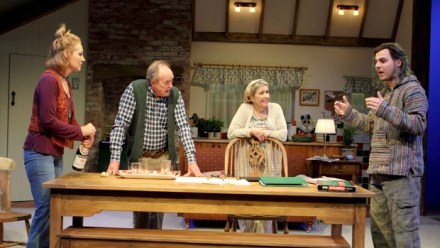
Sir Ken’s excellent West End residency continues with a sugar-rich confection. Sean Foley has adapted and updated an elderly French farce about an assassin who befriends a needy depressive. Hitman Ralph rents a hotel suite overlooking a courtroom where his target is due to make an appearance. The neighbouring room is occupied by a mopey Welshman, Brian, who wants to hang himself from the light socket. Ralph discovers Brian’s plan and realises that Brian’s death will fill the hotel with cops and ruin his assassination attempt. So Ralph must save Brian from suicide. It’s a pretty clunky scenario and the logistics are frankly incredible because the design postulates two adjacent single rooms linked by a communicating door. Hotels aren’t built that way.

The kids are all right

Opera

In a remote fishing village a lone figure confronts an unexplained death, standing tormented but unbroken against fate, the community and the elements of sea and wind that surge through every note of the score. No, not Peter Grimes: this is Vaughan Williams’s 1932 operatic setting of Synge’s Riders to the Sea. But Vaughan Williams’s operas are undramatic, runs the received wisdom. There were no great British operas between Purcell’s Dido and Aeneas and the premiere of Grimes in 1945, we’re repeatedly told. This student production of Riders to the Sea didn’t just refute those assumptions: it threw them into a riptide and watched them being dragged under and swept away.

Love at first sight | 31 March 2016

Television

Now the kids are back for the school holidays, I have a licence to watch complete trash again. No more brooding Scandi dramas (though Follow the Money is shaping up very nicely — plus, as an added bonus, its anti-windfarm theme is really winding up Guardian readers) — just pure televisual soma, such as the masses use to anaesthetise themselves after another thankless day in their veal-fattening pens. First Dates (C4, Fridays), for example. You wouldn’t want to pig out on more than one episode at a time but it’s about as perfectly formed a TV experience as you’ll get: you laugh, you cry, you gawp, you cringe; you feel uplifted by the stories with happy endings and reassured by the ones without as you realise — hurrah!

Sins of the fathers | 23 March 2016

Arts feature

A feature film about priests who abuse children is being released on 25 March. Which happens to be Good Friday. Geddit? The sacrifice of the innocents. A conspiracy of religious hierarchs. Hand-washing by the secular authorities. I’m sure I can think of some more analogies if you give me time, but that’s enough to be going on with. Enough, certainly, for the distributors to boast that the movie is ‘controversially slated to be released on Easter [sic] Good Friday’. As publicity stunts go, this isn’t subtle. But the film is. The Club, directed by the Chilean Pablo Larraín, sets out to perplex us from the first frame until the last.

Born again

Radio

Six years ago, on Good Friday, the journalist Melanie Reid was thrown off her horse while on a cross-country ride in Stirlingshire where she lives. The accident broke her neck and back and left her tetraplegic, paralysed from the armpits downwards. On Easter Sunday on Radio 3 she’s Michael Berkeley’s guest on Private Passions, a timely guest, as he says, because she has recently written in her Sunday Times column about being ‘surprised by a small epiphany of happiness’, of experiencing a ‘rebirth’, if ‘rather cruel’. ‘You find joy in little things ...

Good cop, bad cop | 23 March 2016

Television

Which is better, British TV drama or American? A couple of years ago, merely asking the question would have had the hipsters chortling into their obscure US box sets — and even now a strange cultural cringe seems to persist. Nonetheless, I’d suggest, British television drama these days really is in the midst of an era that will have commentators in 20 years’ time routinely (if a bit unimaginatively) reaching for the adjective ‘golden’. Already in 2016 we’ve had War and Peace, Murder, The Night Manager and Happy Valley — and that’s before the hugely welcome return of Line of Duty (BBC2), Jed Mercurio’s riveting thriller about a police anti-corruption unit.

Slow burn

Cinema

The big hitter this week is, of course, Batman v Superman, but if you want to learn something new, and meet characters that’ll stay with you long after, well, get yourself to Court. This is an Indian courtroom drama in which the wheels of justice grind so slowly you’ll want to scream, and now I can see I haven’t sold this well. ‘What do you fancy seeing at the cinema, dear? A courtroom drama in which the wheels of justice grind so slowly you’ll want to scream? Shall I book, or will you?’ But Court’s lassitude is kind of its point. It is one of those film in which not much happens but everything happens.

Nuclear waste

Theatre

Miss Atomic Bomb celebrates the sub-culture that grew up around nuclear tests in 1950s America. The citizens of Nevada would throw parties and stage barbecues to coincide with the latest nuclear detonation in the desert. This musical has a lot going for it. The melodies are strong, and well sung. The high-kicking chorus lines are easy on the eye and the show has a zippy, innocent spirit. But the storyline gets sidetracked in a mass of contradictory directions. The main theme follows a homesick farm girl who becomes involved with a runaway soldier whose brother runs a Vegas nightclub where a beauty contest is being held that the farm girl hopes to win.

Finally: proof that the ‘Clarkson’ persona was all just an act

To the extent I have ever thought about him, I have always viewed Jeremy Clarkson as a slight irritant. This is largely because he personifies what a type of lazy leftist believes right-wingers to be like (uninterested in culture, cultivatedly thick, casually racist). But this weekend we learnt what some of us had long-suspected: that rather than being a scourge of our dishonest, molly-coddled, excuse-ridden culture, Clarkson may be one of its happiest and most comfortable creatures. Saturday’s Times carried a long interview with him. It is worth reading not because of Clarkson, but because of what it says about our culture.

Rebel angels

Arts feature

This is the first exhibition I’ve been to where the Prime Minister joined the hacks at the press view. A week after the Irish general election, the Taoiseach, Enda Kenny, came to the biggest show in Ireland devoted to the centenary of the Easter Rising. Kenny’s presence at the press launch just goes to show how the Irish rebellion against British rule at Easter 1916 is still the defining story of modern Ireland. In fact, the Easter Rising was a pretty good failure, although I didn’t suggest that to the Prime Minister at the press view. The rebellion lasted only six days before it was put down by the British army. Other attacks on British barracks in Meath, Galway and Wexford didn’t get very far either. Planned attacks in Cork, Tyrone and Donegal never happened.

Repeat prescription

Exhibitions

Walter Sickert was once shown a room full of paintings by a proud collector, who had purchased them on the understanding that they were authentic Sickerts. The painter took one look around, then announced genially, none of these are mine, ‘But none the worse for that!’ Were Giorgione to return to life, and take a stroll around the Sackler Galleries at the Royal Academy, he might echo those words. Few of the works on show, in all probability, were actually executed by Giorgione, but they are none the less magnificent for that. This is — wisely — not an exhibition that attempts to reassemble the artistic personality of that enigmatic figure (there have been quite a few of those over the years).

Bored of the dance

Features

[audioplayer src="http://rss.acast.com/viewfrom22/thespectatorpodcast-politicalcorrectness-budget2016andraves/media.mp3" title="The Spectator Podcast: The end of raving" startat=1080] Listen [/audioplayer]At 19, I dropped out of university to pursue a career as a rave promoter. I went into business with a schoolfriend. We rose through the ranks of party promotion, founded a record label, and started an annual dance music festival. After more than ten years, though, we’ve regretfully decided to close down. And here’s why: young people these days just don’t know how to rave. They are too safe and boring. Rave, like all youth movements, was meant to be about freedom, rebellion and pissing off your parents.

Home and away | 17 March 2016

Radio

Four programmes, four very different kinds of radio, from a classically made drama to weird sonic ramblings, via the best kind of all: first-person narrative, straight to mike. On Syrian Voices this week on Radio 4 (produced by David Prest), Lyse Doucet has been talking to Syrians whose lives have been utterly changed by the war, now passing its five-year mark. On Monday we heard from Sam, a 22-year-old student who lives in the government-controlled area of Daraa and studies English literature at the university. It was here that the uprising began after some students scrawled graffiti on a wall, ‘It’s your turn next, doctor’, calling for their country to be the next in the Arab world to overthrow its government.

Time out of mind | 17 March 2016

Theatre

The Maids is a fascinating document. Written in 1947, Jean Genet’s drama portrays a pair of serving girls who enact sexually loaded fantasies while dressed in the clothes of their employer, Madame, whose murder they are secretly plotting. This macabre sketch still resonates because it analyses and presages the key social transition of the 20th century, namely the overthrow of privilege by the underclass. And it boasts extra layers of erotic chic because the sexually inquisitive maids are sisters and because Genet suggested that the girls might be played by men in drag. This delicate, subtle work is as firmly rooted in its historical era as another classic political allegory, Animal Farm, to which it bears some similarities. Jamie Lloyd has based his update on two bold decisions.

Original sin | 17 March 2016

Opera

The Royal Opera has bitten the bullet so far as Musorgsky’s Boris Godunov goes, and opted to stage the original 1869 version, with no modifications or additions from his revised 1874 edition, which used to be called ‘definitive’ but which seems to be under a cloud nowadays. Rimsky-Korsakov’s version has been pushed right to the back of the doghouse, so that it might soon be revived for its historical interest. Before I launch into my praise of the new production, which is an unqualified triumph, I would like to register some reservations about the work itself, in any of its versions. It’s routinely said that the hero of the opera is not Boris but the Russian people, tormented and downtrodden as they have always been and still are.

Building block | 17 March 2016

Cinema

High-Rise is Ben Wheatley’s adaptation of J.G. Ballard’s novel, and it is deeply unpleasant, if not deeply, deeply unpleasant. (Ideally, I would wish to repeat ‘deeply’ several hundred times, but I do not have the space.) Based on the dystopian notion of tower-block residents regressing into a primitive state once societal norms and the class structure are removed, it sounded promising, like an adult mirroring of Lord of the Flies. But Wheatley is so in love with his own visual style and excesses that all allegory and satire is lost while the violence escalates and women are beaten then raped. Misogyny with social commentary comments on misogyny, but without that it’s just misogyny served up for its entertainment value.

Second thoughts | 17 March 2016

More from Arts

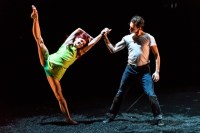
You revisit an old love with wariness. Time’s passed for both of you — sharp edges have been smoothed, and reputations built. But seeing Kaash again last week, Akram Khan’s tremendous debut ensemble work, made when he was 26, revived at Sadler’s Wells now that he is 41 and a world name, I felt the earth move just as before. Like Athene, born fully armed from Zeus’s head, Kaash leapt astonishingly out of the modest, watchful mind of Khan, then a superb classical Indian soloist embarking on his first choreography for other dancers. One of the great pleasures of this past fortnight for a veteran dancegoer has been seeing his dazzling piece again days before the latest creation of his former mentor, Belgian choreographer Anne Teresa De Keersmaeker, now 55.

God’s messenger

Arts feature

When the Japanese conductor Masaaki Suzuki leads his forces in a performance of a Bach cantata, does he worry that the non-Christians in his audience will face the fires of Hell? That seems a bizarre question to ask any conductor of Bach’s music, especially one from Japan, where only one per cent of the population is Christian. But when I met Suzuki in Copenhagen last Friday I asked it, because the 61-year-old founder of the Bach Collegium Japan (BCJ) is part of that one per cent. He’s an Evangelical Protestant, like Johann Sebastian Bach himself. Indeed, he adheres to an even fiercer interpretation of the Bible than the cantor of St Thomas’s.

Just what the doctor ordered

Television

Every now and then, a costume drama comes along that’s so daringly unconventional as to make us re-examine our whole idea of what the form can achieve. ITV’s Doctor Thorne, though, isn’t one of them. Instead, Julian Fellowes’s adaptation of Anthony Trollope observes the usual rules with almost pathological fidelity. Extras dance gamely in ballrooms, scheming matriarchs stand in the way of sweet young lovers and characters express deep fury with the words, ‘Good day to you, madam.’ In the first scene, we even had a handy refresher on the genre’s use of hats as a social signifier. (Basically, toppers for the toffs, peaks for the proles.

Girl power | 10 March 2016

Radio

Hurrah for Radio 3 and its (long-overdue) efforts to give us music not just performed by women but composed, and conducted, by them too. Last year’s innovative day of programming for International Women’s Day introduced us to composers many of us had never heard of, such as Elisabeth Jacquet de la Guerre and Barbara Strozzi, Charlotte Bray and Anna Clyne. Yet to the surprise of even the most sceptical critics, the day was a huge success, proving that some of this music is really good. As Edwina Wolstencroft, producer last year and responsible for this year’s celebration of women in music, says, ‘We know that as many as 6,000 women composers have been identified in history.

The human factor | 10 March 2016

Cinema

Anomalisa is an animated film written by Charlie Kaufman, and while the temptation is to label it a midlife crisis movie, because labels make life so much easier, it is not that clear-cut, just as it never is with Kaufman, who has always refused to explain himself. (Asked what his films are about, his stock response is: ‘It’s about an hour and half.’) I can only say the more you think about this after the event — and you will think about it constantly, as it sets up a sort of thrum under your skin — the more truth and sadness and humanity you will see in it. And it’s all been achieved with stop-motion animation of the kind that CGI was meant to kill off, but thankfully didn’t.

Pride and prejudice | 10 March 2016

Theatre

Jonathan Lynn, co-author of Yes Minister, has excavated the history of France during the two world wars and discovered dramatic gold. He presents us with pen portraits of eminent Frenchmen we think we know. Marshal Pétain (Tom Conti) is a humane pragmatist who refuses to risk speculative assaults on the Western Front. He evolved his strategy from a single motto: never attack until victory is certain. That worked fine at Verdun but in 1940 the same doctrine entailed capitulation to the all-conquering Germans. Pétain’s young protégé during the Great War is a surprise and a delight. We imagine Charles de Gaulle as a monumental slab of garlic-scented arrogance with the body of a furniture-shifter and the face of a parrot-fish.