Culture

Culture

The good, the bad and the ugly in books, exhibitions, cinema, TV, dance, music, podcasts and theatre.

Ai Weiwei’s Aylan Kurdi image is crude, thoughtless and egotistical

Last September a photograph of three-year-old Aylan Kurdi’s lifeless body washed up on a beach near Bodrum made headlines around the world. The image had a significant effect on shifting public perception to the Syrian refugee crisis as well as sparking a debate around the ethics of the circulation of such images. Academics at the University of Sheffield have estimated that 53,000 tweets were sent per hour at the height of the image’s circulation reaching 20 million people around the world in 12 hours. Last week, over four months after the image appeared, the Chinese artist Ai Weiwei made his own contribution to the debate in a photograph which depicts the artist posing as Kurdi.

Magnetic north

Arts feature

‘Edvard Munch, I cannot abide,’ wrote Nikolai Astrup in a letter to his friend Arne Giverholt. ‘Everything that he does is supposed to be so brilliant that it doesn’t have to be more than merely sketched.’ Near contemporaries, Munch and Astrup were both innovative and admired painters but while Munch is today one of the few household-name artists, thanks to one misunderstood and overrated painting, Astrup has been neglected by everyone outside Norway. Happily, this is a travesty soon to be rectified by Dulwich Picture Gallery, which next month stages the first major exhibition of Astrup’s work to be held in Britain. Unlike many other Norwegian painters, Munch included, Astrup did not abandon his native land to make a career further south.

Show me the Monet

Exhibitions

Philip Larkin once remarked that Art Tatum, a jazz musician given to ornate, multi-noted flourishes on the keyboard, reminded him of ‘a dressmaker, who having seen how pretty one frill looks, makes a dress bearing ninety-nine’. If you substitute paintings of flower-beds and dappled sunlight for chromatic keyboard runs, something similar is true of the new blockbuster at the Royal Academy, Painting the Modern Garden. That, however, is only half the verdict on this curious affair. It is a show that feels a bit overblown — like a visit to an enormous Victorian conservatory — but contained inside it is another, triumphantly successful exhibition that is inspiring, exalting and almost entirely about Claude Monet.

President Hassan Rouhani needs to get over the shock of the nude

Has a new art installation opened up at the Capitoline museum? One might be forgiven for thinking so: nude sculptures were recently encased in white wooden boxes so that only their heads could be seen. So modern! So fresh! So radical! Except there was nothing radical about it. Instead, Italian authorities took the decision to cover up the ancient nude statues in honour of Iranian President Hassan Rouhani's official visit to Rome, during his first trip to Europe since international sanctions against his country were lifted. Rouhani and his entourage could not, reportedly, cope with the sight of marble sculptures of naked women, including a Venus dating back to the second century BC.

Another Slice

Poems

All the books stored above our heads, all the books there aren’t enough hours to read again, and still we hesitate to banish them complete. The second-hand life, charity shops, jumble sales, car boot fields: the slow long-term dance, temporary ownership, possession and loss. Charity shops can take anything unwanted, books and LPs, the unfashionable fashions, but all those hours that used to be you, what ever happened to them? Sometimes, as with burnt toast, things can’t be salvaged or scraped right. You have to discard. Start again.

An inconvenient truth | 28 January 2016

Television

On the face of it, the Netflix documentary serial Making a Murderer should only take up ten hours of your life. Judging from my experience, though, its ten episodes will prove so overwhelmingly riveting that you’re going to need at least two more days to scour the internet in an obsessive quest for every scrap of information about the Steven Avery case — and several evenings to discuss it with any fellow viewers you can find. If the fuss about the series has so far passed you by (and if it has, it probably won’t for much longer), you may have to trust me that the story it tells — through such unspectacular old-school methods as assiduously researched footage, talking heads and the occasional caption — is from real life.

Lessons in the surreal

Radio

The new season of the Serial podcast (produced by the same team who make This American Life) was launched last month, releasing one episode a week as the investigative reporter Sarah Koenig looks this time into the strange story of Bowe Bergdahl. He’s the US army soldier who walked out on his platoon in 2009 while stationed on a remote outpost in Afghanistan, close to the Pakistani border. Unsurprisingly, he was captured by the Taliban and held captive for five years before being released, in a prisoner exchange with those held in Guantanamo Bay.

Sound and fury | 28 January 2016

Music

No one is consulted. No one is held to account. No one has the authority to turn it off. How is it that muzak has slipped through every legal control? The blame, I’d say, lies with those who are frightened of silence — with those who spend more money in shops that buzz to a friendly background hum, and laugh too loudly when all around are mute. To moderate their visceral fear of the quiet they cling to cheaply produced, intellectually demeaning and superficially comforting sub-music. Muzak comes in various forms — piped, performed live, and through other people’s headphones, when you can’t actually hear pitched sounds, only a desiccated, insistent beat. Live it can be most memorable. Everyone must have their least favourite story.

Fine vintage

Theatre

A beautiful crumbling theatre in Notting Hill is under threat. The Coronet, which bills itself as the Print Room, faces the menace of renovation. The lovely rambling building has the tumbledown air of an abandoned Romanian palace. The raised stage sits opposite the dress circle of a former cinema and the auditorium, steeply raked, is bounded by a parapet decorated with plaster reliefs of scarred mermaids and broken-winged angels. A modern design team is bound to strip out all this ramshackle charm. The ragged, gloomy corridors, scented with damp brick dust, will be rationalised into glistening avenues of spotlit perfection.

Doing the wrong thing

Cinema

Like The Revenant and The Big Short, Spotlight is yet another Oscar contender ‘based on true events’ — although it has now been suggested that The Revenant was 99.7 per cent made up. (Does this matter? Only, I suppose, in the sense that you should know what you’re watching.) But we’re on firm ground with Spotlight, where the events — the Boston Globe’s uncovering of systemic child abuse by Catholic priests in Massachusetts — are a matter of record, although how you make a film about something so awful, I don’t know. Personally, I wanted the film to give it to the Church with both barrels, and let rip with fury, but it’s too restrained for that.

Northern lights | 28 January 2016

Opera

Opera North continues to be the most reliable, inspiring, resourceful and enterprising opera company in the United Kingdom, and all that without taking account of its extremely limited budget. From April through July it will be presenting its remarkable interpretation of Wagner’s Ring cycle in various cities, including London, so it may not be surprising that before that it is mounting much more modest fare — as indeed everything else is. Giordano’s Andrea Chénier (1896) seems to be undergoing something of a revival, and this new production in Leeds is the first time it has ever been performed in the north of England.

Siftings

More from Books

And we awake like children to tiny snow sprinkled on shed and car roofs, thinking, Will it last, will it last. The roads already damply black.   Nevermindfulnesss Contemplating truth and time, the face in the hairdresser’s mirror for twenty minutes or more, seeing while attempting not to.

Sharing the Dog

More from Books

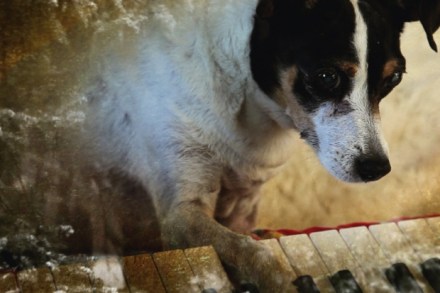
The Dog share didn’t work out well in the end. For a start, Dog — no mean manipulator — cadged extra rations in Home A, so that Home B was obliged to act the disciplinarian. Then there was the quasi-polite dispute about the missed flea drops and the bitten house-guest. Goodwill flagged, and it was decided to scrap the whole idea, and arrange for Dog to live in Home A or Home B. But which? The arrangement — something like an episode of adultery — had begun with elements of euphoria but later suffered painful side-effects.

Simon Amstell roasts the Evening Standard (ahead of hosting their awards)

Next week the Evening Standard will hold their British Film Awards after a three year hiatus. The exclusive do will be take place at the BBC's old television building in White City where actors including Charlotte Rampling, Michael Fassbender and Dame Maggie Smith will compete for gongs. Happily for those whose invites have been lost in the post, the host of the awards Simon Amstell offered attendees at a comedy gig in Hammersmith a sneak preview of his set last night: 'I don't have any jokes but I am hosting the Evening Standard British film awards next week so I thought that I'd see if some of those jokes are funny.' Amstell then went on to give a run through of his planned awards speech.

Wild at heart | 21 January 2016

Arts feature

At the Louvre the other day there was a small crowd permanently gathered in front of Delacroix’s ‘Liberty Leading the People’. They constantly took photographs of the picture itself, and sometimes of themselves standing in front of it. No such attention was given to the other masterpieces of French painting hanging nearby, including many by Delacroix. This painting from 1830 — with its glamorous, bare-breasted personification of liberté, Tricolore in hand, followed by heroic representatives of the working and middle classes — has become an international shorthand for France itself.

Pornographer-in-Chief

Arts feature

Like Black Rod and the Poet Laureate, screenwriter Andrew Davies occupies one of the most colourful and arcane offices in public life. He is Pornographer-in-Chief, a title that was first bestowed by the journalist Paul Johnson on the boss of Channel 4, Sir Michael Grade. Davies has assumed the mantle by virtue (or vice) of sexing up cherished texts from the literary canon for the gratification of television producers. His adaptation of War and Peace has taken critical grapeshot for including incestuous romps that do not strictly feature in the novel. Simon Schama, who bashfully admits he has made his way to the end of the book only eight times, claims to have detected no evidence of a sexual relationship between siblings Anatole and Helene.

Does an understanding of Britain’s cultural debt to Christianity develop with age?

There’s a spate of statistic-based stories about Christianity in decline. Recently we heard that under a million Brits now attend the CofE. Now we hear that the proportion of Britons who say they have no religion is creeping up to 50 per cent. Already, most white Britons identify as non-religious. It’s not really news. For decades religion has been a minority thing, a subculture that the main culture ignores or derides. But this was half-obscured by a residual sense that most Britons were culturally Christian. In 2001 a surprising 72 per cent said that they were. We are seeing a new honesty from these cultural Christians – many of them are now moving away from the pretence that they are sort of Christian. And this means we can see the landscape a bit more clearly.

Turkish delight

More from Arts

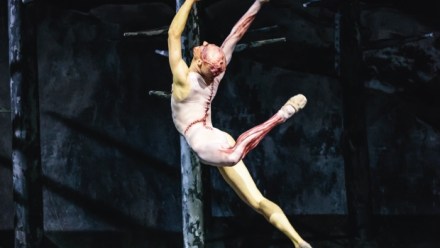
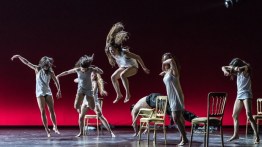
I’ve seen some people saying that English National Ballet’s Le Corsaire is so out-of-date it’s risible to see it staged in the 21st century. Sex trafficking, men in black with scimitars in Istanbul, pirates trading slaves across the Mediterranean, rich fat men rubbing their jewelled paws over fresh young bodies — pshaw indeed! But I’d like to have heard Tamara Rojo, ENB’s artistic director, pitch to her board and sponsors to get the shiploads of doubloons she needed to stage it with the bling and panache its spectacle requires. An even tougher sell might have been getting her multiracial dancers on board with playing slaves and slave-dealers. So yes, I reckon Le Corsaire is bang-on current as a project.

Pride and prejudice

Theatre

Paul Minx ventures boldly into Tennessee Williams country with The Long Road South. It’s 1965 and the Price family are idling about at home in Indiana. In mid-August the air is heavy with frustrated sexuality. Carol Ann Price (Imogen Stubbs) is a kindly, buxom waster slithering decorously into alcoholic dereliction. Her daughter, Ivy, is a perky little menace who cavorts about the lawn in a skimpy bikini trying to elicit male attention. Jake, the patriarch, is a charmless redneck with anger problems and a secret backlog of unpaid debt. Waiting on these white-trash parasites are two black servants, Andre and Grace, who are smart, industrious, even-tempered and limitlessly patient. Andre is a gifted theologian who pines after his severely disabled daughter.

All in the mind | 21 January 2016

Radio

You don’t expect to be brought close to tears by the Reith Lectures, which are after all at the most extreme end of Radio 4’s commitment to ‘educating’ its audience. Yet when Stephen Hawking delivered this year’s talks at the Royal Institution in London (in front of a lucky audience of listeners and scientists) there was both much laughter and a heightened sense of emotion. This was not because of his plight — the eminent professor of theoretical physics has suffered from a rare form of motor neurone disease since the age of 21 and the only discernible movement in his body is in his eyes, and the twitching of his facial muscles. Nor his cheeky sense of humour, or his grace and dignity, although these are remarkable enough.

On the money

Cinema

The Big Short is a drama about the American financial collapse of 2008. It talks you through sub-prime mortgages, tranches, credit-default swaps, mortgage-backed securities, collateralized debt obligations ...and, yes, I just bored myself to tears typing that list. I had to prop my eyes open with matchsticks typing that list. I would even propose that I was more bored typing that list than I’ve ever been in my whole life, which is saying something, as I saw Monuments Men. And, previously, I would have proposed that there is no way you could ever make any of the above fascinating or compelling or sexy, let alone scathingly funny. But The Big Short is fascinating, sexy, compelling and scathingly funny. It’s a miracle.

Class of ’83

Television

No one remembers this now but there really was a period, not so long ago, when the Eighties were universally reviled as the ‘decade that style forgot’. For a time it got so bad that none of us survivors could even bear to look at old photos of ourselves: mullets, feather cuts, Limahl-style bleaching, pastels, legwarmers, unflattering suits so boxy they made you look broader than you were tall... But try telling this to the kids today and they won’t believe you. The Eighties, as far as they’re concerned, are so achingly, incredibly, bleeding-edge cool that there’s no way their parents could possibly have lived through them and, ‘Oh, by the way, Dad, do you mind if I take that old jacket of yours back to school?

A Day Off

More from Books

Well, I’ll go window-shopping in Larousse for seeds of words. Strangely, they’re not for sale — you help yourself to what the worlds produce. Here are the conic sections, there the whales, the art, the musical instruments, the wigs.... My search is stopped by a picture of the sarigue, Didelphis, a marsupial of the west, with young. O Marianne Moore, come, look! She curves her ‘long prehensile tail’ right back towards her neck — it’s like the pantograph of an old tram — the little ones climb on, lift their own small prehensile tails, attach, and off they ride to bed. See, one’s still trying to get on. Wait! Wait for me!

I’m having trouble finding an anti-woman conspiracy in dance

I’m bemused by the outburst of claims that female choreographers are under-represented, held back, or discouraged by 'institutionalised sexism' from unveiling their contributions to the richness of British dance. Only a fortnight ago I was thinking about what to write for my first 2016 piece, and this was the very question on my lips. Why was English National Ballet doing a special all-women choreography programme in 2016 as a protest statement when so many of the best things made in dance last year and the previous year were by female choreographers? But I decided I’d keep that powder dry until ENB come to the stage.

Dull and impenetrable: Hou Hsiao-Hsien’s The Assassin reviewed

Fans of Crouching Tiger, Hidden Dragon be warned: this is not that. Never have I watched a film where the title so belied the tone and pace of the story. For The Assassin is slow, glacially so, and although it really is exceptionally gorgeous to look at – every frame is a sort of cross between a Turner landscape and a Chinese handscroll, all silver birch horizons and Bacchic waterfalls – I expect a few too many ticket-buyers, enticed by rave reviews and the film's director prize at last year's Cannes, will be quite taken aback by how dull and impenetrable they find it. That was not a flippant 'all martial arts movies are the same' reference to Crouching Tiger.

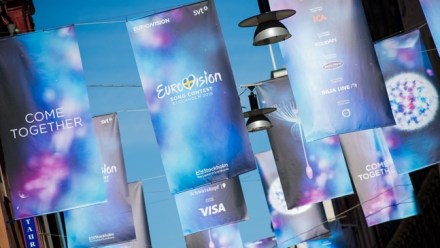
Public will now choose UK’s Eurovision entry – but should we trust the BBC with the shortlist?

For almost two decades, Britain has failed dismally at Eurovision – and deservedly. Our entries have been so bad as to represent a passive-aggressive insult to an entire continent. You can blame the BBC: it picks the song, and just doesn’t understand Eurovision. It seems to think it’s the equivalent of a musical bad taste party, where the aim is to send in cheesy songs. You Europeans have awful taste, the BBC seems to say, so here’s a song so crap that you’ll love it! They tend not to. Today, the BBC has announced that the public will choose the song. Its musical politburo won’t. This is a step forward, but it raises a very important question: can the BBC actually draw up a decent shortlist?

What a tawdry piece it is: Met Opera Live’s Les pêcheurs de perles reviewed

Les pêcheurs de perle Met Opera Live This is the first production at the Metropolitan of Bizet's early opera for a century, and it isn't hard to understand why. What a tawdry piece it is, the kind of thing that might have been written deliberately to get Edward Said's goat. Musically it contains one gem, the unforgettable duet for baritone and tenor, unforgettable any time you've heard it for at least a week. Bizet obviously knew when he was onto a good thing, for he recalls the tune countless times in the course of the opera. It has no motivic significance, but since he seems unable, in this opera, to think of any other decent melodies, the obvious thing to do was to keep audiences happy by using it to paste together a work which has almost no kind of coherence.