Culture

Culture

The good, the bad and the ugly in books, exhibitions, cinema, TV, dance, music, podcasts and theatre.

An enjoyably honest portrait of Rik Mayall

Television

If you’ve tended to think Rik Mayall was both very funny and quite annoying, it turns out you’re not alone – because, with varying degrees of tact, that’s what most of the people who knew him suggested in Rik Mayall: Magnificent B’stard. At a time when far too many documentaries about celebrities are celebratory to the point of cloying, this one was, of course, all the better for it. By his own account, Mayall first discovered the joys of showing off in primary school. Instructed to mime in the choir, since his voice was ‘so horrible’, he did so with the wild exaggeration that would remain his speciality. The laughs he got duly turned his boyhood head.

The power of Glengarry Glen Ross

Theatre

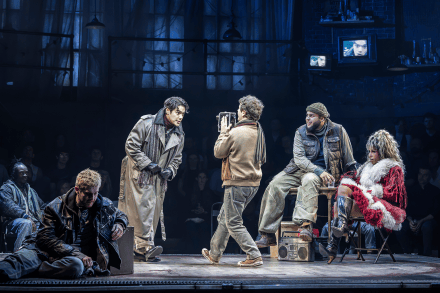
The Old Vic presents an eccentric new version of David Mamet’s ultra-masculine play, Glengarry Glen Ross. Director Patrick Marber populates the show with middle-aged actresses. And why not? Devotees of Mamet may find it patchy but the play is so powerful that it can survive any amount of experimental tinkering. The visuals are pretty incoherent and the Old Vic’s configuration gives the cast no help at all. The playing area is surrounded by concentric rings of seats, cage-fighting style, which makes the actors feel unsure where to pitch their performance. It’s like trying to post a letter while doing a twirl on the doorstep.

Choral church music must be heard within the liturgy

Classical

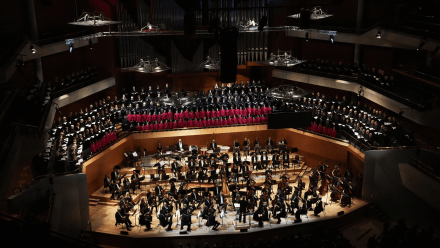
Choral church music is at its most effective when it’s embedded in the liturgy as it was designed to be, rather than performed on stage in a concert. The Mozart Requiem works well in both situations; but if you happen to be in a pew, mid-mass, eyes closed and head in the praying position at the moment when the choir breaks into the ‘Lacrimosa’, the music will somehow be doubly powerful. Two annual summer festivals of music within the liturgy celebrate this truth. The first is the Roman Catholic St Birinus Festival, now in its fourth year.

Thank god for Jodie Foster

Cinema

A Private Life is a French film starring Jodie Foster as a psychoanalyst navigating what might be a murder mystery. It’s a psychological thriller (kind of), and a complex character study, and while it is très, très French, with elements that feel like a fever dream, Foster’s presence will keep you glued. She has a face you could watch for ever. It moves. It’s expressive. It captivates. She hasn’t meddled with it. ‘I don’t want to be some Botoxed weirdo,’ she has said. It makes such a refreshing change to see a 63-year-old woman who looks like a 63-year-old woman rather than a haunted doll. In fact, if it weren’t for her and Frances McDormand, it would probably be game over.

The joy of willow-pattern ceramics

Exhibitions

My granny used Spode willow-pattern crockery for everyday use. There was another grander service for Sunday lunch, also blue-and-white chinoiserie: Booths dragon, picked out with a gold border. Willow pattern evokes for me the taste of slightly stale ginger biscuits, which I liked very much, and coronation chicken, which I was less keen on. The idea of owning a table service now seems close to antediluvian; too formal and too much washing-up, although this was a ritual that mattered greatly to Granny. People now prefer plates that give a dull clunk when flicked, rather than fine china’s dulcet ping. Such changes of fashion were a factor in the 2008 closure of the Spode factory in Stoke-on-Trent, which had been producing willow-pattern plates since the 1790s.

The uprising against ugly cities

Arts feature

Arriving in Oslo, the Barcode District is unavoidable. It is so named because its blocks are laid out like dominos – each design a tawdry, throwaway joke. But the Norwegians have had enough. With a spate of such controversies, Oslo has become an epicentre for an architectural uprising against the uglification of cities. Its Nordic Symposium on Beauty in Architecture has become an annual meeting point for plotting the insurgency. Unlike on this side of the North Sea, where traditional and classical architecture found a champion in the King, Scandinavia’s counterrevolution is led by ordinary citizens.

An entertaining Rheingold from Grange Park Opera

Opera

Grange Park Opera has acquired a new chandelier for its theatre at West Horsley; a jumble of foliage and fairy lights that ascends into the roof pre-curtain, like in The Phantom of the Opera. It’s a fun addition, and very on-brand. This stockbroker-belt festival knows its audience. It raises and splashes cash with equal gusto, and it doesn’t overthink things. A Ring cycle – opera’s ultimate status symbol – has been on the cards at GPO for a few years. Now it’s arrived and the opening gambit, Das Rheingold, looks and sounds impeccably high-spec. It’s designed and directed by Charlie Edwards, and the visuals are familiar but effective.

The glorious silliness of tribute band names

Notes on...

Seeing a tribute band can be a strange experience. There are your heroes on stage once more, magically rejuvenated and playing the music of your youth. You too feel briefly young again – until you notice everyone else at the gig is also at least 57. But as often as not the band is brilliant. They have lovingly tracked down the right guitars, effect pedals and amp settings in search of the perfect sound. They have styled their hair just so, applied the requisite tattoos and, at some obvious expense, commissioned perfect replicas of signature stage outfits. See Björn Again and the girls might come complete with the purple capes worn for Abba’s 1980 world tour before changing into the white-booted ‘SOS’ look.

A ballet masterpiece revived – but where’s the pony?

Dance

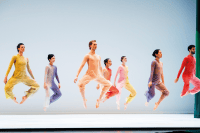
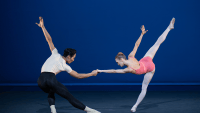
The choreographic partnership of Sol Leon and Paul Lightfoot has long been celebrated in mainland Europe: a new double bill presented by the Royal Ballet is the first time their work has been showcased for British audiences. The first-night reception to Covent Garden was rapturous, but I wonder how long the excitement will last. What an astounding masterpiece this ballet is. I adore it, who couldn’t? Leon and Lightfoot specialise in movement characterised by a nervous staccato, suggestive both of psychic anxiety and robotic precision: the dancers look demented or brain-dead, animatronically controlled. Black is the dominant colour (Leon and Lightfoot are often their own designers) and the lighting does more to shade than illuminate. It is all very chic indeed.

Is there anything sadder than a Scots Gaelic lament?

Pop

Sad songs hit harder, I find, when their meaning hangs just out of reach. Aside perhaps from the exquisite ache of Portuguese fado, there is no more desolate sound in the world than a lamentation in Scots Gaelic, sung in a language most of us can’t speak but conveying emotions we seem, atavistically, to somehow understand. This became clear last weekend while watching Julie Fowlis, the internationally renowned singer from North Uist whose extraordinarily pure voice evokes the power, beauty and savagery of the Hebridean and Highland landscapes, but also connects to some even more profound and universal force.

Toy Story 5 contains delicious touches

Cinema

Toy Story 5 – do we need it? One worries for the narrative integrity of characters when an IP is thrashed to death like this. The latest ​instalment, however, does address one of the most pressing dilemmas of modern childhood (screen time) and whether it will be the end of toys. (‘Extinction… Not again!’ cries Rex, the dinosaur.) It is timely, with some delicious touches – Woody now has a bald spot So it is timely, with some delicious touches – Woody now has a bald spot. And while it isn’t as entertaining as the first three and stumbles at the finishing line, it may be better than the fourth, with its horrible doll Gabby Gabby.

Clarkson’s Farm remains the best drama on TV

Television

Aliens are very fashionable right now. Steven Spielberg recently announced that they are real and have been visiting us since for ever – but then he does have a poorly reviewed new movie to push. Trump’s White House, meanwhile, has been busily trolling us with hints that it knows more about the subject than it has hitherto let on. I personally think it’s all bollocks – or, if you believe Project Blue Beam, worse than bollocks. But whichever camp you fit into, I think you’ll thoroughly enjoy the three-part documentary series The Alien Autopsy Scandal.

A play that shows Iranian society is like our own

Theatre

Under the Shadow is a timely drama set in Tehran in 1988 during the Iran-Iraq war. Saddam’s missiles are raining down on the city which puts an additional strain on the troubled marriage of Iraj and Shideh. Iraj is a doctor. Shideh is a part-qualified doctor. During quiet spells, they chat about humdrum stuff. Iraj wants Shideh to have another baby. Shideh prefers to leap around doing her Jane Fonda exercises. Her mother-in-law potters in and out and fusses over bits of crockery. Their daughter snuggles on a sofa with a rag doll. The low-energy dialogue flits from one issue to the next without any sense of direction. The characters tell each other jokes to pass the time.

Fresh, original Mozart

The Listener

Grade: A It’s spring in Vienna; well, OK, it’s early summer but it’s a grey day when Mozart doesn’t make you feel younger and I reckon this new release from Alim Beisembayev will do just that. In a world of infinite entertainment possibilities, Beisembayev has done the hard bit – the choosing – for you. Here we have two late piano concertos (Mozart wrote them between the ages of 30 and 32, as his own solo career wound down) charged with a grandeur, a playfulness and an endless smiling compassion that will come as a glorious corrective to anyone whose last experience of Mozart involved bodily fluids and confectionery in Sky’s hellish remake of Amadeus.

The problem with ‘queer art’

Arts feature

In 1911 Duncan Grant’s ‘Bathing’ went on display as part of a design scheme for the dining room of the Borough Polytechnic in Southwark. This large painting depicts a group of strongly muscled male bathers diving, swimming and hauling themselves into a boat. Only one of them is wearing a bathing slip, and while this kind of spectacle might have been familiar to anyone educated at a public school at this period, the art critic of the Times complained that it could well have ‘a degenerative influence on the children of the working class’. The picture now hangs in Tate Britain, and is used on the gallery’s website to direct people to an account of ‘Queer Life and Art’.

‘I think I’ve found a real paradise’: David Hockney interviewed

Interview

David Hockney has died, aged 88. During lockdown in 2020, Martin Gayford, the author of ‘Conversations With Hockney’, spoke to him for the magazine. Spring has not been cancelled. Neither have the arts ceased to function. David Hockney’s marvellous exhibition at the National Portrait Gallery may be sadly shut, but the artist himself is firing on all cylinders. ‘I was just drawing on this thing I’m talking to you on,’ he announced when I spoke to him via FaceTime the other day. He was sitting in the sunshine outside his half-timbered farmhouse in Normandy. ‘We’re very busy here,’ Hockney explained, ‘because all the blossom is just coming out, and there’s a lot more to come. The big cherry tree looks glorious right now.

Spielberg fumbles his final sci-fi

Cinema

Steven Spielberg has said his latest film, Disclosure Day, is ‘the summation of my life in science fiction’, which began with Close Encounters of the Third Kind and ends here. (He is now 79.) I adored Close Encounters when it first came out in 1977 and still do – that final scene must be one of the greatest final scenes in cinema, greater even than The Terminator. But Disclosure Day is not its match, not nearly. What we have here instead is a forgettable action film with the bones of your average conspiracy thriller. There may or may not be life on other planets, but this poor Earthling felt the life drain from her at around ten minutes in.

The liberating delights of Aldous Harding

Pop

The first thing I did after getting home from the Barbican the other week was google ‘Aldous Harding neurodivergent’. It seems I’m not the only one: messageboard threads debate it; fans speculate. Once you’ve see her perform, you would know why: she twisted and contorted herself not like a dancer, but like someone trying to work out the kinks in her own physicality. She also barely spoke to the audience. Spot this kind of behaviour on the street and you’d walk on, pretending not to see. On stage, one had to look, and it was wholly compelling. Liberating even – especially if, like me, you are neurodivergent (look, I know everyone is now, but I do have an actual diagnosis). We were being forced to confront our own embarrassment. Forced to see someone being exactly who she was.

Another thriller, another teenage incel

Television

At just over two hours, Martin Scorsese’s 1991 remake of Cape Fear was 20 minutes longer than the 1962 original. It also added some moral complexity. Instead of a total psycho (Robert Mitchum) menacing a lawyer’s very nice family, we got a total psycho (Robert De Niro) menacing a lawyer’s slightly messed-up one. But how do you stretch the story to ten hours? That’s the challenge faced by Apple TV – and, after two episodes, the answer’s already clear: by throwing in any number of subplots, strenuously referencing as many contemporary anxieties as possible and not worrying too much whether some of the characters seem quite stupid in their willingness to ignore the obvious threat.

Delightful Rossini at Glyndebourne

Opera

It’s impossible to say what Rossini would have made of Glyndebourne’s production of Il turco in Italia, but you can bet on one thing – he’d have brought the mother of all picnics. His love of food and drink was heroic; it’s believed that more recipes have been named after Rossini than any other musician. He didn’t mess about, either, berating his Paris grocer when a promised consignment of Neapolitan macaroni turned out to be an inferior Genoese product. ‘If he knows as much about music as he does about pasta, he must be a great composer,’ commented the oblivious shopkeeper. Well, that’s the story, anyway (I thought the source was Stendhal but it turns out to be Ben Trovato).

This Lucian Freud belongs on the compost

Exhibitions

From 1940, at Benton End, near Hadleigh in Suffolk, the artist Cedric Morris brought his eye to breeding irises. Eliminating hated shades of ‘salmon or knicker’, he was, according to his biographer Hugh St Clair, ‘unstinting in his efforts to produce a pure, delicate pink’. Forty years of dedication brought a wild abundance to the garden, which was packed with cultivars, including ‘Benton Baggage’ (pale rose with a blue blaze), ‘Benton Persephone’ (very large white flowers) and ‘Benton Mocha’ (coffee-coloured, with a bright orange beard). A living flower painting.

Three cheers for the new illustration museum

Arts feature

In the artistic pecking order, illustration long languished behind what were seen as the fine arts, even though it was the one art form that most of us would come across every single day. Not unrelated to the status issue, illustration came to be regarded as art for children, young children at that. In the 19th century adult books would be routinely illustrated (Dickens’s illustrators such as Phiz were as much a part of the deal as the novels themselves), but in the 20th the field gradually narrowed. Still, up to the 1970s, even books for teenagers as a rule had pictures. Now, apart from graphic novels, they’re mostly confined to drawings for the tiny tots.

What a rabbit hole this film takes you down

Cinema

Madfabulous is a biopic of Henry Paget, the fifth Marquess of Anglesey, who was probably mad and definitely fabulous. His prodigalities in jewels and clothing were enormous. He perfumed his automobile so it belched violets. He was partial to wearing women’s clothing. He set up his own theatre company to showcase his ‘butterfly dance’. Needless to say, he burned through his family’s fortune in a few short years. How could all this not be wonderful on screen? Who doesn’t wish for an automobile belching violets? Alas, the film leans towards the pedestrian but, still, it will send you down a most satisfying rabbit hole. Look him up. The spit of Frank Zappa, right? And this is the late 1800s we are talking about. Respect.

Bond makes a great video game

More from Arts

Grade: A– He may not know how to make a drinkable martini, but James Bond makes a great videogame. GoldenEye on the Nintento 64 was the first; but there’s always been potential there for more. After all, the character has all the stuff that the medium excels at. He has car chases, he fights, he shoots people, he blows things up, and he appeals strongly to adolescent boys. In 007: First Light, he gets ample opportunity to do all those things, sometimes in very quick succession. Our man here is not yet a wintry Daniel Craig, a suave Sean Connery or a campy Roger Moore: when we first encounter him in the mandatory pre-credits sequence he’s not even a spy.

None of McCartney’s new songs will trouble his setlist for long

Pop

On 30 May 1966, the Beatles released ‘Paperback Writer’ – a fortnight after ‘Paint It Black’ by the Rolling Stones and only days before Bob Dylan released ‘I Want You’ as a single. Paul Simon wrote and recorded (with Art Garfunkel) ‘A Hazy Shade of Winter’ not long after. Yes, yes, what bliss it was in that dawn etc. But anyone predicting back then that, exactly 60 years later, all four artists would still be releasing new music and touring to large and appreciative audiences would have been laughed clean out of the Bag O’Nails. Even when glossy monthly music magazines such as Q started appearing in the 1980s, 40 was regarded as the dark side of the moon for the foundational pop stars of the 1960s.

Why I’m increasingly drawn to optimistic sci-fi

Television

You know you’re getting old when you see Geena Davis from Thelma & Louise cast as a granny sex symbol and Alfred Molina as a character so elderly you’re supposed to believe that he could drop at any time. This is one of the running gags of The Boroughs, a sci-fi/monster series set in an upmarket, Stepford Wives-esque desert retirement village, and clearly aimed at ageing farts like I very nearly am who imagine themselves to be much younger and groovier than they now are. ‘Don’t worry, wrinkly kids,’ the series reassures us. ‘By the time you hit your seventies you’ll be taking more drugs and having more sex – even crazy, orgy sex [note to squeamish viewers: this scene takes place off camera] – than ever before.