I’d just emerged from Stratford station when I realised it had been almost a decade to the day since I’d last been here. I thought back to a dismal morning press call in early 2016 to the mangy park landscaped as a visible legacy of the London Olympics. The collected hacks shivered as Mayor Johnson unveiled the latest of the development’s showpiece public sculptures, devoting much of his speech to boosterish predictions of the area’s imminent renaissance. ‘Really?’ I thought as I surveyed the spectral, vaguely Soviet townscape emerging from the mist. ‘In this shithole?’
Years hence, it appears that Boris, for once, wasn’t bluffing. The new-look Stratford resembles an idiot’s doodle of the Chicago skyline, novelty towers sprouting far into the distance. The role of town centre is performed by a gargantuan shopping mall, while across the way squats Anish Kapoor’s ludicrous tower, still strangled by Carsten Höller’s functionless slides and now looking rather sad – an architectural sex game gone horribly wrong. And there, in the middle, is the development’s intellectual raison d’être: a complex of heavyweight cultural venues, of which this new outpost of the V&A is by some distance the most prestigious.
The display is puddle-shallow and tilted towards the contemporary – but it’s spectacular nonetheless
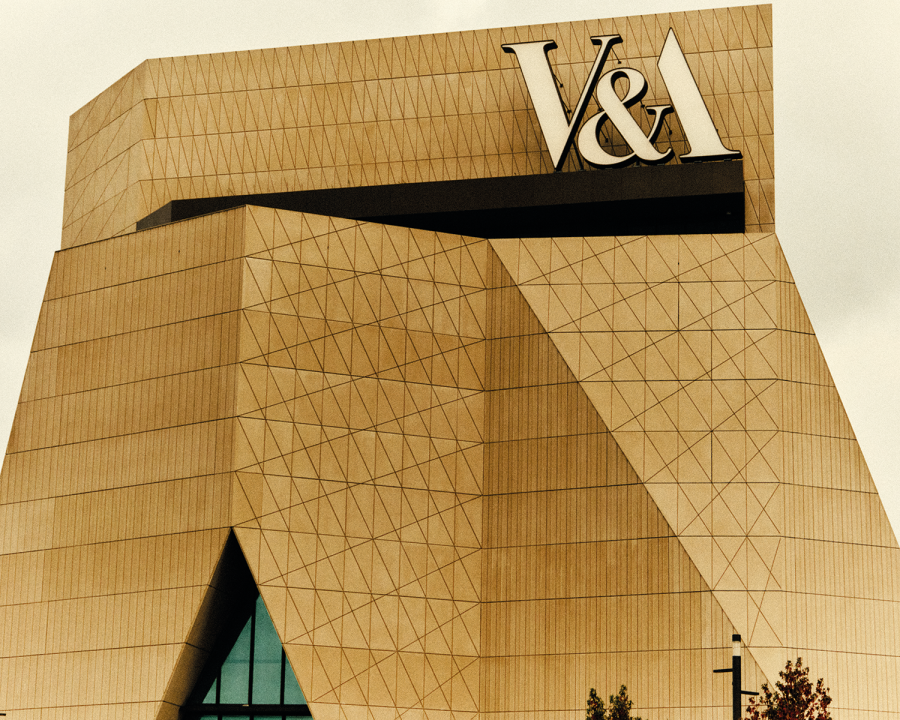
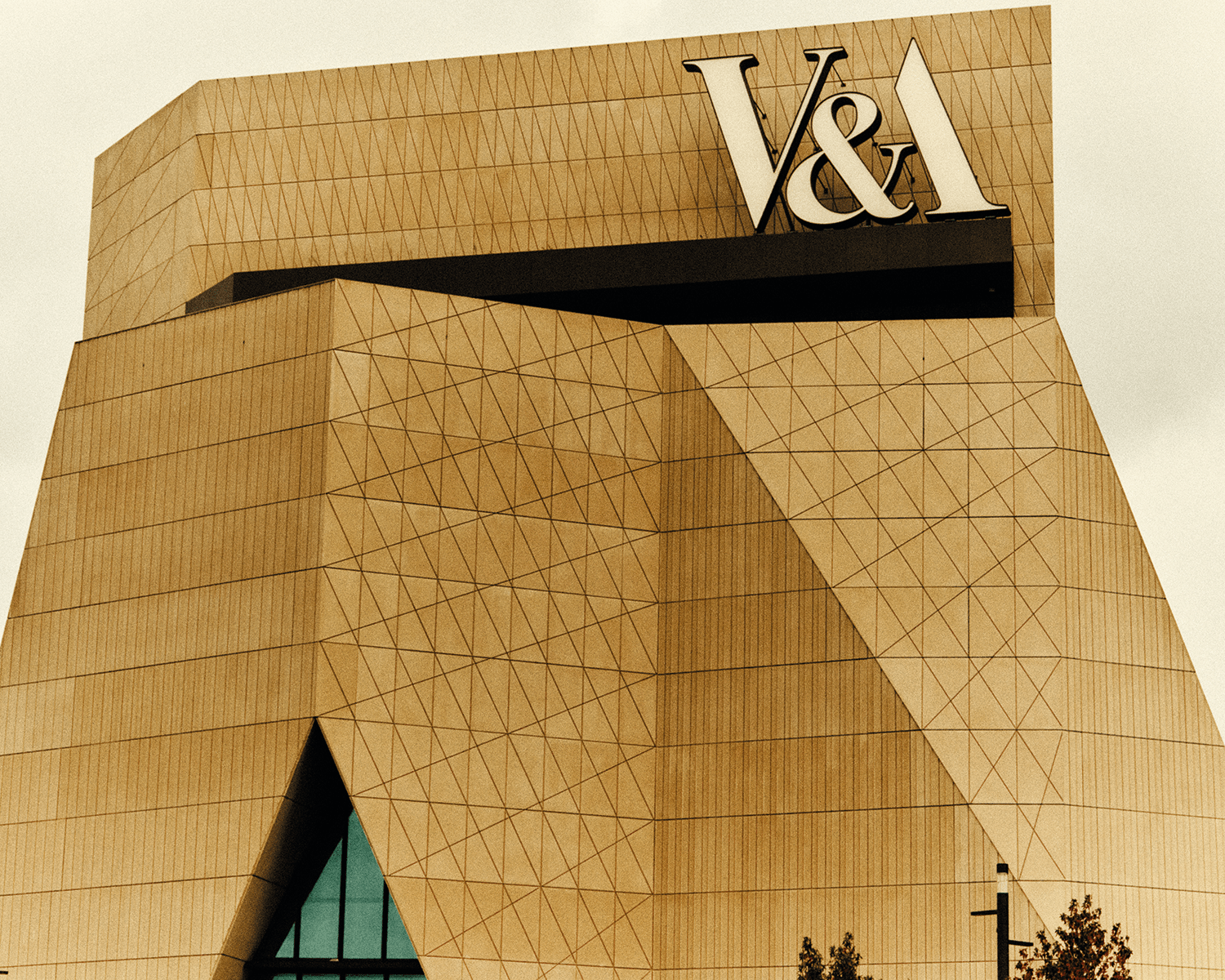
Whether London needed it is an argument I’d find difficult to carry: yet here it is, thrusting skywards like a giant blond molar – an impressive sight, but very much a satellite institution. Its purpose, however, is distinct: to attract a younger, ethnically diverse audience alienated by grander museums. This, perhaps, accounts for the fact that Irish practice O’Donnell + Tuomey’s design looks so deeply Marvelesque. The building itself somehow gives a lot of museum but not much exhibition space. Split over two floors, its small-ish permanent display is entitled ‘Why We Make’: annoying, sure, but a reasonable proposition. The youth thing should by rights be problematic. Normally, this approach sees curators going heavy on their idea of what they feel young people ought to like – or worse still: attempting to get down with the kids and dropping their pants in the process.
But the approach here is quite unobjectionable. Fielding a load of interesting objects in loosely thematic order, the museum tells you what they are and thence invites you to form your own conclusions. The first gallery advances the history of design as an exercise in pure escapism: there’s an explosive, hot pink Molly Goddard dress and a pair of Leigh Bowery’s maximalist gimp suits, seemingly locked in mortal combat; a polyethylene trouser suit by Hussein Chalayan (a protégé of my mum’s, as it turns out, when she taught at St Martin’s in the 1990s). There are zany pieces of furniture stacked up high in glass vitrines; and, inevitably, a small display devoted to William Morris. It’s puddle-shallow and tilted towards the contemporary – but it’s spectacular nonetheless.

The thinking bit comes on the next floor, which grapples with the question: why do we make? In this telling, anything goes: could be for communitarian purposes; to make the best of material and intellectual possibilities; for purposes of subversion; or indeed all of the above. There’s a handbag fashioned in Birmingham, c.1825, emblazoned with a cartoon condemning the slave trade; Protectorate-era rings adorned with portrait miniatures, tacit symbols of the Royalist cause; parts of a makeshift press used to stamp T-shirts with insurrectionary slogans in Lebanon. We get chairs made from postwar surplus and recycled plastic; the Whole Earth Catalogue and ingenious repairs to ceramics, clothing and smartphones.
The inaugural exhibition looks at black music in Britain – from the slave trade to drill. It really deserves its own review, one I’m scantly qualified to write. Yet even to my pasty sensibilities, this was great. A lot of the contextual stuff will be familiar, touching as it does on colonial atrocities, Marcus Garvey, race riots, and so on. But it’s tastefully mediated, smashing straight into a chronological history of subcultures electrified by a stellar soundtrack: ‘My Boy Lollipop’, ‘Silly Games’, ‘Unfinished Sympathy’ and, yes, So Solid Crew. It’s neither condescending nor likely to go over anyone’s head. I spent the night trawling the dustier recesses of my CD shelf, bingeing on lovers rock compilations.
I went twice in its opening week and identified its fundamental weakness only subsequently. Just up the road, the V&A East Storehouse operates as a fully functioning museum depository, but also as a museum in itself: it’s one of the most vertiginously impressive visitor experiences in Europe. V&A East Museum merits no such superlatives: indeed, you might well consider the new V&A an adjunct to its own storage facility. Yet it was rammed when I visited mid-week, and I was without doubt the oldest, whitest face in the throng. This confirmed my status as an ageing hipster – but also made me suspect that the V&A East might be doing its job rather well.
The V&A East Museum is open daily from 10 a.m. to 6 p.m., and Thursday and Saturday from 10 a.m. to 10 p.m.






Comments