Book review

Loved and lost | 2 June 2016

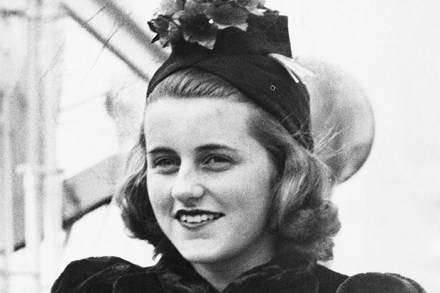
Kathleen Kennedy and her elder brother JFK were the grandchildren of upwardly mobile Irish Catholic immigrants. John F. Fitzgerald, ‘Honey Fitz’, became mayor of Boston, and Patrick J. Kennedy was a saloon-keeper and failed senatorial candidate who sent his sons to Harvard. ‘Kick’ was the fourth child, nicknamed for her ebullient personality, but born just as her mother, Rose, was thinking of leaving her serially unfaithful husband, Joe Kennedy Snr, who made his huge fortune from Hollywood studios and booze. Kick spent her early years schooled at, and confined to, convents, except when the whole family escaped to Hyannis Port or Palm Beach.
Northern lights | 2 June 2016

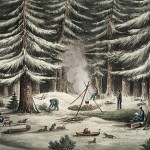
‘The only use of a gentleman in travelling,’ Emmeline Lowe wrote in 1857, ‘is to take care of the luggage.’ My sentiments entirely. The extract from Unprotected Females in Norway reprinted in this book recounts Lowe’s travels with her mother round the Dovrefjeld in the centre of the long country. Tramping through the valleys wearing mosquito veils, ‘solid plaid skirts’ and hobnail shoes, the pair reckoned that the only essentials were a driving whip and a fishing rod. Lowe (who published anonymously) is a spirited companion on the verdant plains and the snowy peaks, and her pleasure in the long boreal gloaming leaps infectiously from the page.

Wise women in wikuoms

In spurts and bursts and flashes, a sublime novelist at work reveals herself. In Annie Proulx’s new novel, there are breath-taking pages and set pieces of extraordinary power. A man on board a ship, as the temperature plummets, sees all those around him embedded in ice before the catastrophe falls on him; a logging run down a river blocks, builds and explodes with the force of missiles; a wall of fire sweeps across a forested wildness. There are individual chapters of great dramatic force, as Proulx’s people confront the possibilities before them and produce their own solutions. But are those flashes enough?

Why Juan Villoro is the best football writer you’ve never heard of | 28 May 2016

Football, unlike cricket, has for the most part been ill served by its writers. For every Brian Glanville and Ian Hamilton (the latter having employed his critical authority to become a first-rate reader of the game), the purveyors of hackneyed analysis are legion. In recent years there has been a propensity to celebrate tactics and formation (i.e. pedantry) over poetry. Latin Americans, however, have always fared slightly better with their writers — as they do with their players — who tend not to make the distinction between literature and sports writing. Gabriel García Márquez and Mario Vargas Llosa, both Nobel laureates, took to writing about the game early on in their careers. Juan Villoro is one of Mexico’s foremost men of letters.

Burning passions

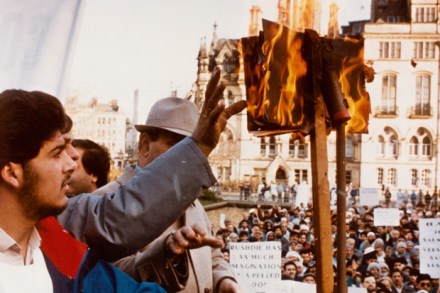
This is a book which, as one eyes its lavish illustrations and dips into its elegant prose, looks as if it ought to come with an option to buy a cut-price John Lewis coffee table. On the Burning of Books is, in fact, much more than that. It wears its scholarship lightly. A weightier treatment of the topic for those interested can be found in Matthew Fishburn’s Burning Books (2008). Kenneth Baker? A name that rings bells. But what did he do? He enjoyed high office in the Thatcher years. At one point he was touted as a contender for Downing Street. His legacy is the National Curriculum. Best forgotten is the Dangerous Dogs Act. Spitting Image caricatured him, spitefully, as a beslimed slug. He was probably the last politician in England seriously to use Brylcreem.

Last laughs | 26 May 2016

A card in a shop window — ‘non-unionised, auxiliary nurses sought… 35p per hour. Ideal for outgoing compassionate females’ — plunges 15-year-old Lizzie Vogel into the turmoil of Paradise Lodge, a local old people’s home: I didn’t want another year of trying to cheat the vending machine, relying on handouts and lifts and third-hand information, medicated shampoo, sugar sandwiches and scrounging cigarettes, babysitting for neighbours just to steal a pot of jam or some good quality teabags. Paradise Lodge is a chaos of commode alerts, unpaid bills and looming catastrophe, run by a bunch of amiable eccentrics — depressed owner, mad matron, variously unqualified staff, plus the son of the local Chinese takeaway owner.

An Oxford treasure trove

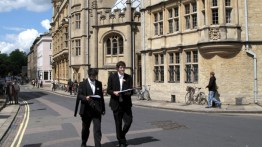
‘What distinguishes Cambridge from Oxford,’ wrote A.A. Milne in 1939, is that nobody who has been to Cambridge feels impelled to write about it… [whereas] every Oxonian has at least one book about Oxford inside him… Oxford men will say that this shows what a much more inspiring place Oxford is, and Cambridge men will say that it shows how much less quickly Oxford men grow up. The hefty and brilliant tome that has escaped from inside Professor Brockliss is very grown up indeed and, as a history of the university, greater than all those that have come before. (The previous, eight-volume account that inspired this one has many fine qualities, but accessibility is not one of them.

On Moses’s mountain

A medieval party of 800 Armenians at the top of Mount Sinai suddenly found themselves surrounded by fire. Their pilgrim staffs shone like candles but, wisely chanting ‘Kyrie Eleison’, they were relieved that after an hour or so the fire abated and not an eyelash of theirs was harmed. The top of Mount Sinai is no place to be stuck in an electrical storm, even less exposed to the fire of God’s presence. A steep mass of weathered granite 7,616 ft high overlooking the Red Sea, it could be climbed on foot (but not on mule-back) with the help of 3,700 steps built into the rock.

One club, no hearts

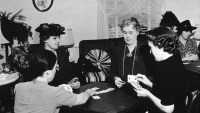
Not a single line of this highly distinctive memoir happens out of doors. All of it takes place in rooms: the dining-rooms and living-rooms, mainly, of five elderly, thin, Jewish bridge-playing ladies, Bette, Bea, Jackie, Rhoda and Roz, in a desirable suburb of New Haven, Connecticut. Their napkin rings are made of silver, porcelain, tortoiseshell, bamboo and Bakelite, and they put on their best necklaces and get out the best coffee cups when it’s their turn to host. They have met together to play bridge every Monday afternoon for over half a century. ‘Five ladies, luncheon of silvery fish, two decks of cards and a scoring pad nearby.’ (It’s five in the club, by the way, so there’s an extra if one of them is ill.

Lost in a time capsule

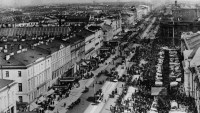
On her arrival in Russia in 1914, Gerty Freely finds it refreshingly liberal compared to her native Britain: here servants are treated well, parents encourage self-expression in children, poor students are given support, and intellectual discourse flourishes. Gerty comes to Moscow as the governess to a rich aristocratic family and stays through the war, the revolutions and the Red Terror. A free spirit, she embarks on her adventure with an enthusiasm which only grows in the face of the dramatic events she comes to witness. Gerty falls for the futurist of the title, Nikita Slavkin, an aspiring physicist, and both become ardent supporters of the revolutionary cause.

The great monkey puzzle

King Kong, the story of a violently amorous gorilla, Me Cheeta, the autobiography of a slanderous Hollywood chimpanzee, and now this, a benign biological, psychological and cultural survey, comes in further recognition of the versatility of our primate cousins. Both collateral branches of our family seem doomed (too many humans, too few apes), unless. . . Chris Herzfeld, a philosopher of science, an artist and a founder of the Great Apes Enrichment Project, has written a movingly tragic study in praise of Wattana, a Bornean orangutan. Even the restrained academic publisher calls it ‘poignant’. Commercial depredations are spoiling Wattana’s ancestral forest habitat at such a rate that the orangutans of Borneo will probably be extinct by 2030.

There’s no escape

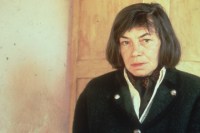
Patricia Highsmith was an accretion of oddities — a woman who doted on her pet snails and carried a selection of them in her handbag, who abandoned her native America for a restless life in Europe, and who turned a habitual paranoia into literature. Now, 20 years after her death, her reputation has been substantially increased by film versions of her Ripley novels and, most recently, Carol (an adaptation of The Price of Salt, her extraordinarily bold novel of a lesbian love affair). For all that, she is generally classed as a crime writer, albeit a very superior one. As one contemporary reviewer commented, ‘Patricia Highsmith is often called a mystery or crime writer, which is a bit like calling Picasso a draftsman.

Why Juan Villoro is the best football writer you’ve never heard of

Football, unlike cricket, has for the most part been ill served by its writers. For every Brian Glanville and Ian Hamilton (the latter having employed his critical authority to become a first-rate reader of the game), the purveyors of hackneyed analysis are legion. In recent years there has been a propensity to celebrate tactics and formation (i.e. pedantry) over poetry. Latin Americans, however, have always fared slightly better with their writers — as they do with their players — who tend not to make the distinction between literature and sports writing. Gabriel García Márquez and Mario Vargas Llosa, both Nobel laureates, took to writing about the game early on in their careers. Juan Villoro is one of Mexico’s foremost men of letters.

Great halls, last balls

Contrary to popular myth, the exuberant flame of life in the English country house was not extinguished by tears at the end of the Great War. And in his deliciously jaunty and wonderfully knowledgeable book, Adrian Tinniswood, social historian and country house authority, also upturns the story that huge numbers of Britain’s loveliest houses disappeared in the 1920s and 1930s, either through lack of heirs, despair, neglect or the stranglehold of taxation. He describes how instead, with ‘new aesthetics and new social structures’, the clubby, elitist, joyful prewar way of life adapted and became even more vibrant after the Armistice. In part, the yearning for a sense of rootedness had become more urgent than ever.

The elegiac and the exuberant

Discussions about the short story too often fall into a false dichotomy that can be characterised, in essence, by a quibble over a consonant. Carver or Carter? On the surface, it would be easy to present Philip Hensher as the Raymond Carver-like elegiac naturalist, giving glimpses of disappointed lives and misunderstood epiphanies, and Helen Oyeyemi as the Angela Carter-ish exuberant fabulist, all giddy metamorphoses and yarns within tales within stories. It would be a disservice to both collections to read them in such a manner. All the stories in Tales of Persuasion have an exquisitely tweezer-y feel to them.

Principles of heredity

Darwin came tantalisingly close to understanding them, 20th-century eugenicists obsessed over them, and with modern science, we are poised to control them as never before. Genes are a constant source of fascination, yet ignorance and misunderstanding plague almost every public discussion of their effects on our health and behaviour. How useful it would be, then, if there was a clear, accurate, and up-to-date pop science book on genetics, a book that recounted the history of genetic science and reflected on its implications for the future of medicine and society. This is the goal of the new book by oncologist-biologist Siddhartha Mukherjee. It is a lofty goal, and Mukherjee attempts it with lofty language.

The feast before the famine

If you had the resources, Georgian Ireland must have been a very agreeable place in which to live. It was certainly more prosperous and peaceful than it would be after the 1848 famine. This idyllic world is captured in Patricia McCarthy’s scholarly and highly entertaining work, which stretches from the start of the building of Castletown House, Co. Kildare, in 1722, to the 1848 famine.

The Feelgood factor

When I wrote for the NME as a schoolgirl in the 1980s, it was recognised that there were musicians who deserve derision — those whose egos and clothes’ bills dwarfed their talent — and those who commanded respect. Wilko Johnson, one-time guitarist of Dr Feelgood, was of the latter. Whether pacing moodily on stage, hammering out choppy refrains on Feelgood classics such as ‘Roxette’, or touring and recording with subsequent bandmates, he was a dedicated grafter with attitude and ability in spades. More recently, Johnson has been in the news for very different reasons. In 2012, he was diagnosed as having inoperable terminal pancreatic cancer.

Fleeing Mother Russia

‘Ah! Scrubbing the deck! My childhood dream! As a child I had once seen a sailor hosing the deck with a large hose while another sailor scrubbed away with a stiff, long-handled brush with bristles cut at an angle. I had thought at the time that nothing in the world could be jollier.’ This is Russian writer Teffi accepting her enforced labour on board a refugee ship fleeing Bolshevik Russia. Moments before, a dispossessed landowner has proclaimed his right to idleness — ‘Hire someone! Do whatever is necessary! If you prefer all this socialist nonsense, then what are you doing on this ship?