More from Books

China’s role in Soviet policy-making

Why should we want to read yet another thumping great book about the collapse of the Soviet empire? Sergey Radchenko attempts an answer in his well-constructed new work. Based on recently opened Soviet archives and on extensive work in the Chinese archives, it places particular weight on China’s role in Soviet policy-making. The details are colourful. It is fun to know that Mao Tse-Tung sent Stalin a present of spices, and that the mouse on which the Russians tested it promptly died. But the new material forces no major revision of previous interpretations. Perhaps the book is best seen as a meditation on the limitations of political power.

A tragedy waiting to happen: Tiananmen Square, by Lai Wen, reviewed

Lai Wen’s captivating book about growing up in China and witnessing the horrific massacre in Tiananmen Square reads like a memoir. The protagonist’s name is Lai, and her description of her parents is utterly convincing – the pretty, bitter housewife mother, jealous of the opportunities her daughter has; the father permanently cowed after being briefly interned by the government decades earlier. In a letter at the end, the author explains that her story is faction – embellished fiction. So how much is true? We will never know. I find this slightly irksome. I so admire writers like Henry Marsh, Karl Ove Knausgaard and Rachel Cusk who are prepared to irritate with their honesty.

The lion and the unicorn were fighting for the crown

Elizabeth I died at Richmond Palace on 24 March 1603 at the age of 69 after a reign of 45 years. Her health had been poor from the early 1590s onwards: arthritis, gastric disorders, chronic insomnia and migraines were just some of the ailments which plagued her. Yet, uniquely among English monarchs, she refused to make provision for the succession. James I made great efforts to ensure that his escape from the Gunpowder Plot would not soon be forgotten From Tudor to Stuart is Susan Doran’s enthralling account of the behind-the-scenes manoeuvres of those who had a viable claim to succeed the Virgin Queen.

My summer of love with God’s gift

When the author and podcaster Viv Groskop first visited Ukraine, she travelled there from Moscow, on a long train that ran eventually beside a field of sunflowers. They were, she recalls in her lovely and modestly scaled memoir, like a ‘blast of sunshine screaming: “Welcome to Ukraine! You are no longer in Russia!”’ The year was 1994, and Groskop had been in the former USSR for a little under a year. A modern languages undergraduate at Cambridge, she had decided to take her year abroad in St Petersburg. Until she got there, she had barely thought of Ukraine. It was one of a bunch of newly independent states; it hadn’t come up on her course.

My brilliant friend and betrayer, Inigo Philbrick

‘Inigo has never asked me not to write this book, but I had come to wonder whether I would have had the courage to write it were he not imprisoned,’ confesses Orlando Whitfield in his coruscating memoir of his friendship with Inigo Philbrick. He was the art dealer whose meteoric career exploded in spectacular style when he was convicted, aged 35, of wire fraud in 2022. Imagine Whitfield’s alarm on hearing that Philbrick had been released from prison in time for publication. By ‘flipping’ art works, Philbrick increased his earnings from ‘£35k a year to £35k a month’ Philbrick, who owes $86,672,790 in restitution payments, will have ample opportunity – and cash incentives – to give his side.

Heroines of antiquity – from Minoan Crete to Boudica’s Britain

She must have been a powerful swimmer. Her name was Hydna and she grew up in the port town of Scione on the northern coast of the Aegean. It was 480 BC, and the Graeco-Persian Wars were raging. The Persian fleet was anchored off Thessaly in eastern Greece, waiting for a great storm to blow through. Hydna and her father were waiting too. When night fell they dived off the harbour wall and into the dark, cold sea. For hours, the two of them swam towards the Persian ships. No one saw them approaching. No one saw them cut, one by one, the anchor ropes. Untethered, the ships were at the mercy of the storm. They smashed into one another, wrecking hulls and rowing decks. By the time calm returned, some 300 lay on the sea floor.

Visitants from the past: The Ministry of Time, by Kaliane Bradley, reviewed

If you could resuscitate a hunk from history, who would you choose? The secretive Whitehall ministry in Kaliane Bradley’s striking debut is working on time travel, facilitating the removal of various Brits from their own era to (roughly) ours. The candidates were all due to die anyway, so the risk of altering history is minimal. Curiously, the boffins do not pick Lord Byron, but a naval officer on the doomed Franklin expedition to the Arctic, lost in the search for the Northwest Passage. Each time traveller is assigned a ‘bridge’ – someone to both monitor and help them adapt to 21st-century London. Lieutenant Graham Gore is paired with a young female civil servant of mixed white and Cambodian heritage.

The glamour of grime: revisionist westerns of the 1970s

In 1967, the unexpected worldwide success of Bonnie and Clyde blindsided the Hollywood film industry, which then spent the next half decade attempting to adapt to the changing tastes of the new youth audience it had apparently captured. No matter that the picture took a pair of vicious, sociopathic thrill-killers who in real life were about as appealing as the Manson family and reinvented them as glamorous Robin Hood figures, there was obviously money to be made, and the studios wanted a slice of it.

How Margaret Thatcher could have saved London’s skyline

Looking around London on the eve of the millennium, it would have been difficult to think that the UK government had an adviser on architectural design. The 1990s had been a dismal decade. Yet such a body existed in the quaintly named Royal Fine Art Commission, refounded in 1924. The original Commission had been created as a way of giving Prince Albert, recently married to Queen Victoria, something to do – contriving the decorative scheme for the new Palace of Westminster. Fresco, the chosen medium, was not ideal in that damp position beside the Thames since the plaster took three years to dry; and the Duke of Wellington did not help the project by declaring he could not remember having met Blücher on the field of Waterloo, as depicted by Daniel Maclise.

Was the flapper style of the 1920s so liberating?

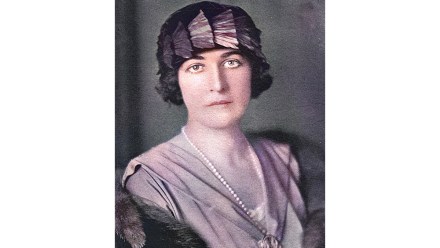
I had held Beauty’s sceptre, and had seen men slaves beneath it. I knew the isolation, the penalty of this greatness. Yet I owned it was an empire for which it might be well worth paying. —Olivia Shakespear, Beauty’s Hour (1896) All the Rage is a perfect title for a book about terrible beauty. The phrase means what’s fashionable at a particular time; but rage is a violent, sudden anger, stemming from the same Latin word that gives us rabies – mad, passionate, dangerous. Beauty, and its attainment, preservation and curse, are all things Virginia Nicholson chronicles and analyses in this compelling history spanning a century and focusing on its western, female manifestation.

A walled garden in Suffolk yields up its secrets

In the hot summer of 2020, during the Covid pandemic, Olivia Laing and her husband Ian moved from Cambridge to a beautiful Georgian house in a Suffolk village and began work on restoring the neglected, extensive walled garden behind it. She was vaguely aware that the garden had been owned and loved by the well-known garden designer and plantsman Mark Rumary, who had died in 2010. He had been the landscape director for the East Anglian nursery of Notcutts, and I remember him as a genial man overseeing extensive, award-winning tree and shrub exhibits at the Chelsea Flower Show in the 1980s. I once owned a copy of the Notcutts Book of Plants, written by him, which was an indispensable reference book for garden designers before the advent of the internet.

Abba’s genius was never to write a happy love song

Memories. Good days. Bad days. In 1992, U2 mounted their Zoo TV tour. U2 being U2, the gigs were over-earnest affairs, their showbiz razzmatazz never emulsifying with their agitprop posturing. But disbelief was colloidally suspended the night the show hit Stockholm – and U2 were joined on stage by Benny Andersson and Björn Ulväeus for a cover of ‘Dancing Queen’. In truth, that evening’s take on one of Abba’s meisterwerke was a lumpen affair. Bono had to drop his voice an octave for what ought to be the song’s soaring refrain.

Western economies are failing – but capitalism isn’t the problem

Real wages have barely increased for more than a decade. Banks have had to be bailed out, and many still exist on a form of state life support. Growth has stalled, taxes are at 70-year highs, yet governments are still bankrupt. Unless you happen to be part of a tiny plutocracy made up mostly of tech entrepreneurs and financiers, there has rarely been a point, at least since the nadir of the mid-1970s, when the economic system seemed beset by quite so many challenges as it is today. The left has smartly stepped into the intellectual space that has been created with a series of well-timed polemics, which, while they vary in precise analysis and on solutions, have at least one thing in common. They argue that the system is fundamentally broken, and it will take radical action to fix it.

From Cleopatra to Elizabeth Taylor, women have found jewels irresistible

When workmen demolished an ancient building in Cheapside in 1912 they saw something glinting out of a broken wooden box. They had stumbled on what became known as the Cheapside Hoard – a collection of jewels dating from around 1600, its star, the Cheapside Emerald, a wonderful stone holding a miniature watch. It came from Colombia, still the source of the world’s finest emeralds, probably the world’s most ancient gems. The first recorded instance of them is on an Egyptian papyrus around 2400 BC. Their beauty and rarity made them the favourite of the élite, with Cleopatra probably their most famous fan. The Rockefeller Emerald fetched $5.5 million in 2017.

A middle-aged man in crisis: How to Make a Bomb, by Rupert Thomson, reviewed

Philip Notman is going through what looks like a midlife crisis. Travelling home from an academic conference, he feels sick and disoriented to the point where he is barely able to function. Back in London, he can’t quite explain to his wife Anya, or indeed to himself, what’s ailing him. Is it just me, he wonders, or is everything unbearably toxic? Instead of working on his next book during a sabbatical, he sets off on a journey in search of a remedy. Rupert Thomson’s new novel has no full stops. In their place are paragraph breaks, with sentences abandoned on the page, increasing the sense of dislocation: Everything sick, he thought Everything in pain Starting from the title, the atmosphere grows increasingly ominous.

Learning the art lingo: the people, periods and -isms

When she first starts working as a security guard at the Guggenheim Museum in New York, Bianca Bosker is so bored that she prays someone will touch the art. ‘Do it, I urged silently from my spot by the wall. Do it so I can tell you not to.’ She’s to stand for hours on end, staring into space, reporting anything that could pose a threat. On the first day she radios her supervisors to alert them to a stray leaf: ‘Not exactly a suspicious package, but I needed something to interrupt the tedium.’ Wheedling your way into a self-contained world about which you know next to nothing is no mean feat The job is one of several Bosker picks up in her quest to understand why art matters.

The recklessness of George Mallory

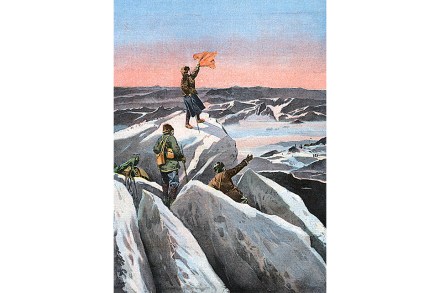
George Mallory bookended the 20th century history of Everest with his pioneering attempts in the 1920s to climb the mountain – and with the spectacular discovery, in 1999, of his body high up on the North Face, preserved by the ice for 75 years after he had failed to do so. His flip remark to a journalist that he was climbing Everest ‘because it was there’ became mountaineering’s most celebrated quote, while masking other less noble reasons. Mick Conefrey has become one of our finest gazetteers of the Himalaya, with successive books on K2, Kangchenjunga and later exploits on Everest. Now he turns his attention to a great conundrum of mountaineering history.

Women on a wind-swept island: Hagstone, by Sinéad Gleeson, reviewed

This absorbing and wild debut feels at once muzzily folkloric and sharply contemporary. It follows Nell, an artist who lives on a wind-whipped island without ties or commitments – until, that is, a group of women living an even quieter life commission her to make an artwork that will tell their story. The Inions, as they’re known, have come from all over the world to Rathglas, a crumbling old convent overlooking the sea. Naturally, rumours abound about them being a cult or a coven, but really they’re ‘ordinary women wanting a different kind of life’, who have rejected hatred and inequality in favour of seclusion and simplicity.