More from Books

Distrust and resentment have plagued Anglo-Russian relations for centuries

Has a book ever been more bizarrely mis-titled than this one? The First Cold War: Anglo-Russian Relations in the 19th Century has nothing whatever to do with the actual Cold War, nor is it for the most part concerned with the 19th century. Rather, Barbara Emerson has written a thorough and often diverting diplomatic history of Anglo-Russian relations from the 16th to the early 20th century. This period encompasses at least 14 wars in which British and Russian troops found themselves embroiled, sometimes on the same side, sometimes on opposite sides. None of these wars was remotely ‘cold’. Nor does Emerson attempt to make any argument that the shifting great power politics of the 19th century resembled those of the post-second-world-war nuclear age.

Citizens of nowhere: This Strange Eventful History, by Claire Messud, reviewed

Any personal history is hard to fictionalise, not least because the story needs to be both universal and unique. Claire Messud manages to find the right balance in her latest novel, reconstructing her family’s past in vivid episodes that open a multitude of windows on to the world. Continents and decades chase one another as the narrative traces the movements of the Cassar family. Hailing from Algeria, for much of the book they are citizens of nowhere. Their tribulations begin in 1940, when Lucienne and her children, François and Denise, flee Greece (where their father, Gaston, has been posted as the French naval attaché) to wait out the war in the relative safety of an Algerian hinterland.

The good old ways: nature’s best chance of recovery

Britain is one of the most nature-depleted places on Earth. The consequences for human wellbeing and resilience, as well as for non-human life, are grave. Conservationists and others say it doesn’t have to be this way. But when it comes to recovery, what should we aim for? How much can we know about what was once present? How much is it practicable or sensible to restore? What does recovery, let alone ‘rewilding’, really mean in a rapidly heating world? Sophie Yeo does not have the answers to all of these questions. Nobody does. What she does offer in Nature’s Ghosts are insights that could help shape a better informed and more constructive debate.

Disgusted of academia: a university lecturer bewails his lot

There’s a beautiful moment in I Am the Secret Footballer (2012), a Guardian column turned whistle-blower memoir, when the anonymous author is momentarily freed from an enveloping depression caused by his career as a professional sportsman. He’s at Anfield to play against Liverpool in one of the biggest games of the season when he picks up a pristine, unused football before a warm-up drill and, inexplicably, sniffs it. With that inhalation he’s transported from the corruption, pressure, scandalous abuse and monstrous egos of elite sport and for a few seconds becomes a kid uncontainably excited at the prospect of kicking a new ball around his council estate.

Kapows and wisecracks: Fight Me, by Austin Grossman, reviewed

Superheroes are the trump card of genres. As a rule of thumb, if a novel has a murder, it’s ‘Crime’; if it has a murder on a space station, it’s ‘Science Fiction’; and if it has a murder on a haunted space station, it’s ‘Horror’. But a novel with crimes, robots, faeries, cavemen, magic, cyborgs and time travel can only be ‘Superhero’. It is rarely successful outside the graphic variety, possibly because such strenuous suspension of disbelief is best managed in comics. Yet it can be done. Michael Chabon’s The Amazing Adventures of Kavalier and Klay is one, while Lavie Tidhar’s Our Violent Century and Nick Harkaway’s Titanium Noir are both clever and witty. Perhaps the most recognisable success was Austin Grossman’s smart 2007 Soon I Will Be Invincible.

At last we see Henry VIII’s wives as individuals

Divorced. Beheaded. Died. Divorced. Beheaded. Survived. Nearly 500 years after the death of Henry VIII, can there be anything new to say about his queens: Katherine of Aragon, Anne Boleyn, Jane Seymour, Anne of Cleves, Katherine Howard and Katherine Parr? Does the world need another book about this sextet? The answer to both questions, as this elegantly written and sumptuously illustrated volume makes clear, is a resounding yes. Published to coincide with the National Portrait Gallery’s exhibition of the same name (20 June-8 September), Six Lives is a collection of concise, accessible essays written by experts with specialist knowledge of Tudor painting, music, jewellery, manuscript illumination and book binding, among other topics.

Jam-packed with treasures: the eccentric Sir John Soane’s Museum

Sir John Soane’s Museum is one of London’s most eccentric buildings, containing a riot of classical fragments, paintings, architectural models and plaster casts jammed in to overflowing narrow galleries packed into a Georgian town house in Lincoln’s Inn Fields. Soane viewed it as a reflection of his busy intellect, ‘studies for my own mind’, he said, and Bruce Boucher’s new book reveals how the architect, famous for designing the Bank of England, put together the remarkable collection that visitors can still see today. The author was director of the Soane Museum from 2016 to last year, and his privileged access to its archives ensures we get an insider’s view of the quirky institution and its more than 40,000 eclectic objects.

The sheer drudgery of professional tennis

Wimbledon’s starched whites, manicured flower beds and hushed silence enable tennis to present itself as a genteel sport. But Wimbledon only represents tennis in the way that an Olympic 100m final represents athletics. It is the best players in the best setting for a brief period. Actual tennis, the day-to-day life of a regular player on the circuit, is very different. It is relentless, stingy and unsentimental. The most surprising thing about The Racket, Conor Niland’s bruising account of his career as a good (but not great) tennis player, is that he emerges with both his sanity and his compassion intact. Tennis is not an easy game to break into.

The costly legacy of Margaret Thatcher’s monetarism

Post-war British economic history is littered with failed policy panaceas. Keynesian demand management would solve the unemployment problem; the Exchange Rate Mechanism would provide an anchor for stability and end sterling’s perennial weakness; the Barber and Kwarteng budgets – separated by 50 years – would throw off the shackles of Treasury orthodoxy and put the country on a path to higher growth. On the face of it, monetarism – the theory that if you control the money supply, you control inflation – fits squarely into this paradigm. As soon as government sought to control the money supply, the historic relationship between money and inflation broke down.

The English lieutenant’s Frenchwoman: the tragic story of Adèle Hugo

In 1882, a sneaky reporter from the Figaro managed to track down Victor Hugo’s only surviving, long-forgotten child to an expensive mental asylum on the edge of Paris. He stalked her as she was being taken for a walk in the local park. She had the ‘profile of a duchess’, ‘staring black eyes’, a perilous hopping gait and odd compulsions. According to the reporter’s inside source, ‘Mme Pinson’ had spent a month removing all the rocks from the asylum’s long driveway and then replaced them one at a time. Thirty-three years later, she could still play the piano and claimed to be writing an opera titled Venus in Exile. She also enjoyed tearing up the pages of books and stuffing the confetti into her bag.

Bayes’s Theorem: the mathematical formula that ‘explains the world’

Here’s a profound question about beards: is the number of acrobats with beards the same as the number of bearded people who are acrobats? Go with your gut instinct. It’s not a trick question. If you answer ‘yes’, then you’ve understood the central idea behind Bayes’s theorem. If you’re one of those people who likes to titter about how bad you are at mathematics, stop it. Retake your GCSE, learn how to pin this obviousness down in symbols, and you can produce artificial intelligence, forecast stock market collapses and understand this: P(A|B) = (P(B|A)∙P(A))/(P(B)) This is Bayes’s equation, the formula which, as Tom Chivers insists in this remarkable, bold book, ‘explains the world’. Rich mathematics begins by spotting an oddity in the obvious.

Second life: Playboy, by Constance Debré, reviewed

Playboy is part one of a trilogy that draws on the life of its author, Constance Debré. Part two, Love Me Tender, was published in Britain last year. The trilogy was inspired by Debré’s experience of leaving her husband, abandoning her career as a lawyer, and then losing custody of her child when she re-emerged as a lesbian (and a writer). In Love Me Tender we met a womaniser who referred to girls by numbers rather than their names; in Playboy, via her first female lovers, we witness her transformation into a queer Casanova. The novel is bold and brash and at the same time quietly controlled. Take this line: ‘We’re all selfish, parents, kids, he, I, it’s no big deal, that’s life, it’ll all be fine.

Why must we be in constant battle with the ocean?

I recently learned to dive in the bay of Dakar. It was exciting. I’d started learning in a Leeds swimming pool and though I knew the ocean would feel different, I didn’t expect it to feel comfortable. It shouldn’t. It is not my element, and humans have long since left it to the rest of the ocean’s creatures. I also didn’t think the ocean would sound like my neck when I roll it during yoga: that same crackle. With their remarkable sonar, dolphins can even tell when a human is pregnant That the ocean is not quiet is one of the most pleasing revelations of the past century (I mean the ocean’s native noise, the fish songs and grunting and whistles – not ships’ propellers). But it is not the best revelation.

A Native American tragedy: Wandering Stars, by Tommy Orange, reviewed

‘You will ask the librarian what novels are written by Indian people and she will tell you that she doesn’t think there are any,’ reflects Victoria Bear Shield, a Native single mother in Tommy Orange’s polyphonic second novel. It is 1954, in America, and she is working out how to rear her baby daughter so that the child is not puzzled, as she herself was, by being ‘the brownest person in every room’. Seventy years later, one would hope that the librarian’s knowledge of indigenous writers would include at least Orange’s own work and that of Sherman Alexie and Louise Erdrich. Orange is a member of the Cheyenne and Arapaho tribes and his first novel, There There (2018), was one of Barack Obama’s books of the year and a Pulitzer Prize finalist.

The ordeal of sitting for my father Lucian Freud

The frontispiece of this book is Lucian Freud’s portrait of his daughter Rose naked on a bed. Rose says that when her father asked her to sit, which she had long hoped he would do, she naturally assumed he would want her naked, but asked him not to paint her hairy legs. He, in turn, asked her to remove her mascara, but she refused. When she saw the canvas she was shocked at how much it focused on her vulva, but she did not object. She sat for him at night – he had other sitters during the day – and he sometimes gave her purple hearts to keep awake. When the portrait was finished, she took on the task of cleaning Freud’s studio, which ‘made me feel special, downtrodden, and loved for all the wrong reasons’. Rose was born in 1958, 18 months after her brother, Ali.

Did the Duchess of Windsor fake the theft of her own jewels?

On 16 October 1946, the Duke of Windsor, the former Edward VIII, and his wife Wallis were visiting England for a short period. They were staying with their friends the Dudleys at Ednam Lodge in Surrey, and felt sufficiently comfortable not to store Wallis’s impressive collection of jewellery in the house’s safe room, but instead kept it – with almost breathtaking carelessness – under the bed. It is unsurprising, then, that an opportunistic thief was able to break into the house while the Duke and Duchess were dining in London, steal the jewels and make good his escape without detection. If this was all there was to the story, it would be diverting but inconsequential.

When Stalin was the lesser of two evils

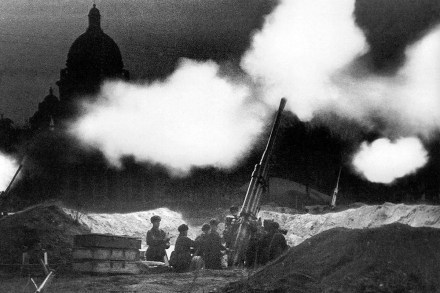
‘We are resolved to destroy Hitler and every vestige of the Nazi regime... Any man or state who fights against Nazism will have our aid.’ These words were spoken by Winston Churchill in a BBC radio broadcast to the nation from Chequers on the evening of 22 June 1941. Churchill detested Stalin – but he needed him to destroy Hitler That morning, Operation Barbarossa had begun, with Hitler’s armed forces launching the biggest invasion in modern history into the heart of a country whose very existence Churchill detested: the Soviet Union. This cataclysmic invasion by the Nazi regime, however, created an ally the British leader had never envisioned. For the previous 22 months, Great Britain’s war with Nazi Germany had not gone well.

Haunted by the past: Winterberg’s Last Journey, by Jaroslav Rudis, reviewed

Jaroslav Rudis’s latest novel follows the 99-year-old Wenzel Winterberg, a Sudetenland German, and his middle-aged Czech carer, Jan Kraus, on what is a quirky European take on the buddy road-trip story. Marx claimed that ‘men make their own history’, but do so under the burden of the past, with the weight of dead generations upon them. The tragedy soon to become a farce begins, according to Winterberg, at the site of the Battle of Königgrätz, with the old man proclaiming: ‘The Battle of Königgrätz runs through my heart.’ He then rambles on about its ‘half a million ghosts’, their roles and where they lie now, before blaming the battle for the loss of his first wife, the madness of his second, and then the death of his third.