More from Books

The strange birth of liberal England

If the road to hell is paved with good intentions, the one to heaven may be surfaced with bad ones. We like to imagine otherwise. We are rational, sensible, moral creatures. If we only think scientifically and apply ourselves, we can achieve anything. Hence the recent secular historiography of the Enlightenment and modern world, which, at least according to Steven Pinker’s latest offering, can be explained straightforwardly by the emergence of science, reason and humanism. Alas, history is not so neat, as real historians know. Good things often come from bad intentions.

Running on empty, and on and on

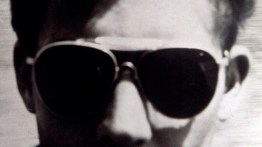
Hunter Stockton Thompson blazed across the republic of American arts and letters for too short a time. When in February 2005 Thompson, 67, killed himself with a .45 at home in Woody Creek, Colorado, freethinkers and lovers of his savage, beautiful words grieved the world over — and we still do. Thompson was a Southern boy from Louisville, Kentucky, whence comes F. Scott Fitzgerald’s Daisy Fay, later Buchanan. After a sally into higher education and military service, both marked by varying degrees of brilliance and insubordination, Thompson moved to New York City and worked as a reporter. His specialty was, initially, sport, and his forte was observation.

Mocking the mandarins

Stendhal likened politics in literature to a pistol-shot in a concert: crude, but compelling. When that politics largely consists of machinations within the European Commission in Brussels, readers may fear that the writer who pulls the trigger wields no more than a pop-gun. Yet the Austrian author Robert Menasse has scoured these corridors of power — and powerlessness — to furnish a thoroughly entertaining fiction that serves both as a sort of campus satire and a novel of ideas. For sure, Menasse has an agenda. His nicest characters tend to believe in the ‘post-national democracy’ of EU integration. Still, their efforts to sell the Brussels system as ‘the moral of history’ pass through enough comically convoluted byways to give succour to sceptics too.

Dialogue with the dead

When Yiyun Li first became a writer, she decided that she would leave behind her native language, Chinese, and never write or be published in it again. She has described this decision as being like a suicide. In languages, she suggests, we form our identities. Leaving one behind is a death of a version of our self; and starting afresh in a new language is a kind of rebirth. In Where Reasons End, the English language, in which Li has made her name as a Chinese-American author, has transformed into something the narrator can no longer depend upon.

A man of great magnetism

Chances are, you are reading these words in some room or other. Build a wall down the middle of it, and in the middle of the wall, insert a tiny shutter. Conjure up a tiny critter who can open and shut this little door at will. When a hotter-than-average air molecule careers towards it, the creature opens the shutter and lets the molecule pass to the other side of the room. Colder-than-average molecules are allowed to pass in the other direction. Soon enough, one half of the room is sweltering, while the other half is distinctly nippy. Magic? Not yet. A fridge performs exactly this trick, pumping heat out of its interior through that dinky radiator at the back. The refrigerator only becomes magical if it carries on running after you unplug it. Fighting entropy is expensive.

Tormented by guilt and desire

James Lasdun is my favourite ‘should be famous’ writer, his work extraordinarily taut and compelling. His eye-boggling psychological thrillers are understated, yet perspicacious and hilarious. By ‘psychological thriller’ I don’t mean they contain newsworthy physical violence. Lasdun is too English for that (although he now lives in New York). I mean the kind of dilemmas that would have your average, settled individual writhing in empathetic angst: secrets and lies in a kaleidoscope; knuckles-in-mouth mortification. Unwittingly (because he started them before the furore), Lasdun has written two superb novellas for the #MeToo age, published together in Victory. Both explore themes of lust, transgression, self-delusion and male friendships.

Ninety degrees north

Having spent too much of my life at both poles (writing, not sledge-pulling), I know the spells those places cast. Michael Bravo promises to reveal something of that enigma, claiming at the outset of his book: ‘I will treat the mysterious power and allure of the North Pole in a way you will not have seen before.’ The volume is one of an interesting series on the cultural history of natural phenomena, that includes a title on Fire, and another on Swamp. Bravo structures his book around the struggle of navigators and philosophers to make sense of the strange powers of the North Pole, beginning with the ancients of Greece, Egypt, India and Persia.

Moving images of Christianity

The Italian film director Federico Fellini was not known for his piety (far from it), yet towards the end of his life in around 1990 he determined to film Dante’s Inferno for national television. The brimstone poem appealed to Fellini for its comico-grotesque scenes of mass writhing human nudity amid firecracker detonations. He was not the first filmmaker to take on the work of the medieval Florentine poet. In the early 1970s, Fellini’s compatriot Franco Zeffirelli persuaded Dustin Hoffman to star as Dante Alighieri in his own version of the Inferno. Hoffman, dressed in a medieval coif hat and Tootsie-red robe, was supposed to wander through a sulphurous underworld accompanied by the Latin poet Virgil. Nothing came of either Zeffirelli’s or Fellini’s Inferno.

Reading the reeds

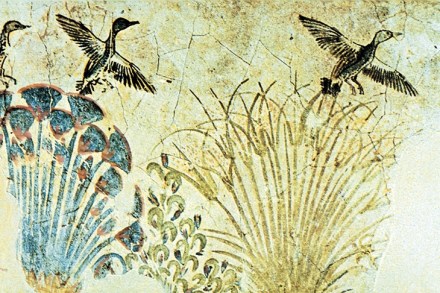
In 2016, after some unseemly back-and-forth between the Commons and Lords, it was decided that Acts of Parliament should no longer be printed on calfskin. Instead, new acts are now recorded on paper, though, in a classic parliamentary compromise, they will still be bound between vellum covers. Since the first paper mills appeared in Britain at the end of the 15th century —and paper almost immediately became the dominant medium for print — this means that parliament has managed valiantly to hold back the paper tide for over half a millennium. (To be fair, they only stopped writing acts out by hand in 1849, four centuries after Gutenberg.) Meanwhile, over the past 15 years, I have come to conduct most of my daily correspondence by email rather than troubling the postal service.

Echoes of The Tempest…

‘I should not have gone back to the island but I did it all the same.’ So begins the Swedish author Steve Sem-Sandberg’s brief, dark and wonderfully atmospheric 12th novel, The Tempest. Islands play a special role in our literary imagination. They are crucibles, havens, prisons and escapes, places of magic and mysterious transformation, worlds that can be shaped and owned. There is a rich history of island-writing, from D.H. Lawrence to J.M. Barrie, Compton Mackenzie to Aldous Huxley, William Golding to John Fowles. Behind them all sits Shakespeare’s late, troublesome, self-reflexive play of creativity and destruction, forgiveness and retribution. Sem-Sandberg’s island is one of a small archipelago sitting in a fjord on the Norwegian coast.

A true labour of love

This is a fascinating example of a small genre, in which the author decides at an early stage in his adult life that he would like to devote himself to a great figure whom he idolises, but who needs help of one kind or another to continue with his work, or at least for what he has done to be more widely appreciated.  The classic case in the recent past is that of Robert Craft, who in his early twenties offered his unlimited services to Igor Stravinsky, and can plausibly be claimed to have enabled the Master to create the works of his last decade, but who also fought against being seen as no more than a vassal, and whose copious writings, in all their brilliance, both celebrate Stravinsky and reduce him, at least as a person, to size.

Everybody hates you – except for me

It’s unusual for musicians to become writers. The trajectory of yearning is meant to be the other way around. When I was a teenager working at the New Musical Express I was bemused by the number of men there who had won the greatest prize on earth — being paid to write — but nevertheless dreamt only of being crooning cretins, singing the same songs over and over again.

Get me out of here

‘If your time ain’t come, not even a doctor can kill you’ — so goes the proverb that best echoes the dilemma of an ageing humankind as we glimpse the harrowing vista of decrepitude to come: a panorama that first takes in the custard-stained wingback chairs of a soul-extinguishing care home, then yaws off nauseatingly to a vision of the demented and the drooling as they hobble into that good night. How can you swerve incarceration and indignity when you just won’t die — and, more pertinently, when no one is allowed to kill you? How to be the auteur of your own death when ‘self-euthanasia’ proves so tricky you need the help of a loved one, thus implicating them in a criminal act?

Something sensational to read in the train

Any memoir is a form of double-entry book-keeping, in which what has been lost is reckoned against what has been gained. It’s always easier to fill in the ‘lost’ column, since boasting is discouraged; sadness gets more attention, too, as it’s generally supposed to be more interesting than contentment. Sophie Ratcliffe includes an actual list of her losses in this wonderful and highly individual book. The items include an Australian opal her uncle gave her, a purse snatched from her at St Petersburg railway station, her father, and the exact memory of a lover’s face. ‘Not that your face was much to write home about,’ she adds. ‘Not that I could write home about it in any case.

Life at the Globe | 7 February 2019

    IN ASSOCIATION WITH THE PRINCIPAL PARTNERS OF SHAKESPEARE’S GLOBE’S 2019 SUMMER SEASON Though the new production of Richard II we’ve been discussing here is taking place at the Globe, it’s perhaps worth remembering that the original didn’t. The play precedes the building of the first theatre by half a decade or so. It is thought to have been written in 1595; its first recorded staging is from the winter of that year in a private house in the presence of Queen Elizabeth’s privy councillor Robert Cecil, Lord Salisbury (who would go on to be a pivotal figure in her reign and the early Jacobean era). Its first appearance in print was in a Quarto of 1597.

The kiss of death

I once threw Tony Parker’s Lighthouse across the fo’c’sle of a ship at sea when I read that his characters were composites. Oral history should be historical, or it goes into the ocean. So it is a shame that I sometimes question Xinran’s authenticity in this account of the loves and lives of four generations of Chinese women. I question conversations recalled verbatim when they clearly weren’t recorded; and perfectly rendered speech when only notes were taken. Is this too severe? Then it is appropriate, because severity is something you must get used to, though this is a book about the Chinese concept of ‘talk love’, defined as ‘the process of cultivating love or interacting on the basis of love’, possibly leading to marriage.

… and The Comedy of Errors

The phrase ‘Shakespeare comedy’ is an oxymoron with a long pedigree, one which perhaps stretches back to the late 16th century; and a running joke in Ben Elton’s Upstart Crow is that no one finds the comedies funny except their author, who thinks they’re hilarious. So it is a brave writer who, in a bid for laughs, bases a Shakespeare comedy on a Shakespeare comedy — in this case The Comedy of Errors. Fortunately, Marie Phillips has the wit, and sufficient wisdom, to pull it off. In Oh I Do Like to Be… Shakespeare is reborn in a grotty English seaside resort, not once but twice.

A violent, surrealist world

Kristen Roupenian’s debut collection, You Know You Want This (Cape, £12.99), comes hotly anticipated. Her short story, ‘Cat Person’, went viral when the New Yorker printed it in December 2017, becoming the second most read article published by the magazine that year. Told in an apparently simple, confessional voice, it recounts 20-year-old Margot’s courtship with 34-year-old Robert, beginning when she flirts while selling him sweets at an art-house cinema, building via text messages, culminating in a night of terrible (for Margot) sex from which she can’t quite be bothered to extricate herself, and continuing in the nasty afterlife of Robert’s increasingly aggressive texts. Everyone read it and everyone argued about it.