More from Books

Kidnapped by Kett

Tombland is not to be treated lightly. Its length hints at its ambitions. Here is a Tudor epic disguised as a historical crime novel. C.J. Sansom’s ‘Shardlake’ series, of which this is the seventh episode, deals with the activities of a hunchbacked lawyer in the 1530s and 1540s. The bloated old king is now dead, and his son, Edward VI, a minor, rules through the Lord Protector, his uncle Somerset. England is in a parlous state — verging on bankruptcy after a disastrous Scottish war, uneasy with the new regime’s ultra-Protestant policies and on the brink of civil unrest. Shardlake has somehow managed to cling to his integrity, despite having some dangerously high-profile clients.

Manic creations

American mass-incarceration is the most overt object of the ‘protest’ of this novel’s subtitle. The author, Sergio De La Pava, works as a public defender in New York City, and calls on an intimate secondhand knowledge of the many different sorrows to be found in the ripples of a single criminal case. But Lost Empress is also about other kinds of losses and limitations to human freedom. One minor character, a Colombian immigrant striving on behalf of his children, endures labour that ‘felt like a prison sentence’ or an ‘abyss’, opened up by ‘the desaturation of meaning’. He is killed in an accident early on; for his son, the grief is ‘a form of imprisonment’.

Little women, big issues

The great thing about Louisa May Alcott’s classic Little Women is that it has something for everyone: stay-at-home types have the oldest of the March sisters, Meg, who struggles to reconcile her love of ease with both her responsibilities and the family’s genteel poverty (and does at least manage to have one night of fun at the Moffatts’ party, sipping their champagne with one hand and sporting her single good glove on the other, before settling down with a nice husband and even better linen cupboard); cool-slash-mean girls have Amy, who wrestles with vanity — not hugely successfully IMHO (Amy would be a demon with textspeak and indeed probably the first social media star from Massachusetts); romantics have Beth and her chronic timidity and pulmonary weakness; and t.

Tory table talk

I bet that you are at best dimly aware of the Progress Trust, and that is what the members of this now-defunct fixture would have wanted. It was a misleadingly named group of comfortably off, often landed backbench Tory MPs, and its weekly discussions very rarely leaked. An unnamed member once explained why. ‘We have no shits,’ he said. The Trust, which would number Alec Douglas-Home and David Cameron, briefly, among its members, was secretive from the outset. It was established in 1943 to resume a more partisan style of politics, at a time when both main parties were still in theory committed to a ceasefire that the Conservatives felt Labour was breaking.

Big cats and acrobats

We’re celebrating 250 years of circus this year. In 1768, the retired cavalryman and entrepreneur Philip Astley, together with his trick-rider wife Patty Jones (whose act was to gallop around the ring smothered in a swarm of bees) took a piece of rope, laid it in a circle on a piece of marshy land at London’s South Bank, and filled it with astonishing acts — tumblers, acrobats, jugglers, clowns. This was the very first circus. Every circus, anywhere in the world, began at that moment. The extraordinary new art form — a collection of street acts and horse tricks, infused with spectacle and risk and set in a circle — quickly trotted off around the world. It first sailed to Dublin, then spread throughout Europe and over to America, India and Australia.

Stitches in time | 11 October 2018

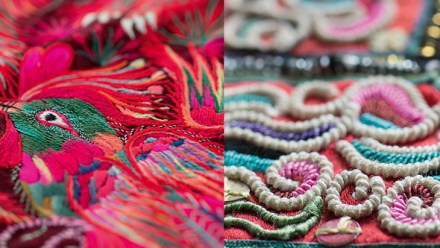
I recently read a book in which the author, describing rural life in the early 19th century, casually mentioned clothing as being ‘all made in the home’. I laughed. Anyone who has ever tried to sew anything (let alone make an entire family’s wardrobe by hand) would not be so cavalier about the amount of labour involved. But it is typical of how a female trade tends to be dismissed as something anyone (well, women) can do in their spare time, as a picturesque hobby. Nobody similarly suggests that farmers in the 1800s made all their own furniture or saddles. But just like those items, clothing was made by people who made clothing for a living.

Passionate pursuits

André Aciman’s 2007 debut novel, Call Me By Your Name, was a sensuous, captivating account of the passionate love a cosmopolitan teenage boy bore for an older American man, which has since been made into an elegant and successful film, directed by Luca Guadagnino. For readers of all sexual persuasions, there was universality in young Elio’s desperation, the false starts and misreadings in his interactions with his desired; the consummation and the final disappointment. Love, unrequited or not, is something of an Aciman speciality, and he returns to it here in his fourth book, Enigma Variations. More of a collection of vignettes than a straightforward novel, it examines the emotional turbulence of the narrator with an exacting, often lyrical eye.

The scourge of the Raj

‘It’s a beautiful world if it wasn’t for Gandhi who is really a perfect nuisance,’ Lord Willingdon, Viceroy of India, wrote in 1933. Gandhi would have been 150 years old in 2019, had he taken better care of himself. He remains the most irritating and admired politician of the 20th century: a perfect subverter of power and political logic, but a nuisance to everyone, allies included. Only Hitler, the other anti-capitalist spiritual politician who broke the British Empire, fascinates to the same degree. The first volume of Ramachandra Guha’s biography, Gandhi Before India (2013), carried the young Gandhi across the British Empire from Kathiawar to London to Cape Town.

The man who disappeared | 11 October 2018

A novel by Javier Marías, as his millions of readers know, is never what it purports to be. Spain’s most eminent novelist, Nobel laureate in waiting, translated into more than 40 languages, Marías likes to play with existential ideas. The Infatuations was ostensibly a murder mystery; Thus Bad Begins chronicled a loss of innocence. But the stories are always interwoven with deliberations on truth, morality, deceit and the impossibility of knowing one another, with side trips through literature and history. Marías’s closeness to Cervantes, Proust and, above all, Sterne is no secret. Shandyesque digressions are among the incidental pleasures faithful readers have come to expect.

Betraying bandits

Spy stories, whether the stuff of fictional thrillers or, as in the case of Sergei Skripal, the real deal — often leave a question nagging. For all the tales of tradecraft and tension, double agents and drama, what difference did one person’s decision to spy really make? That is not the case with Oleg Gordievsky. Gordievsky’s story is remarkable because it has all the drama of a fictional tale and yet also conveys why a single person’s choices can make a difference. Gordievsky was a rising star in the KGB, but one who became disillusioned with the regime he was serving — particularly as he watched the crushing of the Prague Spring by Soviet tanks in 1968.

India on the brink

Most religions bind their adherents into a community of believers. Hinduism segregates them into castes. And people excluded from the hierarchical caste system — the ‘untouchables’ — are permanently doomed to a life of scripturally sanctioned calvary. This hideousness doesn’t, however, hinder Shashi Tharoor from breathlessly exalting Hinduism as ‘a religion for the 21st century’.

Which came first?

Those who study culture — or think about public policy in relation to it — often wrestle with the classic post hoc dilemma: did a work or movement in popular culture influence events in real life, or did it simply reflect the zeitgeist? Were, say, ‘video nasties’ responsible for an uptick in violence and sadism in a generation of British youth? The Daily Mail seemed to think so, although today their hysterical headlines appear faintly ridiculous. Were the two broken boys who committed the Columbine shootings in Colorado shaped by The Matrix? Or did they simply recognise in that film a stylish myth in which to dress their murder/suicide pact?

Short on wit

Nominative determinism is the term for that pleasing accord you occasionally find between name and profession: the immigration minister named Brokenshire, the sprinter named Bolt, and so on. Apparently, there was once a Republican candidate for the California state assembly called Rich White. And how wonderful for there to be a comic novelist called Patrick deWitt. Booker-shortlisted for his western pastiche, The Sisters Brothers, and praised as a latter-day P.G. Wodehouse, the Canadian author certainly seems sure of his calling. My copy of French Exit opens with a letter explaining that each character in his fourth novel ‘deliver[ed] on his or her promise, or beyond his or her promise’.

A very big life

In the autumn of 1897, after two years in jail on a charge of ‘gross indecency’, Oscar Wilde absconded to Italy with the deplorable Lord Alfred Douglas. Sodomy, whether with man or beast, carried a sentence of servitude for life in Victorian Britain: prigs protested that Wilde had got off lightly. In Naples, ragamuffin capital of the Italian south, the Dublin-born outcast went to ground with Bosie in the Villa Guidice (now the Villa Bracale) at 37 Via Posillipo. Inevitably there was press intrusion. The English-language Naples Echo was quick to announce the arrival of Sebastian Melmouth: ‘Readers may know that this is the pseudonym of Oscar Wilde.’ Where to hide?

Is it possible to talk about wine without sounding like a prat?

There are only two British television wine presenters taxi drivers have heard of, Jilly Goolden and Oz Clarke. Who can forget their double act on Food & Drink in the 1980s and ’90s? Since then innumerable cooks have become household names but there have never been any other wine celebrities who pass the cabbie test. As a child I assumed that Oz was Johnny to Jilly’s Fanny Cradock, looking on in awe as she came up with outlandish wine descriptions. He says in his new book, Red & White: ‘people used to think we were married’. But later I discovered that Oz is a wine expert of startling erudition and eloquence. I’ve tasted with him a few times and his knowledge and recall are astonishing.

Oedipus vex

Coming 12 years after his acclaimed debut, Londonstani, Gautam Malkani’s second novel Distortion features a vivid argot, complicating and defamiliarising everyday terms and activities. In its pages, young people do things in exciting new ways, for example going down stairs: ‘It’s the most longed-out staircase you ever saw. Steps so far apart you gotta keep checking your stride.’ Old-dude technology requires explanation: ‘Deskphone’s got some caller-display screen but it only does its thing if they dial you direct.’ Actually, everything requires explanation, nearly always called ‘mansplaining’, the narrator Dillon/Dhilan/Dylan missing the point that it’s what men do to women they assume are stupid. Why the three names?

Field trip with father

Sarah Moss’s concise, claustrophobic sixth novel concerns the perils of family life. The narrator Silvie is a frustrated 17-year-old on holiday in the Northumbrian countryside with her father Bill, a bus driver with an insatiable interest in prehistoric Britain, and her mother Alison, who works as a cashier in a supermarket. They have joined an ‘experiential archeology’ field trip — ‘to have a flavour of Iron Age life’ — run by Professor Slade for a group of his university students. But Silvie dislikes the scratchy tunic that she’s forced to wear and the small wooden hut she must sleep in because her father insists on authenticity.

The unwinnable war

Many wars have outsized and enduring effects on the societies that fight them, but for Americans the Vietnam war has one attribute that guarantees its longevity as a suppurating wound in the national psyche: it was a loss. Analyses have been numerous and perennial, from David Halberstam’s contemporary portrait of the policymakers who led the country into war, The Best and the Brightest, to last year’s mammoth ten-part documentary series by Ken Burns and Lynn Novick, The Vietnam War.