More from Books

Even psychiatrists don’t know how the drugs they prescribe work

What is it like to go mad? Not so much developing depression or having a panic attack — which is wearyingly familiar to many of us — but to go properly mad, the sort of madness that involves delusions and police officers and locked psychiatric wards? Horatio Clare didn’t have to imagine what that was like for his book Heavy Light. It’s a memoir, subtitled ‘A Journey Through Madness, Mania and Healing’, and is an unsparing tale not just of what it was like for him to succumb to a psychotic episode but also of what it did to his family. The book starts with a skiing holiday in Italy with his partner Rebecca and the children.

The least familiar stretches of Nile prove the most interesting

It’s one of the most tantalising travel images in the world — a felucca floating along the Nile at sunset, its lateen sail spread aslant to catch the wind. It takes us back to the beginnings of ancient Egypt, when the need to manage Nilotic flooding and the imperative to trade along the river’s course were the motors of civilisation. Even 2,500 years ago Herodotus was fascinated by the ease with which the Egyptians had learned to cultivate the soil with its waters rather than with laborious ploughs — which, some speculate, had given them the leisure to build pyramids in the down months.

The tragedy of Lebanon — from safe haven to bankruptcy

Mountains are humanity’s most comforting topographical feature. Wherever you find them you will also find those who have flocked to them for refuge. The Kurds, the world’s largest stateless people, span the most mountainous areas of their host states, while ‘Lebanon’ referred originally to the mountains in the eastern Mediterranean that for centuries served as a haven for all the region’s minorities. First came the Christian Maronites, fleeing the persecution of the Orthodox Byzantine Empire in the 7th century; then in the 10th and 11th centuries the Shiite Muslims, persecuted by the Sunni powers; followed by the Druze, persecuted by the Shiites.

What’s a scribbled signature worth?

In 2002 I was living in Berlin. One day my upstairs neighbour Peter told me he had just returned from outside the Hotel Adlon, having seen the self-proclaimed ‘King of Pop’ casually dangling a baby from a third-floor window. Peter was not there among the onlookers as a Michael Jackson fan but rather as a committed autograph collector and dealer, accustomed to haunting stage doors and hotel entrances when celebrities visited the city, tipped off by specialist monthly news-sheets giving the names, dates and locations of likely suspects. He failed to secure a signature that day, but at least witnessed one of the more notorious examples of hands-on parenting of recent decades.

The young bride’s tale: China Room, by Sunjeev Sahota, reviewed

Sunjeev Sahota’s novels present an unvarnished image of British Asian lives. Ours Are the Streets chronicles a suicide bomber’s radicalisation, and its Booker-shortlisted successor, The Year of the Runaways, follows illegal immigrants in Sheffield — where Sahota now lives, having been raised in Derby by Punjabi-born parents. China Room, his most autobiographical work to date, mines his adolescence in deprived 1990s Chesterfield and imagines that of his great-grandmother in rural Punjab. In 1929, a 15-year-old girl is married to one of three brothers. On a remote farm, Mehar shares confined quarters with the best china and two other veiled brides —each competing to conceive a son first.

The great awakening: Henry Shukman becomes a child of the universe

For eight years I rented a small house in Oxford overlooking the canal. The landlord, a poet and novelist younger than myself, had moved with his family to New Mexico. At his desk I managed to write three books, beneath shelves containing editions of his work. I can’t explain why it took me so long to reach up and open those books, but when I finally did, it was extraordinary to discover how similar were our trajectories: same prep school and university; two young sons; novels set in North Africa and Peru; a gap year working on an Argentine estancia. Until that moment, I had cultivated a self-protective disconnect with my landlords, hardly unique, indeed part of a tradition — rather like V.S. Naipaul behaved towards Stephen Tennant when living in Wilsford.

The man who made Manhattan: The Great Mistake, by Jonathan Lee, reviewed

What makes a city? The collective labour of millions packed into its history; the constant forgetting of incomers who arrive to create their own version of a place, their own versions of themselves; the desires of great men, whose improvements are partly intended to secure a better life for their less fortunate fellows, and partly a plea for their own immortality. This is a novel about all three, disguised as one about Andrew Haswell Green. According to one of the few memorials to him still standing, he was the ‘Directing Genius of Central Park in its Formative Period’ and ‘Father of Greater New York’.

As circus gets serious, is all the fun of the fair lost?

What’s so serious about a red nose? How should we analyse the ‘specific socio-historical relations’ and ‘aesthetic trends particular to geographic context’ of the circus? How can we ‘codify’ equestrian performance in the ring? With the publication of The Cambridge Companion to the Circus, this artform has tumbled out of the Big Top and into the library and lecture hall. It’s a recent arrival to lofty, learned spaces. When Vanessa Toulmin of Sheffield University, widely regarded as the world’s leading expert on circus and fairground history, first ventured into academia, she did so under the guise of an ‘early film historian’, as circus wasn’t regarded as worthy of study.

Terence’s stamp: The Art of Living, by Stephen Bayley, reviewed

Rumours reach me that the libel report for Stephen Bayley’s forthcoming biography of Terence Conran was longer than the book itself, so I’m hazarding a guess that Bayley has siphoned off contentious material into this purported fiction. For as he says here, kidding on the level, ‘all novels are memoirs, all memoirs are novels’, and as Conran was Bayley’s colleague at the Boilerhouse Project at the V&A, the boys indeed have ‘previous’. If the hero of The Art of Living, the brilliantly drawn Sir Eustace Dunn, is indeed Sir Terence, he comes across as a sly old fox who ‘betrayed everyone he knew’ and ‘never said please or thank you’.

The life cycle of the limpet teaches universal truths

Adam Nicolson is one of our finest writers of non-fiction. He has range — from place and history to literature and ecology, from the friendship of Wordsworth and Coleridge to the poetics of Homer, from the archaeo-ethnography of his own Hebridean island to the hardy and threatened lives of seabirds. To each he brings a vigorous curiosity and intellect, coupled with an emotional receptivity that ruffles the surface of his prose. Now he has turned his attention to the foreshore of Scotland’s west coast, and a particular point on the northern edge of the Sound of Mull — near Rubha an t-Sasunnaich —with its weeds and its wracks and its shelled and glutinous sea-creatures. Building a series of berms, he creates rock pools.

A matter of life or death: Should We Stay or Should We Go, by Lionel Shriver, reviewed

Leave or remain? That’s the question hanging like a cartoon sledgehammer over Lionel Shriver’s 17th novel. Although she makes merry with the parallels, her subject isn’t Brexit. It’s how long a person should choose to live. Should we allow ourselves to shamble, with gentle optimism, into decades when mental and physical decay are statistical probabilities? Or should we Take Back Control, and off ourselves before revolted strangers are required to wash our private parts at great cost to our struggling NHS? The characters Shriver charges with assessing the options are Cyril and Kay Wilkinson. We meet them in their early fifties as they return home after Kay’s father’s funeral.

The power of the translator to break nations

No one ever raised a statue to a translator, disgruntled adepts of that art sometimes complain. I beg to differ, since I’ve seen one: the handsome monument to the 12th-century scholar-physician Judah ibn Tibbon, ‘patriarch of translators’, beneath the Alhambra in Granada. But if the brokers between languages and cultures still lack many bronze or marble tributes, the books that celebrate their calling have begun to pile higher. A few of them retaliate against the downgrading of translation skills with a mystagogic tone which repels curious civilians. Which makes Anna Aslanyan’s wide-angled and reader-friendly tour of her profession’s many roles, in literature, politics, law, diplomacy, business and data science, all the more welcome and appealing.

The man at the heart of punk: the late Pete Shelley recalls his Buzzcocks years

Manchester, in the words of the artist Linder Sterling, is a ‘tiny little world’. Nearly three million people live in its sprawl, but its centre is compact. Like-minded Mancunians have always found one another easily. Cultural life is febrile, which partly explains how, in the pre-digital late-20th century, England’s third city produced such startling bands: Joy Division, the Fall, New Order, the Smiths, the Happy Mondays and Tony Wilson’s era-defining Factory record label — and Buzzcocks, less celebrated, but without whom Manchester’s creative energy would have failed to detonate. Pete Shelley was Buzzcocks’s charismatic co-founder and chief songwriter, whose sharp lyrics and bratty vocals shaped much of British punk.

Germany’s post-war recovery was no economic miracle

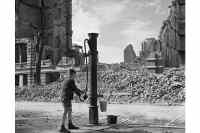
Lord Macaulay wrote that ‘during the century and a half which followed the Conquest there is, to speak strictly, no English history’, because everything in England was decided by an elite who spoke French. This, of course, makes it one of the most fascinating and overlooked parts of our national story.By a similar token, the years 1945-1955 have been neglected by German scholars, because their national history, in Macaulay’s terms, also did not properly exist. Germany, prostrate, shorn of its ancient east, its fate as yet undecided, was entirely run by occupying powers. Yet, as Harald Jähner argues, this is the very era which defined modern Germany. His Aftermath is what every reviewer longs for: a scholarly masterpiece which is also a good read.

Richard Dawkins delights in his own invective

The late Derek Ratcliffe, arguably Britain’s greatest naturalist since Charles Darwin, once explained how he cultivated a technique for finding golden plovers’ nests. As he walked across the featureless moor, ‘the gaze’, he wrote, had to be ‘concentrated as far ahead as possible, not in one place, but scanning continuously over a wide arc from one side to the other and back’. Should you look down at your feet, or allow yourself to be distracted for a second, chances were that this elusive wader would slip off its eggs and you would never work out whenceit came. Reading Richard Dawkins strikes me as requiring a similar kind of disciplined attention.

Abandoned by Paul Theroux: the diary of a sad ex-wife who sadly can’t write

When I interviewed Paul Theroux 21 years ago at his home in Hawaii, there were already rumours that his ex-wife Anne had written a book about him. In fact their son Marcel said in an interview that she had sent Paul the manuscript. Theroux denied it to me, and said breezily that he wished Anne would write a book, because then she’d have greater respect for the work involved. And: I don’t see that if she wrote a book it’s going to be an attack on me. I don’t think it’ll be ‘I discovered his lies’. So it doesn’t worry me. I’m sure she’d show it to me, but it doesn’t really matter — I’m happy to just buy it off the bookstalls. So is this the long-awaited book?

Salman Rushdie’s self-importance is entirely forgivable

I have the habit, when reading a collection of essays, of not reading them in order. I’m pretty sure I’m not alone in this. So, as it happened, I had read nearly all of Languages of Truth before I arrived at the second piece in the book, ‘Proteus’, and came across the Salman Rushdie I had been looking forward to: the worst Rushdie, the infuriating, humble-bragging, know-all, preposterous and tone-deaf Rushdie. Up until then I had been going through the book, pencilling marginal notes which were saying, essentially, ‘oh, this is rather good’, ‘excellent point’, or ‘very well put’. It was all getting a bit too chummy between Salman and me.

The cut-throat business of the secondhand book trade

For almost as long as there have been books, there have been books about books — writers just love to go meta. As well as all that midrash, those Biblical commentaries, the SparkNotes, the interpretations, retellings and the endless online fan fic, there are also of course plenty of guides, manuals and handbooks designed to instruct the gentleman or gentlewoman in the gentle arts of book buying, book collecting and other vaguely book-related activities. (Henry Petroski’s The Book on the Bookshelf — a book about bookshelves — being one of the all-time metabook greats.) I happen to have, by chance, a small library of books about books, including a collection of guides to book collecting.