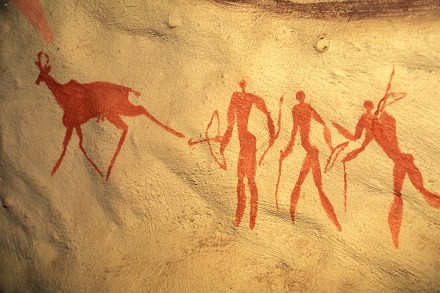
Was there ever a time of equality in human society?
From our UK edition
Origin stories have always helped humans gain a moral compass. Locked in a tight embrace, the Maori deities Rangi and Papa are separated by their enveloped children, creating the distant father sky and nurturing Mother Earth, bringing light to the world. Mayan gods fashion man from maize after destroying earlier clay and wood versions, who are seen to have no soul. Adam and Eve eat from the Tree of Life but illicitly also from the Tree of Knowledge. One of the more touted modern human origin stories, ostensibly based on evolutionary science, speaks of a natural inequality between violent and promiscuous men and caring and faithful women. Having evolved to produce more of their sort, aggressive, lustful males hunted for game and exchanged meat for sex with coy female partners.