Lucy Hughes-Hallett

The extraordinary life of 17th-century polymath Margaret Cavendish

From our UK edition

Margaret Cavendish, the 17th-century Duchess of Newcastle, has been described as a heroine whose every doing ‘is romantic’ (Samuel Pepys); as being ‘so distracted... that there are many soberer people in Bedlam’ (Lady Dorothy Temple); as looking like ‘a devil in a phantom masquerade’ (King Charles II); as ‘the great atheistical philosophraster’ (anonymous 17th-century gossip writer); as ‘a picture of foolish nobility’ (Horace Walpole); as ‘a giant cucumber’ (Virginia Woolf); as a ‘crack-brained, bird-witted... fantastical... crazy duchess’ (Woolf again) and as ‘the empress and authoress of a whole world’ (herself). She has been seen as that most tiresome of types, a ‘character’.

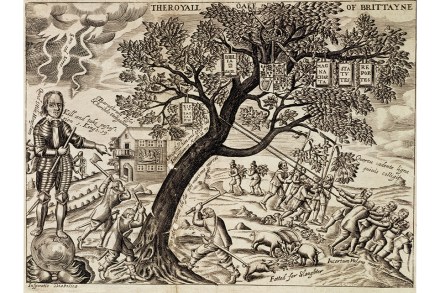
The radicals of 17th-century England began to think the unthinkable

From our UK edition

It was the best of times. It was the worst of times. It was the century, as the historian Kevin Sharpe wrote, summing up the Whig view, ‘in which the champions of law and liberty, property and Protestantism triumphed over absolute monarchy and popery and laid the foundations for parliamentary government’. It was a century of recurring plagues and fire and bloody civil war. It saw successive waves of witch hunts, the beginnings of the Enlightenment and the founding of the Royal Society. It saw revolution and regicide followed by restoration and revolution again.

Was Mussolini’s wilful daughter his éminence grise?

From our UK edition

In 1930, when she was 19 years old, Edda Mussolini married Galeazzo Ciano. His father was a loyal minister in her father’s government: it was a suitable match. Five hundred wedding invitations went out to the Roman nobility, to diplomats from more than 30 countries and to all the senior fascists, the gerarchi. After the ceremony the newlyweds left for Capri, Edda driving her own white Alfa Romeo, with servants and luggage following in another car and bodyguards in a third. They set off at top speed. Then Edda came to a sudden halt. She had noticed a fourth car behind them. She might have supposed that as a married woman she was about to get out from under the massive shadow of her father – but no.