Features

Putin’s Syria problem

For Vladimir Putin, Syria has been the gift that kept on giving. His 2015 military intervention propelled Russia back to the top diplomatic tables of the world — a startling comeback for a country that had spent two decades languishing in poverty and contempt on the margins of the world’s councils. At home, the war took over as a booster of Putin’s prestige just as the euphoria over the annexation of Crimea was being eroded by economic bad news caused by low oil prices and sanctions. In the Middle East, Russia was able to show both friends and enemies that it was once again able to project power every bit as effectively as the Soviet Union had once done.

The Benedict option

Hannah Roberts, an English Catholic friend, was once telling me about her family’s long history in Yorkshire. She spoke with yearning of what she had back home and how painful it is to live so far away. I wondered aloud why she and her American husband had emigrated to the United States from that idyllic landscape, the homeland she loved. ‘Because we wanted our children to have a chance to grow up Catholic,’ she said. It’s not that she feared losing them to the Church of England — it’s that she feared them losing Christianity itself. She and her husband Chris, an academic theologian, are now raising their four young children in Philadelphia, a city with a historically large Catholic presence.

Trump, the emptiest mind

Howard Jacobson awoke to the news of Trump’s victory in November. He had no newspaper column so, what could he do? Write a novel, said his wife, and he did, in six weeks. It is called Pussy, and it is a short and horrifying hypothetical biography of Donald Trump, now an infant prince called Fracassus, born into a noble family of property developers. Fracassus hates words. He hates women. He tweets. Jacobson throws every weapon — every word — he has into Pussy. He is the voice of the metropolitan liberal elite emitting a death rattle, and that is a grave calling.

Do you know a flake fatale?

It was the third time in a row that she had cancelled our date for drinks. The first time she’d forgotten. The second time she remembered a previous engagement and the third time she claimed she’d got the dates mixed up. The next day I got the text she always sends: ‘Sorry darling, I’m such a flake!’ I used to have friends. Now I have flakes — people who are always screwing up arrangements to meet. Flake has become the catch-all explanation and excuse for the bad manners or bad behaviour of friends and loved ones. Cosmo Landesman and Freya Wood discuss the modern affliction of flakiness: We all know about ladies who lunch. But what about the ones who forget you were even having lunch?

Inmates and Islamism

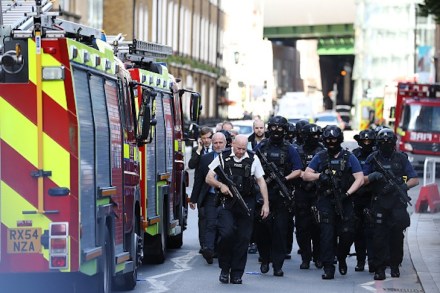
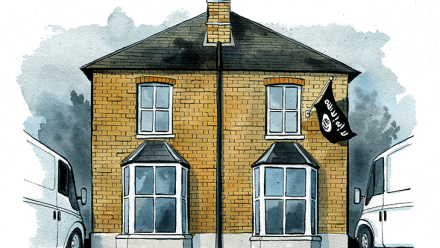
In response to the Westminster attack, a 100-strong new counter-extremism taskforce has been announced to deal with the terrorist threat in prisons. I’m taking some credit for this badly needed focus. In the autumn of 2015, the then Justice Secretary, Michael Gove, asked me to lead an independent review of the threat posed by Islamist extremism in prisons, the probation service and the youth justice system. I used to be a prison governor in what was known until just a few days ago as the National Offender Management Service, so I agreed on the understanding that I reported only to him and that I had his full support to go where the evidence led me, without interference from bureaucrats. To his credit, he agreed immediately. Gathering information was a complex task for a small team.

Kaiser Donald

 Massachusetts All politicians wear masks. Donald Trump’s favourite is that of Maximum Leader. It was on display during this past week. ‘If China is not going to solve North Korea, we will,’ he said at the weekend, ahead of his meeting with Xi Jinping — a throwaway comment that could end up causing mayhem in the Far East. Next, his reaction to news of a chemical bombing in Syria. Trump blamed the atrocity on his predecessor’s ‘weakness and irresolution’, suggesting that he is keen to show the world what strength and resolve look like. The President, it seems, is not too dissimilar to the nightmare his political enemies warned us about: a nuclear-armed hothead itching to show the world how tough he is.

Trump’s plan for Pyongyang

On several foreign policy issues, Donald Trump has toned down the campaign rhetoric now that he is in office. His administration still has concerns about the Iran nuclear deal, but it is backing away from the idea of simply ripping it up or unilaterally rewriting it. On the European Union, he is calming down too; his White House no longer says Brexit marks the beginning of the end of the European project. But on North Korea his positioning is hardening. Hence his warning that ‘if China is not going to solve North Korea, we will’. Not only does Trump want this problem fixed, but his National Security Council is already working on plans to do so. Washington has been trying to work out what to do about North Korea for 20-odd years.

My towering problem

Why don’t tall people get the same sympathy as short people? Everyone feels sorry for minnows, cutting them slack when they talk loudly in meetings or get themselves elected Speaker of the House of Commons. But tall people are seen as life’s victors; the ones you want to be, the ones who get everything their own way. It just isn’t the case. I’m not actually that tall — 6ft 1in — but even I encounter problems. Cashpoints are too low, hotel beds are too short, train seats don’t have enough leg room. In the days of phone boxes, I spent every call hunched over (not enough lead). I regularly have to bend at the knees to use mirrors, and am sometimes forced to take showers kneeling down, because the head hasn’t been fixed high enough up the wall.

In defence of  Ken

We never loved each other, Ken Livingstone and I. We first clashed in public more than a decade ago, and have enjoyed castigating each other ever since. But now that he has been suspended from the Labour party for a second year in a row, I come not to bury him but to praise him. For there is something valorous, even glorious, about his downfall. It was the MP for Bradford West who triggered his demise. In April last year Naz Shah was exposed for sharing anti--Semitic content on social media. Among these posts was a graphic advising the deportation of all Israeli Jews to the USA. Though such views are hardly a problem (can even be a boon) for a Bradford MP these days, any ambitious young politician may still find them a hurdle. Sure enough, Shah performed all the textbook PR moves.

The rescue racket

What is happening in the 300-mile stretch of sea between Sicily and Libya, day in and day out — in other words, what ‘we’ are doing there — is beyond reasonable doubt insane. A sane person would assume that the 181,436 migrants (a new record) who made it by sea to Italy last year had done so under their own steam in flimsy fishing boats and dinghies at least some of the way across the Mediterranean. This, after all, is the message aid agencies and governments put out. In fact, every one of those 181,436 was picked up by EU and non-government aid-agency vessels off the Libyan coast just outside the 12-mile territorial limit, then ferried across to Europe.

The friendly alliance

On 29 March 2019 the Queen should have a state dinner and invite the European Union’s 27 heads of state and its five presidents. The evening’s purpose would be to toast the new alliance between the United Kingdom and the EU: one based on free trade, security cooperation and shared democratic values. This celebration of the new alliance will be especially welcome after two years of negotiations which are bound to be fraught and, at times, ugly. The complexity and the sums of money involved pretty much guarantee this. There is, though, a particular onus on Britain to keep things civil. We have chosen to end this failed relationship, so we should brave the insults and not feel the need to respond to every Juncker jibe.

Fighting chance

Middle age is OK by me. National Trust membership, a Waitrose loyalty card, lying on the sofa drinking red wine and yelling at the telly — since I turned 40, this stuff all just feels right. But by a mile, the best consolation of middle age I’ve found is the cagefighter Conor McGregor and living vicariously through his kicks, punches and verbal smackdowns. How dull my previous enthusiasms for cricket, tennis and football now seem by comparison with the heroic derring-do of this 28-year-old killing machine, a former plumber from Crumlin in Dublin.

A hard lesson is coming

It is one of the great mysteries of modern British politics: how public schools managed to survive three periods of Labour government with their tax breaks intact. How was it that an education secretary, Anthony Crosland, could say: ‘If it’s the last thing I do, I’m going to destroy every fucking grammar school in England, and Wales and Northern Ireland’, and yet do nothing to make life difficult for independent schools? Suzi Leather, Tony Blair’s appointment as head of the Charity Commission, demanded private schools do more to justify their charitable status.

Lost city of fantasy

The new film The Lost City of Z is being advertised as based on the true story of one of Britain’s greatest explorers. It is about Lt-Col Percy Fawcett. Greatest explorer? Fawcett? He was a surveyor who never discovered anything, a nutter, a racist, and so incompetent that the only expedition he organised was a five-week disaster. Calling him one of our greatest explorers is like calling Eddie the Eagle one of our greatest sportsmen. It is an insult to the huge roster of true explorers. Had the advertisement been about a soap powder, it would fall foul of the Trade Descriptions Act. Percy Fawcett joined the army immediately after school, with a commission in the artillery in 1886. The next 20 years involved garrison duty in Ceylon and postings in Malta and England.

The camps don’t work

The civil war in Syria, and the resulting displacement of half the population, has been the tragedy of our times. We cannot turn our backs on the ten million people who have been forced to flee their homes. Every decent society knows this and knows that it’s our moral duty to come up with a workable way of helping the refugees. But while the scale of the displacement is substantial, it is not unmanageable. The 21st century should be capable of dealing with such catastrophes and we must prepare ourselves actually to do so. To rise to the challenge, we need to combine the instinctive compassion that mass suffering arouses with the dispassionate analysis necessary to craft an effective response. We need the heart supported by the head.

Lest we forget | 23 March 2017

I never met Martin McGuinness, but I was certainly affected by him from an early age. His decisions, and those of his colleagues on the IRA Army Council, indelibly coloured my childhood. Belfast in the 1970s and ’80s was a grey, fortified city, compelling in many ways, but permanently charged with the unpredictable electricity of violence. Our local news steadily chronicled the shattering of families, in city streets and down winding border lanes that were full of birdsong before the bullets rang out. There were regular, respectful interviews with pallid widows and dazed widowers, and funerals attended by red-eyed, snuffling children tugged into stiff, smart clothes to pay formal respects to the end of family life as they had known it.

Cameron adrift

It can be cruel, the way politics plays out. At the very moment George Osborne was telling the bemused staff of the London Evening Standard last week that his working life in politics had obscured a passionate desire to become a newspaper editor, a familiar figure could be seen in the fresh meat department of the Whole Foods supermarket almost directly underneath the paper’s Kensington newsroom. That man was David Cameron, and inevitably someone with journalistic instincts spotted him, snapped him on her phone, and tweeted it. Stephen Robinson and James Forsyth discuss Cameron and Osborne's diverging retirement plans: We congratulate ourselves on the ‘here today, gone tomorrow’ nature of British politics.