Features

Pressing back

  Washington, DC I hate to admit it, but I think I’m falling in love with Sean Spicer. No doubt Donald Trump’s stocky, gum-chewing, sartorially challenged press secretary will strike many readers as an unlikely object of passion. But it’s hard not to get red-hot for a man capable of inspiring so much outrage among the most boring, self-important people in America. As press secretary, Spicer’s only real job is to run the President’s daily press briefing, one of those bizarre, quasi-official American institutions — like the State of the Union address or the Easter Egg Roll on the White House lawn — whose utility no one ever seems to question.

The importance of being trolled

Ever since a Twitter troll was elected 45th President of the United States, the Twitterati has agonised over who to blame. But since it was Twitter that gave American voters unfettered access to Donald Trump’s brain, they really ought to be blaming Twitter itself. It’s not possible to say anything balanced or nuanced in 140 characters — that’s a format for jokes, insults and outrage. If you want to seize the world’s attention today, you must troll or be trolled on Twitter. And since this is the one skill at which Trump is utterly unrivalled, he’s now busy trolling both America and himself.

Double trouble | 16 March 2017

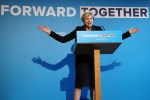
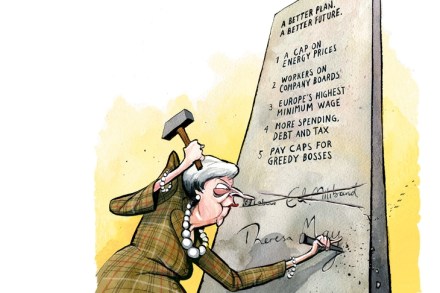
Theresa May is a cautious politician. She has risen to the top by avoiding unnecessary risks; no one survives 18 years on the Tory front bench by being a gambler. But few prime ministers have the luxury of choosing their battles, and she would not have chosen the two that may now define her premiership: successfully negotiating Britain’s exit from the European Union while saving the United Kingdom. If she achieves both, she will join the pantheon of great prime ministers. If she fails, she’ll be keeping Lord North company in the history books. Unlike David Cameron, May has been preparing for a new Scottish referendum from the moment she entered Downing Street.

Why Milton still matters

Just 350 years ago, in April 1667, John Milton sold all rights to Paradise Lost to the printer Samuel Simmons — for £5, with another £5 due once Simmons had the first run of 1,300 copies off his hands. That sounds like a bargain for the 12-book epic poem of Satan’s war with Heaven, Eve’s ‘fatal trespass’ and the expulsion from Eden that soon became a monumental pillar of the literary canon. Samuel Johnson — who as a Tory deplored Milton’s revolutionary politics — placed it first (for design) and second (for execution) ‘among the productions of the human mind’. Some readers, though, have always found it dear at any price.

Redemption for the Ripper

In the autumn of 1888 London was in a state of terrified excitement over Jack the Ripper. There had never been a killer like this in England before, wrote Meredith Townsend and Richard Holt Hutton, the joint editors of The Spectator. They congratulated the British public on not succumbing to the continental habit of lynching (‘In Naples the doctors would have perished, in Berlin the Jews’) but warned that ‘this devil’ might never be caught. By January 1889, Townsend and Hutton were calling for an end to all the ‘morbid interest’ in the Ripper’s crimes.

Little birds, big trouble

A British military base is being used for a multi-million-quid criminal enterprise, possibly involving the Russian mafia — and Britain seems powerless to prevent it. Last year they had a crack at enforcement and had to give up. Mafia 1, British army 0. It’s happening in Cyprus, in the British Sovereign Base Areas. The situation in Cyprus is a bit like the Schleswig-Holstein Question, but with more complex problems of nationality, culture and power. It has let this criminal enterprise thrive and prosper on the fringes, with the result that Britain is providing the infrastructure for a major illegal business with suspected links to Russian criminal organisations. Which is a touch embarrassing. And it’s all about little birds.

Poison, spies and lies

 Washington DC   Roger Stone — political consultant, agent provocateur, friend and confidant of Donald Trump — arrives for lunch with a bodyguard in tow. ‘I’ve had way too many death threats,’ he explains. He says he’s recovering from poisoning by polonium, a radioactive substance used to kill the Russian defector Alexander Litvinenko in London. Litvinenko, he says, had ‘a much larger dose, probably done by British intelligence’. But the British government named the Russian agents responsible, I reply. ‘What was the proof?’ he asks. ‘It’s all mirrors. You know that.’ Stone blames his ‘poisoning’ on ‘the deep state’, a term that in Trumpworld means the intelligence community.

Calendar clash

On a Friday evening in May 2018 I am going to see the Broadway show Hamilton. We had to book the tickets two weeks ago. Fair enough, you might say — some theatre tickets sell out long before rehearsals have begun. Nonetheless, it seems a madly long way off and what if I forget about it between now and then? This week I’ve tried to pencil in the cinema with a group of friends — no one was free until April — and Saturday supper with a couple: they couldn’t do until July. Jenny Coad discusses spontaneity with Isabel Hardman: This is far from unusual. My diary tends to be filled weeks in advance and there is little room for unexpected pleasures without a shamefaced untangling of best-laid plans.

Dumbing down the house

Osterley Park on the western fringes of London is a rare survival. A Robert Adam house, with splendid Adam interiors, it’s still surrounded by its Elizabethan stables, an 18th-century landscape and classical follies — in the middle of urban Hounslow. Over the past decade, this Georgian gem has been increasingly despoiled and dumbed down by the National Trust. The Trust is spending £356,000 to turn Osterley Park into a child-friendly leisure centre. As one of the huge posters strapped to the park fence says, the money will pay for ‘A new skills area for young families providing kids with a safe place to learn to cycle and gain confidence’. Why splurge this vast amount of money on something you can already easily do on the paths at Osterley, i.e. bicycle?

How to make drugs boring

Bill Blair, the former police chief of Toronto, slides into his restaurant chair and twinkles at the waitress. He’s 6ft 6in, white-haired now but perky. Bill has 120 years of policing behind him. He, his father and his grandfather all served 40 years in the force. Now he’s an MP and he’s legalising cannabis in Canada. The restaurant has been here since early in Bill’s father’s time on the beat. It claims to have invented the bacon cheeseburger. We sit round a plastic-topped table and Bill tells me how he ended up pushing drug reform. ‘When I left the force all three political parties wanted me to run for office. I’ve spent my life avoiding politics and the other parties reminded me why. They just wanted me for political kudos.

Back into battle

On 24 June last year, in the Georgian splendour of her official residence in Edinburgh’s Charlotte Square, Scotland’s First Minister offered her reaction to Britain’s decision to leave the European Union. Since Scottish voters endorsed Remain, it was now, Nicola Sturgeon said, ‘highly likely’ there would be another referendum on Scottish independence. Since then that promise — one viewed with dread by the two million Scots who voted to preserve the Union in 2014 — has been variously ‘on the table’, ‘more likely’ than ever and even ‘all but inevitable’. The clock is ticking. Later this month, Sturgeon will address her party’s annual conference.

Let my daughter work

Freud said ‘Love and work… work and love, that’s all there is.’ And ‘Love and work are the cornerstones of our humanness.’ What is life like for people with learning disabilities who have the cornerstone of the love of their parents, but who have little prospect of work? Approximately 1.4 million people in the UK have a learning disability, yet 1.3 million of them are unemployed. Think of the misery that figure represents, the isolation and loneliness. The October 2016 Department of Work and Pensions Green Paper, Improving Lives, states: ‘The evidence is clear that work and health are linked.’ It says that there are 1.

Flock horror

Pity the poor sheep. Every other animal has its champions. There are fox fanatics, dog obsessives, campaigners for cat welfare. Pigs, once a celebrity pet of choice, have their supporters, too. But it’s sheep who need friends right now, because they are, quite literally, under attack. My Facebook pals are mostly country types and barely a day goes by without one of them posting a picture of a sheep mauled, often fatally, by untrained, unrestrained city-dwelling dogs. Camilla Swift is joined by Ben Fogle to discuss the plight of sheep: Sheep-worrying used to be quite a minor problem but it is now getting much worse in terms of the number of incidents. The police say that up to 15,000 sheep were killed last year, which is ten times higher than previous estimates.

Star power

The ongoing war between Donald Trump and the Hollywood A-list has entered a new and unpredictable phase. Celebrity criticism of Trump — keenly anticipated as the chewy takeaway from last week’s Academy Awards ceremony — was instead overshadowed by a celebrity cock-up. Thanks to a mix-up of the sacred envelopes, presenters Warren Beatty and Faye Dunaway temporarily awarded Best Picture to La La Land, rather than the real winner, Moonlight. The result was an unforgettable tableau of confusion at the ceremony’s crowning moment. Trump had earlier let it be known that he wasn’t watching.

Islam’s lost Enlightenment

I am quite used to people smirking into their sleeves when they hear that I’ve just written a book called The Islamic Enlightenment. The really helpful wags say they expect something along the lines of The Wit and Wisdom of Spiro Agnew, which was billed as a collection of all the memorable aphorisms of the former US vice-president, and contained only blank pages. So, the Islamic Enlightenment — good for a laugh. But we’re all familiar with the serious argument that lies behind the jests; that Islam has not been through an Enlightenment, a Reformation, or any of the other rites of passage that have formed our modernity, and that, ergo, Muslims and modernity are strangers.

The McMaster plan

When Lt Gen H.R. McMaster was appointed by Donald Trump to the post of national security adviser, newspaper reports hailed him as a military strategist. It’s not fully clear what the phrase means: not, presumably, that he originated a big idea akin to Alfred Thayer Mahan’s theory of seapower or Billy Mitchell’s conception of strategic bombing. More likely it is supposed to mean ‘a soldier who thinks’. Or more crudely, ‘not a knuckle-dragger’. Or ‘preferable to the cretin who Trump just fired’. Of course, the responsibilities of the position to which McMaster now ascends extend well beyond mere military matters. The national security adviser operates (or should operate) in the realm of ‘grand strategy’.

L’anti-Trump

If you believe the hype, Emmanuel Macron is l’anti-Trump. He is what the inter-national centre-left, reeling from the shocks of Brexit and the US election and fearful of a victory for Marine Le Pen in France, is crying out for: a politician who can win again. He is only 39 years old, handsome and radical sounding. He’s not a career politico; he used to work as a banker for the Rothschilds (every-body loves them). He wears sharp suits and he’s written a book called Révolution. Better still, he has a buzzing movement behind him: his ‘En Marche!’ (Let’s go!) campaign has excited trendy progressives. He is not bogged down with formal connections to the loathed establishment.