Will Heaven

How the Tories can ‘level up’ without annoying Nimbys

From our UK edition

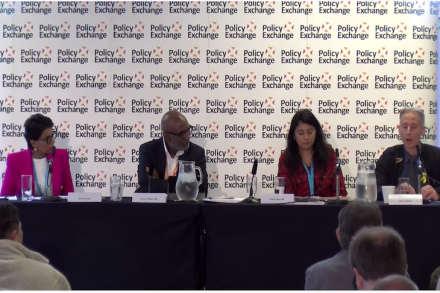
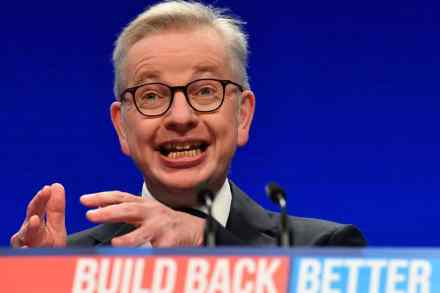
Have the Conservatives lost their nerve on planning reform? Not quite, but a couple of small interventions at the Conservative party conference in Manchester point in a new direction. If anything, they suggest more ambition, not less, on the part of the ministerial team involved – though less opportunity for a falling out with southern voters. The first, by Michael Gove, was yesterday in a Policy Exchange fringe event with Sebastian Payne on the latter’s new book, Broken Heartlands.
The great pretender: Nicola Sturgeon’s independence bluff

From our UK edition

31 min listen

In this week’s podcast, we talk to The Spectator's editor Fraser Nelson and associate editor Douglas Murray about the challenges facing a freshly re-elected SNP. What next for Nicola Sturgeon - full steam ahead for IndyRef2? Or have neither Scotland or Number 10 the bottle for an all-out battle for independence? [01:02] ‘When you look at the practicalities, the case for independence really does fall. Nicola Sturgeon is selling it in the abstract: “Do you feel Scottish”?’ - Fraser Nelson Meanwhile in matters of social etiquette, the new post-pandemic era looms, complete with new modes of social interactions and conversational topics.

How Boris’s planning revolution can keep Nimbys on side

From our UK edition

There is a basic political idea behind the Planning Bill announced in the Queen’s Speech. When you build a house, someone buys it – and when they do, they tend to start voting Conservative. The Bill’s aim is to get more houses built, 300,000 a year by the mid 2020s, helping to create millions more homeowners over the next decade and bringing long-term dividends to the Conservative party. The data supports this idea: House of Commons Library research shows that at the 2019 general election, 57 per cent of voters who owned their home outright voted Conservative, as did 43 per cent of people with mortgages. Renters, both private and social, went in the opposite direction.

Spectator Out Loud: Lloyd Evans, Lionel Shriver and Will Heaven

From our UK edition

24 min listen

On this week's podcast, Lloyd Evans argues that the state should stop subsidising the National Theatre and start funding bingo halls (00:41). Then Lionel Shriver explains the trouble of taking back control (08:15). And finally, Will Heaven explores the dissolution of the Downside monastery (16:48).

The tricks and tactics of Miqdaad Versi

From our UK edition

If truthful reporting risks increasing tension between communities, should it still be published? Do journalists have a social duty to repress certain topics which are unhelpful? These questions tend to separate free societies from those countries where the press is muzzled. In Britain, there has been a tradition: readers decide what is acceptable. But that tradition is under threat, not just from politicians but from the press regulator itself. You may not have heard of the Independent Press Standards Organisation, but it’s worth knowing about. It regulates this magazine and most British newspapers. When it was set up five years ago, its rules, laid out in the Editors’ Code, were meant to enforce accuracy and basic standards.

Downside’s downfall: the dissolution of a monastery

From our UK edition

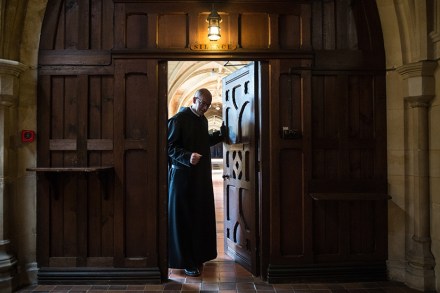
The monks of Downside Abbey in Somerset elected a new abbot last Thursday, according to sixth-century rules laid down by St Benedict. The next day, they sent an email notification saying they had voted ‘to make a new start and to seek a new place to live’. It was a shock to those who know the place. The monks will leave behind a beautiful abbey church built in the Gothic Revival style — its 166ft tower visible for miles around — a monastery and cloisters, the largest monastic library in Britain and a grand-looking public school with more than 300 pupils. It’s as if a piece of English Catholicism, like a decaying chunk of church masonry, has fallen away. But it has been a long time coming.

Why Edward Colston’s statue should have stayed up

From our UK edition

Edward Colston sleeps with the fishes. A mob of Bristolians has toppled the statue of one of their city’s founding fathers, Saddam-style, and lobbed the poor fellow into the docks. Other footage on social media shows protesters kneeling on his brass neck, as if he had something to do with modern-day police brutality in the United States. What on earth has caused this madness, which looked like violent scenes from the English reformation? As is obvious, it’s not really much to do with George Floyd, the man suffocated to death by police last month in Minneapolis. The controversy around Colston has been raging for years in Bristol. A mega-rich philanthropist around the year 1700, he is the nearest thing the city has to a patron saint.

Shades of the prison house: the ghosts of suicides fill our prisons

From our UK edition

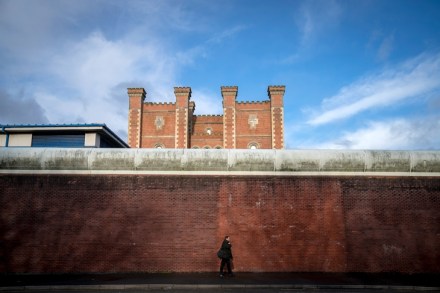
About the time Chris Atkins’s cell was slammed shut at Wandsworth Prison for the first time, I was sitting on the tenth floor of the Ministry of Justice, glued to BBC News. My boss, Michael Gove, had just been given the boot by Theresa May, and as his speechwriter I would be inherited by whoever replaced him as justice secretary. Without warning, No. 10’s black door swung open to reveal a delighted looking Liz Truss — the new chief executive of a creaking government department with 75,000 employees (including all prison and probation staff), with responsibility for a prison system that was in meltdown. I remember madly googling what she might think about prisons, only to be reminded that she was coming straight from the environment department.

The questions that need answering after the London Bridge attack

From our UK edition

We learnt this weekend that the London Bridge attacker, Usman Khan, had been jailed in 2012 along with eight other men for terrorism offences, and had close links to the group planning to bomb the London stock exchange, among other targets. If so, why was he allowed to travel to the heart of London while released on licence? It is highly likely that he would have been restricted from travel to London and that the probation service and possibly police therefore gave special permission for him to attend. The Sunday Telegraph’s coverage indicated as much yesterday. So it looks as if there has been a fatal error here: Khan hoodwinked the authorities into letting him attend an event near London bridge presumably because its theme was rehabilitation and prison education.

The problem with ‘Islamophobia’ and the Tory party

From our UK edition

On Sunday, Policy Exchange held three events at the Conservative Party Conference in Manchester – one on the Irish backstop with Arlene Foster, Leader of the DUP; one with Michael Gove talking to Iain Martin on how to deliver Brexit; and one on the subject of Islamophobia. There were some fascinating moments throughout the afternoon. But the most memorable speech of the day was at the session on Islamophobia – an event which is now being horribly misrepresented on Twitter, including by the NUS president, Zamzam Ibrahim, who claims that it denied 'the existence of anti-Muslim bigotry'. She could not be more wrong.

The empress of art

From our UK edition

Somewhere in the bowels of the Tehran Museum of Contemporary Art is a portrait from a lost world. Its subject is a beautiful young woman: Her Imperial Majesty, Empress Farah Pahlavi of Iran. The condition of the work, however, a luminous print by Andy Warhol from 1977, is so bad that it could be a metaphor for Iran itself. Fundamentalist vandals have slashed at it with knives. The Empress — forced into exile when the Iranian Revolution overthrew her husband, the Shah, two years after the portrait was completed — discovered this upsetting news while watching French TV in her Paris apartment. ‘Seeing that, I said, “They are stupid”,’ she tells me. ‘Instead of tearing it they could have sold it!’ One day, she hopes to see it on display again.

Jail breaks

From our UK edition

You need a strong stomach to be Her Majesty’s Chief Inspector of Prisons, as a letter from Peter Clarke — the current holder of the title — proved this week. HMP Birmingham was in an ‘appalling’ state during his unannounced visit at the start of August. ‘We saw evidence of bodily fluids left unattended, including blood and vomit… next to numerous rat droppings.’ His findings marked a dramatic new low for the prison estate. But they won’t surprise anyone who has recently worked in or visited a bog-standard English jail. When I was appointed speechwriter to Michael Gove at the Ministry of Justice two years ago, I was given a whistle-stop tour of a few of them to get a better idea of my brief.

A tale of two abbeys

From our UK edition

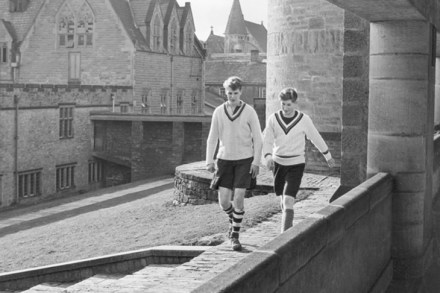
Twenty years ago, Douai, a monastic boarding school in West Berkshire, shocked parents with an announcement that it was ‘no longer viable’. Pupil numbers had fallen through the floor — below 200 — and the sums didn’t add up. So four centuries of history were brought to an end and the boys were sent packing. Now those in the know worry about two more prestigious institutions — Ampleforth, the so-called Catholic Eton in North Yorkshire, and Downside, its more modest Somerset relation. As a former pupil of the latter I’ve been hoping the rumours are unfounded. The school, like Ampleforth, is a remarkable place that produces nice, well-rounded boys and girls. The monks, for the most part, are decent men, trying to live their vocations faithfully.

The Landmark Trust

From our UK edition

About halfway across Lundy, if you’re trudging from the landing bay towards the north lighthouse, there’s a tiny holiday cottage all on its own. It’s a mile and three quarters from the island’s village and very basic inside. There are two bunks in the single bedroom; a dodgy oven in the kitchen that only works if you jam a wooden stick between the wall and the ‘on’ button; and, in the sitting room, the kind of gas lights that died out in the 1930s, because there’s no electricity — and so no wifi or TV — in the whole place. In other words, it’s bliss — at least for the right sort of person. Tibbets, as the cottage is called, is perched on the highest point of the island with views over the Bristol Channel on two sides.

London shows that the more voters get to know Corbyn, the less they like him

From our UK edition

It was always possible, I wrote a month ago, that the London elections would show voters baulking for the first time at the prospect of Jeremy Corbyn in power, especially after the protests in Westminster against anti-Semitism. That hasn't quite happened: it seems there has been a slight swing to Labour in the capital, unlike the rest of the country. But fears of a Tory bloodbath in London – of Corbynistas and Sadiq Khan supporters painting the town red – were misplaced. The Tories have kept hold of their crown jewel boroughs: Westminster, Wandsworth, Kensington and Chelsea. Remarkably, they have even taken back control of Barnet, in north London, which one senior London Tory thought they would lose 'undoubtedly'.

Will the Commonwealth dare to defy the Queen?

From our UK edition

The Queen has done something quite extraordinary today: she has, very carefully, made an explicitly political intervention at the Commonwealth heads of government meeting in London. She told assembled world leaders: It is my sincere wish that the Commonwealth will continue to offer stability and continuity for future generations and will decide that one day, the Prince of Wales should carry on the important work started by my father in 1949. In other words, the Queen wants Prince Charles to be the next head of the Commonwealth. No ifs, no buts. In itself, it's no surprise she supports this idea. It makes sense for Britain's monarch to lead an organisation that evolved out of what the Queen – on her 21st birthday – called 'our great imperial family'.

Labour’s capital gains

From our UK edition

Ever since last year’s general election, when Jeremy Corbyn inspired the strongest Labour surge since 1945, the Conservatives have been unsure if this was a freak occurrence or the start of something bigger. As they have learnt to their cost, opinion polls aren’t as reliable as they once were: only election results matter. There will be plenty next month, with seats on more than 150 councils all over England up for grabs. The Tories are nervous in lots of areas. But what terrifies them is London. The capital has served as the incubator of Corbynism, a brand of politics once laughed off as a niche Islington interest, yet now with an undeniable national appeal. All 32 London boroughs are up for election, and nothing is certain.

Will Theresa May invoke Nato’s Article 5 on collective defence?

From our UK edition

There was a striking use of language in Theresa May's statement to the House of Commons on the Salisbury nerve agent attack. Pointing an accusatory finger at Moscow, the Prime Minister declared: Mr Speaker, on Wednesday we will consider in detail the response from the Russian State. Should there be no credible response, we will conclude that this action amounts to an unlawful use of force by the Russian State against the United Kingdom. And I will come back to this House and set out the full range of measures that we will take in response. This is quite something. It suggests the government is treating this as far more than a murder attempt on a former spy that happened to take place on UK soil. Unless the Russian ambassador can come up with a convincing alibi (e.g.

Our violent and squalid prisons need a dose of Victorian reform

From our UK edition

This morning the new Justice Secretary, David Gauke, delivered one of those keynote speeches about prisons. You know the sort: half an hour in front of a crowd of 'stakeholders' at a convenient London location. It's increasingly hard to take such occasions seriously. Not only are we on the sixth justice secretary since 2010 – meaning it will be a miracle if Gauke is in post in 12 or 18 months' time – but it's only 78 days since the last newly appointed one, David Lidington, gave his own keynote speech about prison reform. When ministers are sentenced to a spell at the Ministry of Justice, they know they’ll be out before long.