Features

Ruth, Queen of Scots

Twenty years ago, Conservatism all but died in Scotland. Tony Blair’s landslide victory made Scotland, at least in terms of its Westminster representation, a Tory-free zone. At no point since has the party won more than a single Scottish seat, and the last time the party won more than a quarter of the Scottish vote, in 1983, its current leader, Ruth Davidson, was four years old. Two years ago, the Tories won just 14 per cent of the vote, an even worse result than 1997. This seemed to fit a broader narrative: Toryism had been beaten back into England, a sign of the union’s exhaustion and a Scotland moving inexorably towards independence. How different it all looks now.

Liberté, egalité, supériorité

The French election, of unprecedented interest, hazard and potential for violence, has been largely about who is to blame. Blame for what, exactly? For the country’s chronic malaise. But is it the fault of the bankers, the bosses, the bureaucracy, or the immigrants? Quite often the British press gives the impression that France is in some kind of deplorable condition that we must at all costs avoid, a hybrid, perhaps, of economic Guinea-Bissau and ideological North Korea. In part, this is because the French themselves so strongly lament the state of their country; I have a whole shelf of books (by no means exhaustive) in which French authors predict its imminent collapse. Like any nation at any time in history, France has its problems.

Is Le Pen really ‘far-right’?

What is ‘far-right’? With the progress of Marine Le Pen to France’s presidential run-off, the term has been liberally used — as it has been over recent years across the West. Golden Dawn in Greece, Jobbik in Hungary, and the Sweden Democrats are all said to be far-right, to name but three. The fact that the first two of those groups engage in intimidation, racism and overt displays of political violence would ordinarily distinguish them from a peaceful democratic party opposed to mass immigration like the Sweden Democrats. Yet everywhere there is the same name creep. The website Breitbart is frequently called far-right, as is the administration of Donald Trump.

Moths vs the middle classes

It’s not the free movement of people I spend my nights fretting about; it’s the free movement of pests. It’s the thuggy Spanish bluebells invading our woodland and killing our own delicate flowers; it’s the Asian caterpillars devastating our box hedges; it’s the black-winged killer ladybirds from North America wiping out our spotted red ones with a nasty fungal disease. And — particularly worrying for anyone trying to run a household — it’s the tiny webbing clothes moths, thought to have originated from South Africa, their larvae feasting on our favourite cardigans and carpets — probably feasting right now, under the very bed in which we are failing to sleep.

Why Theresa May’s 1970s-style energy price caps won’t work

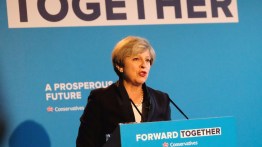
Better access to education. Tax cuts for anyone in the struggling middle. More affordable homes, and more money for the National Heath Service. There is nothing wrong with Theresa May seeking to stake out the centre ground of British politics and stop Brexit turning into a right-wing campaign to turn back the clock. But one might have imagined she’d use conservative means to achieve this, rather than raiding Ed Miliband’s last manifesto for ideas. The proposed price cap on energy companies is an alarming example of Mrs May’s left turn. There are so many ways in which the price cap is a genuinely terrible idea that it is hard to find space to list them all. But here are four big flaws to be getting on with.

A little too perfect

Emmanuel Macron is going to be the next president of France. I know people are saying Marine Le Pen isn't out of the race and it's important to keep the suspense going as long as possible. But I see no scenario in which the French will vote her into the Elsyée.  Le Pen's attempt to distance herself from the toxic National Front founded by her father, declaring herself an independent, just like Macron, is entertaining. But it will change nothing. The French may claim to be revolutionaries but they are terrified of change and Marine scares them. Avec raison.  So the serious questions are, who is Emmanuel Macron, the future president of the republic, and what should we expect from his forthcoming quinquennat?

What’s the matter with Macron?

Coming out of a celebratory dinner at a Montparnasse brasserie after topping the poll in the first round of the French presidential election on Sunday, Emmanuel Macron had a brief brush with the press. A reporter asked: ‘Is this your Fouquet moment? This referred to a notoriously showy celebration by Nicolas Sarkozy at Fouquet’s restaurant after his own victory in 2007. The 39-year-old centrist was visibly cross. He simply wanted to thank his secretaries, security officers, politicians and writers, he said. Then came the dig. ‘If you don’t understand that,’ he said, ‘you understand nothing about life. I have no lessons to learn from the petit milieu Parisien.

Do do God

This election was won two days before it was announced, on Easter Sunday. Theresa May put out an Easter message in which she suggested that British values had a Christian basis. It was her version of David Cameron’s message two years before, in which he said that Britain is a Christian country. She was rather more convincing. I don’t know whether Cameron is sincerely religious, but he didn’t seem it. He didn’t even seem to try very hard to seem it, as if fearing that his metropolitan support might weaken, and perhaps that George Osborne would make a snarky jibe about it at cabinet. But it still did him good to make those pro-religious noises. St Theresa should keep her piety out of politics, said a few pundits.

The lords of poverty

 Kenya I met Dr Tom Catena in Sudan’s Nuba Mountains — the site of an African war and famine few have even heard about — in a hospital overflowing with children. I saw bombs had ripped away their arms, flying shrapnel had taken out a baby’s eye, anti-personnel mines had shredded legs to jagged bone and ribbons of gangrenous flesh, infants suffering kwashiorkor and the other horrors of malnutrition. Inspired by St Francis of Assisi, ‘Doctor Tom’ has worked almost every day, all day, since he arrived as the only surgeon for the Catholic hospital in Nuba nine years ago. I asked him: ‘Why do you stay?’ He replied: ‘There’s no other option. You leave and abandon everyone here or you stay and keep going.

Anti-social media

On Tuesday morning I was thinking to myself how oddly pleasant social media seemed. Then Theresa May dropped her election bomb. Immediately the posts started appearing: ‘Tory scum’ and ‘Tories launch coup’, then came the memes and I thought: I can’t take another two months of this. I’d only just tentatively returned to Twitter and Facebook following Brexit and Trump; now I find myself wanting to suspend my accounts again. I think back nostalgically to general elections of yesteryear. I vaguely remember some fellow students being pleased about Blair winning in 1997 but most of us were more excited about seeing Teenage Fanclub at Leeds Metropolitan University. The polls of 2001 and 2005 passed by without me noticing.

The suburban battleground

In Westminster, all the general election chatter is about Brexit. Will Tory Remainers turn Lib Dem? Will Labour leavers desert Jeremy Corbyn? As polling day draws near, however, the Europe obsession must recede. Politicians may not be able to look past last year’s referendum, but voters will have moved on. MPs will find that, as before, the great issue of our time will be just one of many on the doorsteps. This summer’s battleground won’t be Brussels. It will be suburbia. Domestic matters will decide whether Theresa May returns to Downing Street with a fat majority, and no one is more domesticated than the average suburbanite. We are intensely local. We want good local schools and good local hospitals — we don’t like grand projects like HS2.

Left in the shadows

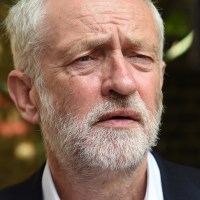
In the early hours of 9 June 2017, Jeremy Corbyn conceded defeat. For the luckless political journalists forced to cover the Labour campaign this was a rare moment. The leader of the opposition had avoided the press and public. Now, as Labour was going down to its worst defeat since 1935, Corbyn was at last prepared to take questions. But not before he had made one of the most graceless concession speeches in British political history. He offered no apologies to the scores of Labour MPs who had lost their seats or the millions of voters who needed an alternative to conservatism. He accepted no responsibility. On the contrary, the passive-aggressive Labour leader was as close to jubilation as anyone had seen him. His eyes shone. His voice rang with an unearned self-confidence.

Theresa’s party tricks

Theresa May has long been clear about what sets her apart from other politicians: she doesn’t play political games. When she launched her bid for the top job last year, she was clear that — unlike her rivals — she hadn’t succumbed to the temptations of Westminster. She told us that she didn’t drink in the bars or gossip over lunch. She invited the TV cameras into her first Cabinet meeting as Prime Minister to record her telling ministers that ‘politics is not a game’. The danger for May in calling an election three years ahead of schedule is that it looks a lot like game-playing. Has a 20-point poll lead proved too much of a temptation, even for this vicar’s daughter?

Save aid!

Bill Gates is worried about Britain. For years, the UK government has been one of the world’s largest donors in overseas aid, and about £60 million has been given to the Bill & Melinda Gates Foundation. But aid has been rather unpopular lately, prompting questions about whether a generous country like Britain needs charitable donations collected by the taxman. And indeed, whether the aid spending pledge might be dropped in the general election campaign. Mr Gates senses a different tone of debate in Washington and London, with too few people making the case for government aid. So the world’s richest man is stepping in.

The Irish problem | 20 April 2017

When David Cameron called his Brexit referendum, the potential difficulty of Northern Ireland was not uppermost in his mind. Nor does it seem to have worried Theresa May greatly when she announced a snap general election this week. Even before this fresh electoral battle, Northern Ireland’s politics were already — to paraphrase Sean O’Casey — in ‘a terrible state of chassis’. Perhaps May thought the existing chassis in Belfast couldn’t get any worse. On reflection, I’m not so sure. The last Assembly election in March left the DUP and Sinn Fein, the two tribal behemoths, delicately balanced on 28 and 27 seats respectively. Unionists lost their overall majority.

Faute de mieux

Who will win the French presidential election? Does it even matter? Nothing in the programmes or personalities of the leading contenders gives confidence that any of them can fix the Fifth Republic and the corruption, dysfunction and stagnation that it has inflicted on the French. At Marie-Trinité’s café in the southern French village where I am an elected councillor, the mood before the voting is one of weary resignation and disgust. Yet this election does matter, and it can make a difference, not only because all of the probable outcomes threaten to make things even worse, but because almost all of them have the potential to be particularly painful for Britain, whatever the result of our own election on June 8.

Bias and the BBC

Last week, Nick Robinson wrote an article in the Radio Times saying Radio 4’s Today programme no longer has an obligation to balance its coverage of Brexit. This led to criticism from Charles Moore that he was, in effect, admitting to BBC bias. The two met for a discussion in The Spectator offices. Nick Robinson: As you’re so fond of pointing out, Charles, most economists, business organisations, trade unions and FTSE 100 chief executives were Remainers. The BBC’s difficulty is that news tends to be about interviewing people in power: scrutinising them, asking tough questions. It’s right that we should go and look for other voices, look for critics.