Simon Barnes

The History of the World in 100 Animals by Simon Barnes is published by Simon and Schuster.

Why are killer whales attacking boats?

From our UK edition

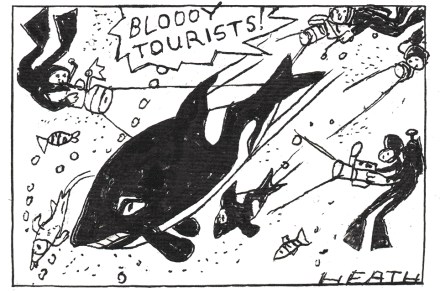
Orcas – killer whales no less – are on the attack. They have declared war on humanity. They are systematically destroying boats in uncannily coordinated attacks. They are taking revenge because White Gladis, an orca matriarch, was traumatised after being hit by a ship. The attacks began in the seas off Spain and Portugal but now they have spread to the North Sea. Is anyone safe? It’s clear that there are two stories being told at the same time. The first concerns the ethology (study of animal behaviour) of the odontocetes or toothed whales (including dolphins). The second is about the relationship between humans and nature. The two tales are perhaps equally interesting.
Anshel Pfeffer, Laura Gascoigne and Simon Barnes

From our UK edition

19 min listen

This week: Anshel Pfeffer discusses Bibi's recent misstep (00:54), Laura Gascoigne reads her arts lead on Vermeer's women (06:54), and Simon Barnes examines the cultural life of orcas (14:32).  Produced and presented by Oscar Edmondson.

The cultural life of orcas

From our UK edition

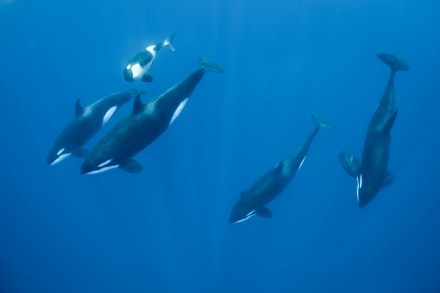
Male killer whales are all mummy’s boys. That’s not a revelation; their curious and intense social lives have been studied for decades, but the extent to which a male orca depends on his mother has been revealed by new research, which shows that mothers routinely sacrifice their food and their energies for their enormous male offspring, compromising their own health and their ability to produce more young. Orcas or killer whales – the former name is used more often these days – are not whales but big dolphins, up to eight metres long. They’re fierce enough under any name, but curiously selective in their ferocity. And that’s all about culture. Not ours: theirs. The cultural life of orcas is a subject of scientific debate, and its implications are extensive.

The ethics of eating octopus

From our UK edition

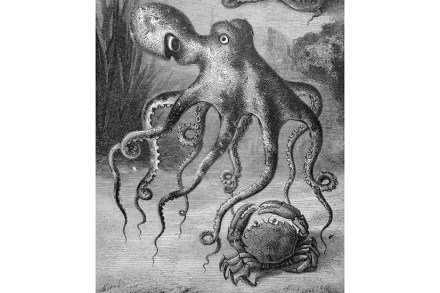
Should the undoubted intelligence of octopuses change the way we treat them? This question has been asked a lot of late because of the documentary My Octopus Teacher. The film is about a year-long relationship between a man and an octopus, and it takes place in a kelp bed off South Africa. It celebrates the sensitivity, awareness and intelligence of the octopus. That’s a difficult concept. Octopuses — octopi is wrong because it’s not Latin and octopodes is insufferably pedantic — are molluscs. That’s the same phylum as slugs and snails and cockles and mussels. In other words, intelligence is not restricted to our own phylum of chordates or back-boned animals.

The rise and fall of mink

From our UK edition

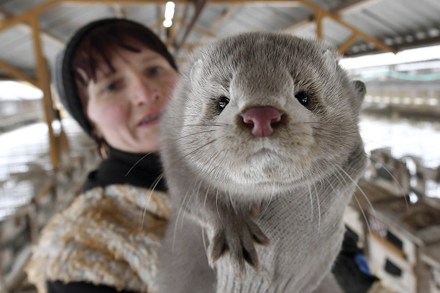
Mink keeps you warm. That’s a most acceptable bonus, but its prime function is status. This week, however, the focus on mink has been for an altogether different reason. Denmark, the world’s largest exporter of mink skins, began culling 17 million minks to stop a mutated form of coronavirus. As a precaution, Britain has closed its borders to anyone travelling from Denmark. There were once three species of mink: American, European and the sea mink of North America. The last went extinct in the early 20th century because of the fur trade. Minks are related to stoats and otters. They’re great swimmers and have evolved a coat to suit their watery lives: a dense underfur overlaid with dark, glossy guard hairs.

Our duty to Hong Kong: time to grant citizenship

From our UK edition

40 min listen

As China looks to push through its national security law, is it time to offer Hong Kongers a way out? (01:00) And with the Black Lives Matter protests continuing to rage in America, can they unseat Donald Trump? (15:30) And last, do animals have culture?

Why whales sing: it’s a question of culture

From our UK edition

A few years ago I was sitting in Carl Safina’s yard on Long Island, drinking tea, occasionally patting a dog who was lying at my feet. Safina was talking about the magnanimity of wolves. A wolf in Yellowstone National Park, known as Twenty-One, never lost a fight, and unlike most wolves, never killed a vanquished opponent. Park rangers called him the perfect wolf. ‘When a human releases a vanquished opponent rather than killing them, in the eyes of onlookers the vanquished still loses status but the victor seems all the more impressive,’ Safina said. ‘Onlookers might feel it would be desirable to follow such a person, so strong yet inclined towards forbearance.’ Safina is not some woo-woo merchant, or a new-world mist-dweller. He does proper science.

Audio Reads: Rachel Johnson, Paul Wood, and Simon Barnes

From our UK edition

25 min listen

This week's episode features Rachel Johnson's diary, in which she talks about becoming an aunt again; Paul Wood on why mass testing isn't good enough – and why we should be testing everyone in the country; and Simon Barnes on why boxing is the most natural thing in the world.

What Joanna Lumley and two cobras taught me about fist-fighting

From our UK edition

Why do we box? It’s an almost ludicrously inefficient form of combat. The last thing the SAS suggests its soldiers to do is put their dooks up. But boxing is nonetheless the world’s leading combat sport — millions watch boxing in lockdown, and when we’re all allowed out, thousands will head first to the pub, then out into the streets and carparks, to throw punches at each other’s heads. Why? I have the answer. It came to me by a combination of Joanna Lumley and a fight I once witnessed between cobras. Boxing is not a great form of combat — not if your aim is to put your opponent out of action fast.

Maro Itoje is a national hero for our time

From our UK edition

Sport is a paradox. It’s supposed to be. Sport divides, but then again, sport unites. The England rugby union team play in the World Cup final in Japan on Saturday morning, thereby dividing the English from the South Africans, and dividing those who follow the game into two camps — England supporters and everybody else. Closer to home, it divides the English most particularly from the Welsh, who suffered the great misfortune of losing their semi-final to the South Africans. But in these times of bitter divisions — perhaps the deepest the country has known since the time of the General Strike — England will, at least for a couple of hours, feel united.

These otherworldly birds stopped breeding in Britain centuries ago. Now they’re back

From our UK edition

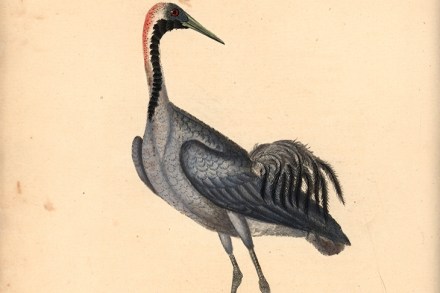
The RSPB regularly gets calls from people who have seen ‘a funny bird’. ‘It’s got a red head and it’s feeding from the bird table.’ ‘That sounds like a goldfinch.’ ‘No, no — it’s standing on the ground and feeding from the bird table…’ Cranes can stand as tall as a man. They became extinct as breeding birds in this country and stayed that way for damn near half a millennium. But astonishingly they’ve come back, and of their own accord.

On bended knee

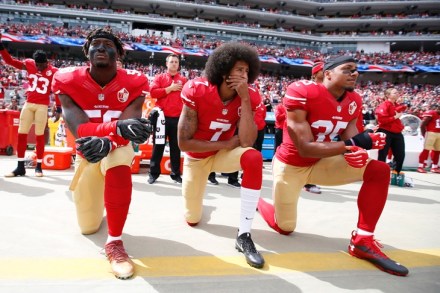
Every so often sport bursts its banks, spills from its usual courses and goes flooding incontinently onto the news pages. This year we’ve already had Australian cricketers doing unspeakable things with sand-paper, Gareth Southgate’s World Cup waistcoat and the return of Serena Williams to Wimbledon a few months after an emergency caesarean. And now we have Colin Kaepernick. He is currently an unemployed quarterback of America’s National Football League. He famously — heroically if you like — refused to stand for the pre-game national anthem, in protest against social injustice and police treatment of black people. Many other footballers followed suit.

The agony of World Cup penalties

From our UK edition

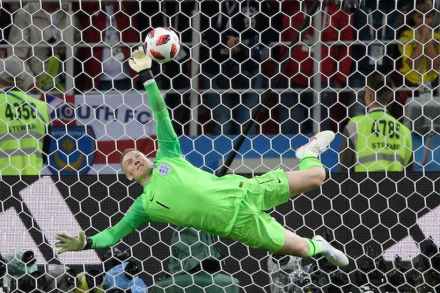
Last week, for the first time since 1996, and for the second time in nine attempts, England won a match that was decided by a penalty competition. You may have read something about it. The penalty shoot-out is the classic example — the type specimen — of a sport transforming itself for television. Television loves penalties because television loves drama. When drama is mixed with partisanship the mixture is irresistible: a perfect piece of entertainment. Many sports have gone down the same route: changing their essence to please television, to create entertainment and ultimately to make more money. It’s not always a bad thing. The tie-break in tennis was first used in 1965 on the professional circuit.

The agony of penalties

From our UK edition

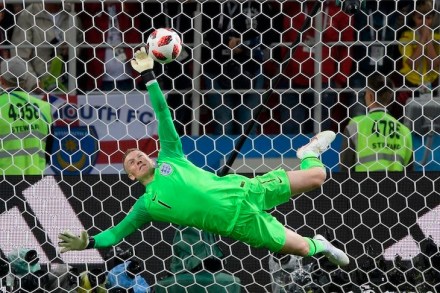
Last week, for the first time since 1996, and for the second time in nine attempts, England won a match that was decided by a penalty competition. You may have read something about it. The penalty shoot-out is the classic example — the type specimen — of a sport transforming itself for television. Television loves penalties because television loves drama. When drama is mixed with partisanship the mixture is irresistible: a perfect piece of entertainment. Many sports have gone down the same route: changing their essence to please television, to create entertainment and ultimately to make more money. It’s not always a bad thing. The tie-break in tennis was first used in 1965 on the professional circuit.

The joy of bird-listening

From our UK edition

Here’s a rum thing: you can tell the quality of a piece of land with your eyes closed. Your ears alone will tell you if it’s any good or not. And this, as it happens, was good land. I was attempting to explain this concept to a group of disparate individuals, among them land-owners, gamekeepers, shoot-owners, farm workers, solicitors, an official from the National Farming Union, an RSPB warden, someone from Norfolk Wildlife Trust, a local councillor and a person who sells agricultural equipment. So I delegated the explanation to a goldcrest. This is the smallest bird in the northern hemisphere and weighs about a quarter of an ounce. It was pelting down a shower of sweet golden notes from the top of a conifer. Higher, thinner than you can believe possible: now have you got it?

The art of the sledge

From our UK edition

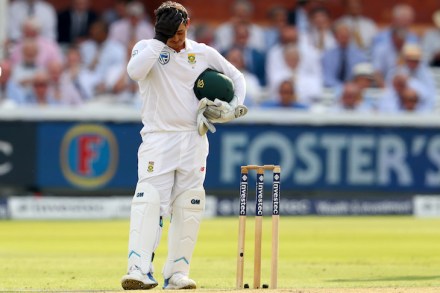
‘Good morning, my name’s Cowdrey.’ England batsman Colin, later Lord Cowdrey, to the Australian fast bowler Jeff Thomson. ‘That’s not going to help you, fatso. Now piss off.’ Lord, who wrote those lines — was it Oscar Wilde? Noël Coward? Woody Allen, maybe? Or was it just a primordial example of sledging: the art and science of the cricketing insult? Sledging is hot again as the Test series in South Africa against Australia reaches new heights of bad vibes. And when we’re getting moral lectures from David Warner — the Australian player who thumped the England player Joe Root in a bar for the unforgivable sin of wearing a joke wig on his chin — well, we know we’re faced with one of those fascinating moral puzzles.

Girl power: give women’s sport the credit it deserves

From our UK edition

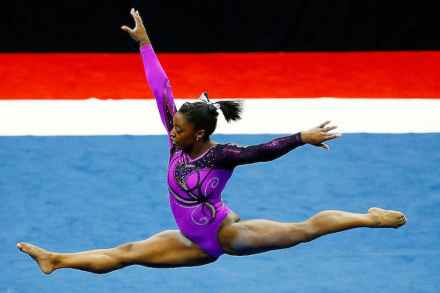
England won the cricket World Cup for the fourth time. Huzzah! England reached the semi-finals of the European football championship. Huzzah again! Or you can, as some have preferred, say well, it’s not really England, is it? It’s England women — and that’s not the same thing at all. Ten points for observation, eh? I remember when I first noticed. But there’s less power, less speed and it’s altogether less thrilling a spectacle than the men’s versions, they say. Anya Shrubsole, the demon fast bowler who secured the win for England by taking six wickets in the final, only bowls at 70 mph; she’d be cannon fodder in a men’s game.

Girl power | 3 August 2017

From our UK edition

England won the cricket World Cup for the fourth time. Huzzah! England reached the semi-finals of the European football championship. Huzzah again! Or you can, as some have preferred, say well, it’s not really England, is it? It’s England women — and that’s not the same thing at all. Ten points for observation, eh? I remember when I first noticed. But there’s less power, less speed and it’s altogether less thrilling a spectacle than the men’s versions, they say. Anya Shrubsole, the demon fast bowler who secured the win for England by taking six wickets in the final, only bowls at 70 mph; she’d be cannon fodder in a men’s game.

Is Johanna Konta British?

From our UK edition

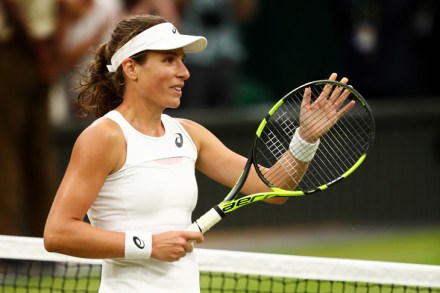
Have you been cheering for the excellent Johanna Konta at Wimbledon? Go, Jo! Or should that be Go, Yo? Johanna (pronounced Yo-harner) was born to Hungarian parents in Sydney and came to Britain when she was 14; her parents moved to Eastbourne while she went to train in Barcelona. She became a British citizen in 2012. Is she really British, then? Or is she a Plastic Brit, exploiting our great nation for what she can get? Greg Rusedski came from Canada to represent Britain at tennis in 1995, aged 22, even wearing an ill-advised Union Jack bandana. The Lawn Tennis Association (Britain’s national federation) later tried to persuade Novak Djokovic to become British; there were agitated talks during the Davis Cup tie between Britain and Serbia and Montenegro in 2006.