Features

The madness of King Donald

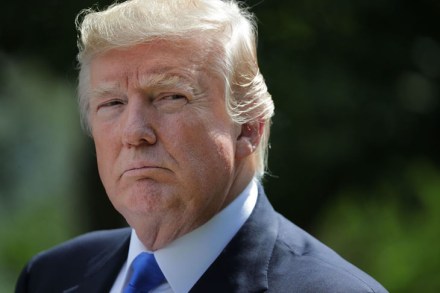
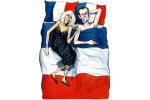
 Washington DC Trump is a fighter - he seems to thrive on pressure - and he is lawyering up The panhandlers outside the White House hold signs saying: ‘Trump is President — saving to leave the country.’ Those signs will have to be updated if Trump’s enemies are right and the 45th President is driven from office by a scandal called ‘Putingate’. Inside 1600 Pennsylvania Avenue, Trump is said to be in a fury about the allegations that he is Russia’s pawn. Washington is gripped by rumours of a president sitting up in bed at night, a cheeseburger balanced on his stomach, raging at the television news. He does not, like Nixon, wander the halls at night talking to the portraits. Instead, he reaches for his phone to tweet.

The known wolf

The meeting place of the two worlds could not have been more sharply defined. In Manchester Arena, thousands of young women had spent the night singing and dancing at a show in Ariana Grande’s Dangerous Woman tour. Songs such as the hit ‘Side To Side’ were performed: ‘Tonight I’m making deals with the devil/ And I know it’s gonna get me in trouble…/ Let them hoes know.’ Waiting for them in the foyer as they streamed out was Salman Ramadan Abedi, a 22-year-old whose Libyan parents settled in the UK after fleeing the Gaddafi regime. A man whose neighbours said he must have been radicalised in Manchester, ‘all those types’ having been driven out of Tripoli.

All hail Pence!

 Washington Day 1: The New York Times reveals that President Trump offered FBI director James Comey a 25 per cent discount on membership at Mar-a-Lago if he would end his investigation into former NSC director Michael ‘Mikhail’ Flynn. Vice President Pence secretly convenes the cabinet at Camp David. The site is chosen because Trump has visited it only once, declaring it ‘a dump’, and is therefore unlikely to show up. Pence tells the cabinet: ‘It has been a great honour to serve with the President’, whom he calls ‘a truly wonderful human being’, but says ‘it’s time we started thinking about our own reputations here’.

Holding court

A hundred years after the Russian revolution, Russia has a tsar and a court. Proximity to Putin is the key to wealth, office and survival. The outward signs of a court society have returned: double-headed eagles, the imperial coat of arms, the cult of Nicholas II (one of whose recently erected statues has ‘wept tears’), an increasingly wealthy and subservient Orthodox Church. In 2013, ‘to strengthen the historical continuity of the Russian armed forces’, the main honour guard regiment in Moscow was renamed Preobrazhensky, after the oldest regiment of the Imperial Guard, founded by Peter the Great in 1683.

Boats, goats and landslides

J.L. Carr’s classic novel How Steeple Sinderby Wanderers Won the FA Cup (1975) contains a character named Arthur Fangfoss. Mr Fangfoss is a rural tyrant who, when standing for the local council, limits his election address to a pithy eight words: ‘If elected, I will keep down the rates.’ No such brevity, alas, attends the 2017 manifestos of the UK’s three main political parties. The shortest of them — the Lib Dems’ Your Chance to Change Britain’s Future — weighs in at over 80 pages, while Labour’s For the Many, Not the Few extends to a well-nigh novella-length 23,000 words.

First class

On the Today programme a month ago, Education Secretary Justine Greening was asked whether she could name any ‘respected figure or institution’ in favour of more grammar schools. She declined to answer, which was taken to mean that she couldn’t, and that there wasn’t. I’ve been travelling a lot this year, so wasn’t around to offer my support. I’m back now. Assuming that a professor of education at a Russell Group university is respectable enough, let me wade into the debate: yes, I’m in favour of more grammar schools. Educational experts against more grammar schools — of which there are plenty — point to the current evidence from England and international evidence in their support. They’re wrong to do so on both counts.

Red Theresa

Never has the Conservative party been more confident about winning a general election. Theresa May’s popularity ratings have broken all records; her aim in this campaign is not just to defeat the Labour party but to destroy it. The Tory MPs who talk about ten years in power are the more cautious ones; some talk about staying in government until the 2040s. The party’s name is seldom mentioned in this campaign. We instead hear only about ‘Theresa May’s team’, and voters seem to approve. As to what the Conservatives stand for, they’d rather not say. At times it seems they’re not even quite sure. The Tory messages revolve around Jeremy Corbyn and not much else.

‘Our children are horrified’

Wrexham, North Wales   To window cleaner Andrew Atkinson, Theresa May’s ‘blue-collar Conservatism’ is not just a slogan. It’s what he is. For the duration of the general election, gap-toothed, 32-year-old Atkinson has hung up his chamois leathers and water-fed poles and taken to campaigning on doorsteps in a bid to become Wrexham’s first Conservative MP. The campaign is costing him a fortune in lost jobs. Atkinson is a broad-shouldered lad who left home at 17 to earn a living as a self-employed squeegee wallah (‘glass hygiene technician, please,’ he jokes). He has the square jawline of Buzz Lightyear and an unaffected way with housewives.

This is an emergency

The NHS as we know it is dying. It’s no longer a matter of if it will collapse, but when. Those of us who work on the front line have known this for some time, and it’s heartbreaking. Last week’s ransomware cyber-attack served to highlight how frail and vulnerable the health service is. While many tried to blame Health Secretary Jeremy Hunt for failing to prevent such a disaster, the archaic IT system is actually emblematic of how the NHS as a whole has struggled to keep up to date and adapt to the modern world with the necessary speed. I trained as a doctor specifically because I was so proud of the NHS and the ideologies underpinning it. It is one of this country’s greatest achievements: a fair, equitable and cheap way of delivering healthcare.

Throw in the towel

Spas are supposed to be relaxing. You pad around in a regulation robe and too-big slippers. Everything is beautifully soft, crisply white, low lit. There are loungers for flopping and glasses of tea —pale yellow and herbal, not builder’s. Towels are everywhere. It’s rehydrating, restful, rejuvenating. Music tinkles in the background; occasionally a cymbal resounds. The treatment list has huge promise. You will emerge looking glorious or at least a shinier — hopefully slimmer — version of yourself. Medical spas go further still. Your liver will be grateful, your skin more youthful, your lumps and bumps smoothed, your outlook revolutionised. Ten years ago, spas were thought to be a bit peculiar.

Life in a gulag

I was invited to Moscow earlier this year to give a talk about my latest book. But while I was there, I wanted to see if I could track down a few survivors of the gulags — the prison work camps where millions died during the communist years. I wanted to film interviews with them to be used as exhibits in a museum of communist terror which I hope to help create. I asked Anne Applebaum, who wrote Gulag: A History of the Soviet Camps, if she could offer any advice on finding survivors. She gave me tips but added: ‘You’re a bit late.’ The people who were incarcerated in Stalin’s work camps are mostly dead. It was going to be difficult — perhaps impossible.

Made in Windsor

It’s a summer of change for the House of Windsor — out with the old, in with the young. The Duke of Edinburgh has just announced that he is standing down. The Queen carries on, but she’s 91, and now the younger members of the royal family are expected to step up. For an institution that supposedly represents stability, a period of transition inevitably brings dangers. How will Princes William and Harry and the photogenic Catherine, Duchess of Cambridge cope? The early signs are not altogether promising. Nobody these days expects the royal family to heed Walter Bagehot’s famous warning that they should not ‘let in daylight upon magic’; that is, preserve the dignity of the monarchy by shrouding themselves in mystery.

Stand up for Arsène

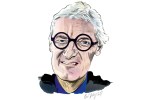
I had 20 good years supporting Manchester United but now I follow Arsenal, and I find the treatment of the magnificent Arsène Wenger by large sections of my fellow fans mystifying and depressing. I supported Manchester United because when Rupert Murdoch bought top-tier English football in the early 1990s and started marketing it aggressively at the middle classes — who, like me, had previously had no interest in the sport — United were the only logical choice. They played pulsating, swaggering football and often scored thrilling wins from seemingly impossible situations.

Mother Theresa

Tory activists last week were heard to refer to Mrs May as ‘Mummy’. No Corbynista calls their hero ‘Dad’. The human race is guided by myth as much as by logic, and mythology explains people to themselves more vividly than economics. The agony expressed in the liberal intelligent press is understandable. The sensible people who all voted Remain direct much of their fury against the Corbynistas who have taken over the Labour party. Fair enough. Interestingly, however, they attend so closely to what Tony Benn liked to call ‘the ish-oos’ that they ignore the bigger mythological picture. Last summer the country voted — very unwisely according to the sensible 48 per cent — in favour of Brexit.

More gas, less wind

The Global Wind Energy Council recently released its latest report, excitedly boasting that ‘the proliferation of wind energy into the global power market continues at a furious pace, after it was revealed that more than 54 gigawatts of clean renewable wind power was installed across the global market last year’. You may have got the impression from announcements like that, and from the obligatory pictures of wind turbines in any BBC story or airport advert about energy, that wind power is making a big contribution to world energy today. You would be wrong. Its contribution is still, after decades — nay centuries — of development, trivial to the point of irrelevance. Here’s a quiz; no conferring.

Libya’s best hope

We were in a detention centre for migrants in Tripoli and we came to a big locked door. It was impressively bolted and padlocked. Someone murmured that we didn’t have time to look inside. But I felt somehow obliged to do so. Outside in the sun I had already said hello to about 100 migrants — almost all of them from West Africa: Guinea-Conakry and Nigeria. They were sitting on the concrete in rows, their heads in their hands; the men in one group, and about half a dozen women a little way off. They had been here for months, in some cases, and they wanted to go home. Kwasi Kwarteng and Kim Sengupta consider the future of Libya: ‘J’ai faim,’ said one of the men. ‘C’est pas bon ici,’ said another.

At the cutting edge

There’s a graveyard inside Henry Marsh’s head, though you’d never guess it to look at him. There he sits in his elegant flat in a small castle on a small island in the Oxford Thames: 67, attractive, restless. There he sits with the world all around him: Persian rugs, French tapestries, Japanese prints and his beautiful blonde wife (the anthropologist Kate Fox) in a separate flat below. But the ghosts of past patients are never far away. Henry Marsh is a brain surgeon, celebrated for his skill in operating on patients under just local anaesthetic. He’s famous also for his astonishing memoir Do No Harm, to which he’s now written an equally remarkable sequel, Admissions.