Arts feature

Sea fever

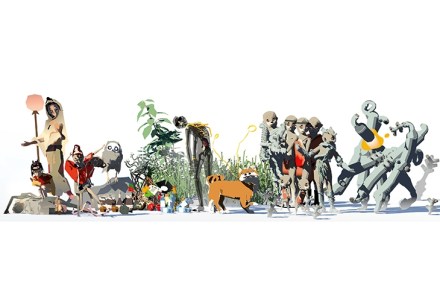
Looking at the sketchbook of William Whitelock Lloyd, a soldier-artist who joined a P&O liner after surviving the Anglo-Zulu War, I’m reminded why I avoid cruises. On board this India-bound ship were: a ‘man who talks a great deal of yachting shop and collapses at the first breeze of wind’, ‘a successful Colonist’, and ‘the victim of mal de mer who lives on smelling salts’. It would be just my luck to be stuck in the cabin between ‘One of our Flirts’, the busty lady with pretty eyes, and what Lloyd affectionately called ‘Our Foghorns (automatic)’ — two bawling babies. By the late 19th century, ocean liners attracted all sorts, from emigrants seeking a new life in the US to curious poseurs.

The right stuff | 1 February 2018

Geoff Norcott is lean, talkative, lightly bearded and intense. Britain’s first ‘openly Conservative’ comedian has benefited enormously from the Brexit vote and he’s popular with television producers who need a right-wing voice to balance out the left-leaning bias of most TV output. ‘It’s funny meeting TV types,’ he tells me. ‘They say, “We really want to hear alternative viewpoints.” And I’m thinking, “By alternative you mean majority,”’ Norcott, 41, was raised on a south London estate. ‘Both my parents were quite political. My dad was a trade unionist who got quite high up in the NEC [Labour’s national executive committee] and my mum ran as a Lib Dem councillor.

Crown jewels | 25 January 2018

Peter Paul Rubens thought highly of Charles I’s art collection. ‘When it comes to fine pictures by the hands of first-class masters,’ he wrote from London in 1629, ‘I have never seen such a large number in one place.’ In Charles I: King and Collector the Royal Academy has reassembled only a fraction of what the king once owned, yet even so this is a sumptuous feast of an exhibition. Some of what’s on show will be familiar to an assiduous British art-lover, since it comes from the Royal Collection and the National Gallery. But the sheer concentration of visual splendour is overwhelming and the installation spectacular. The Renaissance, like spring, came late to northern Europe — and last of all to distant Britain.

Sex, lies and conductors

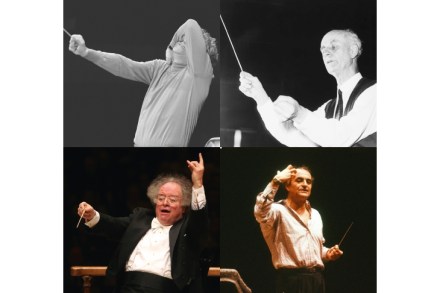
I once knew a great conductor who claimed that he never boarded a plane to a new orchestra without a tube of lube in his pocket. Just in case he got lucky (which he often did). Conductors are migratory birds who fly where their agents point them, hopping from one hotel bed to the next. There is no shortage of bright young things on an orchestra’s staff and besotted fans backstage who are open to a wink and the whisper of a room number. A maestro is never alone for very long. Sex is one of the perks of conducting. Mostly, it’s consensual. My middle-aged maestro would sit up half the night reading poetry to a young woman before he made anything so crass as a lunge. Down the years, there have been few complaints about maestro sex. Seduction techniques vary.

A tough act to follow

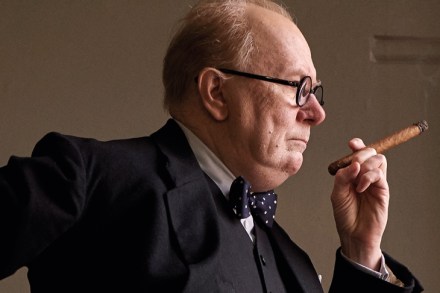
Gary Oldman has joined a long list of actors who have portrayed Winston Churchill — no fewer than 35 of them in movies and 28 on television. He is one of the best three. ‘I knew I didn’t look like him,’ Oldman has said. ‘I thought that with some work I could approximate the voice. The challenge in part was the physicality, because you’re playing someone whose silhouette is so iconic.’ We all have our own mind’s-eye view of what Churchill should look and sound like, and his personality was so strong and sui generis that it is almost impossible for an actor to impose himself on the role. He is therefore almost always left with either mere impersonation or caricature. Oldman avoided this in Darkest Hour through research.

Hitting the high notes

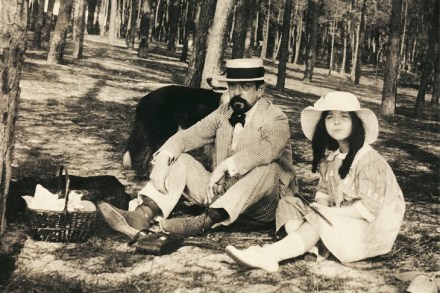
Claude Debussy died on 25 March 1918 to the sound of explosions. Four days earlier, the Kaiser’s army had deployed its long-range Paris Gun, and as Debussy’s cancer entered its final hours, artillery shells were bursting in the streets around his home in Avenue du Bois-de-Boulogne. This quiet modernist — who’d transformed music into an art of almost limitless expressive subtlety — died amid the thunder of mechanised war. The funeral was poorly attended, and as the cortège halted, curious shopkeepers glanced at the wreaths: ‘It seems he was a musician.’ The classical music world is morbidly addicted to anniversaries of major composers.

Renaissance man

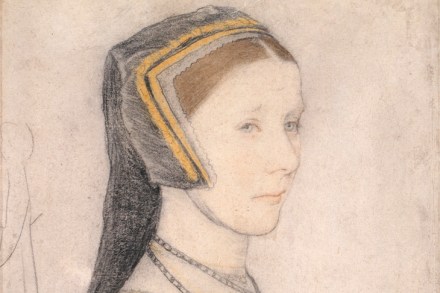
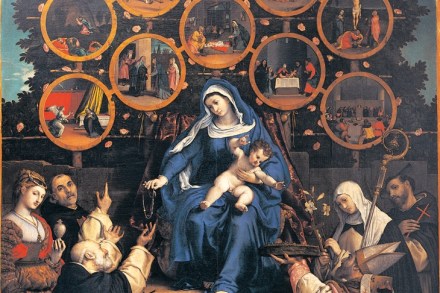
Lorenzo Lotto’s portraits — nervous, intense and enigmatic — are among the most memorable to be painted in 16th-century Italy, but his fellow Venetians didn’t see it that way. In a letter to Lotto of 1548, the poet and satirist Pietro Aretino wrote that he was ‘outclassed in the profession of painting’ by Titian. Now, though, with an exhibition of his portraits in store at the National Gallery next year, it looks as though Lotto’s time may finally have come. On a bright day this autumn my wife and I went on the trail of this most fascinating and idiosyncratic of Renaissance artists.

Drama queen | 7 December 2017

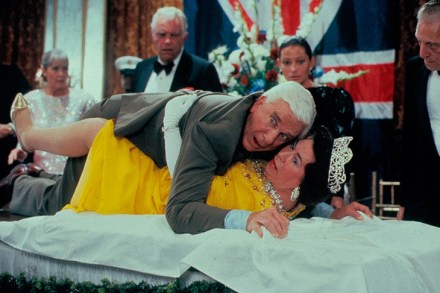
If cinema is propaganda, Elizabeth II can be grateful to it. Film is a conservative art form, and almost nothing has attempted to thwart or mock her. (The Daily Star once printed that Princess Margaret would appear in Crossroads, but Crossroads was not cinema, and it was not true. Instead the award for tabloid lie of the year was named the Princess Margaret Award.) I could not find an art film with the Queen weeping under a table in her nightgown, although she did appear in The Naked Gun: From the Files of Police Squad! (1988), and was mounted by Leslie Nielsen. She also appeared in the disaster film 2012 (2009), attempting to flee a tsunami in an ark built by China, with the dogs. This is less preposterous than the Leslie Nielsen scene. She would not go to China to die. But that is it.

Animal attraction | 30 November 2017

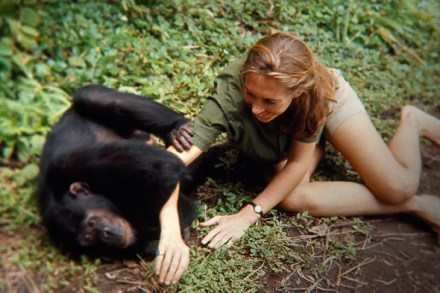
There are times when our national passion for cutting people down to size is a little tiring. I left Brett Morgen’s new documentary about Jane Goodall, the chimpanzee expert, in a rare flush of excited enthusiasm. ‘You’ve got to see it!’ I said to everyone. Most replied along these lines: ‘Goodall, didn’t she turn out to be a fraud?’ Or: ‘Wasn’t it all Leakey’s work she took credit for?’ ‘Yeah, what’s with that?’ says Brett Morgen hunched over his toast in a very hipster Soho hotel. ‘In the Times of London today, in the review, it says Jane can’t hold a candle to David Attenborough. I’m like, he’s a fucking TV presenter!

Darkness visible | 16 November 2017

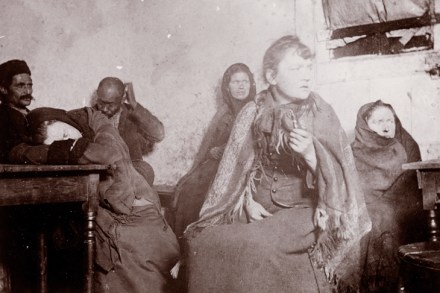
All photography requires light, but the light used in flash photography is unique — shocking, intrusive and abrupt. It’s quite unlike the light that comes from the sun, or even from ambient illumination. It explodes, suddenly, into darkness. The history of flash goes right back to the challenges faced by early photographers who wanted to use their cameras in places where there was insufficient light — indoors, at night, in caves. The first flash photograph was probably a daguerreotype of a fossil, taken in 1839 by burning limelight.

Bring up the bodies | 9 November 2017

The moment you invite friends to some new ‘cutting-edge’ disability theatre or film, most swallow paroxysms of social anxiety. What if it’s dull? Am I allowed to yawn? What if I hate it? How interminably politically correct will it be? Do I want to think about ‘disability’ on a fun night out? While most objections can be overcome by a convincing performance, it is interesting to ask whether disability makes a difference to art, or does art transcend disability? If the current crop of plays and films, not to mention disability production companies, is anything to go by, the answer is yes to both, and we should want more of them.

The female gaze | 2 November 2017

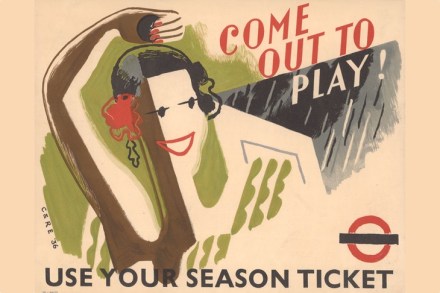
Every weekday, I travel by Tube to The Spectator’s office, staring at the posters plastered all over the walls. I like looking at the plays and exhibitions that have recently opened or wondering whether that shampoo really will add more ‘oomph’ to my hair. Often there is a pretty girl on the poster. A picture of a woman can sell almost anything. I’ve rarely thought much about the individuals who produce the posters. But as a new exhibition at London’s Transport Museum called Poster Girls reveals, there is a rich history of female art running through the city’s concrete veins.

The art of persuasion

It’s hard to admire communist art with an entirely clear conscience. The centenary of the October revolution, which falls this month, marks a national calamity whose casualties are still being counted. When my father-in-law comes to visit, I have to hide my modest collection of Russian propaganda: he grew up under the Soviets and has few fond memories of the experience. He can’t work out why old agitprop is so popular today. But the simple fact is, for all the disaster they wrought, the Bolsheviks did leave a legacy of images so striking that, even now, they can draw thousands into a museum. As Tate Modern is about to demonstrate. Its new exhibition, Red Star Over Russia, showcases one of the greatest collections of Soviet propaganda posters.

Seeing the light | 19 October 2017

Dance is an ephemeral art. It keeps few proper records of its products. Reputations are written in rumours and reviews. And by reputation, Kenneth MacMillan was the dark genius of British ballet — its destroyer, if you listen to some. They think this country’s classical ballet reached its pinnacle under the Apollonian hand of Frederick Ashton, before MacMillan stomped in with his working-class neuroses and rape simulations and took ballet down to the psychological underworld. It’s an absurd reduction, since Ashton was quite as screwed up as MacMillan, but the notion persists of the two of them embodying opposite sides of the British ballet coin, order and chaos. Both giants left the Royal Ballet dozens and dozens of ballets, which critics recorded were amazing things.

Cabbages and kings

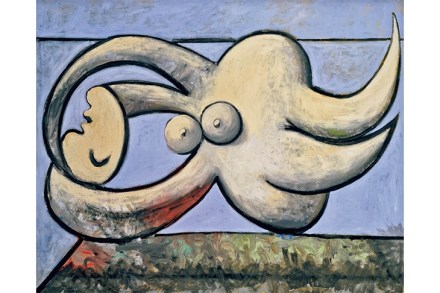
The first pastry cook Chaïm Soutine painted came out like a collapsed soufflé. The sitter for ‘The Pastry Cook’ (c.1919) was Rémy Zocchetto, a 17-year-old apprentice at the Garetta Hotel in Céret in southern France. He is deflated, lopsided, slouch-shouldered, in a chef’s jacket several sizes too big for him. His hat is askew, his body a scramble of egg-white paint. Soutine painted at least six cooks in their kitchen livery. In their chef’s whites they look like meringues that have not set (‘Pastry Cook of Cagnes’, 1922), îles flottantes that do not float (‘Cook of Cagnes’, c.1924), and, in the case of the ‘Little Pastry Cook’ (c.

Savage beauty

Could it, at times, be frustrating to have taken one of the world’s most famous photographs? Steve McCurry’s ‘Afghan Girl’ (1984) is, according to the Royal Geographic Society, the most recognised photo on the planet. You can summon it to mind in a trice: a beautiful young refugee of about 12, her head covered with a rough red shawl, stares out at the camera with those pale green eyes. But what Steve McCurry’s vast, World Atlas-sized new retrospective portfolio shows is just how many other, perhaps even better, photographs he’s taken of the country over the past 40 years; how many other Afghan girls there are in the shadow of that green-eyed superstar. One portrait of a child in blue-grey taken in Ghazni six years later is especially intense.

No pain, no gain | 28 September 2017

The best episodes of Curb Your Enthusiasm are the ones that make you want to hide behind the sofa, cover your ears and drown out the horror by screaming: ‘No, Larry, no!’ I’m thinking, for example, of the one where our hero attends a victim support group for survivors of incest and, in order to fit in, decides to concoct a cock and bull story about how he was sexually abused by his uncle. This, of course, comes back horribly to haunt him when out one day with his blameless real uncle… But no, I shan’t try to elaborate, for the plots in Curb Your Enthusiasm are as convoluted as any farce. And besides, you should see it for yourself.

iAddicts

For many years The Spectator employed a television reviewer who did not own a colour television. Now they have decided to go one better and have asked me to write a piece to mark the tenth anniversary of the iPhone. I have never owned an iPhone. (In the metropolitan media world I inhabit, this is tantamount to putting on your CV that you ‘enjoy line dancing, child pornography and collecting Nazi memorabilia’). But, even though I’m a diehard Android fan, I still cannot help paying attention to every single thing Apple does and says. I don’t think this happens in reverse. I doubt Apple owners pay any attention to the next phone announcement from LG or Nokia — any more than Anna Wintour lies awake wondering what Primark’s autumn season has in store.

Art of darkness | 14 September 2017

Stephen King, 69, has sold more than 350 million books, and tries not to apologise for being working-class, or imaginative, or rich. The snobbery has ebbed a little, though; in 2003 he won the National Book Foundation’s Medal for Distinguished Contribution to American Letters, and now the BFI is screening a series of adaptations of his novels, which show how versatile he is. Why can’t you write stories like Rita Hayworth and Shawshank Redemption, a woman asked him once. I did write it, he told her, but she did not believe him. King has published 59 novels, but he is a recovering addict and can’t remember writing them all. Most of Cujo (1981), a story about a rabid dog and adultery, is news to him.

Made in Port Talbot

Port Talbot, on the coast of South Wales, is literally overlooked. Most experience the town while flying over it on the M4, held aloft by concrete stilts planted in terraced streets. From that four-lane gantry, the only landmarks are the dockyard cranes and belching steelworks. Over Easter in 2011, National Theatre Wales staged a piece of street theatre that was crafted as a civic resurrection. The Passion of Port Talbot featured Michael Sheen as a Messiah-like teacher who harkens to oral memories. ‘I remember!’ he hollered on the third day, while attached to a crucifix on a traffic island by Aberavon beach, before reeling off a litany of local names: of villages, streets, sweet shops, pubs, clubs, mountains.