Arts feature

Moor and more

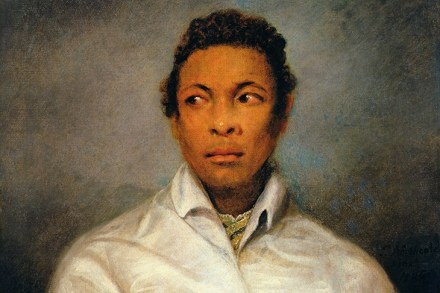
In 1824 an ambitious teenage actor fled to England from his native New York where he had been beaten up once too often. He built a career here, being billed as ‘a Most Extraordinary Novelty, a Man of Colour’. What audiences encountered, however, was not the expected comedy of a simpleton mangling the Bard. They got instead an actor of thrilling charisma and deep natural ability. Ira Aldridge soon became the first black actor to play Othello, taking over the part from the brandy-sodden genius Edmund Kean, who died mid-run due to what one obituary called his ‘vortex of dissipation’. Thanks to a slew of highly prejudiced reviews in London, Ira became a classic example of a tour de force who was forced to tour.

What lies beneath | 24 August 2017

Last year, Gary Hume made a painting of himself paddling. At a casual glance, or even a longer look, it might not appear to be what it is. What you see is a wrinkled, pinkish surface with a sort of dome of curving green and blueish shapes at the bottom. This, to Hume, is a sort of self-portrait as a child at the seaside. ‘I’m on the beach, I’ve got the ripples going around my ankles making little coloured shapes, and all the sand.’ Hume’s paintings are like that. They may look abstract, but it turns out that they are startlingly real. One from some years ago consists of six shiny black rectangles with yellow bars between them.

Whatever happened to Alice?

In 1987, the art of opera changed decisively. John Adams’s opera Nixon in China was so unlike the usual run of new operas in its concept that many people, on first hearing about it, assumed it had to be a joke of some sort. Turning the preposterous and reviled figures of Richard and Pat Nixon and Henry Kissinger into operatic heroes — they were all still alive in 1987 — seemed preposterously at odds with the dignity of the form. It was entirely serious. Though the concept was in part that of Peter Sellars, the opera director, the exquisite refinement of treatment was that of the librettist, Alice Goodman. Unlike almost all contemporary operas, it quickly spread across the world.

Acid reign | 10 August 2017

In 1988–9, British youth culture underwent the biggest revolution since the 1960s. The music was acid house, the drug: Ecstasy. Together they created the Second Summer of Love — a euphoric high that lasted a year and a half and engulfed Britain’s youth in a hedonistic haze of peace, love and unity. At the end of a decade marked by social division and unemployment, acid house transcended class and race, town and country, north and south. Amid the smoke and lasers, an entire generation came up together. How did it happen? The story starts in Ibiza, which by the mid-1980s had outgrown its roots as a hippie commune and was attracting beautiful people from all over the world.

His dark materials | 3 August 2017

Randy Newman is already struggling to keep up with himself. His dazzling new album, Dark Matter, was written before the changes of the last year, and no matter how pointed and current some of it is, there’s something missing. ‘There was a newspaper article that said Donald Trump is like a character in a Randy Newman song,’ he says. ‘I didn’t think there were any real people like the guy in “Political Science” or “My Life Is Good”. But he’s close.’ He’s had a bash at something for the Potus. ‘I just had an idea for a Trump song,’ he says, sounding rather like Yogi Bear’s rather smarter brother. ‘But then I didn’t do anything about it.

Show up and show off

The Edinburgh Festival was founded as a response to war. The inaugural event, held in 1947, was the brainchild of Rudolf Bing, the manager of Glyndebourne Opera, and Henry Harvey Wood, a British Council grandee. Both were convinced that a festival of music and theatre was needed to restore the artistic heritage of Europe after six years of devastation. Edinburgh recommended itself as the host city because of its cultural prestige, its picturesque location (to rival Salzburg), and its ample store of theatres and hotels that could accommodate hundreds of performers and thousands of visitors. That the Luftwaffe hadn’t flattened the city was a significant mark in its favour. The festival set out to ‘provide a platform for the flowering of the human spirit’.

Ivory towers

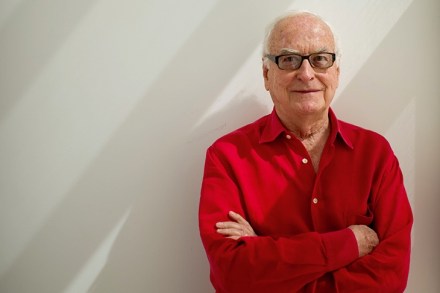
Great novels rarely make great movies, but for half a century one director has been showing all the others how it’s done. James Ivory has worked his magic on all sorts of authors, from Kazuo Ishiguro to Henry James, and this week the finest of all his adaptations returns to the big screen. ‘A film that’s almost two and a half hours long, non-stop talking, set in the Edwardian era — who would have thought that would be such a huge success?’ says Ivory, on the phone from his home in upstate New York. Yet somehow, this taciturn director turned a wordy novel by E.M. Forster into a gripping drama. How did he do it? By creating the ideal setting, meticulous in every detail, then stepping back and giving his creative colleagues room to breathe.

Let there be light | 13 July 2017

If you’ve never heard the John Wilson Orchestra, it’s time to experience pure happiness. Buy their 2016 live album Gershwin in Hollywood — seriously, just do it. Play the first track: a medley arranged by Ray Heindorf for Warner Brothers’ 1945 Gershwin biopic Rhapsody in Blue. One by one the great melodies glide past and you’ll already know them, of course: ‘Swanee’, ‘Embraceable You’, ‘I Got Rhythm’. There’s something different, though, about the way they sound here. The brass swaggers; the strings melt and swoon. It’s a sound that most of us have only ever heard through the crackle of a vintage-movie soundtrack, or on a Capitol-era Sinatra LP. But this is fresh — in fact, it gleams.

Grain of truth

We routinely feel emotional about materials — often subliminally. Which is why new substances and techniques for manufacturing have provoked vivid writing, particularly during the design-reform debates of the 19th century. Think of John Ruskin on the evils of cut as opposed to blown glass or his views on wrought iron as opposed to cast iron — the latter emblematic in his view of a ‘sophisticated, unkind, uncomfortable, unprincipled society’. For the designer Gottfried Semper man’s very inventiveness was a loss. We were losing our understanding of discrete materials. Then there was, and is, our perfectly justified anxieties about the plastics family, beautifully chronicled in Jeffrey Meikle’s American Plastic: A Cultural History.

There will be blood | 29 June 2017

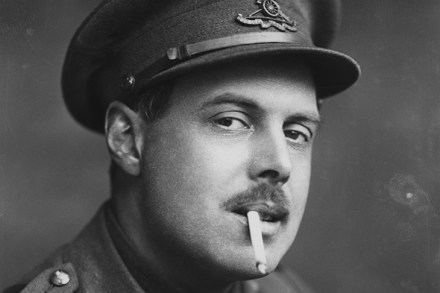
Wyndham Lewis was a painter, poet, publisher and picker of fights. No target was too grand or too trivial: sentimental Victorians and the modern man of government; shark art dealers and the ‘atrocious’ Royal Academy; compilers of honours lists and editors of literary reviews; thin flapper girls and the fat ‘Belgian bumpkins’ of Peter Paul Rubens; men who read detective stories and women who liked bowl-of-apple paintings by second-rate Cézannes. People who lived in Putney. The poet Edith Sitwell, who sat for an unfinished portrait by Lewis, was one of his ‘most hoary, tried and reliable enemies…I do not think I should be exaggerating if I described myself as Miss Edith Sitwell’s favourite enemy.’ Sitwell was a fierce opponent.

Brief encounter | 22 June 2017

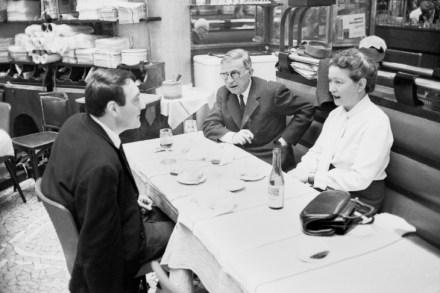
How do you follow a film like Shoah? The nine-hour Holocaust documentary, released in 1985 after 11 years of work and 350 hours of interviews — with survivors and perpetrators, saviours and collaborators, historians and bystanders — is considered one of the greatest films ever made. For decades, director Claude Lanzmann kept returning to the subject, raking over the same material, finding it impossible, maybe indecent, to move on. Of the five documentaries he has made since Shoah, four were substantial footnotes to the original, extended — and often extraordinary — out-takes from the acres of unused footage. But Lanzmann did have an answer to the question of what to do next — even though it sounded like a joke.

Kissin in action

Is Evgeny Kissin, born in Moscow in 1971, the most famous concert pianist in the world? Probably not, if you stretch the definition of ‘concert pianist’ to encompass the circus antics of Lang Lang, the 34-year-old Chinese virtuoso who — in the words of a lesser-known but outstandingly gifted colleague — ‘can play well but chooses not to’. But you could certainly argue that Kissin has been the world’s most enigmatic great pianist since the death of Sviatoslav Richter in 1997 – though, unlike the promiscuously gay Richter, his overwhelming concern with privacy does not conceal any exotic secrets. He has recently married for the first time, but chooses not to publicise the fact.

Building block | 8 June 2017

Liverpool is the New York of Europe. The business district looks like old Wall Street: a miniature Lower Manhattan on the Mersey. It’s a city of scale, drama, melodrama, tragedy and comedy. Not to mention rich and poor. And often all these effects are simultaneous. No other British city has a similarly contrary architectural character: superb, shabby, romantic, melancholy, proud and mean. You cannot be in Liverpool and not be affected by its buildings. I grew up there and long before I knew what ‘design’ meant, Liverpool had taught me to see — as well as to feel the deadly weight of history. It’s an architectural education. But Liverpool has not treated its architects well.

Woman to woman

Bump to bump they stand: Mary and her cousin Elizabeth, both pregnant, both apple-cheeked and glowing as expectant mothers should be. It is a moment of shared joy. The whispered intimacy of ‘I’m pregnant!’ ‘Me, too!’ Joseph and Zacharias stand sheepish in the background, as men do on such occasions. Joseph has more reason than most to feel left out. The baby isn’t his in the conventional sense. Zacharias has the look of a man overtaken by events. After so many ‘barren’ years, here is Elizabeth, pregnant and beaming with the future John the Baptist.

Making waves | 25 May 2017

The end, whenever it came, was always going to be too soon for Katsushika Hokusai. There was still so much to see. So much he had not painted. On his deathbed, Hokusai, attended by his doctor, said a prayer. ‘If heaven will extend my life by ten more years…’. He paused and made a private calculation. ‘If heaven will afford me five more years of life, then I’ll manage to become a true artist.’ He may have been 90, but he wasn’t done yet. In life, Hokusai (1760–1849) painted dragons, creatures of long life, by the dozen. He has them disappear in puffs of inky smoke, then reappear across the page. He painted the phoenix, bird of resurrection.

Animal magnetism

‘I frequently went to bullfights with Picasso,’ Sir John Richardson remarked, quite casually, as he showed me around the exhibition Picasso: Minotaurs and Matadors, which he was installing at the Gagosian Gallery, Grosvenor Hill. He mentioned this by way of explaining why a large and splendid linocut was inscribed to him by the artist: ‘à mon cher ami.’ They saw many fights together in the 1950s, either in Nîmes or Arles. Picasso took these occasions seriously. ‘If the fight was going well he was silent, concentrating totally. What he couldn’t stand was people talking. He would sigh and say, “Oh, I wish they’d shut up.” All around him people were shrieking if something went wrong, but he was absolutely cool as can be.

Dome truths

It was 50 years ago today, Sergeant Pepper taught the band to play. The result was a popular masterpiece. Thirty years later, a less accomplished, tone-deaf group of individuals collaborated on the Millennium Dome, and the result was an expensive, sniggerable calamity. For a while, I was one of them. Of course, it was not really a ‘Dome’ at all, since a dome is a sophisticated self-supporting masonry structure and this was just a big, stupid, hemispherical fabric tent. But ‘Millennium Tent’ did not have rhetorical resonance sufficient to burnish the already very bright and shiny egos of its perpetrators during the Blair Dawn. In any organisation, lots of stuff goes wrong a lot of the time, as Murphy’s Law states.

Cover stories

These days, Aubrey Powell is a genial 70-year-old who can be found most mornings having breakfast at his local Knightsbridge café. But in the late 1970s, he did something that surely no other human being has done before or since. He photographed a sheep lying on a psychiatrist’s couch on a beach in Hawaii. Its coat had been treated with Vidal Sassoon products, and it was sedated with Valium because it was scared of waves. So what on earth was he up to? The answer — as anybody who recognises Powell’s name will guess — was creating one of the 373 album covers that his company Hipgnosis designed back when LPs ruled the world. (In this case, for 10cc’s Look Hear?

Acting up | 20 April 2017

Gemma Arterton’s new film, Their Finest, is about second world war propaganda. Her character, who is bookish and sensitive, is allowed — because of war — to write film scripts. She discovers two girls — two ordinary, pale, unhappy girls — who steal their father’s boat and sail to Dunkirk for the rescue. She thinks this story will swell hearts: and so she, and her collaborator (Sam Claflin), make a British Casablanca about Dunkirk. They know there must be loss, or nothing has value. I marvelled over two things in Their Finest, even as I dislike the title. First, how the pale, unhappy girls are transformed, for the film inside the film, into beautiful actresses, all lipstick and ankles, with shadow brushed away.

Concrete cuckoo

The Catholic Church’s Second Vatican Council provides a salutary example of a tiny ‘elite’ foisting ‘anti-elitist’ practices on the ‘non-elite’ — and coming a cropper. Vatican II’s dates are important. The Council was convened in 1962 and concluded in December 1965. These were the high years of the most uncompromising architectural modernism and, just as pertinently, of the craze for theatre-in-the-round, whose champions considered the proscenium arch to be an authoritarian (very possibly ‘fascist’) instrument inimical to ‘participation’. Rome’s neophilia left much of the clerisy bewildered. It was admitting temporal fashions to a spiritual domain. Maynooth’s head was spinning.