Arts feature

On the offensive

‘I’m an amateur,’ Barry Humphries tells me. The Australian polymath uses the word in its older sense of ‘enthusiast’ rather than ‘bungler’ and he feels no need to point out the distinction. He’s in London to perform a three-week residency at the Barbican — Barry Humphries’ Weimar Cabaret — with his fellow Australian Melissa Madden Gray, who uses the stage name Meow Meow. The show was inspired by Humphries’ fascination with Germany’s culture during the interwar years. ‘It was the last song before the nation slid into moral squalor.

1968 and all that | 12 July 2018

Unless you have been sleeping under a barricade or a pile of Molotov cocktails it will not have escaped your attention that we — that is, a few broadsheets and BBC4 — have been having a good old think about the events of 1968. When student rioting brought France to its knees and the revolution didn’t quite happen. The Independent helpfully reminded us that Sgt. Pepper’s was released ‘around about then’, and that Lady Chatterley’s Lover was banned (also ‘round about then’). It is highly probable that Philip Larkin was mentioned. Over on BBC4, Joan Bakewell did a slightly better job of framing the whole caper. Daniel Cohn-Bendit got his props, as did the enragés.

Out of this world | 5 July 2018

In G.F. Watts’s former sculpture studio in the Surrey village of Compton, a monstrous presence has interposed itself between the dusty plaster models of ‘Alfred, Lord Tennyson’ and ‘Physical Energy’. Standing 14ft tall, the brightly painted soldier with fez and sabre is a replica of a colossal puppet made by James Henry Pullen (1835–1916) while an inmate of the Royal Earlswood Asylum for Idiots in Redhill. So terrifying was Pullen’s ‘Giant’ to the local children that it was confined to quarters after causing a rout at a Guy Fawkes procession. Its maker was inside, operating a system of pulleys and levers that batted the eyelids, waggled the ears, rattled the sabre and, through a mechanical larynx, emitted amplified shrieks.

Putting our House in order

My earliest memory of a mosque is being with my father in London’s Brick Lane Mosque. He was a member of its management committee and that gave me, an infant, the right to roam freely the four floors — including its vast basement — as I waited for him to finish meetings. I remember seeing Hebrew writing on a plaque on the top floor. There were mezuzahs on doors, respectfully preserved by the Muslim elders. I played with my brother on the second floor amid the dusty ebony pews left over from the mosque’s days as a French Huguenot church. European Judaism, Christianity and Islam were woven into the historical fabric of Brick Lane Mosque. At weekends, I learned how to recite the Quran in Brick Lane.

‘I’ve got dementia in reverse’

‘I like your shirt today,’ Sir Ray Davies says to the waiter who brings his glass of water to the table outside a café in Highgate. ‘How’s your girlfriend?’ It turns out the girlfriend is no longer the girlfriend. ‘You broke up? You know, that happens. It’ll be OK. You’ll meet somebody else.’ He pauses and then says something that runs through my head for days after our interview. ‘She’ll meet somebody else.’ It’s true, of course; she will. And it’s a human thing to say: both parties to the relationship will move on. But it’s also delivered with a hint of claws. Who wants to be told, fresh from a break-up, that their ex will soon be hooking up with another partner?

High art

‘To look at ourselves from afar,’ Julian Barnes wrote in Levels of Life, ‘to make the subjective suddenly objective: this gives us a psychic shock.’ The context of Barnes’s remark is the 100-year span in which aerial photography evolved from its 19th-century birth in the wicker cradle of a gas balloon to the miraculous moment in 1968 when an astronaut aboard Apollo 8 took the photograph known as ‘Earthrise’: the darling blue ball of planet Earth rising up over the arid, inhospitable surface of the moon. And all around our little blue globe, darkness. ‘Earthrise’ administered a psychic shock by providing ocular proof of our true position in the universe: insignificant, precarious, lost in the expanding emptiness of space.

Go West

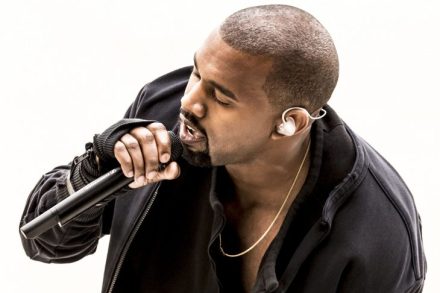
Kanye West is more than halfway in to the Rock’n’Roll Hall of Fame — if his politics don’t block the way. This extraordinary rapper-producer first won over a worldwide audience with the 2004 anthem ‘Jesus Walks’, disrupted hip-hop’s bling-bling materialism with the us-vs-them challenge of his Jay-Z collaboration Watch the Throne, and then released the confounding My Beautiful Dark Twisted Fantasy, which rightly became the most highly acclaimed hip-hop album this century. He went on to make controversial public art with his ‘New Slaves’ video, which was projected in 66 locations around the world (called Orwellian by admirers and dumbfounded detractors).

A vanished world

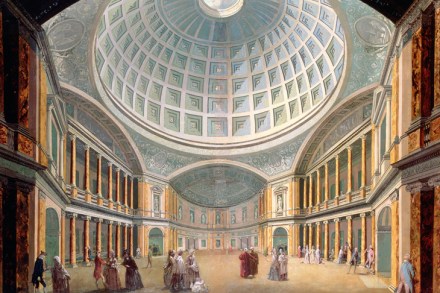
When the German novelist Sophie von La Roche visited Oxford Street in the 1780s she saw watchmakers and fan shops, silversmiths and spirit booths, and a Pantheon that rivalled the one in Rome. Edward Gibbon called the domed ballroom, which hosted glitzy concerts, ‘the wonder of the eighteenth century and of the British empire’, but Von La Roche could not agree. The Pantheon’s architect, she concluded, ‘only half knew what he was about’. The young James Wyatt, who went on to design some of the loveliest college buildings at Oxford University, had apparently given little consideration to the acoustics of his Pantheon, ‘as the sound becomes diffused’.

A man of many parts | 24 May 2018

A most excellent fellow, Roger Allam. On the stage he brings dignity to all he does, in the noblest traditions of the British theatre. Off it he is a fully paid-up member of the human race, admired by his comrades as a man no less than as an actor. Some mummers, eager to let off steam, occasionally let the side down. Allam is the sort of chap — star and team player — who brings the profession into repute. Three times a winner of an Olivier award, twice for best actor, he is currently to be found on the West End stage in The Moderate Soprano, David Hare’s touching portrait of John Christie, Etonian, commissioned officer, eccentric and founder of Glyndebourne Festival Opera on the family estate in Sussex. ‘I’ve grown to love the man,’ says Allam.

The greenhouse effect

The glasshouses at Kew Gardens are so popular that they can be quite unbearably busy at weekends. And why shouldn’t they be? They’re beautiful structures and the plants they shelter are so marvellous that they deserve the attention they get, whether from botany nerds, schoolchildren, or millennials dressed for Instagram and posing for selfies in the steamy leafy heat. But for the past five years, the biggest member of the Kew family has been closed to the public. Hidden under an enormous awning that the botanic gardens boasts could have covered three Boeing 747s (one of those area-the-size-of-Wales facts that mean very little), the Temperate House has been undergoing a lengthy restoration.

Feet first

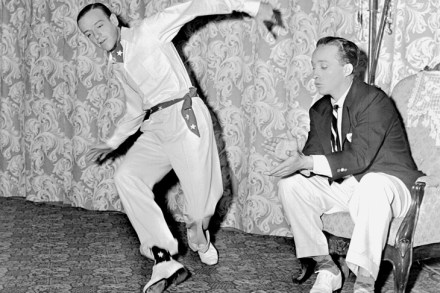
Fire up YouTube on the iPad, tap in ‘tap’, then wave goodbye to the rest of your day: clip after clippety-clip of the best and brightest stars rattling out impossible rhythms: Fred Astaire dancing on the ceiling; Fayard and Harold Nicholas taking the stairs one split jump at a time; Gene Kelly singing (and dancing) in the rain. The American actor, writer and entertainer Clarke Peters (anything from The Wire to Five Guys Named Moe) was never dragged to tap-dancing classes as a boy in the late 1950s — ‘it was more ballet and jazz by then’ — but he remembers ‘trying to pick up moves from the films. I think I do what I do because of Gene Kelly. He wasn’t a great tap dancer but I loved his athleticism, his style.

Restoration man | 3 May 2018

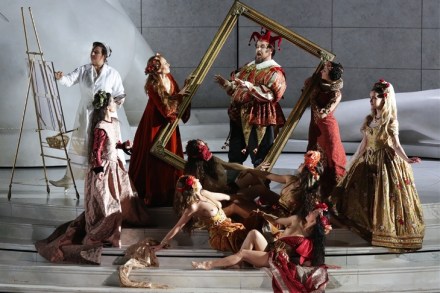
As the curtain opens on the second act of Don Pasquale, I hear a rustle of discomfort. Donizetti’s opera has not been seen at La Scala since 1994. Its restoration, on the orders of a new music director, sets off a critical flutter and Davide Livermore’s new production, set in the Cinecittà film studio during the 1950s dolce vita, seems designed to tweak the Roman nose of national vanity. Italy is supposed to be a serious country these days, burying buffoonery and hedonism among the Coliseum ruins. Even Silvio Berlusconi is seen as an archaeological relic, not to be disturbed. So Riccardo Chailly’s embrace of opera buffa in his first full season as music director provokes the kind of disquiet that we might feel if Covent Garden reinstated Gilbert and Sullivan.

Acropolis now

‘My Acropolis,’ Auguste Rodin called his house at Meudon. Here, the sculptor made a Parthenon above Paris. Surrounded by statues of ‘mutilated gods’, he cast himself as the Phidias of the age. His collection was part cabinet of curiosities, part charnel house. He bought Nile crocodiles and Peking ginger jars, painted sarcophagi and chipped red-figure vases. Crowded among his 6,000 Greek, Roman, Egyptian, Assyrian, Chinese and Japanese objects were his own plasters, bronzes and clay models: hands by the hundred, legs vast and trunkless, arms beckoning, fidgeting, reaching. Isadora Duncan set up her ‘Dionysian’ dance school nearby to teach Hellenic rhythms.

Call of the wild | 19 April 2018

One of the prettiest pieces in the V&A exhibition Fashioned from Nature is a man’s cream waistcoat, silk and linen, produced in France before the revolution, in the days when men could give women a run for their money in flamboyant dress. It’s embroidered with macaque monkeys of quite extraordinary verisimilitude, with fruit trees sprouting all the way up the buttons. And what we know is that they were derived from the Comte de Buffon’s Histoire Naturelle, générale et particulière, of 1749–88.

The nonconformist

Viv Albertine, by her own admission, hurls stuff at misbehaving audiences. Specifically, when the rage descends, any nearby full cup or glass is likely to be decanted over the object of her ire. She’s remembering an incident a few years back, at a gig she played in York, when she felt compelled to introduce some persistent talkers to the contents of their pint glasses. ‘There’s such a fine balance there, because you don’t want to sound like a schoolmarm. Johnny Rotten used to walk offstage if there was spitting. The Slits [the groundbreaking punk band for whom Albertine was the guitarist] couldn’t do that because we would have looked like Violet Elizabeth Bott: “We’re not going to play until you thtop thpitting”.

The highs and hellish lows of superstructuralism

Amid the thick of the Crimean war, Florence Nightingale dispatched a plea to the Times deploring the lethal conditions of British military field hospitals. Ten times more soldiers were dying from diseases like cholera and dysentery than from battle wounds. Shocked, the War Office commissioned 49-year-old Isambard Kingdom Brunel to design the world’s first prefabricated hospital. Components were manufactured to Brunel’s specifications in Gloucestershire then rushed to Turkey for erection. He took the commission on 16 February 1855 and fewer than five months later, the new Renkioi Hospital could accept 300 patients (2,200 by March 1856). Infection rates collapsed. Nightingale called it ‘magnificent’. The new architecture of prefab had triumphed.

The simulation game

Digital art is a crowded field. It’s also now older than I am. Yet despite a 50-year courtship, art galleries have been reluctant to allow it more than a toehold in their collections. Things are changing. Take MoMA’s visit to Paris last year. Alongside the Picassos and Pollocks was a very popular final room, made up of a single, beautiful computer-generated animation, in which a huddle of humans tramp across a constantly disintegrating landscape. ‘Emissaries’ (2015–17) is the work of the 33-year-old artist Ian Cheng, who two weeks ago opened his first show in the UK at the Serpentine Gallery. Cheng’s first inspirations were video games like The Sims, and working in special effects on Pirates of the Caribbean.

Wild at heart | 15 March 2018

There is a culty YouTube video shot three years ago on the laptop camera of Ruben Ostlund. It shows the film director listening live as the nominations for the Academy Awards are announced from Los Angeles. The tension mounts as they approach the foreign film category. Alas, Force Majeure from Sweden isn’t nominated. Ostlund disappears off screen to sob and mewl. This year, there was a sequel to the video, but with a happier ending: the director’s latest film The Square was nominated for an Oscar. These mini-movies, like the rest of Ostlund’s oeuvre, are funny but subtly savage. He is a provocateur who trades in discomfort. You watch with your toes knotted.

Année érotique

By 1930, Pablo Picasso, nearing 50, was as rich as Croesus. He was the occupant of a flat and studio in rue La Boétie, in the ritzy 8th arrondissement, owner of a country mansion in the north-west, towards Normandy, and was chauffeured around in an adored Hispano-Suiza. He stored the thousands of French francs from the sale of his work in sacks deep inside a Banque de France vault, like a ‘country bumpkin who keeps his savings sewn into his mattress’, someone once said. Married since 1918 to one of Sergei Diaghilev’s ballerinas, Olga Khokhlova, Picasso was coming to dominate the art world in a manner no painter has before or since — including, increasingly and importantly, New York. But by mid-1931, he had worries.

Close of play | 15 February 2018

‘Mad, wearying and inconsequential gabble,’ sighed the Financial Times in 1958. ‘One quails in slack-jawed dismay.’ Here’s the FT at the same play last month: ‘The best I have seen on-stage.’ How about the Evening Standard? Then: ‘Like trying to solve a crossword puzzle where every vertical clue is designed to put you off the horizontal.’ Now: ‘Pinter’s cruel dialogue has rarely sounded sharper.’ ‘What all this means only Mr Pinter knows,’ mused the Manchester Guardian. On its return to the West End, the playwright’s biographer Michael Billington, writing in the Guardian, judged that ‘The Birthday Party has lost none of its capacity to intrigue’.