Selina Mills

The objects we take for granted that were designed by disabled people

From our UK edition

Back in the 1990s, if you were disabled in the UK or US, and you believed that being disabled was more about self-determination and less about being left in care homes, you might have protested with banners declaring 'Nihil de Nobis, sine Nobis' ('Nothing about us without us').  The call – allegedly first used by a 15th-century Polish political party – was taken up by disability activists who wanted the non-disabled world to consider how the material world was rarely designed or included disabled people. This fact itself was 'disabling'.  Thus, they asked, why not build a ramp, instead of a staircase, so we can all use it? Or make print readable for everyone, as we all will need glasses at some point?

Xbox Adaptive Controller, developed by Microsoft. © Victoria and Albert Museum, London

The forgotten female composer fêted by Mozart and Haydn

From our UK edition

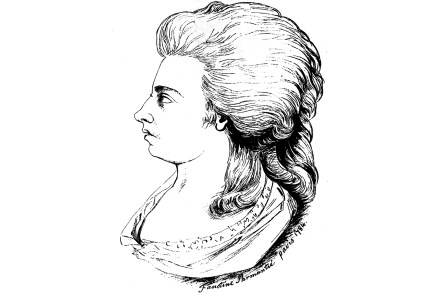
A few years ago, I was sitting in the London Library researching a book about blind people across the ages. As a semi-blind person myself, I sighed at the lack of women, other than the endlessly chipper Helen Keller, who never had a bad day. Ever. My sister, however, drew my attention to a two-line wiki entry for the 18th-century composer, singer and professor — and darling of the Viennese musical court — Maria Theresia von Paradis (1759–1824). Ten years passed, and after many hours of research in libraries and chats with music scholars, we now find ourselves — to our utter amazement — co-writing a chamber opera about her life.

Unique and disturbing: Donmar Warehouse’s Blindness reviewed

From our UK edition

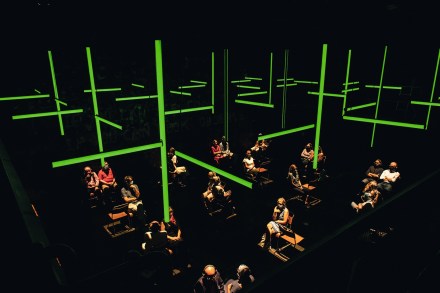
Okay, I admit it. I have a girl crush on Juliet Stevenson. Ever since I first saw her in the 1990 film Truly, Madly, Deeply with Alan Rickman, I have loved her sexy, round and intelligent tones. Imagine how excited I was to discover, therefore, that you can have Juliet in your ear for a whole hour and 15 minutes while you sit through a so-called ‘sound installation’ — or rather an audio staging — of Blindness, the current offering at the Donmar Warehouse and the first opening since lockdown. Sitting in a darkened theatre studio, with strobe lighting and headphones, you are seated in your own space, and socially distanced from 40 other people.

Lend me your ears | 22 February 2018

From our UK edition

Audio description, or AD, as it is fondly called, is coming of age. Once consigned to the utility room of grey voices reading boring cues to inform blind people what was going on on stage or screen, AD is now a dynamic narrative form that is findinga presence in almost all the arts (from opera, theatre and film to art galleries and museums). It is so widespread and well done that many consider it an art form in itself. For the uninitiated, audio description simply provides a listener, through headphones or a TV speaker, with the essential details of the action and events in a film or play during a convenient pause. When done well, it does not intrude on an audience’s experience of the play, the acting or the director’s intention, but instead shapes and enhances it.

Bah, humbug!, Tiny Tim

From our UK edition

Here we go again. Partridges in pear trees. Lovely big Christmas turkey. The Queen’s speech. And then, at some point during the Yuletide season, some version or other of Dickens’s ghost story A Christmas Carol. This year’s glut of Scrooge stories includes the Old Vic’s major production starring Rhys Ifans (reviewed by Lloyd Evans in last week’s Spectator) and Michael Rosen’s retelling of the tale, Bah! Humbug! There is a new film, The Man Who Invented Christmas, featuring Christopher Plummer as Scrooge and Dan Stevens, he of Downton Abbey fame, as Mr Dickens himself. It plots the months running up to the publication of A Christmas Carol in Yuletide 1843.

Bring up the bodies | 9 November 2017

From our UK edition

The moment you invite friends to some new ‘cutting-edge’ disability theatre or film, most swallow paroxysms of social anxiety. What if it’s dull? Am I allowed to yawn? What if I hate it? How interminably politically correct will it be? Do I want to think about ‘disability’ on a fun night out? While most objections can be overcome by a convincing performance, it is interesting to ask whether disability makes a difference to art, or does art transcend disability? If the current crop of plays and films, not to mention disability production companies, is anything to go by, the answer is yes to both, and we should want more of them.

Thanks to Audio Description, the blind have the best seat in the house

From our UK edition

I did not mean to snort so loudly. There I was watching the amazing Simon Russell Beale in King Lear at the National Theatre and things were all getting a bit nasty — what with daughters scheming and people having their eyes gouged out. And then, through a small earpiece, which no one else could hear, I heard the immortal words, said in a deep and quiet voice: ‘Lear enters to find Goneril clenched in tight embrace with Edgar. He clasps her tightly.’ At my snort, a very serious man behind me tapped me on the shoulder and ‘shushed’ me. He had no idea that I was tuned into the wonderful world of audio description, or AD as the industry refers to it. For the uninitiated, AD has been around for some time.

An emotional journey

From our UK edition

Director Lindsay Posner finds something primal and truly disturbing in Arthur Miller’s play The day’s rehearsal is about to commence. The actors sit or stand around chatting, telling anecdotes, prevaricating, pouring one last cup of coffee — anything to avoid the moment when they have to begin committing emotionally and psychologically to Arthur Miller’s text. Why, I ask myself, is A View from the Bridge proving so difficult to rehearse? This is not due to laziness on the part of the company, but an awareness that the play’s action unfolds as relentlessly and remorselessly as any Greek tragedy; demanding intensities of emotional and psychological expression which crash through conventional barriers and resonate in the world of myth.

Bad neighbours

From our UK edition

Lakeview Terrace 15, Nationwide Summer 15, Key Cities Lakeview Terrace is one of those menacing, neighbour-from-hell type thrillers with Samuel L. Jackson playing Abel Turner, an LAPD cop who bristles with hostility from the moment Chris and Lisa, an interracial couple — he’s white, she’s black — move in next door. This is a movie that inverts Hollywood’s usual racism shtick as, here, the bitter racist is the white-hating black rather than the black-hating white, although why any black might hate a white beats the hell out of me. I’m white and quite lovely. Ask anyone.

Mystery of the missing tapes

From our UK edition

Selina Mills on how some newly discovered tapes give us a glimpse into the life of Agatha Christie One hot summer’s afternoon in London, when I was five or six, I was sent to the garden of our house in Chelsea, rather than attending a birthday party, to contemplate a naughty deed. I can’t remember my crime, but I can remember swaying too violently on a vivid orange hammock, and falling on my head with a thump. Before long, a smart old lady with ropes of pearls rushed over from next door and calmed my howling. We had a nice little chat about the merits of hammocks on hot sunny days and being naughty until my mother arrived and the lady left. I did not discover until much later, however, that my rescuer was Agatha Christie; the following winter (1976) she died.

Using our imagination

From our UK edition

Sensory deprivation has, it would seem, become fashionable these days. As well as restaurants opening in Paris and London for seeing people to experience not seeing (dining in the dark), there is now a dating service where you meet your ‘blind’ date in the dark (supposedly avoiding image issues), and spas have created weekend packages where you can be blindfolded for 72 hours, and experience bumping into your fellow inmates on the way to the steam room — hopefully not in the nude. Whether this new-found interest in the non-seeing world stems from a need to make sense of the mass of images inundating our daily lives, or whether it is just another way of making money, is hard to tell.

Self-taught prodigy

From our UK edition

...Over her paint and her colours bentCan paint what it is to be innocent.Life, add thy wisdom, and at length bring usWhere springs the fountain of her genius.Walter de la Mare A few years ago, a couple found a small but elegant drawing of a young girl playing with her pets hanging at an art dealers. Intrigued by the intricate detail of the work, they brought the drawing home. The wife, Leonie Summers, an art-historian, established that their treasure was by an artist called Pamela Bianco, who died in New York in 1994. For a while the story stopped there and searches to identify Bianco through English art books seemed fruitless.