Arts feature

Pirates on parade

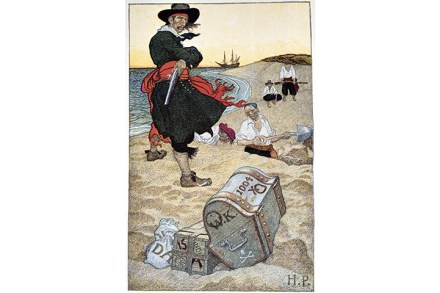
Avast there, scurvy dogs! For a nation founded on piracy (the privateer Sir Francis Drake swelled the exchequer by raiding the Spanish, who were in no doubt that he was a pirate), it is appropriate that Britain should give the international archetype of the pirate his language. The language of the Victoria & Albert’s exhibition A Pirate’s Life for Me at the Museum of Childhood in Bethnal Green is a banquet of humour and doggerel. Whether you arrive a slipperslopper sea-cook, reeking of Havanas, or pushing treasures in a pram, you will stare at walls, speak in tongues and smile. These master (and mistress) mariners of yore have their grappling hooks deep in the psyche of maritime nations. In their infancies, modern states needed pirates.

Breaking his silence

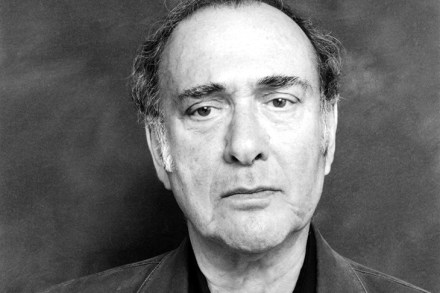
Arriving in Budapest, I receive a summons I cannot refuse. Gyorgy Kurtag wants to see me. Famously elusive, the last of the living avant-gardists is about to present his first opera at La Scala Milan this month and, if past form is anything to go by, he’s unlikely to utter much about it beyond a cryptic Magyar aphorism. Kurtag is 92 and his Scala opera — Fin de Partie, after Samuel Beckett’s Endgame — is a hefty 450 pages long, which may be as much music as he has written in half a lifetime. So why is this master miniaturist — famous for compressing his ideas down to a few chords — submitting a vast opera to the unforgiving glare of an Italian first-night audience?

Don’t mention the war

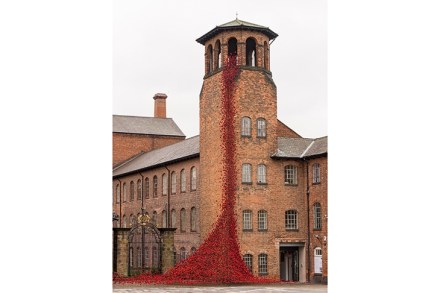
A cascade of poppies falls from ‘weeping windows’ across Britain. A 50-metre drawing of Wilfred Owen appears in the sand, and is washed away by the sea in which he swam. A silhouetted soldier stands on the white cliffs of Dover. A thousand pumpkins ‘recall’ an antisubmarine airship. You can pretend you are in no-man’s-land in Dorset, or ‘clearing up the immense horrors of trench warfare’ in Dulwich. We have Great War proms, Great War bake-ins, Great War fashion shows, even Great War Countryfile. Blackadder has been summoned back to the colours. The Royal Mail issues a ‘classic, prestige and presentation’ pack of stamps.

We need to talk about Kevin

The sixth and final season of House of Cards has begun without Kevin Spacey, who played the murderous Democratic American president Frank Underwood. Netflix fired Spacey when he was accused of multiple sexual assaults last year, although he is not yet charged with any crime. The longed-for dénouement of Frank Underwood — the moment when he realises his crimes have been in vain — never came. Instead his wife Claire, so lovely in looks, is now president. (It’s TV.) When the trailer for the final season appeared, Underwood was already in his grave, with Claire, played by Robin Wright, standing over it. Wright gave an interview saying that she had never known Kevin Spacey, which made me smile, because it is exactly what Claire would have said.

The Maestro, Ennio Morricone, interviewed: ‘I am a real composer’

Ennio Morricone, the Oscar-winning Italian film composer, has died at the age of 91. Here, Richard Bratby spoke to the 'Maestro'. Ennio Morricone’s staff wish it to be known that he does not write soundtracks. ‘Maestro Morricone writes “Film Music” NOT “Sound Tracks”’, explain the printed interview guidelines. ‘Maestro Morricone is a composer. Composers do not use the piano to compose music with, they write their music down directly in musical notes without the interference of any musical instrument.’ Well, that’s Beethoven told. In the classical music world, you hear tales about ‘riders’, the Spinal Tap-like lists of minimum requirements that pop stars issue before consenting to walk among mortal men.

‘I should just shut up’

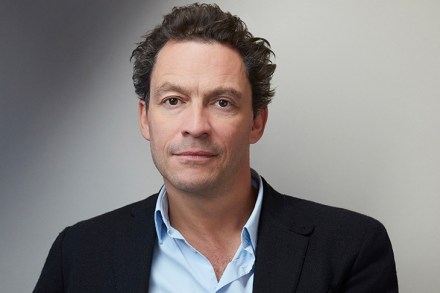
Lounging confidently on the sofa of a Soho hotel suite, Dominic West has been beaming at me, but now his handsome smile dissolves into a hurt look. I have just asked him to explain why he, in common with so many actors, feels the need to voice his political views. ‘I should just pipe down and carry on acting?’ he asks, leaning forward to pour tea. I don’t like to be rude, so I raise my eyebrows and shrug as the most polite way of saying, ‘Well, it’s an idea.’ West, who is giving interviews to promote his new film Colette, has also made a campaign video calling for a second EU referendum. In it, he warns people that Britain won’t be able to make trade deals with America, Turkey or India on its own.

Walpole’s world

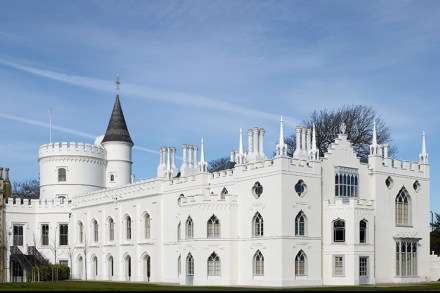
We can’t know what Horace Walpole would make of the continuing popularity of serendipity, a word he coined in 1754 to describe the accidental happy discovery of a Renaissance portrait he had long been seeking. In 2001 it became the title of a romantic comedy and this year of a song by a South Korean boy band, which has had 74 million hits on YouTube. But we can imagine that he would be pleased that his lifelong effort to leave his mark on posterity has been so successful. He was born (in 1717) with the proverbial silver spoon in his mouth, the youngest son of the all-powerful Sir Robert Walpole, 1st Earl of Orford and effectively Britain’s first prime minister.

Houses of ill repute

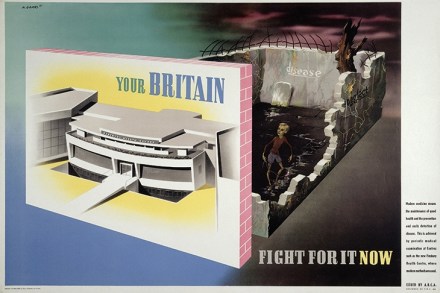
Architects and politicians have a lot in common. Each seeks to influence the way we live, and on account of that both, generally, are reviled. But architecture is more important than politics. Unless you are an anchorite or a polar bear, it’s unavoidable. And it lasts longer. The best architecture affects our mood. Exaltation, if you are lucky. And the worst influences our behaviour: a riot with burning Renaults, if you live in a French banlieue. But, as a new exhibition at the Wellcome Collection suggests, architecture may also, in one way or another, affect our health. At ground level, this is quite obvious. Damp, foul air, extreme temperatures, bad drains, structural collapse, fire risks, asbestos and socially hostile environments can all, alas, be experienced in buildings.

The stirrer and the monk

Sometimes Andrea Mantegna was just showing off. For the Palazzo Ducale in Mantua, he painted a false ceiling above the Camera degli Sposi. Around a great trompe l’oeil oculus, apparently open to the sky, assorted gawpers and cherubs lean nosily over the parapet: ‘What’s going on down there, then?’ Only the Duke and Duchess of Gonzaga entertaining their friends from Ferrara. A terracotta pot is half off the edge, supported only by a thin rod. One nudge from a misbehaving putto and — whoops! — just missed the Duchess. Some of the putti stick their heads through the trellis. Another stands on a ledge, flashing us his bare, plump, crinkly bottom, brilliantly foreshortened by Mantegna. Giovanni Bellini’s figures tend not to show us their bums.

Not easily Suede

‘I always think they’re not lusting after me,’ Brett Anderson says of the middle-aged fans who still turn up to see his band Suede and leave the shows a little flushed and excited. ‘They’re lusting after something that doesn’t really exist. They’re remembering their wild youth. It’s faintly comical to me when I think about myself in the 1990s and the sexuality of it. That got a bit out of control, I suppose. And it’s odd, because I’m quite a reserved person in lots of ways, so I don’t really know what was going on there.’ Oh, Brett, you do yourself a disservice. Look at yourself! Not an ounce of flab, dressed like a clothes-horse, face all sharp lines and clean planes. You’re a well-preserved man.

‘Search me, squire’

I think everyone was a little nervous of Harold. Including Harold, sometimes. He was affable, warm, generous, impulsive — and unpredictable. Like his plays, where the hyper-banal surfaces — the synthetic memories and false nostalgia of Old Times, the aural drivel of Rose in The Room, the bogus familial warmth of The Homecoming — are fragile and about to be displaced by something ugly and authentic, something obscure and violent. Plays where on countless occasions — think of Lenny in The Homecoming or the alcoholic Hirst in No Man’s Land — a speech will take off into dramatic Tourette’s, unstoppable and at the edge of sense. The plays are edgy, alert to something sinister at the periphery.

Round the horn

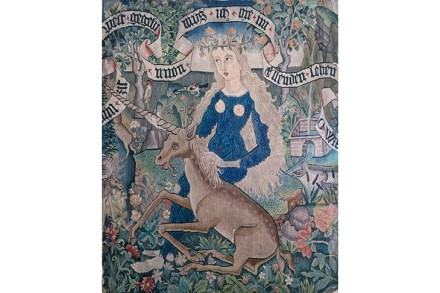
After the England football team beat Tunisia at this summer’s World Cup, they celebrated with a swimming-pool race on inflatable unicorns. Purple hooves, rainbow manes, cutesy eyes, yellow horns like upended Cornetto cones. The millennial unicorn is unrecognisable from the medieval. The proud unicorns of bestiaries and courtly romances have become the twinkling Bambis of Instagram. Search #unicorn (more than nine million posts) and canter into a pastel clearing of long lashes, swishy tails and crystal horns. ‘My favourite colour,’ announces one unicorn, pink, prancing, wide-eyed, ‘is glitter.’ Compare the simpering My Little Unicorn of the emoji palette with the noble creature in the ‘Unicorn Tapestries’ (c.

The little cloth dyer who made it big

Tintoretto was il Furioso. He was a lightning flash or a thunderbolt, a storm in La Serenissima of Renaissance Italy, a maverick and a cheat. One of his friends, a fellow Venetian, likened him to a peppercorn overwhelming ten bunches of poppies. More often than not, those poppies were rival artists. He trampled them like an overgrown child. Henry James said that ‘if Shakespeare is the greatest of poets, Tintoretto is assuredly the greatest of painters’. He was at least the most aggressive. A series of exhibitions opens in Venice this autumn to mark the 500th anniversary of Tintoretto’s birth. If they show him to be half as devious as his first biographers described him, then it will be all anyone can do to salvage his good name.

Object lesson | 6 September 2018

‘If liberty means anything at all it means the right to tell people what they do not want to hear,’ wrote George Orwell in his preface to Animal Farm. It is a line that has gone down as one of the great capsule defences of dissent, made all the more prescient by the fact that the preface, an attack on the self-censorship of the British media during the second world war, wasn’t published until the 1970s. But the lines that follow it are too often overlooked. ‘The common people still vaguely subscribe to that doctrine and act on it,’ Orwell goes on, ‘it is the liberals who fear liberty and the intellectuals who want to do dirt on the intellect’.

A tale of two cities

Not so long ago, the Dundee waterfront was presided over by a great triumphal arch, built to commemorate Queen Victoria’s visit in 1844. It was an imposing piece of decorative architecture, 84 feet high, and it dominates most views of the city painted over the ensuing century. It became a cherished symbol of Dundee but in 1964 they knocked it down and used the rubble as infill for a thuddingly insensitive road system that would effectively destroy the southern face of the city. Mary Shelley stayed in Dundee in her youth and later wrote of the ‘blank and dreary’ northern shores of the Tay. It’s a description still familiar to many, although the region’s nadir arrived long after Shelley. The destruction of the arch heralded decades of dismal urban planning.

For the love of operetta

It’s the lederhosen that grabs you first. Two gents were walking down the street ahead of us in full Alpine rig: long socks, collarless loden jackets, and hunting hats decorated with what looked like shaving brushes. Among the flowerbeds and fountains that surround the main theatre of the Bad Ischl Lehar Festival a posse of young women crossed our path, all wearing embroidered dirndls and laughing. By the time we took our seats in the auditorium, we were grappling with a deeply un-British notion: that none of this was ironic. We weren’t at Glyndebourne any more. But if you love the much-mocked art of Viennese operetta, a forgotten spa town at the far end of the Salzkammergut is exactly where you want to be.

Night vision

Like most of our ape ancestors, we have really had only one response to the fall of night. We have stretched and yawned, we have climbed upwards, we’ve lain down somewhere soft, closed our eyes and shut the whole thing out until morning. Humans may have exchanged tree trunks for a set of stairs, and bunches of green leaves for sprung mattresses, but the same basic reflex has been ongoing among large primates for four million years. The new exhibition at the Natural History Museum, Life in the Dark, reveals to us a little of what and who we have been missing as a result of our diurnal bias. Not surprisingly, it turns out that night-time is peopled with creatures that we find scary.

Return of the Muse

It’s October 1895 and the spirit of Music has been absent from Britain for exactly 200 years. Why she fled, and why she should return now — specifically, to the Leeds Festival — is not clear. Undaunted, Charles Hubert Hastings Parry, the poet Robert Bridges and the massed choral and orchestral forces of the West Riding send up a prayer to the exiled ‘Myriad voicèd Queen’: ‘Thy many-hearted grace restore/ Unto our isle, our own to be’. You read that correctly: the composer whom Edward Elgar would call ‘the head of our art in this country’ begins his Invocation to Music by swallowing whole the Germanic libel that 19th-century Britain was ‘Das Land ohne Musik’. Well, of course he does.

Colouring in the past

There is something of The Wizard of Oz about Marina Amaral’s photographs. She whisks us from black-and-white Kansas to shimmering Technicolor Oz. When Howard Carter leans over Tutankhamun’s open sarcophagus (1922), he does so in the glare of pharaonic gold. A photograph of fallen American soldiers on the Gettysburg battlefield (1863) shocks the more when we see the colour of the blood soaking through shirts. The Javanese dancers who performed at the Exposition Universelle in Paris (1889) are gorgeous in madder pinks, jades and golds.

How does your garden grow?

What could be more British than nosying around someone else’s private property while munching on a slice of cake? The National Garden Scheme allows you to do both, opening up people’s back gardens to the public and offering them a lovely homemade afternoon tea while they’re at it. I grew up poring over the pages of its famous Yellow Book of open gardens, envying the fat borders of geraniums and delphiniums in the rural area where we lived. But the NGS doesn’t just do big walled gardens and sweeping lawns; it has a London Yellow Book, too, and while the gardens are far smaller, the plants, the cakes and even the wine that some homeowners offer are no less lovely. ‘Lovely’ really is the best word to sum up the whole scheme.