Andrew Roberts

Andrew Roberts sits in the House of Lords as Lord Roberts of Belgravia

How Göring almost derailed the Nuremberg Trials

From our UK edition

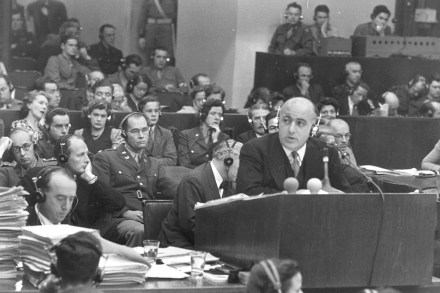
The new movie Nuremberg, starring Russell Crowe as Hermann Göring and Rami Malek as his US Army psychiatrist, has had mixed reviews. The Spectator’s Jonathan Maitland hated it, describing it as an ‘obscenely ill-judged two hours’ filled with ‘egregious errors of taste, decency and judgment’. Some critics have given it four stars, but Peter Bradshaw in the Guardian called Malek’s performance ‘an eye-rolling, enigmatic--smiling, scenery-nibbling hamfest which makes it look as if Malek is auditioning for the role of Hitler in The Producers’. The key scene comes when the American chief counsel Robert H. Jackson (played by Michael Shannon) fails to break Göring in the witness box, and the British barrister Sir David Maxwell Fyfe (played by Richard E.

The myth of the Boston Tea Party

From our UK edition

At 6.30 p.m. on Thursday 16 December 1773, a group of between 100 and 150 Americans raided three East India Company merchantmen moored in Boston and threw 92,000lb of tea (worth $1.7 million in today’s terms) into the harbour. A central part of the American founding story, the 250th anniversary of the Boston Tea Party is being commemorated this month as a key moment when patriotic Americans fought back against the greedy British and their oppressive taxation policies that forced up prices on commodities such as tea, which in turn led to the American Revolution.

The sinister attempts to tarnish Churchill’s legacy

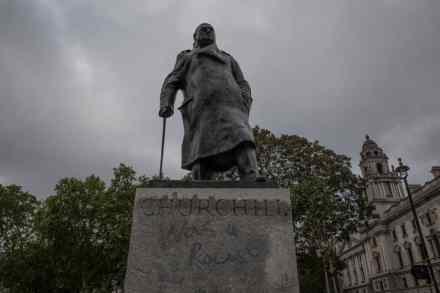
Winston Churchill is one of Britain’s enduring symbols. His relentless drive, deep conviction and steadfast leadership means that he remains admired by millions around the globe. Yet for years, the political mainstream has been compelled to defend his memory from spurious attacks from the left, such as John McDonnell calling him a ‘villain’. Depressingly that threat – and the same pernicious desire to denigrate our nation’s greatest hero – can now be found on the right. The aim is not simply to manipulate the public’s view of Churchill, but through his denigration to create the intellectual space for their other pernicious ideas to flourish Spawned from a sinister fringe of the American ultra-MAGA movement, these views have been propagated to millions.

Why we wrote the 7 October parliamentary report

From our UK edition

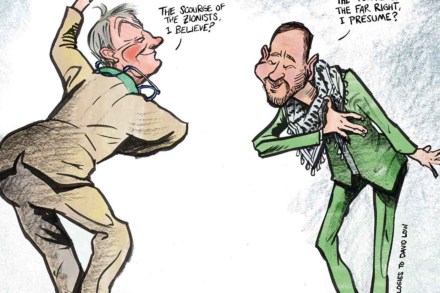
‘Amnesty International and Harvard,’ says Alan Dershowitz of the 7 October 2023 massacre, ‘blamed it on Israel even before the first shot was fired in Gaza.’ It was true; the Israel Defence Force (IDF) did not enter Gaza until 27 October, but already there were ‘River to Sea’ anti-Israel demonstrations, anti-Semitic posts on TikTok, the first stirrings of the Tentifada movement on campuses, a deafening silence in the United Nations (especially from its women’s committee which was to take six months to denounce the mass rapine) and a worldwide attempt to blame 7 October on its victims rather than its perpetrators.

America has changed sides on Ukraine

From our UK edition

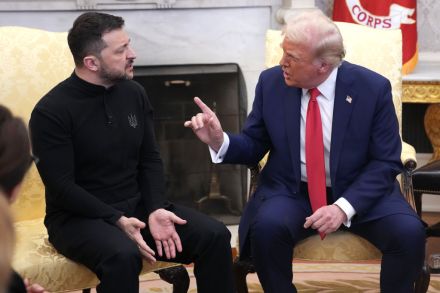
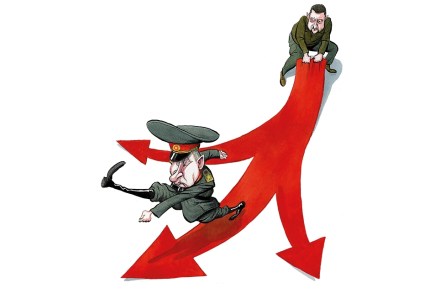
Andrew Roberts gave the following speech in the House of Lords, following the publication of the report ‘Ukraine: A Wake Up Call’ from the International Relations and Defence Committee. We must not underestimate the gravity of what has happened, which is that during a war against totalitarian dictatorship, the United States has effectively changed sides. It is very unusual for a country to change sides during a major war. Historically, Italy did it in 1943, but that was hardly decisive. However, the Saxons and Württembergers changed sides on the third day of the four-day Battle of Leipzig in October 1813, which doomed Napoleon in that campaign. Before that, the Stanleys changed sides on the morning of the Battle of Bosworth, which similarly spelled doom for Richard III.

The ghost of his father haunts Winston Churchill

From our UK edition

Winston Churchill hoped and expected his autobiography, My Early Life, to be read as much as literature as history, and also as an adventure story. He dedicated it ‘To a New Generation’, and it was especially intended to inspire people in their early twenties. ‘Twenty to 25, those are the years,’ he wrote. ‘Don’t be content with things as they are.’  Aged 56, Churchill was singularly discontented with things as they were. He was out of office and out of favour with his party, and had already entered his ‘wilderness years’.

When will Ronald Reagan get the recognition he deserves?

From our UK edition

The talented military historian Max Boot has published a well-researched life of Ronald Reagan that is fundamentally wrong. First the good parts: he has combed through lots of archives finding new information and has interviewed countless people who worked with or knew Reagan. His style also bears the reader effortlessly along. Yet his claim that Reagan was merely a lightweight pragmatist who had little effect on reviving the American economy, resuscitating the country’s self-esteem or winning the Cold War is absurdly revisionist. It says more about the author’s own rejection of the Republican party than it does about Reagan’s world-historical achievements.

‘A war for Middle East stability’: Israeli President Isaac Herzog on what’s at stake in the conflict with Hamas

From our UK edition

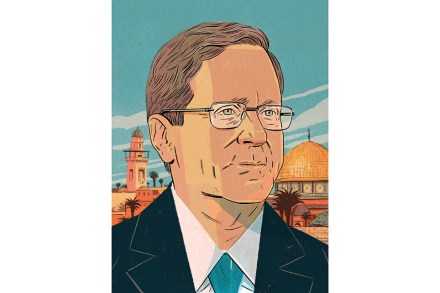
President Isaac ‘Bougie’ Herzog is Israeli aristocracy. His father, Chaim Herzog, was the sixth president, serving between 1983 and 1993; his grandfather Yitzhak Herzog was chief rabbi; his maternal uncle was Abba Eban, the most famous of the country’s foreign ministers. After leading the Israeli Labor party and the parliamentary opposition in the Knesset between 2013 and 2017, Isaac became Israel’s 11th president in July 2021. He is the first to be born in Israel since the Declaration of Independence 75 years ago. My first question rather asks itself: how is the war going? ‘Depends on what you mean by war,’ Herzog quickly replies, before turning the discussion away from Gaza to ‘the grand picture’.

Henry Kissinger saved us from a much worse world

From our UK edition

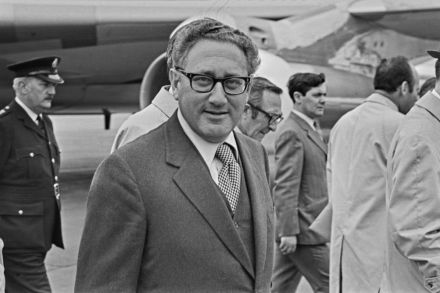
‘If I give you a copy of my book,’ I said to Henry Kissinger two months ago, ‘which chapter will you read first?’ ‘I will look myself up in the index,’ he replied in that voice that sounded like a cement mixer on the blink, ‘and start there.’ He automatically assumed that a book I had written with General David Petraeus on the evolution of conflict from 1945 to Ukraine would of course make reference to his career, his opinions, his contribution to history. Anything else would be unthinkable. And of course he was right.

Why are House of Lords clerics so anti-Tory?

From our UK edition

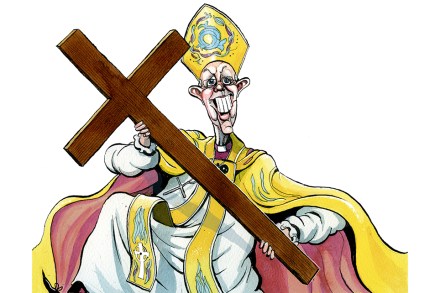
The bishops can smell blood in the water. Sensing how badly the Conservatives are doing in the polls, the two archbishops and 24 bishops of the Church of England in the House of Lords appear to have thrown aside any pretence of political objectivity and impartiality and have pitched themselves all-out against the government. This has been building up since the advent of the Tory-Lib Dem coalition in 2010, but the way that the bishops have taken their gloves off in the present session of parliament is shocking. Anglican bishops occasionally argue that they opposed the last Labour and coalition governments just as much as they do the present Conservative one, but consider these statistics. In 1999-2000 they opposed Tony Blair in 27.

My hope for Ukraine

From our UK edition

Kyiv When Winston Churchill visited bomb sites during the Blitz, the most common sentiment he heard was, ‘We can take it!’, followed closely by ‘Give it ’em back!’. That emotion is very evident in Kyiv, where Ukrainians are understandably nonplussed at opposition in some British newspapers like the Times to their drone attacks on Moscow. They point out that they are attacking military targets there, unlike Russia’s terror attacks on civilians. I was in Kyiv as part of General David Petraeus’s delegation to a conference organised by the Cipher Brief, a national security-focused media organisation.

The Lockdown Files are a historian’s dream

From our UK edition

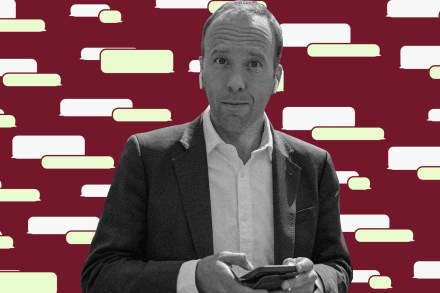
For all that the Lockdown Files, as reported in the Telegraph, sometimes read like the screenplay of The Thick of It, they will be a wonderful resource for historians. Whatever one thinks of the morality of Isabel Oakeshott’s actions vis-à-vis Matt Hancock, we now have 2.3 million words of WhatsApp messages that offer a rare psychological profile of ministers acting with emergency powers in a swiftly unfolding global crisis.

Farewell to arms: Britain’s depleted military

From our UK edition

Ayear ago on Friday, President Vladimir Putin unleashed blitzkrieg on Ukraine. It was an unprovoked assault that has so far led to more than 200,000 people being killed or wounded, but has failed in its intention of establishing Russian hegemony over its democratic neighbour. The West and much of the rest of the civilised world were shocked by the invasion, as well as being horrified and disgusted by the brutality of the Russian armed forces.    So it was with undisguised adulation that Ukraine’s President Volodymyr Zelensky was greeted by a standing-room-only crowd of parliamentarians in a freezing Westminster Hall this month, giving one of the most inspirational addresses to be heard in the 900-year history of that room.

The monarchy will survive Diana’s death (1997)

From our UK edition

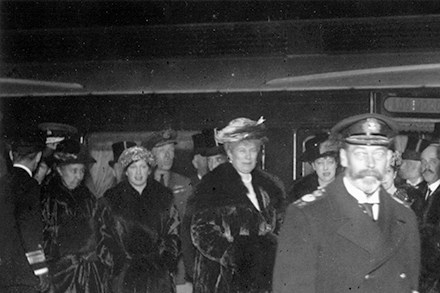
Today marks 25 years since the death of Diana, Princess of Wales. Andrew Roberts wrote The Spectator’s cover story that week, republished below and available at our digitised archive. The story that ended so horribly in that functional concrete Parisian tunnel early on Sunday had begun with a television show in 1969, when the victim was seven years old. In contradiction of Walter Bagehot's advice, daylight was let in on the magic of the monarchy. Before 1969, all had been deliberately obscure. Who now remembers Commander Colville? For over two decades, Commander Richard Colville DSC was press secretary, first to George VI and then to the present Queen.

The triumph of the National Army Museum

From our UK edition

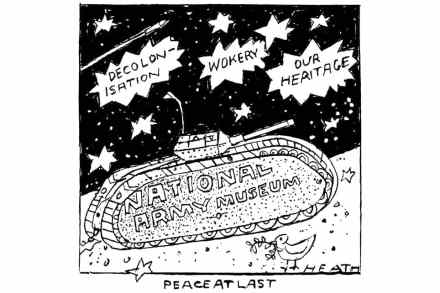
Five years ago this month I wrote an article in The Spectator denouncing the National Army Museum after its £24 million Heritage Lottery Funded refurbishment. The concept of decolonisation was then in its infancy, and I criticised the museum’s relentless attempts to make visitors ashamed of the British Army’s supposed legacy of imperialism and slavery, when that constituted only a tiny part of its overall glorious story (and it was in the forefront of fighting against the latter). I am thrilled to say that today the museum, which has been under new leadership since 2018, has returned to the aims of its Royal Charter, anchored itself to historical facts rather than contemporary politicised fashions, and thus been totally transformed.

What the Marxist Tariq Ali gets wrong about Winston Churchill

From our UK edition

Tariq Ali, the Marxist writer and activist, believes that a ‘Churchill cult’ is ‘drowning all serious debate’ about the wartime leader, and that ‘an alternative was badly needed’. He has therefore written a book that parrots every earlier revisionist slur about Churchill – war criminal, evil imperialist, mass murderer, pro-fascist – from detractors such as Caroline Elkins, Priya Gopal, Richard Gott, David Irving, Madrushee Mukerji, Clive Ponting, Richard Toye and Geoffrey Wheatcroft. If there were indeed a Churchill cult, it has done a singularly bad job of drowning out criticism of its hero.

The courage on Ukraine’s front line

From our UK edition

Central to the question of whether or not Ukraine can survive as an independent state is that of re-supply, not just of drones and anti-tank weaponry but also of food, especially if the conflict lasts for months or even years. The vast agricultural centre of the country is not being seeded, with potentially catastrophic consequences. Nato governments are providing lethal weapons and other aid, of course, but from what I have just seen in Berehove in western Ukraine there is another very heartening sign. For there is a large underground network of private, non-governmental groups – largely based on Christian groups with long-established family connections – that is transporting huge amounts of food and other non-lethal supplies into Ukraine.

Have Americans got George III all wrong?

Americans are rarely accused of underestimating themselves, but might they in fact be a greater people than they think? That thought has regularly occurred to me over the past three years while I was researching and writing my new biography of their last king, George III, and especially when I read Richard Brookhiser’s insightful comment in his recent book Give Me Liberty, where he points out that Britain’s thirteen American colonies in the 1760s and early 1770s were among “the freest societies in the world.

George iii

Would your party pass the ‘Gove Test’?

From our UK edition

I’m on a book tour which involves 65 speeches in 60 days in Britain, Washington, Philadelphia, Virginia, Mexico, California and New York. I suspect the second part will be tougher than the first, as Americans understandably hold a less charitable view of King George III. I’m a lot kinder about their Founding Fathers than the woke crowd in the States, though. The National Archives in Washington is threatening to put up a sign next to the Declaration of Independence stating that some of its views are ‘outdated, biased, and offensive’. Of course they are referring to its clause about Native Americans, but I’m going to try to persuade Americans that it’s also true of 26 out of the 28 clauses lambasting the poor old king.

Churchill as villain – but is this a character assassination too far?

From our UK edition

The veteran journalist Geoffrey Wheatcroft claims in his prologue to Churchill’s Shadow that: ‘This is not a hostile account, or not by intention, nor consciously “revisionist”, or contrarian,’ before launching into a long book that is virtually uninterrupted in its hostility to Winston Churchill, his memory and especially anyone who has had the temerity to admire Churchill or learn lessons from his life and career. Churchill revisionism is hardly new.