Arts feature

A woman of genius

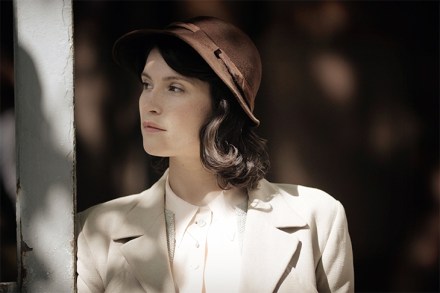
‘Your favourite virtue?’ ‘I don’t have any: they are all boring,’ wrote the 21-year-old Camille Claudel in a Victorian album belonging to an English friend in 1886. The remark perfectly matches the photograph of the aspiring sculptor taken two years earlier by César: childlike, sullen, attitudinous, beautiful. Claudel was in England on a break from working in Auguste Rodin’s studio, where she had been taken on as an assistant in 1884. She had met Rodin through her mentor Alfred Boucher, who discovered her precocious teenage talent on a visit to his hometown of Nogent-sur-Seine in the 1870s, and continued to supervise her subsequent studies in Paris.

Hollywood goes East

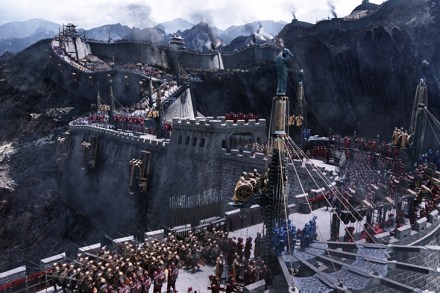
It’s kind of surreal being here.’ The general sentiment, no doubt, of most people on planet Earth right now, but the specific words of Matt Damon at the world première of his latest film earlier this year. The reason for his befuddlement? The film was The Great Wall, for which he had moved to China for half a year with his family. But the première was taking place beneath the extravagant pagoda of Grauman’s Chinese Theatre on Hollywood Boulevard. From actual China to Los Angeles’ idea of China — no wonder Damon found it weird. Yet, as so often happens in Hollywood, the weird could well become the way of things.

Internal affairs | 23 March 2017

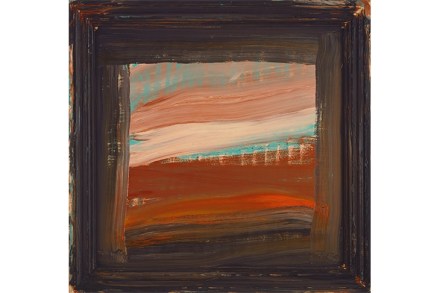
Over 20 years ago I wrote about Giambattista Tiepolo in The Spectator. Shortly afterwards I went to visit Howard Hodgkin in his spacious, white, light-filled studio close to the British Museum. It turned out that he had read my column and was pleased that someone had been discussing this 18th-century Venetian, who was just his idea of what a painter should be: a subtle master of colour, poetic, sensual, a bit neglected — in other words, much as he saw himself. The real subject matter of an artist such as Tiepolo, I suggested that day, is not really the Madonna or the apotheosis of some minor aristocrat. It is something more elusive and personal — such as the painter’s feelings about the charm of dogs, naked bodies or dreams of flying. ‘Yes,’ answered Hodgkin.

The odd couple | 16 March 2017

Only once did Michelangelo sign a sculpture. It was the ‘Pietà’ of 1497–1500, and he did so using an incomplete sentence in the past imperfect: ‘Michelangelo Buonarroti the Florentine was making…’. The implication was that actually completing a perfect masterpiece was an unattainable goal, so instead he just had to leave off (a great many artists still feel the same about finishing a picture). The ‘Pietà’ is included in Michelangelo & Sebastiano, a remarkably ambitious new exhibition at the National Gallery: not, of course, the original marble, which remains in St Peter’s, but a plaster cast from 1975.

Paradise lost | 9 March 2017

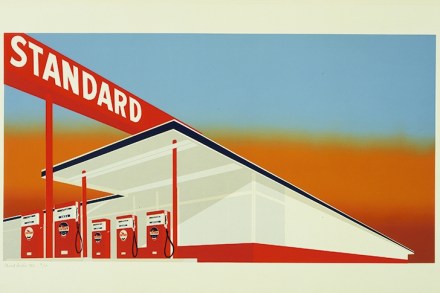
The American dream was a consumerist idyll: all of life was to be packaged, stylised, affordable and improvable. Three bedrooms, two-point-five children, two cars and one mortgage. The sense was first caught by Alexis de Tocqueville in Democracy in America (1835–40), where he talks about a people more excited by success than fearful of failure. We all know when the dream died: on 9 November 2016. People in Brooklyn were crying. In Manhattan they couldn’t breathe. A national angst had been revealed: the land of plenty had become the land of the plenty cross. But when did the dream start?

From page to stage

Reading Elena Ferrante’s Neapolitan quartet is a heady experience. You not only see, hear, know her characters — you can almost taste them. The villain of the first of the four books, which follow the friendship of mercurial Lila and striving Lenù from childhood into their sixties, is Don Achille, an ‘ogre’ who sweats the smells of ‘salami, provolone, mortadella, lardo and prosciutto’. Lila herself, always wriggling free of the nets of others, is ‘skinny, like a salted anchovy’. Nino, loved by both Lila and Lenù, is ‘an anomalous, sweet fruit’.

Snap, crackle and pop

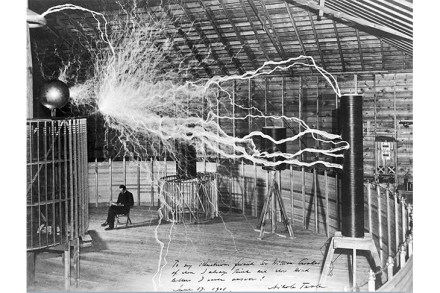
As you go into the new Wellcome Collection exhibition, Electricity: The Spark of Life, you might have in mind a sentence from Mary Shelley’s original electrifying novel Frankenstein; Or, the Modern Prometheus: ‘I collected the instruments of life around me, that I might infuse a spark of being into the lifeless thing that lay at my feet.’ A copy of the 1831 edition of her book, with its startling anatomical frontispiece, awaits you, among many other wonders. The exhibition, a collaboration between the Wellcome, the Teylers Museum of Haarlem and the Museum of Science and Industry, Manchester, is packed with electrical instruments, together with models, artefacts, books, film loops and pictures.

Thoroughly modern Monteverdi

‘Eppur si muove’ — And yet it moves. Galileo’s defiant insistence that the Earth revolves round the Sun, his refusal to submit to the Inquisition, is a familiar one. It’s the battle cry not of a reformer but of a revolutionary, a passionate teller of truths. It’s a credo he shared with composer Claudio Monteverdi. Born barely three years after the astronomer, Monteverdi faced his own inquisition. Defying those who would make music an immoveable sphere, bound in place by harmonic proprieties and structural conventions, he made works that rejected tidy formalism in favour of messy, fleshy humanity. His was music that moved in every sense, that lived as vividly as those who inspired it.

Some like it hot

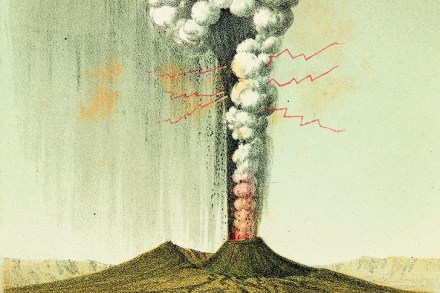
In the mid-6th century, legend has it, St Brendan set off from Ireland with a currach-load of monks on a mission to find the Isle of the Blessed. The Irish like to think that his Atlantic odyssey took him to Newfoundland before the Vikings; what seems more probable, if you believe the medieval account, is that it brought him close to the shores of Iceland where he passed a mountainous island with ‘a great smoke issuing from its summit’ and ‘flames shooting up into the sky’. If there were any doubts that what is meant here is a volcano, they would be dispelled by the drawing in the margin of the version of the Navigatio Sancti Brendani Abbatis currently on show at the Bodleian Libraries.

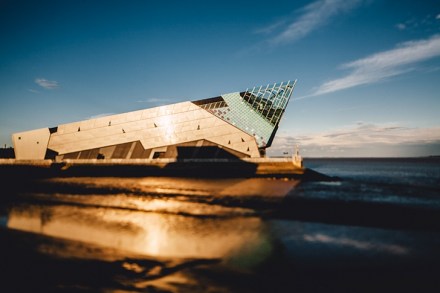
Hull’s a poppin’

In early January, lastminute.com recommended its top 15 destinations for 2017. In 12th spot, just above Montreal, Croatia and Japan, was Hull. And if you’re tempted to opt for a snooty chuckle at this point, my advice would be to go to Hull — because, judging from my recent experience, even on a cold January weekend, the place is buzzing with a hugely infectious, if still slightly bashful, sense of rediscovered civic pride. ‘I’ve lived here for 50 years,’ one man told me, ‘and this is the greatest thing that’s happened to the city in my time.’ The ‘this’ he’s referring to is, of course, Hull’s status as the UK City of Culture for 2017.

The only way is up | 26 January 2017

Michael Andrews once noted the title of an American song on a scrap of paper: ‘Up is a Nice Place to Be.’ Then he added a comment of his own: ‘The best.’ This jotting was characteristic in more than one way. A splendid exhibition at the Gagosian Gallery, Grosvenor Hill, London, makes it clear that Andrews was — among other achievements — a supreme aerial painter. No one else has better caught the sensation of floating, to quote another song from the Sixties, up, up and away. It was also typical of Andrews that his addition to that title was only two words — but it makes a big difference. His paintings are like that. At first, there may seem not to be much there. ‘Lights VII: A Shadow’ (1974) is almost a painting of nothing at all.

Ideal homes

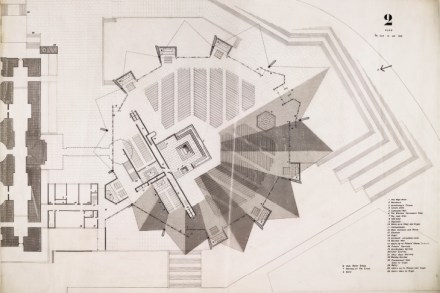
Artists, poets and philosophers have not paid much attention to Milton Keynes ...although comedians have. This urban experiment has been mocked by lazy satirists who find ambition derisory and concrete cows hilarious. Milton Keynes is 50 this year and it has an honourable place in the history of that ancient chimera, the Ideal City. It was conceived in a decade when the improving influence of the ‘white heat of technology’ could be cited without irony (or embarrassment). In those days, technology involved calorific value, not cold, invisible bytes. The name sounds like an ad-man’s invention. But until 23 January 1967, when the new city was designated, Milton Keynes was an old, quiet Buckinghamshire village near Bletchley, one of 15 that were absorbed into the whole.

Haus of ill repute

Here in Munich, in the gallery that Hitler built, this year’s big hit show is a spectacular display of modern art. Postwar: Art Between the Pacific and the Atlantic, 1945–1965 is a massive survey of international modernism, curated with typical Germanic can-do. Talk about ruthless efficiency — even the catalogue weighs several kilograms. All the stars of German modern art are here, from Joseph Beuys to Gerhard Richter, but the most interesting exhibit isn’t in this huge central hall, where Hitler staged his Great German Art shows, it’s in a quiet corner of the gallery, at the end of a deserted corridor, up an empty flight of stairs.

Munchkins and mischiefs

Arthur Rackham shouldn’t have lived in anything as conventional as a house. It should have been a gingerbread cottage, like the one he drew for Grimms’ Fairy Tales, with cakes for a roof and boiled sugar for windows. Or a Rapunzel turret, for letting down ropes of long, blonde hair, except he was so very goblin-bald. Or a Sleeping Beauty palace with a spinning-wheel in the topmost tower. As it was, he lived in Chalcot Gardens, north of Primrose Hill and south of Hampstead Heath, with his wife Edyth Starkie, a portrait painter, and their daughter Barbara, at the end of an 1880s row set back from the road.

Back in the USSR

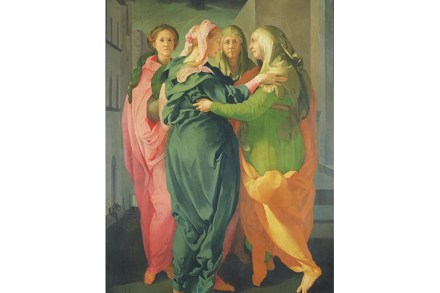
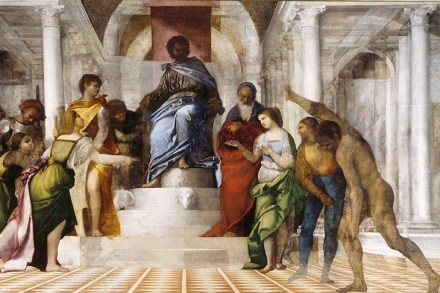
For much of 1517 Michelangelo Buonarroti was busy quarrying marble in the mountains near Carrara. From time to time, however, he received letters relating how his affairs were going in Rome. These contained updates on — among other matters — how his friend and collaborator Sebastiano del Piombo was getting on with a big altarpiece which he hoped, with Michelangelo’s help, would vanquish their joint rival, Raphael. This picture, ‘The Raising of Lazarus’, has been in the National Gallery for almost 200 years now (it is No. 1 in the inventory of the collection). Next March it will be one of the centrepieces in an ambitious exhibition that inaugurates the new North Galleries, Michelangelo & Sebastiano: A Meeting of Minds (15 March–25 June).

O come, let us adore him

On 27 July 1613 a man prostrated himself in the church of San Pedro Mártir in Toledo, having first made a solemn declaration: ‘I, Juan Bautista Maíno, make profession and promised obedience...’ Thus he became a Dominican friar. At the time, Maíno was halfway through painting ten canvases for the high altar of this very same church. Two of these, the most glorious and seasonally apposite, are currently on loan from the Prado and on show in Room 1 at the National Gallery (until 29 January). They open a window on to a little-known episode in Spanish art — and the spiritual life of an intriguing man.

Instant gratification

Instant photography already existed long before Edwin Land, the ingenious inventor and founder of Polaroid, went for a walk with his daughter in Santa Fe in 1943. ‘Why can’t I see the pictures now?’ she asked her father on the way home. But the photographic systems available at that time were really just ‘experimental portable darkrooms’ rather than truly ‘instant cameras’. Only a few hours after his daughter’s question, Land got hold of a patent lawyer and by Christmas the first test versions of ‘Polaroids’ had been developed in the lab. Land was an incredible visionary. He was not just researching an innovative film system. He was on the hunt for a completely new tool for life.

Screen grab

St James’s Palace. 1953. A dynamic Duke of Edinburgh is relishing a ding-dong with the antediluvian fossils of the Coronation Committee. He wants to embrace modernity by allowing the BBC to televise the ceremony. The ‘grey old men’ want to continue doing things in exactly the same way that they have been done since 1066. Modernity prevails and the coronation is the biggest television spectacular there has been. This episode, splendidly recreated with a little artistic licence in The Crown, Netflix’s epic about the Queen, was a tipping point in terms of the public’s acceptance of the medium of television. Many viewers acquired their first sets for the sole purpose of watching the coronation. Now, in the television world, the wind of change is rising again.

Where the wild things are

‘What is man, that thou art mindful of him?’ asks the Psalmist. It’s a good question. God Himself doesn’t give a very satisfactory answer. In one breath he insists that humans are a little lower than the angels, made in His own image, but also (in a formulation as bleak and more terse than any modern reductionist’s) that they are made of dust, and to dust they will return. Darwin tells us a similar story. We don’t have to flip back too many pages in our family albums, he says, before we see furry, feathered and scaly faces. But then he draws an exuberantly branching tree of life, rooted in stardust, and tells us that we’re perched on the topmost bough. It’s not surprising that we’re confused.

Death by television

Forty years ago this month a film appeared, so prescient I wonder if its author, Paddy Chayefsky, saw the 2016 American presidential election campaign in a crystal ball. It was called Network and it foretold the rise of Donald Trump. The plot is King Lear appears on Newsnight: a newsman run mad. The protagonist is Howard Beale (Peter Finch), an anchorman at a failing network. The year is 1976, and America is embattled with inflation, depression and the end of the Vietnam war. It is not a time for American heroes, to paraphrase Chayefsky’s acolyte Aaron Sorkin writing in The West Wing. Beale’s ratings are low. He is fired. He announces that he will kill himself, live on air. ‘I just run out of bullshit,’ he says.