Spectator Life

Spectator Life

An intelligent mix of culture, style, travel, food and property, as well as where to go and what to see.

Where to invest on Italy’s islands

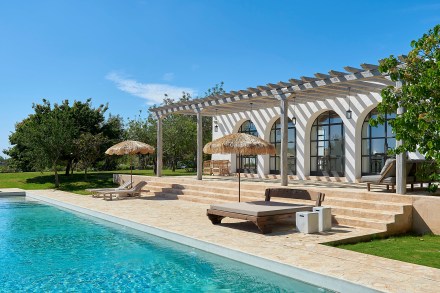
A world away from TV dating reality shows, raucous party boats and the VIP areas of nightclubs in the Balearics, the Italian islands are hard to beat when it comes to understated chic. Harder to reach too, and generally more arduous places to purchase a home in, the islands can offer property hunters something special. TV and film producers know this well: picture the Baroque palazzos of Inspector Montelbano’s Sicily, the private beach of Ischia or the winding cobbled streets of neighbouring Procida used in The Talented Mr Ripley. For wild empty beaches, secret coves and quaint fishermen’s houses lining ancient quaysides, the islands in the Gulf of Naples are a good place to start, reached by ferry from Naples.

What Boris’s right-to-buy gets wrong

It isn’t hard to understand why the government should want to revive the spirit of Margaret Thatcher’s right-to-buy, which was credited for creating a whole new class of homeowners – and in the process Conservative voters. While the right to buy has never gone away – and survived the Blair and Brown years – it is a shadow of its former self. In 2020/21, 6,994 social homes were sold, compared with 167,123 in the peak year of the scheme, 1982/83. Last year’s figure was markedly lower even than the 17,756 homes sold in 2006/07 – the heyday of the Blair housing boom. What does today’s announcement do to widen the right-to-buy?

How to navigate a property market downturn

Housing market data is, by its very nature backward looking. Data released by the Halifax recently paints a picture of a market that’s still rising. Prices rose again in April 2022 for the tenth consecutive month. It's the longest run of consistent rises since 2016. And prices are 10.8 per cent higher than they were in the same month in 2021. And yet the cost-of-living crisis continues to escalate. Whether it’s energy or fuel prices, inflation, or the rising cost of food, it’s all beginning to bite. And yes, interest rates have risen too. At the beginning of May the Bank of England raised rates to 1 per cent with an expectation that there will be further rises to come. All this means that buyers are significantly more inhibited than they were a year ago.

The Spanish islands worth investing in – from Mallorca to Ibiza

Another summer starts, and so another series of the irrepressible reality show, Love Island. Attention is focused on a rustic six-bedroom Mallorcan farmhouse being blinged up with ‘bright colours and neon signs’ for this year’s fame-hungry contestants. Its exact location is a closely guarded secret. An appetite for privacy and rural isolation on the Balearic Island has been strong trend since the pandemic started, with property hunters decamping from cities or the Spanish mainland.

For Generation Rent, the landlord is king

Last night, I posted an advert on property rental site SpareRoom: ‘Looking for someone to take over my room in Dalston/De Beauvoir from July. Beautiful house, large bedroom, overlooks a garden centre.’ By this morning, I had almost 60 inquiries. Bleary eyed and fuzzy from sleep, I checked my email: it was inundated with prospective tenants offering to ‘pass’ interviews over Zoom before being granted a viewing or handing over large sums of money for the deposit before even seeing the place in person. One woman had contacted me from Australia.

Generation Rent is moving abroad

As a born-and-bred Londoner, the thought of living elsewhere has always repulsed me. And yet now I feel an ever-increasing desire to run for the hills. Thankfully I’m not alone in feeling restless and dissatisfied. And while my reluctance to live a plane ride away from my parents is keeping me in the country (for now at least), it seems many have no such qualms about abandoning ship. According to research commissioned by immigration law firm Reiss Edwards, Google searches for ‘moving abroad’ were up 1,000 per cent in April, with my generation – the much maligned millennial – apparently leading the charge. It’s hardly news that millennials – who are currently aged 26 to 41 – have not had the easiest ride.

The coastal boltholes that rival Cornwall

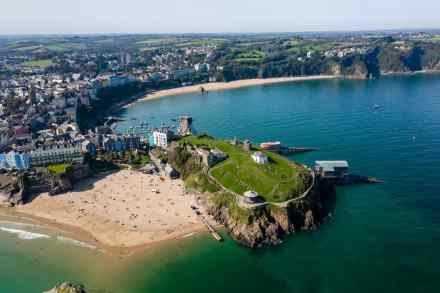
May Day is behind us, the summer season approaching, and already the tensions between second homeowners and locals in Cornish seaside towns have been gleefully reported by the tabloid press. Visit Cornwall is considering a register of second homes while councils are proposing a tax on empty properties. House prices have gone up by an average of 28 per cent across Cornwall since the pandemic began, according to the Land Registry, so is it time to look elsewhere for a coastal bolt hole? The British coastline is at least 1,200km long so there are some great alternatives, although the perennial favourites can get just as ‘overrun’ as the likes of St Ives.

Inside the Henley mansion that housed the Fords and the Kennedys

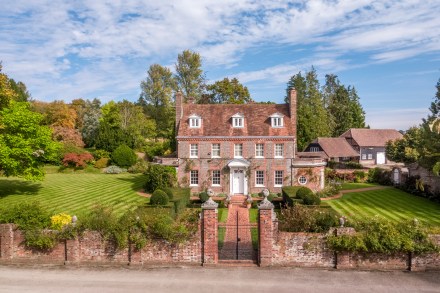
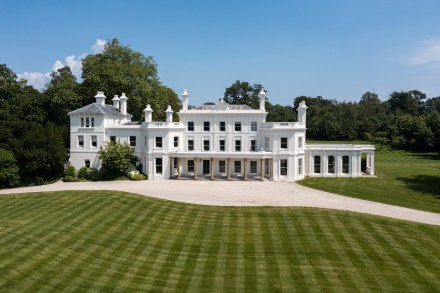
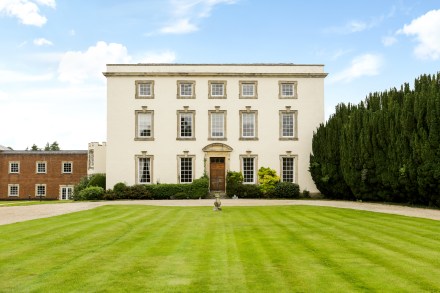
Turville Grange has many of the expected hallmarks of the top-end English country houses and estates on the market this spring. First comes its punchy price tag – in this case £18.75m – and lusted after location, the upmarket riverside town of Henley-on-Thames, in Oxfordshire. Then there are its classic good looks: built in Queen Anne style in the 1880s, the Grade II listed three-storey house sprawls across 8,000 sq ft of space, has five main bedrooms, five staff bedrooms, two guest bedrooms and five reception rooms. There’s even a scratch or two of graffiti as proof of the requisite royal visitors – Princess Victoria, younger sister of King George V, etched the dates 1915, 1917 and 1918 into a first- floor window with a diamond ring.

Right-to-buy won’t fix Britain’s housing crisis

The biggest long-term threat to the Conservatives is neither partygate nor even the cost of living crisis – but declining rates of home ownership. As Mrs Thatcher understood, when people are able to afford their own home, they become more conservative in outlook. They put down roots in their local area and they gain a vested interest in capitalism – just look how Mrs Thatcher won and held on to aspirational areas such as the new towns. That the rate of home ownership plunged from 70.9 per cent to 62.6 per cent between 2003 and 2017 (it has since recovered slightly) goes quite a long way to explaining why Jeremy Corbyn became such an attraction for young people in the general election of that year.

Is London’s housing market faltering?

Prime Central London has always been viewed as safe. It has some major plus points for the world’s wealthy – it’s on the Greenwich Meridian so can trade East and West, is an island considered geographically safe and geo-politically stable. Wherever you lived in the world you could stash a considerable portion of your wealth in this safe haven with the added bonus that, if a downturn were to grip your own country, you can relocate to London. The relative global stability of the last decade has led to empty properties. The heart went out of Prime Central London years ago.

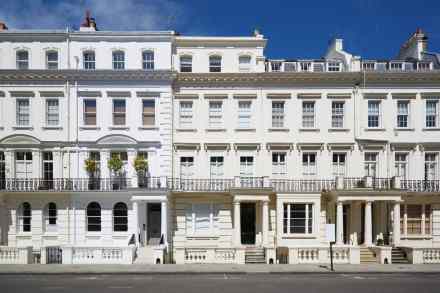
The Bridgerton effect: a guide to buying Georgian homes

With its high society intrigue, gossipy plotlines, raunchy love scenes and gravity defying hair do’s, all set against the backdrop of spectacularly sumptuous homes, Netflix series Bridgerton has rewritten the rules for small-screen period drama. The Shonda Rhimes exec-produced series gained 193 million hours of viewing time for its second series in the first three days – the highest for any English-language Netflix series in this time frame. Whether you love it or hate it – or love to hate it – its impact is undeniable, offering an irresistible twist on classic 19th-century tales of the upper classes, imbued with a modern sensibility.

How I finally learned to love my eco-home

Nine years ago, when I invested every-thing I had in a part-rent, part-buy, one-bedroom, government-backed eco-home which proved to be a boiling box in summer, my first instinct was to throw myself out of a window – but I couldn’t because they opened only ten centimetres. My second was to complain about it in The Spectator. Now, I return to update you on my energy bills. Prepare to turn green with envy. Friends who live successful sorts of lives – involving houses, spouses and gardens – exclaim ‘Oh, so you weren’t joking about living in a J.G. Ballard novel?’ when they come around for the book launches I host in my living room, before asking if I can open a window. ‘I can actually,’ I boast.

The dos and don’ts of buying land

You’d be forgiven for thinking that buying land is just the same as buying a house. But, other than the form of contract and the stamp duty you pay, the two transactions have almost nothing in common. When you buy a house, even if it comes with land attached, what you’re really buying is a physical structure with infrastructure (pipes, energy, drainage, and access) and most importantly the permission for that building to be where it is. And it’s that permission that holds the real value. Very often with land you’re either buying hope value or opportunity, an existing income stream and sometimes it’s a financial responsibility. Land may also be a route to receive a range of tax benefits.

The cult of the extortionate ‘English’ kitchen

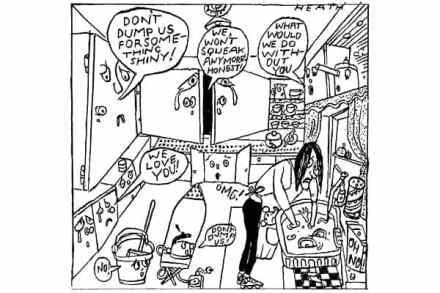
A house around the corner is on its fourth kitchen in a decade. Every two or three years, the house changes hands, the pristine kitchen comes out and a newer, pristiner kitchen goes in. They are always white, they are always shiny, and when I peer through the basement windows there is nothing in the way of signs of life. I reckon I can predict the next kitchen. Think homespun, think rustic, think scullery maid in mobcap and pinny. What the rich want now is a plain old Plain English kitchen. Hand-crafted cabinets, antiqued brass, Delft tiles with authentic craquelure. Starting at £34,000 and going up to… well, how much have you got? Don’t you dare put Dulux on your artisan doors. Plain English has its own bespoke paint chart.

The secret to buying in Italy

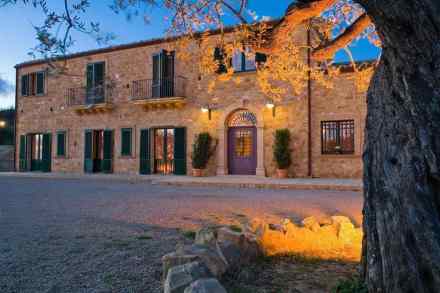
The best recent advert for the bella vita is surely actor Stanley Tucci sampling regional cuisines in CNN’s Searching for Italy exclaiming ‘oh my god’ at least four times an episode as he swoons over risotto Milanese or Sicilian pasta alla Norma. It's these sun-soaked visions of a foodie paradise that persuade scores of Northern Europeans and Americans to buy a home there. Around 30,000 Britons have moved there – mostly to Lombardy, Lazio or Tuscany – but a raft of incentives is helping draw many buyers to southern Italy, where rural properties are more affordable.

Why millennials love midcentury modern

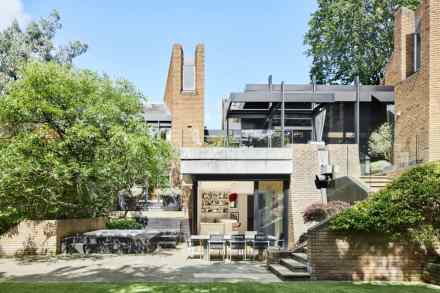
I’ve recently become betrothed, so naturally I’ve started playing the fantasy house game; scrolling through property sites on my phone, highest price first, before I go to sleep at night. I thought I knew what I was looking for; a Georgian townhouse, solid stone steps leading up to a grand front door, basement kitchen, you know the drill… but then I saw it, my dream house. The main living area is a vast open plan, multi-levelled space with a sweeping wall of windows; white limestone floors contrast against its naked brick body and slatted wooden ceiling; everything is bathed in brilliant natural light, the lines between inside and outside gloriously blurred. In short, it’s a mid-century modern (MCM) masterpiece.

The social cost of Cornwall’s second home boom

Cornwall has a boast this week and it has nothing to do with ice-cream or tides: we have made more than 2000 offers to house Ukrainian refugees. I am not surprised. The duchy is filled with second homes, and they are very often empty. Harboursides are dark in winter and the old town in St Ives is no more than a monied ghetto now. Cornwall is now more of a business than a place, with an owner and a servant class Since the war began it is often said that it is easier to offer refuge to those closest to you. The Polish don’t want Syrians, for instance, but they want Ukrainians. In Cornwall the opposite is true.

Why second-homers are buying in Portugal

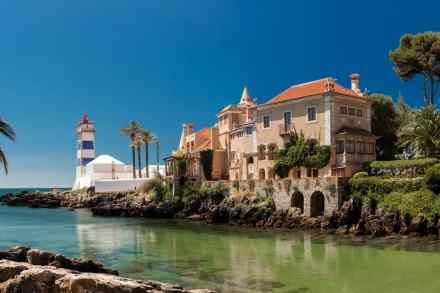
In recent years Portugal’s been pulling away from its image as a place for golf-playing retirees. Now it’s a fashionable and increasingly upmarket destination for home buyers who are drawn by its tax benefits coupled with its unspoilt coastlines and low-octane lifestyle. As of December 2021, there were 42,071 Britons resident in Portugal, according to the SEF, the Immigration and Border Service, the second largest group of foreigners behind the Brazilians. It is extraordinary that although the figure has fallen a little since 2020 – the pandemic has played its part – prior to Brexit, Britons made up only the sixth largest group of foreign residents in Portugal.

The home improvements that are shrewd investments – and what to avoid

Is the property market stagnating? According to the latest figures from the Nationwide House Price Index you could be forgiven for thinking that everything’s tickety-boo. Prices are up 1.7 per cent and annual growth now running at 12.6 per cent with the typical home up to 20 per cent higher than in February 2020. However, with inflation on the up, higher interest rates are on the way. Rising costs of living are seemingly out of control and there is increased market and economic uncertainty resulting from Russia’s invasion of Ukraine. Whether the market remains competitive or stagnates, why move and go through all the hassle and expense when you could simply use the money you’d spend on agent’s fees and stamp duty to invest at home?

The nuclear bunker market is booming

As the spectre of nuclear war returns so does another very modern phenomenon: a spike in interest amongst the paranoid rich seeking to procure their own nuclear bunker. Over in Texas – already home to a vibrant culture of ‘preppers’ who spend their time planning for every shade of apocalypse – one creator of custom shelters, Rising S Bunkers, says it’s had a 700pc increase in interest in the last month. Made from long-lasting plate steel, their bunkers are designed to be buried under the average American yard. Of the five units sold last month, the largest fetched $240,000.

What the flight of Russian money means for the London property market

Ever since the early 2000s, London’s luxury property market has been the preserve of foreign investors, many of whom are purported to be Russian. In Chelsea, Highgate and Hampstead, streets of empty mansions quickly became an inevitable part of city life, while the Russian investment phenomenon was dubbed ‘Londongrad’. Thanks to the use of myriad offshore companies and ownership structures, and the practice of buying properties in the names of third parties – so called nominee accounts, it is all but impossible to identify the owners of these houses. Short of posting a private detective outside of each one for weeks on end and hoping the real owner shows up, the exact number of Oligarch-owned homes remains a mystery.

Is the house price boom about to end?

Will the housing market crash? We have been asking the question for two decades now are prices climbed to ever higher multiples of earnings. But apart from a few months in 2008 and early 2009, when prices did slide appreciably, it never seems to happen. Stock market corrections come and go but nothing will seem to dislodge housing from its inflated heights. Having just gone through the most unlikely property boom in history, however – in which prices have surged throughout a pandemic – it is worth asking again. If we really have reached the end of the age of ultra-low interest rates that would remove the engine that has driven the long housing boom of the past three decades.

A house hunter’s guide to France

Offering a choice of three stunning coastlines, historic villages and dozens of wine-making regions France has long been one of our favourite places to buy a holiday home. Queen Victoria loved Nice, Noel Coward adored Cap Ferrat and the ‘old’ French Riviera between Toulon and Hyères features in the new Downtown Abbey film out next month, with Dame Maggie Smith’s Dowager Countess enjoying a Belle Epoque holiday home there. Our nearest neighbour has remained a popular choice during the pandemic because it’s really the only feasible place to drive to, and Brittany, Normandy and the Loire have seen an uptick in demand from British buyers less keen on flying.

There’s more to Essex than TOWIE

That Essex County Council is spending £300,000 on an advertising campaign to rehabilitate its reputation can’t come as a surprise. The only surprise is that it didn’t think to do it before – or that somehow they believe £300,000 is enough to turn the tide. As far as I can tell, £300,000 won’t touch the sides. And in a strange way, I'm glad. Because Essex, as Britain's most underrated county, is something of an undiscovered haven for ex Londoners like me. Don’t believe me? Let’s do a test: if I say the word ‘Essex’ to you, what images come to mind? The cast of Birds of a Feather, perhaps? The boy band Bros, a Mark III Ford Escort and perhaps Sir Alan Sugar?

Inside the Henley town house with connections to Henry VIII

Being Henry VIII’s confessor must have been a nerve-racking job, but it’s one John Longland – who also held the titles Dean of Salisbury and Bishop of Lincoln, and was thus a major ecclesiastical figure of the Tudor era – held with aplomb. Although he was closely associated with influential men (and bigger names) such as Sir Thomas More and Cardinal Thomas Wolsey, his role in one of the most turbulent chapters in British history has secured his legacy, and given him a walk-on part in Shakespeare’s Henry VIII, as well as many a modern-day small screen bodice-ripper.

There’s more to paint than Farrow & Ball

Hands up if you’ve ever had your house decorated and strategically placed a couple of empty tins of Farrow & Ball Dead Salmon on the doorstep so the neighbours appreciate your excellent taste. It happens a lot, says Henry Prideaux, a London-based interior designer who agrees that a certain kind of paint brand, 'can appeal for a variety of reasons, whether it is for its environmental credentials, ease of use, or value for money. Sometimes though, it’s a case of keeping up with the Joneses and impressing your friends by using the best and most expensive.' At £52 for a 2.5L tin, it's clear that Farrow & Ball has become a dictum for a certain kind of smug.

How to invest your way to a house deposit

Back in the day, saving for your first home used to be a bit of a doddle. Find a nice savings account paying 5 or 6 per cent, stick away as much as you can every month, and, within a few years, head for the estate agents.  Talk of a ten-year slog to get on the housing ladder and using the stock market to build up your deposit was unheard of. But that was then. Kirstie Allsopp provoked controversy earlier this week by saying she felt 'enraged' when young people claimed they couldn't afford their first home because 'there are loads of people who can do but don't.' But is it merely a case of cutting back on life's luxuries?  In such a tough financial climate, it would be tempting to see investing as a magic wand that can conjure up the keys for that longed-for first home.

Why Wiltshire trumps the Cotswolds in the race for rural homes

Wiltshire’s property prices have been given a shot in the arm during the pandemic. It’s one of those desirable rural locations that has suddenly became even more popular as we have veered from daily commuting towards flexible working. Historic towns such as Salisbury, Marlborough and Warminster have been perennial favourites but are attracting buyers looking for more bedrooms (and larger gardens) for their buck, with the low-key villages of bucolic areas such as the Vale of Pewsey and Nadder Valley in demand. 'Buyers who previously might have been looking in Oxfordshire and Hampshire are now looking at Wiltshire where prices are typically 25-30 per cent less,' says Mark Lawson of the Buying Solution, a property search agent.

Kirstie Allsopp is wrong about house prices

They could cancel their Netflix subscriptions, stop drinking chai tea or go a little easier on the avocados and the smoothies. And perhaps most of all they could get on their bikes and start searching for some cheaper places to live. Kirstie Allsopp, the presenter of popular TV shows such as Location, Location, Location, probably always knew she was going to stir things up with her comments this weekend. Allsopp said that if young people simply cut back on some self-indulgent luxuries, and explored some alternative areas to live, then they would be able to get on the property ladder in their twenties just the way she did:  'I don’t want to belittle those people who can’t do it. But there are loads of people who can do it and don’t. It is hard.