Spectator Life

Spectator Life

An intelligent mix of culture, style, travel, food and property, as well as where to go and what to see.

For sale: Jane Austen’s birthplace

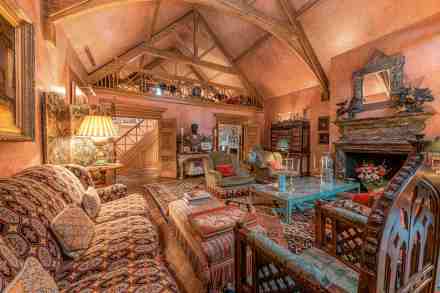
‘There is nothing like staying at home for real comfort,’ wrote the eminently quotable Jane Austen in Emma, in 1815. ‘Nobody can be more devoted to home than I am.’   If the incomparable Regency writer and social critic could see Steventon House, on the site of her birthplace and childhood home in Hampshire, she would doubtless approve. Although it’s not quite on the scale of the manicured estates that feature so largely in her property-obsessed novels, the Grade II listed 1820s home is all Georgian elegance, with 7,000 sq ft of living space, beautifully proportioned high-ceilinged receptions and fine period features including decorative fireplaces, cornicing, and working shutters.

Mean streets: the psychology of neighbour disputes

Eunice Day’s breaking point came when her neighbours asked if she would move her car from a communal grass verge in their cul-de-sac so that it could be mowed. After several weeks of polite hostilities, Day stormed a neighbour’s home in the Dorset town of Ferndown, a row ensued, and the resulting scuffle left the 81-year-old in court charged with assault. In Bedminster, Bristol, fed-up locals have taken a more passive-aggressive approach to ‘outsiders’ parking on their streets. Suburban vigilantes have been creeping out and sellotaping notes to windscreens urging their owners to park outside their own homes instead.

How padel courts became hot property

Peloton has peaked and troughed, wild swimming has made its splash – and now, it seems, it's padel's turn for the prime spot. Said to be the world's fastest-growing racket sport, the game – a hybrid of tennis and squash, with a dash of ping pong – is fun and sociable (it’s played in doubles) and has been adopted by around 25 million people worldwide. Easy to get good at quite quickly, it’s also apparently the ‘new golf’ among retired footballers – David Beckham is a fan.  ‘Padel has become an obsession in the shires...

Home is where the art is: inside J.M.W Turner’s last house

Joseph Mallord William Turner continues to occupy a singular place in British cultural consciousness. The English Romantic artist, watercolourist and printmaker – often referred to as ‘the painter of light’ – elevated landscape painting to high art and, when he died in 1851, left a legacy of 550 oil paintings, 2,000 watercolours and 30,000 works on paper. When one of these surfaces at auction, it sells for tens of millions of pounds. However, most of his works – with the power of nature, the sea and the industrial revolution as central themes – were bequeathed to the nation.

Why developers deserve to pay for the cladding crisis

In recent months, Michael Gove has been upsetting not only the house-building industry but its defenders, too. The Levelling-up Secretary has been accused of ‘blackmail’ by online newspaper Cap X, which compared his actions to ‘Putin’s Russia or Erdogan’s Turkey’. The Telegraph mocked him up on a wrecking ball Miley Cyrus-style, and several trade press articles have accused him of ‘declaring war’ on the industry. The reason? Gove has ordered housing developers to pay for ‘life safety’ remediation measures on blocks they built, which have been found to have serious fire safety defects in the aftermath of the 2017 Grenfell Tower fire – regardless of whether they were to blame for the flaws or still own the building.

In defence of the 15-minute city

At the end of last year, the subject of the ‘15-minute city’ began to creep into neighbourhood WhatsApp groups, interrupting the usual discussion of lost cats, car crime and blocked drains. Oxfordshire County Council had proposed a traffic-zoning scheme to reduce car usage in the city – and suggested that to address unnecessary journeys, every resident should have ‘all the essentials (shops, healthcare, parks) within a 15-minute walk of their home’. But critics up and down the country hit on the proposals as an example of the ‘international conspiracy’ and ‘tyranny’ of the 15-minute city – which, they warned, is probably coming to a neighbourhood near you soon.

The ebb and flow of life on a houseboat

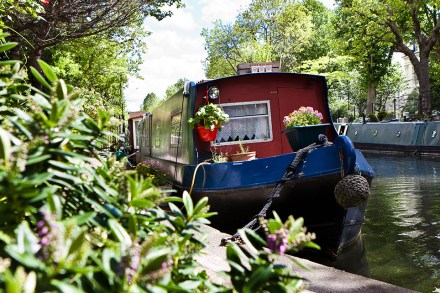
In the spring of 2021 I took a man to a pub in Hackney and bought him a drink. Perhaps he should have been doing the buying, since I had just handed him a large sum in return for his narrowboat. But I was in an exultant mood. No London flat, I reasoned, could ever be as cosy as that low-ceilinged, teak-panelled interior with its coal-burning stove and narrow cabin bed. And outside it lay a pathway to adventure through the hidden districts of the capital, their parks, nature reserves, railway bridges, gasholders, locks, warehouses and waterside pubs. Such thoughts, amplified by a sub-genre of YouTube and Instagram accounts, tempt scores of idealists on to the canals each year. They quickly discover reality.

Would you pay £24,000 for a fridge?

At the start of this month, the modish kitchen appliance brand Sub-Zero & Wolf proudly announced the launch of its Classic French Door fridge-freezer. This beast of a machine, featuring Nasa-inspired air purification technology and an automatic ice-maker complete with 'party mode', will set you back £23,868 ­– or the best part of a year's salary for the average UK worker. Admittedly it does look like an impressive piece of kit, what with its nano-coated glass shelves which stop spills from spreading, crisper drawers with humidity levels designed to keep food fresher for longer and shadow-reducing interior lights.

How ‘DFLs’ saved St Leonards

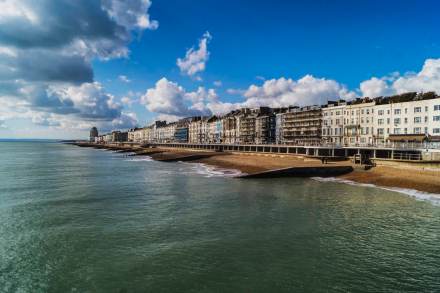
Almost 30 years ago, my journalistic career began in the faded seaside town of St Leonards-on-Sea, where I spent six months undertaking a crash course in shorthand, typing and all the basic skills of local paper reportage. With no previous experience of just how dismal an out-of-season holiday town could be, my spirits were high on the trip down the A21 – an extended coastal sojourn sounded like fun. The reality of St Leonards in the early 1990s brought me back down to earth with a bump. This once splendid Regency resort – created by the team which had designed London’s Bloomsbury and Regent’s Park – was a wasteland.  Its white stucco townhouses were crumbling. Most cafes and restaurants closed during winter so there was nowhere to go and nothing to do.

The Norfolk manor house that inspired Virginia Woolf

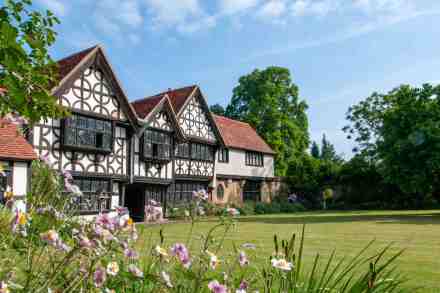
Many English country houses lay claim to literary legacies. Blo Norton Hall, however, has more right than most. In the summer of 1906, while in her early twenties, Virginia Woolf rented the Elizabethan Norfolk manor house with her older sister, artist Vanessa. The seven-mile journey there from Diss station, through isolated countryside, and their arrival at the secluded, moated site made a deep impression on Woolf. She wrote in her diary: ‘Every mile seemed to draw a thicker curtain than the last between you and the world. So that finally, when you are set down at the Hall, no sound whatever reaches your ear; the very light seems to filter through deep layers; and the air circulates slowly, as though it had but to make the circuit of the hall, and its duties were complete.

Gorgeous Georgians: the timeless appeal of Regency properties

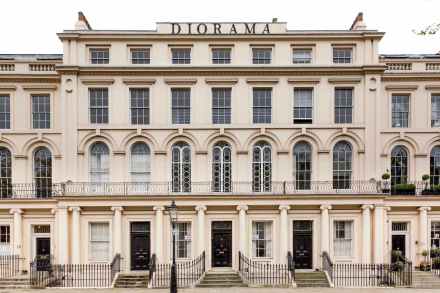
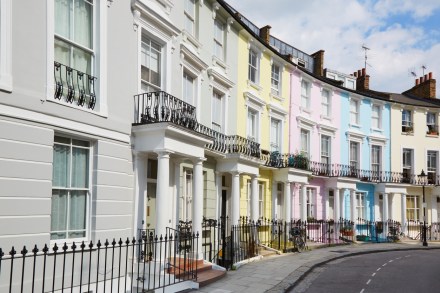
In the early years of the 19th century, the extravagant, spoiled and hard-partying Prince Regent had a surprisingly good idea. Encouraged by pals like Beau Brummell, and with the financial backing of the property developer James Burton, the future King George IV hired the architect John Nash to design a new London neighbourhood. His vision was for a series of magnificent streets, many in terraces styled like modern sugar-coated palaces, on Crown-owned land just north of central London. These ‘Regency’ homes would encircle a brand new park which, modestly, the future King would name after himself.

My search for London’s cheapest flat

Maternal nocturnal worry number 57a: how are our offspring going to get their toes on any rung of the property ladder if they want to carry on living in London? I’m sure thousands of us mothers of young adults lie awake at 2.30 a.m. contemplating the fact that a one-bedroom flat in Leytonstone now costs £375,000. We curse ourselves for not having bought the whole house next door to us in 1989 when it was for sale for a third of that amount.  What makes these properties cheap is not only that they’re tiny, but also that they’re hard to get to Last week I set out to find the cheapest flat for sale in Greater London.

The rise of the ‘workation’

The biggest single driver of last year’s property boom was the surge in working from home. For many, the commute went from daily chore to occasional concern, enabling them to move to areas that previously seemed beyond reach, from the Cotswolds to Cornwall. But others have gone further still – swapping ‘work from home’ for ‘work from anywhere’. These digital nomads typically ditch the nine-to-five or find flexible employers to enable them to decamp to sunnier climes in the greyest months of the year. And during a winter of high energy bills and soaring living costs at home, the trend has been growing.

The death of the landlord

Spring is property auction season, when a motley collection of semi-derelict houses, flats with leases in the single figures and the homes of mortgage defaulters get sold off. This year, though, a scan of the catalogues of some of the UK’s leading property auction houses reveals a new class of property under the hammer: rental flats. Under pressure from rising interest rates and increasing regulation, many landlords are opting for an exit strategy. According to recent research from estate agent Hamptons, Britain’s rental sector is losing homes at a rate of 66 per day. Agents across the country report an influx of instructions from small-time landlords who’ve decided to invest elsewhere.

For sale, the £3m Welsh mansion with political foundations

Known as Wales’s first tycoon, the industrialist and Liberal politician David Davies was born in 1818 in a hillside tenement in the village of Llandinam, Powys. Davies, the son of a farmer and sawyer, went on to amass a fortune through bridge-building, railways, coal-mining and dock development, while also serving as an MP for Cardigan.   The teetotal Calvinistic Methodist, probably best remembered for founding Barry Docks in the 1880s, was known for his philanthropic deeds, although he did have one obvious indulgence. In counterpoint to his hill-darkened boyhood home, where he cared for several younger siblings, in the 1860s he constructed a light-filled family property that he named Broneirion – designed so that it would receive sunlight all year round.

How the bottom fell out of the prime country market (again)

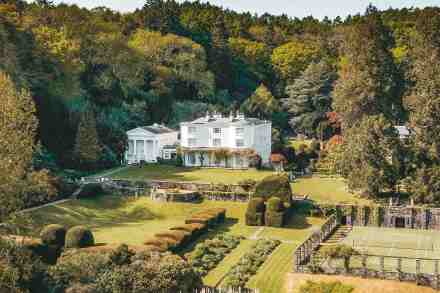
As trophy homes go, the Grade II*-listed Glen Usk is hard to top. Set on the west bank of the River Usk in Wales, it is a white rendered neoclassical fairy-tale of a Georgian country house and its current owners have thoroughly renovated the eight-bedroom home, set in 35 acres.  At the tail end of 2021 it went on the market with estate agent Fine & Country for £6.5 million. In November the Monmouthshire property’s price was dropped by £2 million after failing to find a buyer (and also to reflect a decision to reduce the amount of land to be sold with it from 75 acres to 35). Three months later, it is still on the market.

How King Charles saved Cornwall

I’m a 30th generation Cornishman. I’m so Cornish my mum can make Cornish pasties blindfolded, my maternal grandmother was employed aged nine to break rocks in a Cornish tin mine (she was a ‘bal maiden’), and my second cousins founded Cornish Solidarity, which is the very-lightly-armed wing of Mebyon Kernow (the Cornish Plaid Cymru). Nonetheless my visits to the county are infrequent, probably because I am not overly fond of rain.  However, on my most recent visit I noticed that something in Cornwall has changed.

Hot property: 10 buildings to look forward to in 2023

Every year produces a number of ‘firsts’ and ‘mosts’ in architecture – and 2022 was no different. Most obviously, at least for residents of New York, the world’s skinniest skyscraper, with sixty storeys of single apartments stacked to a height of 435 metres, was completed on ‘billionaire’s row’ in Manhattan, perhaps becoming the ultimate example of ‘form following finance’ in the construction annals.

The dwindling case for living in London

The recent debate around ‘levelling up’ may be missing something. I would argue that there is another way to consider geographical inequality – and, by this alternative measure, a levelling has been under way for more than 20 years. I’ve spent three decades working in advertising, so it’s unsurprising that I tend to view economic life through the lens of consumption. By contrast, mainstream economists tend to view disparities through the medium of earnings or wealth. To me, measures of wealth should include not only the quantity of money you have but the breadth of worthwhile options available in choosing how to spend it. Let’s put it another way.

The £6m country house that was home to Churchill’s secret army

The high-risk, adrenaline-fuelled operations dramatised in recent BBC1 mini-series SAS Rogue Heroes left viewers gripped. Not quite as attention-grabbing, but no less fearless (or dangerous), were the activities of another special forces unit, the Special Operations Executive (SOE) – a volunteer force set up in 1940 to wage a secret war. Famously ordered by Prime Minister Winston Churchill to ‘set Europe ablaze’, this band of brave agents were often dropped by parachute into Nazi-occupied territory, tasked with sabotage, subversion and helping local resistance movements. Many of them were serving soldiers with commando training; others had been drawn from civilian life.

Why are experts always wrong about house prices?

Over the past two generations, those with property in the UK have been unwittingly transformed from owners to investors. This makes no sense, and has led to a lot of baby boomers feeling smug and clever when in reality they’ve just been lucky. However, the effect has been lasting and means property owners are now a politically valuable group – and that what your house is worth has disproportionately strong influence on how rich you feel. And of course, now that everyone has an interest in the value of their home, there are plenty of supposed experts willing to pretend they’re helping you look ahead to see what will happen in the market. It’s particularly prevalent at this time of year, i.e.

Is this Britain’s most historic house?

Hyperbole in estate agents’ brochures isn’t unusual – but when it comes to a write-up for Great Tangley Manor, which has gone on the market for £8.95 million, overkill is almost impossible. Believed to be the UK’s oldest continuously inhabited property – its Saxon foundations date from 1016 – the Grade I-listed moated manor house, in the village of Wonersh in the Surrey Hills Area of Outstanding Natural Beauty, comes with an extraordinary roll call of associated famous names. From the spheres of royalty, art, literature, garden design and even America’s Gilded Age, all have played their part in shaping secluded Great Tangley into a country house with a compelling story.

Would you co-own your holiday home?

Imagine dividing up your holiday time between your farmhouse in Tuscany, your villa on the French Riviera, your Mallorcan townhouse, your cottage in the Cotswolds and your apartment in Chamonix. Instead of dealing with the hassle of renting such properties, or the upkeep of owning each one of them, you just turn up and everything is ready and familiar.  Belgians Hilde and Henrik love the concept of co-owning five holiday homes, enjoying two or three weeks in each a year. ‘Everyone treats the house as if it’s their own, and we even found the fridge half full of beer when we arrived at Soller [in Mallorca],’ says Henrik, in his late fifties.

The remaking of Gainsborough’s House

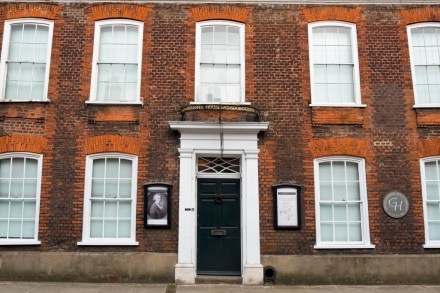
From the road Gainsborough’s House looks like it could be a thoroughly plausible restaurant in a town like Godalming or Chertsey, the sort of place where a prawn cocktail costs £15 and comes with most of a lemon in a white gauze satchel on a separate plate. The stout two-storey structure is Georgian, red brick and has a front door flanked by a pair of handsome Regency windows. Glance up the neighbouring side street, however, and you immediately see that something extraordinary has happened: there’s an enormous, ultra-modern, industrial-looking extension to the rear in brick and flint. Is it a carbuncle? I’ll leave you to decide, but yes, I’m confident it’s the sort of thing that would make King Charles choke on his fountain pen.

A house-hunter’s guide to haggling

Not so long ago buyers were treating house-hunting as a blood sport – price ceiling-shattering bids and gazumping were commonplace everywhere from the Cornish coast to the London suburbs to the Lake District. But six months is a long time in property. Following the debacle of the mini-Budget and amid rising interest rates and soaring living costs, not to mention looming recession, the power balance in the market has firmly shifted. Vendors can no longer sit back and wait for the offers to pour in.  Buyers who don’t have to move are increasingly taking a wait-and-see approach. Those still up for a move are determined not to overpay, often hoping to factor in future price falls to insulate themselves against negative equity.

The remaking of Margate

The faded splendour of 1980s Margate is the backdrop for Sam Mendes’s new film Empire of Light, starring Olivia Colman and Colin Firth. Coming to UK cinemas on 9 January, it’s about a romance in the north Kent seaside town and the revival of a striking 1930s cinema with a distinctive brick ‘fin’ tower. Renamed briefly as the Empire Cinema during filming in the spring, Margate's Grade II-listed Dreamland Cinema takes a starring role. In reality it's part of the Dreamland amusement park complex that’s had 102 years of rollercoaster fortunes.

The truth about why we hate estate agents

Once again estate agents have been named among the least-trustworthy people in Britain, rated in the public consciousness somewhere between politicians and journalists (ouch). Less than a third of people believe agents tell the truth, according to the annual Veracity Index from market research firm Ipsos Mori, which tracks consumer trust in particular professions – less than the same time last year. Many of us have our own horror stories of widespread chicanery in the sector: when moving house recently, for example, I was informed I would not be permitted to view a house I was interested in until I agreed to list my flat with the selling agent first.

A house-hunter’s guide to Somerset

It’s famed for cider, cheese and Glastonbury, but there’s much more to love about Somerset.  Alongside a popular private members' club (Babington House) and a global gallery outfit (Hauser & Wirth), its most in-vogue country house hotel (The Newt) has helped to attract a steady stream of creative emigres. Among those embracing the county's way of life are internationally known designers such as Alice Temperley and Bill Amberg and landscape gardeners such as Lulu Urquhart and Adam Hunt, whose rewilding garden won best in show at this year's RHS Chelsea Flower Show (which happened to be sponsored by The Newt).

Is North London’s housing market recession-proof?

Of all the suburbs in Britain none has become quite so politicised as North London. This slightly leafy (and lefty) swathe in and around Islington – with Hampstead Heath marking its northern edge and Regent’s Park its southern boundary – is treated by our recent political leaders as a kind of shorthand for, to borrow a phrase from Suella Braverman, the ‘tofu-eating wokerati’. Liz Truss took a dig at her privileged metropolitan enemies who ‘taxi from North London townhouses to the BBC studio’ to criticise her, ignoring the fact that Islington is not all Upper Street boutiques and multi-million pound homes. Islington is one of London’s most deprived boroughs, and more than a third of children in Camden live in low-income families.