Spectator Life

Spectator Life

An intelligent mix of culture, style, travel, food and property, as well as where to go and what to see.

Why now could be the time to buy a bigger house

The vast majority of people who move home do so because they need more space. In the good old days, the late 1970s, people moved often – on average every three years. The average is now nearer two decades (you can thank stamp duty for that). The same time period has seen a growing obsession in Britain about the value of our homes. If the value’s going up it feels good; if it’s going down we despair. But this has led to something of a blind spot about the advantages of a falling market to those wanting a bigger home. My experience is that many miss out on this advantage as they attempt to ‘call’ the market and wait for the very best deal to fall into their lap A tough market is the best time to trade up.

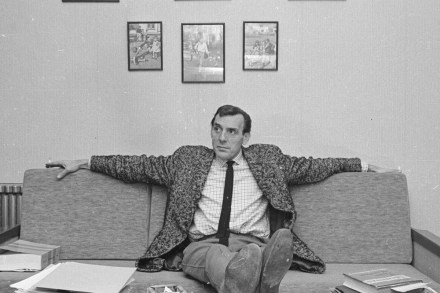
Eric Sykes, Spike Milligan and the house with comedy value

Part of an 1890s terrace of Arts and Crafts buildings, 9 Orme Court, off the Bayswater Road in W2, is at first glance simply the kind of grand red-brick townhouse you’d expect to find in the area. Look up beyond the elegant entrance canopy to the ornate first floor balcony, however, and above it you’ll spot a pair of blue plaques that single out its seminal role in the birth of British alternative comedy – and a place from which peals of laughter would ring out across the sedate street.

House of cards: why are so many property sales collapsing?

Moving house is said to be one of the most stressful life experiences, right up there with bereavement and divorce. But what about the stress of not moving? Amid the upheavals of the past few months increasing numbers have seen their property ladder dreams collapse around their ears. According to market analyst TwentyCi there has been a ‘sharp increase’ in the number of deals falling through. More than 90,000 agreed sales disintegrated between July and September, an 18 per cent increase on the same period in 2019. Wendy and William Waterton know exactly what it feels like to be on the sharp end of a collapsing sale. In the past two years it has happened to them twice. The couple bought their one-bedroom starter flat in Woolwich, south-east London, for £320,000 in 2017.

Why househunters are heading to Royal Berkshire

When the Prince and Princess of Wales announced they were moving their family to the Royal County of Berkshire this summer, estate agents reported a ‘flurry’ of enquiries about properties around Windsor and the village of Bucklebury, 50 minutes west on the M4. The Middleton family had already been increasing their interests in and around Bucklebury, where they have lived since Kate was young. James Middleton and his French wife, Alizée, own a farmhouse there, and Pippa Middleton’s husband, James Matthews, has acquired Bucklebury Farm Park. Pippa and her husband also bought a £15 million mansion nearby this year. And where royals and their relatives lead, it seems others follow.

Yours for £3k a week, the townhouse with royal history woven into it

The 34 early Georgian houses that line Fournier Street, in the heart of Spitalfields, are a perfectly preserved microcosm of East London life through the centuries. Since it was built in the 1720s, the street – which runs between Brick Lane and Commercial Street, in E1 – has variously been home to the city’s wealthiest and poorest. With many of its first residents Huguenot weavers escaping religious persecution in France, the street is characterised by its series of highly glazed lofts, harnessing the light vital for the skilled textile work, with many of the houses subsequently bought by those in the silk trade. Arguably one of the finest houses on the street, No.

Who wants to live in the Square Mile?

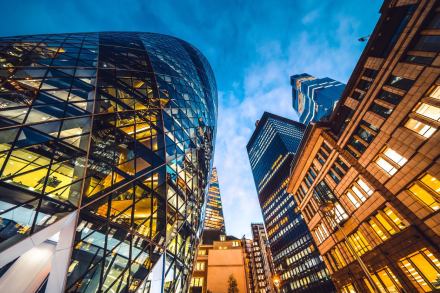
Mixing business with pleasure can be risky business. For decades the City of London has upheld this doctrine, religiously prioritising office space over new homes to preserve its reputation as a global financial centre. In his 29-year tenure as the City of London’s planning chief, Peter Rees famously allowed only one new residential tower to be built in the Square Mile: The Heron, a 285-apartment building which was completed in 2013. But the aftershocks of the pandemic – recent data suggests that the number of workers at their desks in the Square Mile’s offices is down by around a third; office vacancy rates stand at almost 10 per cent – have forced a rethink.

In the dog house: how pets are reshaping the property market

Since the pandemic, the UK's dog population has boomed to more than 12 million, with a third of households owning one. But while once we might have been content to kit them out with their own kennel, now it seems they’re dictating what sort of home we want for ourselves.  Buyers are increasingly seeking out properties with high-end creature comforts such as built-in dog showers or dog beds integrated into kitchen units. Clare Coode of Stacks Property Search says: ‘Thirty per cent of my clients mention their dogs in our first conversation. Their priorities are dog walks from the door, a dedicated dog room with external access or having a section of the utility room for a sleeping area, low wash basin and underfloor heating.

How to spot a looming house price crash

From the man down the pub/on Twitter to major lenders and think-tanks, homebuyers and sellers can barely move for so-called experts dishing out advice on the property market. Rising interest rates and increased mortgage costs have prompted fears of a house price slump, with Capital Economics predicting a 5 per cent drop over the next two years. Credit Suisse is forecasting that prices could fall by as much as 15 per cent if interest rates hit 6 per cent – making it more of crash than slowdown. Buyers don’t want to make a major purchase at the top of the market, and sellers may be hesitant to list if they aren’t going to get what they feel is the best price.

The £14m Hyde Park mansion with an extraordinary story

When Joachim von Ribbentrop, Hitler’s hapless roving emissary, descended on London in 1936 with orders to negotiate an Anglo-German alliance, one of his first ports of call was the elegant mansion just off Hyde Park owned by Sir Roderick Jones, chairman of the Reuters news agency, and his wife Enid Bagnold, the writer of National Velvet. Wangling an invitation to dinner was a surprisingly astute move – the parties at 29 Hyde Park Gate were legendary, usually attracting a gilded mix of aristocrats, politicians, journalists and writers, such as H.G. Wells and Vita Sackville-West – and Ribbentrop had convinced himself that by schmoozing luminaries he could persuade Britain to side with the Nazis. It did not go well.

Inside the recharged Battersea Power Station

At its peak, Battersea Power Station supplied a fifth of London’s electricity, including to Buckingham Palace and parliament. Today, the most electric thing about it is the virtual reality gaming venue on site. Times have changed – but the reopening of the power station allows us to rediscover one of our finest pieces of industrial heritage and to take stock of the neighbourhood's £9 billion makeover. The iconic Grade II*-listed building was decommissioned and shut down in 1983. Over the past ten years, in Europe's largest urban regeneration project, it has been restored and repurposed. The project reaches its climax today when the power station reopens as a residential, retail and hospitality development.

Battles royal: how Charles has influenced British architecture

It is the evening of 30 May 1984. The country’s leading architects have assembled at Hampton Court to celebrate the 150th anniversary of the body that represents their interests, the RIBA. It is a sea of black polo necks, masculine chit-chat and clinked glasses. Given that the ‘R’ in RIBA stands for ‘Royal’ – albeit an honour actually awarded by William IV in 1837, three years after the Institute of British Architects’ founding – it is perhaps no surprise that a royal has been drafted in to politely murmur some congratulations over dinner. Yet what happened next was most certainly not expected.

Lost property: where have London’s overseas buyers gone?

It has been almost a decade since the first apartments at Battersea Power Station went on sale. Such was the excitement about its redevelopment that buyers queued in the chilly dawn for the chance to pick up a £343,000 studio flat or a £6 million penthouse. Most were from overseas, and in four days in January 2013 they collectively spent £600 million. These kinds of scenes are something London’s housebuilders and estate agents can today only dream of. Although we have moved on from worst ravages of the pandemic, and traveller numbers are very much in recovery, many foreign property buyers – for years the mainstay of prime London’s property market – remain missing in action.

The hateful sterility of new-build houses

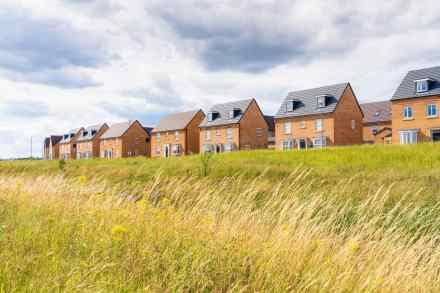
Where do you stand on new houses? You know, the little red boxes you see massed along the sides of motorways or clustered on what used to be flood plains? They’re hateful, aren’t they? Now, I know many people (my mother included) who own perfectly lovely new houses – and these houses are indeed all very lovely, and I bow to their pragmatism in putting basic necessities such as effective heating and draught-free corridors above the concerns of taste or aesthetics. But I can’t do it. Whether it’s down to the fact that the windows are a funny shape and as impossible to open as those on an Airbus, or that there are fire doors everywhere with nasty brass handles, or that the ceilings are too low, I could not tell you.

Why Warwickshire rivals the Cotswolds for rural living

Have we reached peak Cotswolds? Not if the queues outside Diddly Squat Farm Shop near the village of Charlbury are anything to go by. Locals bemoan the traffic jams around Jeremy Clarkson’s estate as fans flock from far and wide to take home a bottle of the ‘cow juice’ from the Clarkson’s Farm TV series. Clarkson’s tongue-in-cheek product is a wry nod to the area’s reputation for rural chic, forged by the likes of Lady Bamford’s Daylesford Organic farm shop – where a scented candle will set you back £49 – and Nick Jones’s Soho Farmhouse, where a stay in a luxury ‘piglet house’ costs £395 a night.

Scrapping inheritance tax is a terrible idea

There is no hole deep enough that a Conservative minister cannot muster the spadework to excavate it to even greater depths. No sooner had Kwasi Kwarteng announced that he was dropping his proposed reduction in the upper rate of income tax, than Andrew Griffith, one of his ministers at the Treasury, declared that he would like to see inheritance tax abolished. ‘I have lots of my fantastic local association [members] with me here and they will know because they asked me at my selection meeting 27 months ago which tax, if I had the choice, I would most like to see eliminated. History will record it was inheritance tax, ’he told Conservative party conference.

What the weak pound means for London property

Having written recently about how Prime Central London is enjoying a time in the sun after almost a decade in the doldrums, buying a property there just got even more tempting – if, that is, you’re spending dollars. And 66 countries worldwide are linked to the currency and affected by fluctuations in its value. A property in Kensington and Chelsea will now cost dollar-based buyers two-thirds of what it would have cost them in 2014 Over more than four decades it’s been clear that the fortunes of PCL are affected more by geopolitical events and exchange rates than by domestic interest rates. Any global ‘black swan’ event – such as the removal of the Shah of Iran, the introduction of the euro, the LTCM collapse – has had an effect.

The rise of the eco-mansion

In a wide clearing in woodland in a county of southern England that shall remain unnamed, a very unusual property is being built from brick and wood. When complete in a couple of years’ time, a lost rambler who stumbles across it may think he has found an old country house dating from the early 18th century, perhaps even the late 17th. With its classical proportions and time-honoured elegance, the building could be mistaken for an unadvertised outpost of the National Trust, the ancestral home of minor gentry, or even the setting for Bridgerton or some other regency drama. Yet this will be a thoroughly modern home, albeit one that embraces certain ancient methods to achieve its agenda: being as eco-friendly as possible.

Why the global elite are buying London property again

If you’re looking for a bellwether for the world economy, you could do worse than consider what’s happening at the very highest end of London’s property market. Over several decades, Prime Central London – or PCL – had become a repository for cash from wealthy foreigners, whether they actually wanted to live there or not. This had several side effects – namely that PCL became mostly lined with empty properties and prices went into ‘trophy’ mode. This is a world controlled by a cabal of high-end agents operating completely off the grid Then Brexit appeared on the horizon, and for some time rich international buyers avoided London out of fear of complications that might arise from being outside the EU.

Churchill and the house that saved the world

A short train journey from London, in the outer reaches of suburbia in Kent, sits the house that saved the world. Or rather: it’s the house that saved the man who saved the world. The property in question, of course, is Chartwell, which 100 years ago this month was bought by a certain Winston Churchill, then a Liberal MP. Back then his career was in ascendance: in 1924, with Churchill having crossed the floor, Stanley Baldwin made him Chancellor, a post he retained until 1929. But then, rather suddenly, he was out in the cold. That was when Chartwell – and the 81 acres it sits in – came to the rescue.

Welcome to Herne Hell, Boris

When I lived in north London as a postgraduate student, my flatmates amused themselves by shouting abusive names at the then member for Henley as he cycled past on his way to the Commons from his house in Islington. But judging by the reaction from my old neighbours in Herne Hill, Boris Johnson is likely to receive an even less affable greeting there. The erstwhile prime minister and his wife have reportedly bought a five-bedroom home in Herne Hill, the leafy liberal, left-leaning pocket of south-east London where I lived for almost 20 years before moving to Norfolk last summer.

Flat broke: my Help to Buy disaster

‘Do you want a cup of tea?’ The surveyor shook his head. It would take me longer to boil the kettle than for him to do a valuation of my 400 sq ft, one-bedroom flat. I paced awkwardly around. A minute later, he gave me the thumbs-up. Valuation complete, he left. I boiled the kettle anyway. Four years after the purchase of the flat, via the ‘Help to Buy: Equity Loan’ scheme, I couldn’t be more desperate to sell. Would I make a profit? I just want to escape its clutches and avoid a loss. Why sell? Let’s start at the beginning. Why buy? Perhaps it was an early midlife crisis. At nearly 30 years old, I thought it time to leave the familial roost. It was unfair on my parents to have me, the resident ghost daughter, living at home for ever.

The rise of the ‘neo-Geo’ country pile

The Queen’s wedding gift to Prince Andrew and Sarah Ferguson in 1986 was a brand new 12-bedroom house in the Berkshire countryside. Sunninghill Park was an unfortunate mash-up of architectural styles, from its Tudor-ish chimneys to its vaguely Arts and Craftsy roofline and the monumental columns flanking its entrance. And how we laughed. It was the first time a royal had lived in a new build since Queen Victoria’s son Prince Albert moved into Bagshot Park in Surrey in 1879. The Duke and Duchess of York’s property was instantly nicknamed ‘SouthYork’ thanks to its resemblance to Southfork, the Ewing family ranch in Dallas.

How to join the Greenwich set

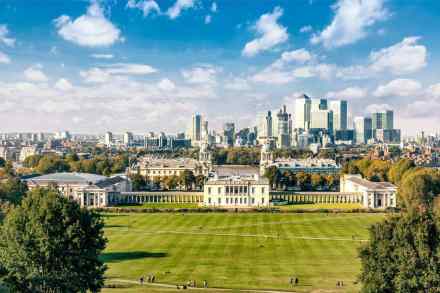
The steamy Netflix period drama Bridgerton might not immediately put you in mind of the Tory inner circle. (Liz Truss for one has professed to be fan of grittier TV dramas such as Scandi crime thriller The Bridge.) Yet the two have some common ground – and it can be found in Greenwich, south-east London. Forget the Notting Hill set of the Cameron era and the Islington mafia of the Blair years. It seems that a verdant corner of the (Labour) royal borough has turned blue, with Truss, potential chancellor-in-waiting Kwasi Kwarteng and former Brexit minister Lord Frost (now tipped to head up the Cabinet Office) all living in the period streets of West Greenwich – where Bridgerton has been filming on their Regency doorsteps.

The lost charm of London’s St Giles

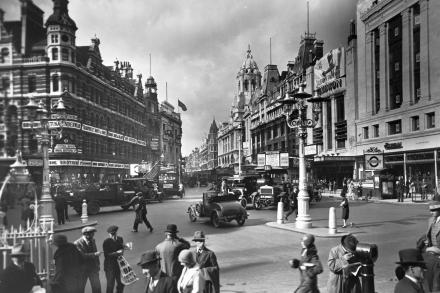
London's architectural landscape is changing at such a pace that it's hard to remember what's been lost beneath the acres of tarpaulin. Buildings I must have walked past a thousand times and that I could have sworn were important landmarks have been disappearing at an alarming rate. Despite the devastation there appears to be little in the way of pushback from harried, post-pandemic Londoners. How quickly we forget what our eyes once took for granted; the familiar razed without a second glance. The area known as St Giles, just east of Charing Cross Road and south of New Oxford Street, has suffered more ignominy than most.

The £15m Surrey mansion where Rudolf Hess was held prisoner

The restoration of any run-down English country mansion is likely to involve extensive re-roofing, re-plumbing and re-wiring. Only one, however, is likely to uncover microphone wires hidden deep within walls by MI6, or involve the polishing of a grand, three-storey oak staircase over which Hitler’s top henchman, dressed in full Nazi regalia, tried to throw himself (failing when he got his leg stuck in the balustrade). Mytchett Place, between Ash Vale and Frimley Green in Surrey, is a sprawling 23,000 sq ft Victorian house that has just hit the sales market for £15 million.

Inside the new commuter belt: from Oxfordshire to Essex

The rise of hybrid working has meant buyers are willing to endure a longer commute so they can have a bigger house. London’s newly expanded commuter belt now includes many locations within a 90-minute ride, which have become hot spots in the ‘race for space’. But access to the capital is still important for part-time commuters - so which areas tick both boxes? For the hybrid workforce, being able to drive 10-15 minutes to a station with regular trains into the capital is key, along with easy access to a motorway or trunk road.

The Mayfair mansion that was once the home of Gucci

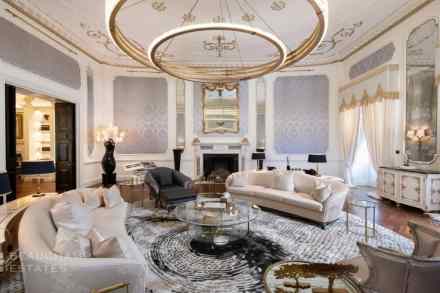
Minimalists, look away now. With its magnificent 20ft-high ornately plastered ceilings, lashings of gold leaf, bookcases topped by busts of Alexander the Great, Caesar Augustus and Marcus Aurelius – and its role as the global HQ of one of the world’s most glamorous fashion empires – this 14,000 sq ft Mayfair mansion is in need of an owner with a budget as big as their lust for luxe. For sale with a price tag of £55 million, through beauchampestates.com, the palatial Grade I listed Neoclassical Grafton Street house was built over seven storeys between 1769 and 1772 to a design by architect Sir Robert Taylor, whose pupils included John Nash.

What to look for in a post-prime ministerial property

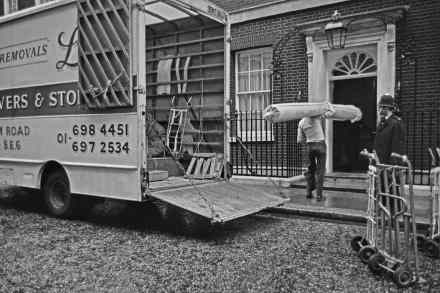
After the pomp of high office – the convoys of ministerial cars, police on the gates, the £840-a-roll wallpaper – what are a former prime minister and his spouse to do for a home? Boris and Carrie Johnson must be considering their next move. They might be hoping for the kind of arrangement that was put in place when Alec Douglas-Home lost the 1964 election. The new prime minister Harold Wilson ‘kindly put Chequers at our disposal for a day or two,’ Douglas-Home remembered. ‘Then [the hotelier] Sir Hugh Wontner, with great consideration, allowed us to stay in the penthouse at Claridges for a fortnight, so that a sense of perspective and pose was gradually regained.’ Sadly such generosity seems in short supply in the Conservative Party of 2022.

When is the right time to move house?

When the winds of economic change are blowing, it’s often a good idea to make your property move, batten down the hatches, and stay put for a while. We aren’t quite at that point in the cycle. However, with interest rates on the rise, inflation beginning to kick in and all the signs of a slow-down at best and a possible recession, now is the time to take some decisions. There are costs to moving and if you are going to go to all the trouble, you may want to increase your property exposure. Otherwise, you’re investing more money in an asset that will most likely grow in value at the same pace as your previous abode. Moving to similar sized properties is best done in a rising market where you secure your sale and purchase a new home at a similar time.