Spectator Life

Spectator Life

An intelligent mix of culture, style, travel, food and property, as well as where to go and what to see.

Why Powys should be on your property radar

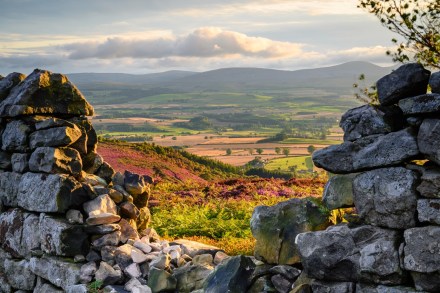
The word Powys is not filled with onomatopoeic potential and, to the English ear at least, doesn't conjure up a particular image. And yet the region has a dizzying lineage, one that stretches back to antiquity. In the fifth century, the Romans scarcely off the stage, Powys was ruled one of the last kings of the Britons named Vortigern – that’s according to the Venerable Bede not the comedically venerable Monty Python. Later still Powys was ruled by Brochwel Ysgrithrog (‘the fanged’ or ‘of the tusk’) and did battle with the Saxons before Alfred the Great had even been born – let alone burned his fingers on a cake. It thus qualifies as one of the most ancient place names in Britain – predating the Saxon era.


The Building Safety Bill betrays the victims of the cladding scandal

Monday promised to be a significant day for those living in high rises across England. The Building Safety Bill, which has been sold by the government as the biggest change to building safety in a generation, was published in its final form before it goes through parliament. Introduced more than four years after the Grenfell fire killed 72 people, the Bill is aimed at ensuring a similar catastrophe never happens again. But will it succeed? The 208-page document includes wide-ranging measures that will overhaul building safety regulation exposed as wholly inadequate by Grenfell, as well as significantly change the way in which high-rise buildings are designed, built, managed and lived in.

Is now the best time to move house?

You don't need me to tell you that the property market has experienced a surge over the last year. The stamp duty holiday encouraged many to buy now rather than later, working from home has opened our eyes to living in areas with more natural amenities on the doorstep and we’ve realised that if we do only have to go into the office three rather than five days a week, a longer commute is tolerable. But for how long can the bubble continue? Whilst there’s plenty of speculation over how long this current boom will last, here’s my guide on determining whether you should take the plunge right now or hold fire. Don't panic buy Do you already own a home?

The house mafia: the scandal of new builds

29 min listen

This week…Why should the first time buyer be so scared of new builds? (00:36) Plus… will the catholic church come to the defence of the word mother? (09:33) And finally… Why does it take so long to understand Japanese culture, even for the Japanese? (18:50)With John Myers founder of YIMBY, Vickey Spratt housing correspondent of the I newspaper and author of the up coming book Tenants, Spectator Columnist Mary Wakefield, theologian Theo Hobson, former editor of The Tablet and author of Martyrdom: Why Martyrs Still Matter Catherine Pepinster, Professor Philip Patrick and comedian Ollie Horn (@olliehorntweets).Presented by Lara Prendergast.Produced by Cindy Yu, Natasha Feroze and Sam Russell.

Where to find value in Surrey

The debate over whether we will end up going back to the office five days a week is likely to rumble on for the coming years. Desperate employers worried that the genie is out of the bottle are battling with those of us who happen to get more done when we aren’t distracted by gossiping at the water cooler. And it’s not just anecdotal either. According to research undertaken by Close Brothers, 39 per cent of Londoners are thinking of moving to achieve a better quality of life. So where should you move if lifestyle is driving your decision? Surrey has often been touted in times gone by as the first county to consider. Close enough to the big smoke to commute, it's also far enough away to ensure rolling hills and to warrant the hassle and cost of a move.

What’s the plan for planning reform?

13 min listen

With the Conservatives still taking stock after their loss in the recent by-election, it seems the governments ambitions for planning reform are now firmly under the microscope. 'When you speak to these MPs... they are absolutely convinced that planning reform is dead' - Katy Balls And on what would have been 'freedom day', there are reports that the powers at be don't think they'll have to extend restrictions again (we've heard that one before). 'If they don't hit July 19th they would have major political and I would suggest economic problems too because I think that would create a real loss of confidence about when the UK would ever re-open fully.' -  James ForsythIsabel Hardman is joined by James Forsyth and Katy Balls.

Clarkson’s Farm: where to live out the country dream

Jeremy Clarkson’s latest TV venture, Clarkson’s Farm on Amazon Prime Video, sees the petrolhead learning to manage his 1,000 acre Cotswolds farm. Anyone dreaming of their own rural idyll might want to consider one of these beautiful farmhouses. For artists - Folliotts Farmhouse Image: Clare Goldsmid Currently owned by a ceramicist and artist, Patricia Low, this Grade II-listed farmhouse would make an inspiring retreat for creative types seeking a slice of rural life without the responsibility of too much land. Set within about 0.4 acres in the hamlet of Tidpit near the Hampshire village of Martin, the 18th-century main four-bedroom home comes with a separate two-storey artist’s studio.

Sprawling forests and space galore: is this Britain’s next property hotspot?

There comes a point in every metropolitan potentate’s journey from London to Edinburgh, when he or she looks up from their laptop in First Class and gazes from the window of the train. At this point, they suddenly realise that whatever’s been absorbing their interest for the last hour or two, is completely irrelevant. Chances are they are gazing out at some of the 60 or so miles of Northumberland that the doubtlessly ageing LNER rolling-stock is careening through at 100 miles per hour.

Stunning literary homes for sale: from Agatha Christie to Evelyn Waugh

Our attention turns to all things literary this week after the return of the Hay Festival. It comes during a bumper year for book sales, when lockdown encouraged many of us to read more and escape our repetitive reality for fictional worlds. But what of the authors' own abodes? Here we look at five homes for sale with links to literary greats. Agatha Christie - Winterbrook House The Queen of Crime bought this five-bedroom house in Wallingford, Oxfordshire, with her archaeologist husband Max Mallowan in 1934 and lived there until her death in 1976, taking inspiration for her popular detective fiction from her surroundings.

The dos and don’ts of building an extension

House prices are increasing at their fastest rate for seven years, jumping by as much as 10.9 per cent according to the Nationwide in their most recent survey. Is now the time to stay put and extend rather than go through the hassle of moving into a supply constrained rising market? And if you do extend, is it guaranteed that you’ll add value? Adding an annex or a loft extension, according to Shawbrook Bank, a home improvement loan provider, indicates that you’ll add 5 per cent to the value of a home and separate research by Nationwide suggests that 20 per cent of the value can be added if you build in a double bedroom and en-suite bathroom.

Inside John le Carré’s £1.95 million former Somerset home

When Julia Riley ran her Somerset home as a B&B prior to the Covid pandemic a few guests booked in not for her Tripadvisor-recommended breakfast or a peaceful night’s sleep, but because of the Georgian property’s literary connection. Coxley House is the former home of David Cornwell, better known as the spy novelist John le Carré. 'We had one or two people coming because they were keen on him,' says Riley. 'They wanted to know which bedroom he slept in and things like that but, to be honest, I’m not entirely sure, so I invariably told them it was the one they were sleeping in because it was the easiest answer.

From Suffolk to Essex: why moving east makes sense

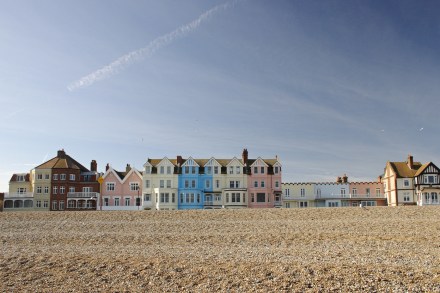
You might remember, back before Covid, when life was ‘normal’, at three o’clock on a Friday afternoon, the Volkswagens, Audis and Jaguars clogging up the pavements of Kensington, Parsons Green and Hammersmith would one by one nudge out, and make for the Great West Road, duly clotting the A4 like a fast-food addict’s aorta. To all points west they would go – to the dewy hamlets of Hampshire, to the honeyed villages of the Cotswolds, to the pebbled beaches of Dorset’s Jurassic Coast, to the curvaceous nooks of Devon’s South Hams. But there is another way you can go, my friends, one which isn’t west. You can go east. And, boy, does it pay dividends.

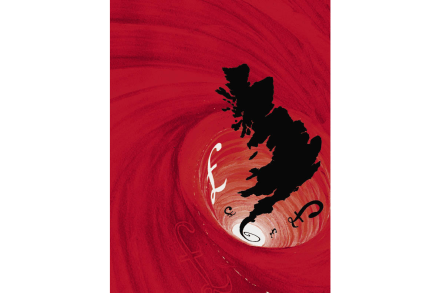
The insanity of Britain’s housing market

On the day the Office for National Statistics announced a sharp rise in consumer price inflation, albeit to a still modest 1.5 per cent, we discovered that house prices have jumped by a staggering 10.2 per cent in the last year. The average house in England now costs £275,000, close to ten times the average annual income. In 1992, the average house cost three times the average income. A housing boom during a pandemic in the wake of the deepest recession in 300 years doesn’t make a lot of sense, but a few recent events can partially explain it. After three lockdowns, there is pent-up demand, including for houses. The abrupt shift to working from home has led to a permanent change in how some people do their jobs.

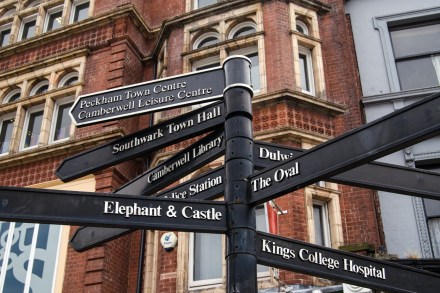
The truth about Camberwell – is Boris’s old haunt worth investing in?

Like other areas of London, Camberwell suffered from having much of its modern town planning done by the Luftwaffe. As the original bridges over the Thames were built, particularly Blackfriars in the 18th century, the roads leading to them, wide and quiet, became lined with handsome Georgian and Regency houses. Victorian fillers came later along with grids of basic but reasonable housing for the many labour intensive businesses springing up. Modern Camberwell has become aligned with artists, perhaps trendily missing out on the over gentrification affecting some near SW postcode neighbours.

The dangers of buying a ‘doer-upper’

Is there any television programme as cruel as Grand Designs? At least Jeux Sans Frontieres only offered 15 minutes of humiliation at a time. Grand Designs, by contrast, offers a lifetime’s worth, often with bankruptcy and divorce thrown in. But none have come quite such a cropper as Edward Short who, in 2008, paid £1 million for a building plot on the North Devon coast and has spent the past 13 years – as well as a further £6 million – trying to turn it into a lighthouse-inspired luxury home with infinity pool, home cinema and sauna. What stands there at the moment, however, looks more like the remains of Chernobyl nuclear power station.

Can Somerset gazump the Cotswolds?

Life is peaceful there. Go west, in the open air. So sang the Village People and subsequently the Pet Shop Boys. They had a point as according to Rightmove, Bruton in Somerset is the top country hotspot for home buyers. With a 122 per cent increase in the number of house sales over the past 12 months and a rise in asking prices of 19 per cent, has the market already moved too far to make it a good investment proposition? And is there anything on the market worth buying? With London’s average property prices at £630k for a flat, £678k on average and £962k for a terraced house, an average house price in Bruton of £365k looks relatively attractive.

Will 95 per cent mortgages really help first-time buyers?

Did we end up learning anything from the 2008/09 financial crisis? If we did, we seem to have forgotten it pretty quickly again, to judge by the re-emergence of the 95 per cent mortgage. Numerous deals have been launched over the past week, with interest rates of around four per cent – the result of the Chancellor’s Budget initiative for the government to underwrite such loans. If you can sum up what went wrong in the late 2000s in one sentence it is that in their determination to grow their share of the mortgage market, banks overlooked that fact that it takes very little to turn a secured loan into an unsecured one.

The UK property boom looks set to continue

If there is one thing I have learnt from working in the property market for over 40 years it's that any market prediction worth its salt takes into account the relationship between London and the regions. Sometimes the capital is a useful bellwether for the rest of the country but not always. In the early 2000s, the central London market was booming thanks to an influx of investment from abroad. Such was the popularity of London with foreign buyers that the property market bounced back quickly after the 2008 financial crash - this was as much because of exchange rates as interest rates, something simply not seen in the provinces. For various reasons, successive governments then sought to squeeze the Prime Central London piggybank and overshot.

Which London suburbs are worth moving to?

Pre-pandemic, all you needed for a good London location was a roof terrace, proximity to a vibrant social scene and a tube station. Or a river view. Then everything changed. Whilst central areas have pretty much fallen into the doldrums, a combination of more room, better value and access to green spaces has become essential. If you had all the money in the world, you’d still locate around London’s greatest open green spaces. Hampstead Heath, Kenwood and Regent’s Park to the north, Hyde Park or St James’s Park in central London or Battersea, Richmond, Dulwich or Richmond to the south. For the rest of us, living in a shoe box with little space to work from home is no longer desirable. Can you get more value elsewhere?

The commuter villages that combine town and country

The rush to leave London has been a staple of property columns over the last twelve months. Built up, densely-populated urban areas were portrayed negatively in favour of remote locations, but as normal life begins to resume does that characterisation still hold? London is already back on the agenda for many professionals and will remain central to culture, creativity and commerce, especially when restaurants, bars, theatres, museums, music venues and galleries re-open. And yet the urge for green space is not going to disappear overnight. The pandemic may well have changed our relationship with the city permanently.

Leaving London? The top commuter cities that will give you more space

Would you swap living in London for York? According to the latest survey on family-friendly city living, York tops the list. On a range of measures from childcare costs to average house prices and leisure activities, York is it. Unless your work or family ties take you there, I’m not convinced though. The three-hour train journey into London means a move there would more or less sever your links to the capital.   There's no denying that the capital's house hunters are being tempted increasingly further afield in their property searches. More space and lower prices makes it seem like a no brainer. But the jury is out on whether the pandemic will cause us to ditch the office for good.

Why there’s never been a worse time to move to the country

It began with a sourdough starter. Then we dabbled with home delivery cocktails. This time round, I watched The Dig and bought a Fair Isle tank top and a blouse with a big collar to wear for Zoom calls. Then, when my husband’s company announced they’d be hiring remotely, we embraced the biggest lockdown cliché of them all: moving to the country. Mentally, we checked out of London and started rubbing our hands in expectation of what we could get in exchange for our terraced house in Zone 2. Outdoor space, a couple more bedrooms - the trade-off many Londoners have come to expect in exchange for enduring the years of a ruinous mortgage and the Northern Line during rush hour. Alas, the reality was as disappointing as the must-watch of Lockdown 1.0, Normal People.

Is this a once-in-a-generation chance to invest in central London?

Buy when there is gunfire on the streets, goes the old adage. But could this be a case of the right time to buy being when there is, well, hardly anything happening on the streets? Few investments have been as hard hit by Covid-19 as commercial property in central London. As shops and restaurants have been closed, and office staff made to work from home, landlords have struggled to collect their rent. In the six months to September, for example, Shaftesbury, which owns 600 buildings in the West End including 1.9 million square foot of retail and office space, managed to collect only 41 per cent of what was due, falling to 36 per cent in January. Moreover, many people believe that there will be a permanent shift in the way we work and spend our leisure time.

How to negotiate on a house

With Rishi Sunak announcing plans for a Stamp Duty holiday extension and floating the policy of 95 per cent mortgages, the boom in house sales looks set to continue apace. So, in an increasingly competitive market, what's the secret to securing the best possible price on a house? Firstly, your relationship with the agent is key, even as the buyer. Despite the fact that most agents are paid by the seller estate agents form their primary relationships with buyers. If you want to live in a certain area find the best negotiator - the person you think can persuade a seller to accept your price. And don't be afraid to badger them. They may not work for you but the squeaky wheel always gets the oil. They want the deal as much as you do.

Is now the time to buy a coastal bolthole?

It's hard to believe we're heading towards the pandemic's first anniversary. The economy has had a torrid time. But if there's one area that has surprised us all with its buoyancy it is the property market. Ever since the first lockdown, there has been a flurry of activity at a time when a market crash was predicted. So, what is going on and should you hop on the bandwagon? The Office for National Statistics reported that UK house prices rose by 8.5 per cent over the year to December 2020. That growth wasn’t in city centres which have, at best, been largely stagnant. Instead it was driven by properties out of town and particularly in rural areas and on the coast near to major conurbations.

Will the new Help to Buy scheme help anyone?

As Mark Twain didn’t quite say, there are only three certain things in life: death, taxes and yet another government-backed bung for the housing market. The latest instalment is the 2021 to 2023 Help to Buy scheme, which carries on the theme of offering subsidised loans to first-time buyers – and only first-time buyers. Here’s what is on offer—from April. Buyers can take out a loan of between five and 20 per cent of the purchase price of a new home (or up to 40 per cent in London). There is a cap on the property price on which the loans are available varies from region to region, ranging from £186,100 in the North East to £600,000 in London.

Are house prices about to fall?

A pattern seems to have emerged in the latter stages of the Covid crisis: Keir Starmer gets wind of discussions within government of possible new lockdown restrictions and calls for them to be implemented immediately – just to make it look as if he is ahead of the curve and the government behind it. We should take seriously, then, Sir Keir’s call for the housing market to be closed down for the duration of the lockdown. At present, in contrast to the first lockdown, it is still permissible for property viewings to take place, and thus for homes to be bought and sold. Yet as increasing numbers of buyers are already finding, for them the housing market has already closed down.

Where to search for property in 2021

Did anyone get their predictions for the 2020 property market right? I suspect not. We’d barely heard of Covid back in January last year and, if we had, we would have probably written off the housing market for half a decade. But look at property now. Prices are up 5 per cent on average and so too is the volume of sales: £62 billion of extra transactions according to Zoopla compared to 2019. And that's despite the economic hit we've experienced over the last year. I’d suggest the upward trajectory will continue, albeit with a few wobbles. This market movement is being driven by macro factors, not local ones. Low interest rates and economic optimism surrounding a 2021 vaccine could mean continued growth.