James Max

James Max presents the weekday Early Breakfast Show on TalkRADIO and is a qualified chartered surveyor.

When is the right time to move house?

From our UK edition

When the winds of economic change are blowing, it’s often a good idea to make your property move, batten down the hatches, and stay put for a while. We aren’t quite at that point in the cycle. However, with interest rates on the rise, inflation beginning to kick in and all the signs of a slow-down at best and a possible recession, now is the time to take some decisions. There are costs to moving and if you are going to go to all the trouble, you may want to increase your property exposure. Otherwise, you’re investing more money in an asset that will most likely grow in value at the same pace as your previous abode. Moving to similar sized properties is best done in a rising market where you secure your sale and purchase a new home at a similar time.

Is now the best time to move house?

From our UK edition

You don't need me to tell you that the property market has experienced a surge over the last year. The stamp duty holiday encouraged many to buy now rather than later, working from home has opened our eyes to living in areas with more natural amenities on the doorstep and we’ve realised that if we do only have to go into the office three rather than five days a week, a longer commute is tolerable. But for how long can the bubble continue? Whilst there’s plenty of speculation over how long this current boom will last, here’s my guide on determining whether you should take the plunge right now or hold fire. Don't panic buy Do you already own a home?

How to navigate a property market downturn

From our UK edition

Housing market data is, by its very nature backward looking. Data released by the Halifax recently paints a picture of a market that’s still rising. Prices rose again in April 2022 for the tenth consecutive month. It's the longest run of consistent rises since 2016. And prices are 10.8 per cent higher than they were in the same month in 2021. And yet the cost-of-living crisis continues to escalate. Whether it’s energy or fuel prices, inflation, or the rising cost of food, it’s all beginning to bite. And yes, interest rates have risen too. At the beginning of May the Bank of England raised rates to 1 per cent with an expectation that there will be further rises to come. All this means that buyers are significantly more inhibited than they were a year ago.

Where to buy along the Elizabeth Line

From our UK edition

Finally, on 24 May, CrossRail will open. Named The Elizabeth Line, the stats are extraordinary and impressive. An £18.7 billion infrastructure project for a 62-mile-long railway line with stations stretching from Reading in the west to Shenfield and Abbey Wood in the east. It has taken 20 years to bring the project to fruition with the inevitable overspend running into billions. Once open, it will increase the London rail network's capacity by ten per cent. Now, if you’re expecting the whole line to open all at once, you’d be mistaken. The central section will open offering a train service between Paddington and Abbey Wood. The Bond Street stop won’t open for another three months. In fact, the route won’t operate as a single entity until 2023.

The dos and don’ts of buying land

From our UK edition

You’d be forgiven for thinking that buying land is just the same as buying a house. But, other than the form of contract and the stamp duty you pay, the two transactions have almost nothing in common. When you buy a house, even if it comes with land attached, what you’re really buying is a physical structure with infrastructure (pipes, energy, drainage, and access) and most importantly the permission for that building to be where it is. And it’s that permission that holds the real value. Very often with land you’re either buying hope value or opportunity, an existing income stream and sometimes it’s a financial responsibility. Land may also be a route to receive a range of tax benefits.

The home improvements that are shrewd investments – and what to avoid

From our UK edition

Is the property market stagnating? According to the latest figures from the Nationwide House Price Index you could be forgiven for thinking that everything’s tickety-boo. Prices are up 1.7 per cent and annual growth now running at 12.6 per cent with the typical home up to 20 per cent higher than in February 2020. However, with inflation on the up, higher interest rates are on the way. Rising costs of living are seemingly out of control and there is increased market and economic uncertainty resulting from Russia’s invasion of Ukraine. Whether the market remains competitive or stagnates, why move and go through all the hassle and expense when you could simply use the money you’d spend on agent’s fees and stamp duty to invest at home?

The rise of the ‘secret’ property market – and how to break in

From our UK edition

All the best houses can be found on Rightmove, right? Well, actually no. Increasing numbers of properties are being sold 'off-market' in an environment where there’s very little supply and a range of motivated buyers. How can you access these properties if you’re looking to move and how can you avoid getting stung? There are some interesting misconceptions about the way the property market, particularly the residential market, in the UK works. Understanding the competing forces is wise in such a competitive market. Many forget that the role of an estate agent is to look after the interests of the seller, not the buyer. When you see a property online or via an estate agent, they’re showing you what they have on their books.

Will going eco add value to your home?

From our UK edition

It was never my intention to buy an eco-friendly home. However, when I purchased my house, two years ago, it had solar panels on the roof, insulation built into its walls, underfloor heating and a range of features designed to reduce energy consumption. Indeed, there’s no doubt that my energy bills have been lower. I find I'm not turning the heating on as often, even when it’s freezing outside. I have been able to keep the thermostat on low. In square footage terms, it’s just a bit larger than my previous abode. Yet, the energy bills are half.  The fact that energy efficient homes cost less to run should be reflected in the price. Except, in reality, that’s not the case.

The beautiful South: why house hunters are flocking to Winchester and Bournemouth

From our UK edition

Those still contemplating an exit from the big smoke will no doubt be eyeing up the well-worn path down the M3 to Winchester and, beyond it, Bournemouth. Winchester notched up one of the highest levels of population growth in the south last year – more than Guildford and other popular areas of Surrey: a phenomenon that has no doubt been expedited this year as increasing numbers of house buyers look to the South.  Winchester has often featured in lists of the best places to live in the UK. Large enough to be considered a city with all the services, culture, and connections that entails, it offers house hunters a pleasing compromise between urban convenience and rural charm. Plus it's 1 hour 23 minutes to London on the train.

The two-hour rule: where to move to within touching distance of London

From our UK edition

According to the latest forecast from estate agents Hamptons, a second wave of property demand could keep house prices rising by up to 3.4 per cent a year between 2022 and 2024. Now that the pandemic is moving into our rear-view mirror, it seems many buyers are still plotting a move from the city. If you’re not going into your office every day, you might be forgiven for thinking that you can cut ties with London completely. As the great city reawakens post-Covid, you should think again. Its vibrancy, shops, history, world class cuisine and incredible arts and culture should still be the guiding light of any property search - even if it is simply to make sure that you can still reach the capital by train. With that in mind, why not follow the two-hour rule?

Fit for a Queen: why Windsor should be on your property radar

From our UK edition

It’s rumoured that Prince William is considering a move from Kensington Palace to be closer to his grandmother in Windsor. Since her return from Balmoral, she has based herself full time at Windsor Castle and it’s certainly a great town but should you consider moving there too? Years ago I worked with American investors looking to buy commercial real estate in the UK. One thing they could never quite appreciate is how old everything was. They’d often ask why anyone would build Windsor Castle under a flight path. I’ll merely leave that there with a raised eyebrow and let you know that an original castle was first built on the site in the 11th Century. During the reign of Henry VIII it was used as a royal court and centre for diplomatic entertainment.

The dos and don’ts of buying a new build home

From our UK edition

If you’re looking to get onto the housing ladder, you’ll at least be considering a new build property. In England, according to the Office for National Statistics, there were nearly 245,000 new additional dwellings between April 2019 and March 2020. And according to building control figures, the number of homes completed was 49,470 between January and March 2021, with 46,010 starting on site. Supply is certainly on the up and there’s considerable pressure from national and local government to build more homes. But are there things you should look out for? And what precautions can you take to ensure your property won’t be a nightmare? On the plus side, a new build will never have been lived in before.

Where to find value in Surrey

From our UK edition

The debate over whether we will end up going back to the office five days a week is likely to rumble on for the coming years. Desperate employers worried that the genie is out of the bottle are battling with those of us who happen to get more done when we aren’t distracted by gossiping at the water cooler. And it’s not just anecdotal either. According to research undertaken by Close Brothers, 39 per cent of Londoners are thinking of moving to achieve a better quality of life. So where should you move if lifestyle is driving your decision? Surrey has often been touted in times gone by as the first county to consider. Close enough to the big smoke to commute, it's also far enough away to ensure rolling hills and to warrant the hassle and cost of a move.

The dos and don’ts of building an extension

From our UK edition

House prices are increasing at their fastest rate for seven years, jumping by as much as 10.9 per cent according to the Nationwide in their most recent survey. Is now the time to stay put and extend rather than go through the hassle of moving into a supply constrained rising market? And if you do extend, is it guaranteed that you’ll add value? Adding an annex or a loft extension, according to Shawbrook Bank, a home improvement loan provider, indicates that you’ll add 5 per cent to the value of a home and separate research by Nationwide suggests that 20 per cent of the value can be added if you build in a double bedroom and en-suite bathroom.

Can Somerset gazump the Cotswolds?

From our UK edition

Life is peaceful there. Go west, in the open air. So sang the Village People and subsequently the Pet Shop Boys. They had a point as according to Rightmove, Bruton in Somerset is the top country hotspot for home buyers. With a 122 per cent increase in the number of house sales over the past 12 months and a rise in asking prices of 19 per cent, has the market already moved too far to make it a good investment proposition? And is there anything on the market worth buying? With London’s average property prices at £630k for a flat, £678k on average and £962k for a terraced house, an average house price in Bruton of £365k looks relatively attractive.

Which London suburbs are worth moving to?

From our UK edition

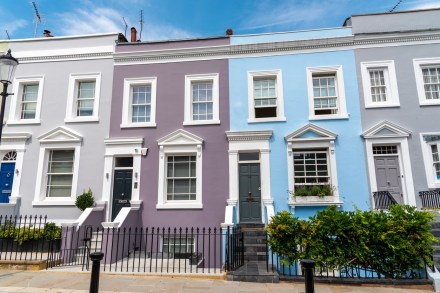
Pre-pandemic, all you needed for a good London location was a roof terrace, proximity to a vibrant social scene and a tube station. Or a river view. Then everything changed. Whilst central areas have pretty much fallen into the doldrums, a combination of more room, better value and access to green spaces has become essential. If you had all the money in the world, you’d still locate around London’s greatest open green spaces. Hampstead Heath, Kenwood and Regent’s Park to the north, Hyde Park or St James’s Park in central London or Battersea, Richmond, Dulwich or Richmond to the south. For the rest of us, living in a shoe box with little space to work from home is no longer desirable. Can you get more value elsewhere?

Leaving London? The top commuter cities that will give you more space

From our UK edition

Would you swap living in London for York? According to the latest survey on family-friendly city living, York tops the list. On a range of measures from childcare costs to average house prices and leisure activities, York is it. Unless your work or family ties take you there, I’m not convinced though. The three-hour train journey into London means a move there would more or less sever your links to the capital.   There's no denying that the capital's house hunters are being tempted increasingly further afield in their property searches. More space and lower prices makes it seem like a no brainer. But the jury is out on whether the pandemic will cause us to ditch the office for good.

How to find a property bargain in London

From our UK edition

The centre of London currently looks as though the apocalypse has struck. Streets, bars and restaurants lie empty and shops are boarded up. It's hard to picture the bustling capital so familiar to many of us a year ago and it's understandable that this dead city centre has prompted many home owners to up sticks and leave. But reinvention is sure to occur. And when it does, you’ll want to be a part of it. Whilst interest in rural properties has surged and rents in London are falling, prices in the capital are yet to reflect the sheer volume of people moving out. Those who can hold on to their London property are doing so in the hope the city will bounce back post Covid. Supply remains tight whilst domestic buyers continue to take an interest.

Is now the time to buy a coastal bolthole?

From our UK edition

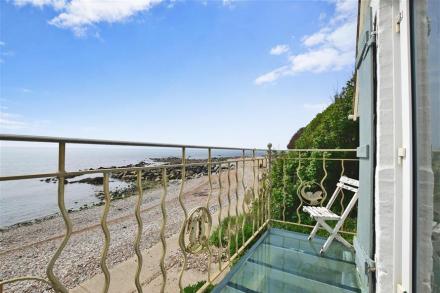
It's hard to believe we're heading towards the pandemic's first anniversary. The economy has had a torrid time. But if there's one area that has surprised us all with its buoyancy it is the property market. Ever since the first lockdown, there has been a flurry of activity at a time when a market crash was predicted. So, what is going on and should you hop on the bandwagon? The Office for National Statistics reported that UK house prices rose by 8.5 per cent over the year to December 2020. That growth wasn’t in city centres which have, at best, been largely stagnant. Instead it was driven by properties out of town and particularly in rural areas and on the coast near to major conurbations.

8 mistakes to avoid when house hunting

From our UK edition

House hunts often begin in the new year, prompted, perhaps, by the removal of the Christmas tree and its gaudy baubles. Maybe there’s a realisation as you take down the decorations and start work again that the place you live in is a bit tired. There's a temptation to think that all of life’s problems could be solved by a new start. Fresh-faced house hunters often forget that there are few things more stressful than moving house - bar, perhaps, divorce. Since the housing market has effectively closed shop during lockdown, it's the ideal opportunity to reflect on how to remove the pressure from the process once there's a chance to look at houses again.