Spectator Life

Spectator Life

An intelligent mix of culture, style, travel, food and property, as well as where to go and what to see.

The rise of the ‘secret’ property market – and how to break in

All the best houses can be found on Rightmove, right? Well, actually no. Increasing numbers of properties are being sold 'off-market' in an environment where there’s very little supply and a range of motivated buyers. How can you access these properties if you’re looking to move and how can you avoid getting stung? There are some interesting misconceptions about the way the property market, particularly the residential market, in the UK works. Understanding the competing forces is wise in such a competitive market. Many forget that the role of an estate agent is to look after the interests of the seller, not the buyer. When you see a property online or via an estate agent, they’re showing you what they have on their books.
The London property hotspots most likely to gain value

The preponderance of publicity over the last 24 months exhorting Londoners to abandon ship has left some areas of the capital looking like relative bargains or at least lagging behind widely hyped price rises elsewhere in the UK. Indeed, the average property price in Cambridge is now higher than that of the capital. Anecdotally, the stress of moving under duress has meant a significant number of those recently ‘lost’ have now returned to areas like Wandsworth, Hammersmith and Fulham. Many buyers have rented for a time in order to attempt a rural purchase before deciding to return. According to data from propertymark, there were an average of 29 buyers for every available property in December, meaning many house searches no doubt ended in vain.

A house hunter’s guide to Sussex

Bracing sea air, walks along windswept dunes and early-morning dips in the surf …living by the seaside can be just the tonic for mind, body and soul. What’s more, with greater opportunities for remote working, it’s in vogue. According to the agent Knight Frank, the sale of coastal homes increased 19 per cent over the five-year average, in 2021 with the biggest increase in south-east England: 217 per cent. With Sussex spanning the lion’s share of the south coast, it’s often the go-to spot for movers and second-home owners from London, with train journeys between 60 and 90 minutes. But whether you seek sailing, peaceful beaches or the buzz of a bucket-and-spade resort, where to choose?

Why work from homers are buying in Barbados

Life in the world’s newest republic is sweet. It’s peak season in Barbados, and another wave of Covid hasn’t stopped the rum sundowners flowing on the Caribbean island’s sugar-sand beaches. Given half the chance, many of us might well prefer to spend January wafting between beachfront restaurants and sun loungers, as the packed front-end of planes heading there during December have proved. Many of the island’s predominantly British holiday home owners have been heading to their properties on the West Coast of the island – and there will be no doubt a few villas changing hands too.

Is now the time to snap up a European bolthole?

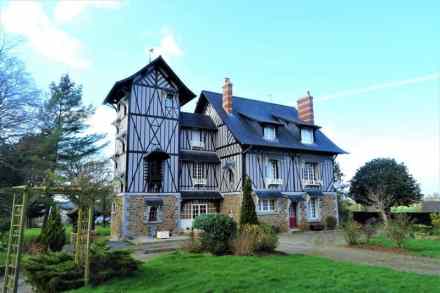
It takes a lot to put the British off buying a bolthole on the Continent. Not even the twin headwinds of the pandemic and Brexit have deterred some determined sun-seeking buyers over the past year, for whom endless chilly staycations don’t cut the mustard. There is no doubt some people who had planned to buy in southern Europe have purchased in Cornwall instead in in recent months but that has had the effect of driving up prices in UK coastal hot spots even more, highlighting the affordability of places such as Brittany. For the Anglo-French estate agency Leggett Immobilier, the biggest areas for British buyers this year have been Normandy, Brittany and the Loire Valley.

The rise of the London pied à terre

There’s nothing new about having a London pied à terre. For many based in the country yet working in the city having a ‘flat in town’ is a matter of convenience, whilst for those seeking to enjoy theatre trips or other metropolitan pleasures, it’s rather a luxury. Yet it’s been an increasingly expensive to acquire one since April 2016 when a stamp duty surcharge on second homes added an extra three per cent to each tax band, and when last year’s coronavirus lockdown made everyone flee to the country, flats in the capital were cast off rather than coveted. But what a difference a year can make. With the daily commute having partly revived for many, an appetite for metropolitan life regained, demand has shifted back towards London.

When will the Tories do something about house prices?

Anyone who doubts that the fiscal response to the pandemic has stoked inflation needs to look at the latest figures from the Nationwide on the housing market. Yet again they confirm that the deepest recession in modern history has been accompanied by a boom in house prices. Moreover, the inflation does not seem to have been reined-in by the ending of the stamp duty holiday. The price of the average home, according to the building society, rose by a further 0.9 per cent in November to reach £252,687. This is ten per cent up on last November and 15 per cent up on March 2020, at the beginning of the pandemic. How can a global crisis which temporarily put several million people out of work in Britain have resulted in a housing boom?

A house buyer’s guide to Bath

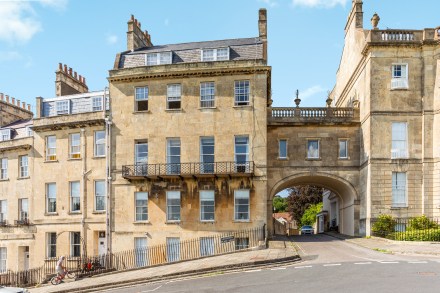
The pale honey-coloured Georgian terraces and elegantly colonnaded streets of Bath have seen a busy year. In the summer the crew for the Netflix Regency romance Bridgerton flew into town to film the second season of the hit series, whilst in October the Grand Parade was transformed into a winter wonderland for the forthcoming Warner Bros film, Wonka. A dream for film-makers, the compact Somerset city has also been a magnet for Londoners continuing to decamp for a new life within its World Heritage walls. Whilst the first wave of the pandemic induced rural exodus saw a rush for the coveted villages on its fringes, this year townhouses and flats have been in demand as we voraciously rediscover café culture and the small-city buzz.

The trouble with a green stamp duty tax

Should homebuyers have to pay a higher rate of stamp duty if the property they are buying has a low energy rating? After all, motorists already pay a higher rate of road tax if they are buying a new car with high fuel consumption. The stamp duty idea has been advanced by a trade body called the Energy Efficiency Infrastructure Group, which takes the example of a two bedroom end-of-terrace property with an agreed sale price of £250,000. At present, the buyers would pay stamp duty of £2500 (or zero if they were first time buyers). Under the new system they would pay £847 if the property had an energy performance certificate (EPC) rating of A, rising to £4796 if it had a rating of E.

The enduring appeal of Arts and Crafts homes

When designer, poet, novelist and social activist William Morris told members of a Birmingham arts society in 1880 to ‘have nothing in your houses that you do not know to be useful, or believe to be beautiful,’ he unwittingly inspired legions of modern-day home influencers. Marie Kondo exhorts her acolytes to only own things that ‘spark joy’, minimalist Joshua Becker leads the way in radical decluttering, and Netflix star duo’s The Home Edit tames unruly celebrity spaces. But Morris, widely credited as the godfather of the Arts and Crafts movement, did it arguably more eloquently than anyone else.

Will going eco add value to your home?

It was never my intention to buy an eco-friendly home. However, when I purchased my house, two years ago, it had solar panels on the roof, insulation built into its walls, underfloor heating and a range of features designed to reduce energy consumption. Indeed, there’s no doubt that my energy bills have been lower. I find I'm not turning the heating on as often, even when it’s freezing outside. I have been able to keep the thermostat on low. In square footage terms, it’s just a bit larger than my previous abode. Yet, the energy bills are half.  The fact that energy efficient homes cost less to run should be reflected in the price. Except, in reality, that’s not the case.

Where to buy along London’s new overground routes

We’re forever reading about the transformative power of infrastructure projects. As house hunters contend with the lottery of which project is actually going to break ground, there’s a valuable lesson to be learned from Crossrail. Since Gordon Brown approved the plans in 2008 and building work began a year later, research from agent Benham & Reeves indicates postcodes with a Crossrail station show rises 17 per cent higher than surroundings, with some centrally placed stations adding over 140 per cent. Hamptons International investigated projections in 2012 that prices of properties close to Crossrail stations would rise by 25 per cent by 2021.

Could EVs destroy the value of terraced homes?

With their private jets and gas-guzzling mansions, delegates at Cop26 have been widely criticised for an elitist attitude towards the environment. Nothing better demonstrates the gulf between policymakers and ordinary people than over the charging points for electric cars. It is one thing to install a home charging point for your car if you own a large house up a crunchy gravel driveway – indeed, according to the property website Rightmove, owners of such properties have been fitting charging points with great enthusiasm, with a 541 per cent increase in the number of homes being advertised with such a facility over the past year. But what do you do if you live in one of the 43 per cent of homes which do not have off-street parking?

How to prevent house theft

The heart breaking story of the Luton vicar who had his house recently ‘stolen’ from him by fraudsters has rightly touched a nerve with property owners everywhere. The horror of arriving at your own home to find your keys no longer work in the lock and the house now legally belongs to someone else might seem like a rare experience.  But unfortunately it's more common than anyone might imagine. Indeed the first time I can remember it happening was in the early 80s and involved a house in one of the most expensive streets in London and a foreign Princess. The major problem with investigating, let alone reporting, this sort of fraud is that victims and their advisors, be they estate agents or solicitors, are loathe to ‘fess up.

The beautiful South: why house hunters are flocking to Winchester and Bournemouth

Those still contemplating an exit from the big smoke will no doubt be eyeing up the well-worn path down the M3 to Winchester and, beyond it, Bournemouth. Winchester notched up one of the highest levels of population growth in the south last year – more than Guildford and other popular areas of Surrey: a phenomenon that has no doubt been expedited this year as increasing numbers of house buyers look to the South.  Winchester has often featured in lists of the best places to live in the UK. Large enough to be considered a city with all the services, culture, and connections that entails, it offers house hunters a pleasing compromise between urban convenience and rural charm. Plus it's 1 hour 23 minutes to London on the train.

Where to buy along the Oxford Cambridge train line

Year after year, Oxford and Cambridge vie with other world universities for coveted top dog status. Unsurprisingly for such a concentration of brainpower, science and tech industries have blossomed in both cities over the past two decades, bringing with them an influx of young professionals on the look out for houses. Both are within an hour of London with good links of their own into the capital. What has been missing, however, is a strong transport link between the two. As anyone who has done battle with the M25 or, worse, the maze of roundabouts surrounding Milton Keynes, will tell you, travelling between Oxford and Cambridge is far from straightforward, even by road.

Will inflation cause a house price crash?

Just what would finally bring the seemingly endless boom in house prices to a halt? A global banking crisis which resulted in the collapse of several large institutions plus others having to be bailed out by the government? A pandemic which cost the lives of over 100,000 people in Britain, led to the enforced closure of most shops and contracted the UK economy by nearly 20 per cent in a year? Had you raised either scenario when the market was racing ahead in the mid-2000s there would have been a general assumption that yes, either would have been fatal, leading to a house price crash. Sure enough, the first of these – the 2008/09 banking crisis – did lead to a sharp fall in prices, albeit one which was rapidly reversed in London and the South East.

The two-hour rule: where to move to within touching distance of London

According to the latest forecast from estate agents Hamptons, a second wave of property demand could keep house prices rising by up to 3.4 per cent a year between 2022 and 2024. Now that the pandemic is moving into our rear-view mirror, it seems many buyers are still plotting a move from the city. If you’re not going into your office every day, you might be forgiven for thinking that you can cut ties with London completely. As the great city reawakens post-Covid, you should think again. Its vibrancy, shops, history, world class cuisine and incredible arts and culture should still be the guiding light of any property search - even if it is simply to make sure that you can still reach the capital by train. With that in mind, why not follow the two-hour rule?

For sale: the London home of Britain’s only assassinated Prime Minister

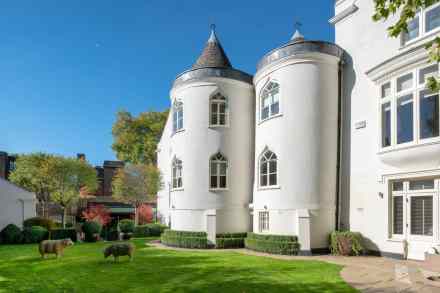
With its elaborate castellated pediment, arched and oriel bay widows, three round towers and snowy-white stucco façade, Hunter’s Lodge, in affluent Belsize Park, is anything but your average North West London home. Throw into the mix 500 years of history, the untimely demise of a British prime minister, scandalous royal shindigs and a recent, lavish three-year-restoration project providing a basement spa, glass-walled champagne cellar and cigar room, and this Georgian gothic revival castle makes for all-round drama.

Did house-buyers really gain from the stamp duty holiday?

So, the stamp duty holiday has finally come to an end, as the tapered reduction in discounts expires. Now it’s just a case of catching the flight home, getting the dog back from the kennels and watching as the tan fades. And, as with a fortnight in concrete hotel in Benidorm, it is time to start asking: was it really all worth it?  If the aim was to stimulate the housing market it was a runaway success – in the year to the 2nd quarter of 2021 there were 1.258 million residential transactions, compared with 996,050 in the same period in 2018/19. Proving the Laffer Curve in action, the latter stages of the stamp duty holiday have even succeeded in raising more revenue: government receipts in the first eight months of 2021 were £7.

Could the next property boom be in Battersea?

I'm not quite sure what the average age of Spectator readers is, but for many a pink floating pig is their abiding memory of Battersea Power Station. Since 1983, when it stopped producing energy, there have been many unfulfilled promises and dreams for the building. I went inside it back then and it was immense. So vast and bleak was the space that the majority of Londoners simply couldn’t envisage anything happening there. 30 years of will it, won’t it, were brought to an end ten years ago when current shareholders SP Setia, Sime Darby Property and the Employers Provident Fund acquired it and started to make good on their vision.

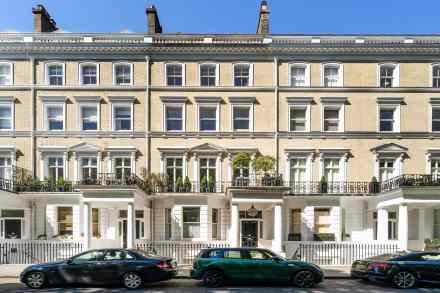
For sale: the Kensington townhouse that hosted Gladstone and Tennyson

Queen Victoria famously described William Gladstone as a 'half-mad firebrand' who 'addresses me as if I were a public meeting.' The monarch reluctantly put up with the Liberal politician as her prime minister four times between 1868 and 1894, while considering him – among many other things – 'arrogant, tyrannical and obstinate.' Quite what she made of George Warren, the 2nd Baron de Tabley, who Gladstone appointed as her Treasurer of the Household at the start of his first term as premier, is unclear – but we do know he quit his job monitoring the widowed, querulous and reclusive monarch’s finances on behalf of Parliament two years before Gladstone’s electoral defeat of 1874.

Now’s the time to house hunt in Chelsea

Every now and then the London property cycle creates an anomaly missed by the majority of property buyers until it’s too late. It started about 25 years ago when overseas buyers lobbed a rock into the prime central London property pond – created ironically by a Labour government. In the run up to the Euro, the demand for prime central London property went into overdrive. The reasons were many, but ultimately it came down to London’s unique blend of safety - both geographical and political, ability to look and trade East to West and its status as a world City. London always had that air amongst international buyers of a place where, if the balloon went up in your own country, you could safely go and live in your not insubstantial investment.

Fit for a Queen: why Windsor should be on your property radar

It’s rumoured that Prince William is considering a move from Kensington Palace to be closer to his grandmother in Windsor. Since her return from Balmoral, she has based herself full time at Windsor Castle and it’s certainly a great town but should you consider moving there too? Years ago I worked with American investors looking to buy commercial real estate in the UK. One thing they could never quite appreciate is how old everything was. They’d often ask why anyone would build Windsor Castle under a flight path. I’ll merely leave that there with a raised eyebrow and let you know that an original castle was first built on the site in the 11th Century. During the reign of Henry VIII it was used as a royal court and centre for diplomatic entertainment.

Something borrowed: the rise of the pool renter

Here’s a question for you: if you were lucky enough to own a swimming pool or a tennis court – or indeed both – would you want to rent it out per hour to the hoi polloi, the great unwashed, the General Public? Although I am not in the happy position of being able to answer this question personally, I would have thought the answer would be a hard no. No to other people’s verucas, no to other people’s splashing and cavorting in earshot, and absolutely no to other people’s children bombing into your pool all day long. I concede that tennis might be a different matter. A quick set or two, the odd grunt and then time’s up.

How London is reinventing retirement

Even ten years ago you’d have been laughed at for suggesting it – but there are several reasons why a London retirement is becoming more palatable, even desirable for those approaching the end of their careers and the start of the leisure years. The number of people aged over 65 projected to rise by over 40 per cent in the next 15 years to over 16 million. By 2040, nearly 25 per cent of people in the UK will be aged 65 or over – according to AgeUK. Figures like these show how the city could grow in appeal for a demographic that have traditionally gravitated towards the well-worn seaside retirement towns of the South East and South West. It's not for nothing that Eastbourne is known as God's waiting room.

The dos and don’ts of buying a new build home

If you’re looking to get onto the housing ladder, you’ll at least be considering a new build property. In England, according to the Office for National Statistics, there were nearly 245,000 new additional dwellings between April 2019 and March 2020. And according to building control figures, the number of homes completed was 49,470 between January and March 2021, with 46,010 starting on site. Supply is certainly on the up and there’s considerable pressure from national and local government to build more homes. But are there things you should look out for? And what precautions can you take to ensure your property won’t be a nightmare? On the plus side, a new build will never have been lived in before.

Buy a boat, not a holiday home

One of the most striking features of the second Covid summer has been the soaring prices of holiday cottages. How dare the owners of static homes in the vicinity of the coast be charging quite so much for the uneven pleasures of a week in a caravan park? Well, get used to it because as Britain’s population continues to soar – we’re on track to hit 75 million in the next two decades –pressure on property and prices is only going to increase. As Mark Twain remarked: ‘Buy land, they’re not making it anymore.’ All right, you say, we’ll go abroad instead, plus the weather’s better over there. Well good luck with that, too.

For sale: five homes with political connections

As MPs and peers vacated the Houses of Parliament for their summer holidays last week, we take a look at five homes for sale with political links. Where Pitt stoppedImage: Knight Frank A bronze plaque on the front of Pitt House, a grand Georgian property in Bath, informs visitors of its famous former resident. William Pitt the Younger made the townhouse his home in 1802, the year after the first of his two stints as prime minister came to an end with his resignation. Built a decade earlier, the residence was designed by Thomas Baldwin, the architect of many of the city’s most impressive buildings. Its connection to the country’s youngest prime minister is not the property’s only political pedigree: it later served as the offices of Bath Conservative Association.