Spectator Life

Spectator Life

An intelligent mix of culture, style, travel, food and property, as well as where to go and what to see.

What’s stopping a housing crash?

Should we really believe that house prices rose by 0.9 per cent in September, as claimed by the latest release from the Nationwide House Price Index? The unexpected rise moderates the annual fall in house prices from 5.3 per cent in August to 3.3 per cent in September. There is a health warning on the Nationwide’s figures – and one which also applies to the monthly Halifax figures. Both these indices are derived from data on mortgage approvals for their own customers. When the market slows and there are fewer sales, it means there is less data on which to base the monthly figures, which inevitably makes them less reliable. Indices such as these were only originally meant to be read on a quarterly basis.
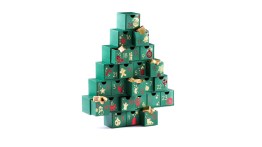
Advent calendars are becoming offensively showy

Each year in the charity shop where I volunteer, the Christmas cards arrive in August; by September, they must be on the shelves. We’re a small shop and space is precious; shoes and bags which would make us a healthy profit are swept aside for half-hearted etchings of mardy robins. But at least it’s in aid of charity, and thus in keeping with the spirit of the season – even if Christmas is still almost a third of a year away.

In defence of the office romance

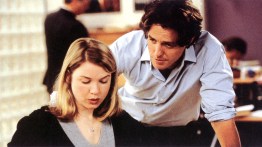
In the wake of Philip Schofield’s ‘unwise but not illegal’ relationship with a much younger employee, ITV have issued a new policy. It requires staff members to declare the names of their ‘associates’ and the ‘nature of their relationships’ on a Google Forms questionnaire. This is frankly a pathetic attempt to stamp out abuses of power in the workplace. And it risks killing off something I feel quite strongly about: the office romance. We must protect that at all costs.  Elon Musk discourages employees from being friendly with each other as he believes ‘comradery is dangerous’ Bores think that romantic office relationships are unprofessional. In fact, they are entirely healthy and natural.

My terrible evening on a stand-up comedy course

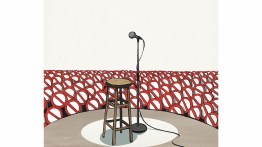
A few years ago, I abandoned a five-year counselling course after just 40 minutes. Apparently, I couldn’t have a refund from the community college but could transfer to another course. I may have a writer’s fascination with finding things out but I have a strange aversion to being taught. Looking at the long list of courses available to me, all I could see were things I didn’t want to be taught. Computerised Accounts and Book Keeping, Burlesque Dancing and The Art of the Burgundian Netherlands. I wasn’t looking for a hobby and there was barely anything on that list that came close to piquing my interest.  A more unprepossessing bunch of human specimens would be hard to imagine There was, however, one course that caught my attention: Stand-Up Comedy.

Among the Glastonbury pagans

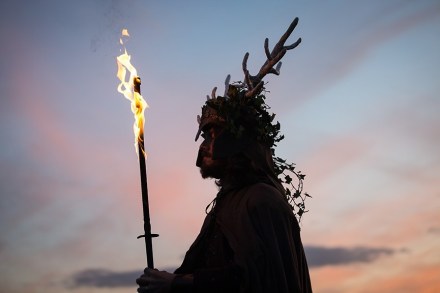
England is a mystical place, and its epicentre is Glastonbury, known by its pagan residents as Avalon, the mythical island of the Arthurian legend. It has sacred springs, the supposed tomb of King Arthur, the Tor and ruined tower, proximity to Stonehenge and now a thriving, sprawling community of pagans, with dozens of denominations from druid to water-witch. Once dismissible as mere woo-woo fringe, paganism has become a religious force that demands serious consideration for the simple fact that it is the fastest-growing religion in Britain. In the 2021 Census, 74,000 people in the UK referred to themselves as pagans, up from 57,000 in 2011, with a further 13,000 people calling themselves Wicca.

Life behind bars: so long to Westminster’s favourite landlord

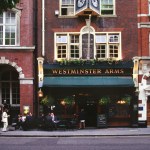
If you work in politics, chances are you have drunk in the Westminster Arms. Located just off Parliament Square, every night it hosts the collection of hacks, wonks and mandarins that comprise the SW1 bubble. For 30 years, Gerry Dolan has run the pub with his mix of Irish humour and no-nonsense determination. When we meet, three days before his retirement, his roving eyes still flick up every time to scan each new patron that enters his beloved bar. ‘I have loved the Westminster Arms. It's been a great mistress’ he says. ‘My wife ran the wine bar downstairs, and she probably worked harder than I did. I was like a Redcoat, really.’ Dolan is one of a dying breed of lifelong landlords in the capital, tied to one establishment.

How to make Irish barm brack

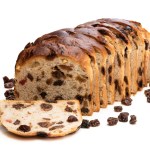
Those of us who grew up with a traditional Halloween, that is to say, in Ireland, don’t have much truck with the contemporary version. The pumpkin-coloured, gore and chocolate fest that has come to Britain via the US is gross by comparison; we had a simple version. We dressed up, but in masks and any old clothes we could lay our hands on. We had nuts and apples for bobbing, not chocolate in the shape of severed fingers. We went from house to house looking for a penny for the bobbin’, not trick or treating. And the thing you really looked forward to was barm brack. Halloween was a time for ghosts, not chainsaw massacres It’s actually a fruited, not too sweet yeast loaf, which is really good buttered, and if a bit stale, toasted and buttered.

Sam Smith, please put it away

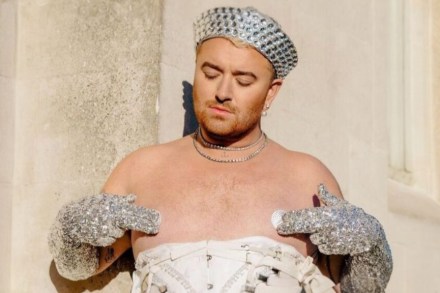
Undressing. Getting one’s kit off, whether for the lads or the ladies, depending on one’s bent. Disrobing, divesting, denuding. Slipping into something more comfortable. Giving one an eyeful. Getting ‘em off. Once we put away childish things and cease frolicking as nature intended, stripping off becomes a whole new ballgame. In our newly found state of youthful beauty, we may discover that flashing a bit of what one’s momma gave one can evoke a level of interest in others which one’s callow utterances cannot quite manage. If big-bodied nobodies are stripping off for strangers, how could we expect entertainers to keep their kit on? But equally, it’s important to know when one has reached an age – or a weight – when one should put it away. Cover it up.

The forgotten genius of Dennis Price

This month marks the 50th anniversary of the sad death of the actor Dennis Price, star of the classic 1949 black comedy Kind Hearts and Coronets, regarded by many to be the greatest British film of all time. Price was only 58 when he died from cirrhosis of the liver and complications following a broken hip, in a public ward of Guernsey’s main hospital. In the same way his co-star Alec Guinness stole the limelight in Kind Hearts, so the shock break-out of the Arab-Israeli Yom Kippur war did the same on the day of his death. His debts caused him to ‘beat a strategic retreat’ to the Channel Islands where the booze was cheap and the taxman couldn’t bother him Price’s demise may not have been front-page news in 1973 but the sense of loss of all who knew him was great.

Britain’s most haunted country houses

For centuries, the English country house has provided the setting for some of the most terrifying fiction in our history. These isolated buildings, with their many empty corridors, secret backstairs, shut-up attic rooms and dark corners, their inherent eeriness has made them iconic settings for chilling encounters. But which real country houses inspired their fictional counterparts? Menabilly House, Cornwall Daphne Du Maurier’s mysterious Manderley was inspired by two country houses. The exterior was based on Menabilly House in Cornwall, an estate which Du Maurier would eventually rent from the Rashleigh family five years after Rebecca’s release, while the interior was inspired by Milton Hall in Cambridgeshire.

The beautiful sadness of Matthew Perry

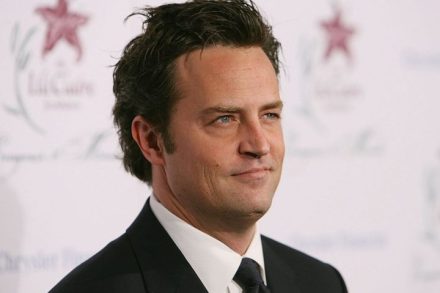
Matthew Perry, who died yesterday, was the funniest of the Friends – and the saddest. 'What must it be like to not be crippled by fear and self-loathing?' his character, Chandler Bing, asked. It seems Perry never quite figured out the answer. Chandler was a brilliant comic creation – and Perry, a melancholic clown, perfectly suited to the part. Perry stood out among his Friends castmates with his impeccable comic timing and the unique cadence with which he delivered his lines.  To most of the world, he will always be Chandler – the brilliant, charming, sad-funny clown But he was insecure and addictive. Perry once said that, when the live studio audience of Friends didn’t laugh at one of his jokes 'I felt like I was gonna die'.

Tips for Doncaster and Newbury tomorrow

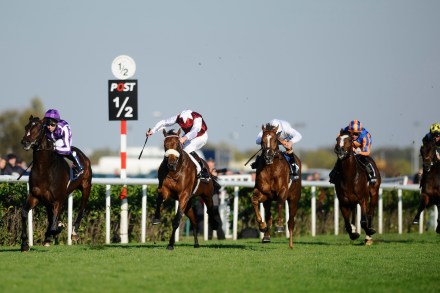
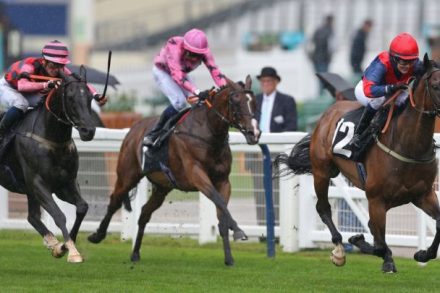
I have a policy of not betting or tipping on jump racing until at least the first week of November. That’s because the early season form over chases and hurdles is so difficult to predict in that it is hard to know which horses are fit from their summer break and which are not. Having said that, there is no doubt that the jumps cards at Cheltenham and Kelso tomorrow excite me far more than anything offered up on the level by Doncaster or Newbury. Yet, I will nevertheless stick to my self-imposed punting rules. If this race was run every Saturday for a year, there would be a different result each time At the time of writing first thing on Friday morning, the Saturday cards at both Doncaster and Newbury were under threat from the weather.

My favourite, ferocious teacher

In 1979, I was 11 years old, and I had a quite remarkable teacher. Don’t worry, though – this isn’t going to be one of those anodyne paeans to an inspirational educator that the Department for Education use in their ads to lure people into teaching. In fact, if the lady I’ll refer to here as Mrs G were somehow to be reincarnated and placed in front of a Year 6 classroom of today, Ofsted would have her frogmarched out after about 20 minutes.  She once sent me to the local parade of shops to buy a box of Tampax  Mrs G was a fearsome sight – in her late 40s, as broad as she was tall, squeezed into shirt and slacks, with closely shorn curls. I have no photographic evidence, so I’m relying on memory here. She seemed enormous, but then so does everything to a child.

Sofia Coppola made girls sad

When Cecilia Lisbon, the youngest of the five Lisbon daughters in Sofia Coppola’s film The Virgin Suicides, winds up in the hospital having survived an attempt on her own life, the doctor tells her: ‘You’re not even old enough to know how bad life gets.’ ‘Obviously, doctor,’ Cecilia replies, ‘you’ve never been a 13-year-old girl.’ The dark edge of adolescence runs through Sofia Coppola’s films. You get a sense from even the most playful and romantic scenes that, behind the lustre of expensive clothes or dappled sunlight, girlhood is tragic and that its transformations are traumatic. Coppola’s eye for these contrasts makes her films brilliant.

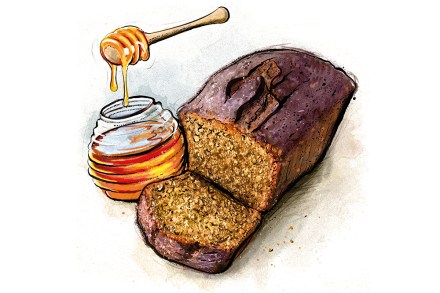
Dark, bold and perfect for autumn: how to make the perfect honey cake

I did not plan to cook a loaf cake when I embarked on concocting a traditional honey cake recipe. The original plan was to explore the Russian honey cake, or medovik, which dates back to the 19th century, and has a rich history. It is the War and Peace of the cake world: thick and a real undertaking. A long, careful assembly process, with up to a dozen layers of thin sponge – flavoured with honey and baked ever so briefly – interleaved with honey-flavoured buttercream, followed by a long chill, and then covered in more buttercream and cake crumbs. It is what we cookery writers like to euphemistically call ‘a project bake’.

‘They do better spaghetti bolognese in Hampstead for a tenner’: The Lobby at The Peninsula, reviewed

The Peninsula is a new hotel at Hyde Park Corner. It is part of the trend for absurd expense: rooms start at £1,400 a night and express the kind of preening mono-chrome blandness that will be the London of the future. It is a building of great ugliness – I would type the names of planners who allowed it, but on these pages it is incitement to violence. It sits on its six-lane round-about between the Lanesborough hotel and a long peeling red-brick late Victorian terrace that once appeared in a Stephen Poliakoff film about how things always fall apart. This food knows nothing of beauty, delicacy or comfort: it’s a grift It isn’t really a hotel, I think, staring: it doesn’t have that much identity.

It’s a blessing that England didn’t make the rugby World Cup final

In the days when Spitting Image was funny it featured a song called ‘I’ve Never Met A Nice South African’. In fairness it was in 1986, long before the end of apartheid, though the sentiments would have chimed with the feelings of most English sports fans at the weekend. In the end South Africa was the story: pitted against England on the same day, in two different sports, in two World Cups, resulting in two defeats for England – but two very different post-match emotions. The rugby semi-final felt almost triumphant: okay, so England lost, but what a stirring, intense, physical battle. It was not a game, however, to illustrate the spectacular pleasures of fast-flowing rugby.

It’s time to ban balsamic

Balsamic vinegar, according to a recent poll, is now considered an essential store cupboard ingredient by a quarter of all Brits. I detest it. This dark, syrupy fermented grape juice is like Marmite – you love it or hate it. Partly because it is overused, and also the numerous versions produced, I find myself flinching when I see it on a kitchen or dining room table. The Italians still behave, at least on the culinary front, as though they are a series of different countries When I first started travelling to Italy in the 1980s, I was given invaluable lessons in food crime: one, never, ever, under any circumstances, order a cappuccino after 10 a.m.

The secret to learning a language quickly

Becoming proficient in a so-called ‘easy’ language (for English speakers, French is relatively easy) often takes hundreds of hours; a difficult language (Mandarin anyone?) takes several thousand. That’s good for language teachers, but not so good for the learners.  Language teaching today is where medicine was in the 18th century Even after putting in all those hours of following an expensive course, many people never become proficient. How can so much time and effort amount to such little progress? Language learning happens inside the brain, making the processes involved difficult to observe and understand – that’s why language teaching today is where medicine was in the 18th century, and why, all too often, language lessons are associated with failure.

The night my friends went missing on a Spanish train

Twenty years ago, the Spanish railway company RENFE stole my girlfriend’s father. There were four of us – my girlfriend, her dad, and a university friend of ours. We had been in Spain for more than a month, walking the Camino de Santiago. Now it was time to head home, first by train to Bilbao and then on to Stansted by air. Once we found our seats on the train, in the rearmost carriage, I settled in for the long haul – the journey is ten hours – with my battered copy of Herodotus, which I was determined to finish before the start of the new academic year. I was soon absorbed in the father of history’s delightful tall tales about, among other things, giant gold-mining ants.

The drudgery of airports

Having a child growing up in Italy means regular flights there and back from Stansted airport. This is unfortunate, as I find nearly any other form of transport preferable. It isn’t so much the flying itself – I lack the imagination to envisage what it really means to hover 38,000 feet above the earth in a fragile aluminium tube – but the malarkey which surrounds it. I am talking about airports: getting to them, getting through them, getting out of them. The tunnel of trauma, the concentrated drudgery, the dismal, dehumanising price you must pay for your place in the sun.

Save our unmessed-with pubs!

From the outside, it appeared derelict – not an uncommon thing to find when visiting an unknown establishment based solely on a listing in an old copy of ‘The Good Pub Guide’. But a chap walking past with his labrador reassured us: ‘She usually opens at noon.’ When we returned an hour later it was immediately plain that the pub was still in use – you could hear music coming from inside. This turned out to be from a five-piece acoustic string band who were seated by the fire, playing ‘I’ve Just Seen a Face’.

How to hunt for fallen meteorites

At 1.17 p.m. on 1 February 2019, a daytime bolide exploded over Vinales, Cuba, showering down meteorites on the local villagers. Seasoned meteor hunters flew the stones back to the Tuscon Gem Show in a now-defunct Inn Suites where, from my display room, I watched enviously as they broke the stones apart with a hammer and began to sell them for $100 per gram. The hunters staved off competition by inventing wild stories about how the army had taken over, confiscating the meteorites and jailing hunters trying to take meteorites out of Cuba. But a few days later, a Russian hunting team brought 50kg to the show, selling them at $10 per gram. Soon after that, the locals flooded the market, flying the meteorites from Cuba to Panama to Florida, selling 20kg lots for as cheap as $1 per gram.

The unconscious savagery of the Rolls-Royce Spectre

Most Rolls-Royce drivers have four cars or more: this is a car for leisure. They drive their Rolls-Royces perhaps 3,000 miles a year: I would never do that. I would treat it like any other car. Lawrence of Arabia had nine armoured Rolls-Royce Silver Ghosts for his campaign in Arabia. I would go to the supermarket in it, muddy the doors, let brambles scratch it. Before I drove Rolls-Royces I didn’t like them because I didn’t like the people who drove them. Now the fact they drive them is the only thing I like about them.

Two tips for Ascot on Champions Day

Not for the first time on Champions Day at Ascot, the ground tomorrow looks likely to be very soft and it is essential to back horses that can handle the conditions. All the better, too, if they have strong course form as the sand-based track is not liked by all horses – even those that can handle ease in the ground. In the Balmoral Handicap (4.25 p.m.) the likes of Docklands, Sonny Liston, Migration and Baradar are at the head of the market and, of the four, the last named makes most appeal. He has winning course form and he will relish the recent rain. Yes, he has been raised by the handicapper for his two recent wins but that doesn’t necessarily mean his winning streak will end.

Sir Ranulph Fiennes: a living Lawrence of Arabia

Sir Ranulph Fiennes (a third cousin of Ralph, since you ask) has written a book about Lawrence of Arabia. He feels an affinity with him: he too has led Arabs in fighting, in Sir Ranulph’s case, for the Sultan of Oman. ‘I’d been in Arabia, leading Arabs against the Marxist rebels. In Lawrence’s day, the British were fighting the Germans and the Turks’.   ‘It’s my DNA. My ancestors did lots of travel in new places’ The circumstances differed. ‘Lawrence had camels and was dealing with a huge body of men; I had six open-topped Land Rovers with two machine guns and I led 30 men; a mixture of Belushis and Oman Arabs and Zanzibars. I felt about the men as a family.’ What does he make of Lawrence’s extraordinary career? ‘It mystified me’, he says.

Richard Curtis doesn’t owe fat people an apology

Nepo-narcissism has plunged new depths. Scarlett Curtis, the mauve-haired social justice activist and daughter of filmmaker Richard, has been grilling her hapless father about his wicked pre-cultural revolutionary past. During a creepy Soviet-style cross-examination in front of a crowd at the Cheltenham Literature Festival, Scarlett harangued the creator of Blackadder for failing to include a single black person in his film Notting Hill. Rather than telling his daughter to check her thinking – duh, the film came out in 1999, long before it became mandatory to patronise people of colour – Richard made the fatal error of trying to excuse his problematic past.

It’s time to take Italian wine seriously 

Tuscany: earth has not anything to show more fair. The landscape is charming. The gentle hills seem to smile down upon humanity. The inhabitants give the impression that they were already civilised when we British barely had enough woad to paint our backsides blue. There are also the grapes. From early on, Tuscany sent its vinous plenitude to Rome. Today, it still does, and to Orbi as well as Urbi. There was a time when Italian wine was not taken seriously in the world, and Italians themselves seemed to concur with this patronising assessment. That is no longer the case. One of the most interesting intellectual disputes in vinous matters now concerns Italian wine. There was a time when Italian wine was not taken seriously.

Have I been sent mad by goats?

I am on a retreat in the Portuguese mountains outside Faro, a heavenly place called Moinhos Velhos. I have not eaten food in three days. I have practised hours of yoga and meditation. I have swum many cool, slow lengths of a blue-tiled pool and sweated in a wood-fired sauna and walked for miles through a red dirt valley under whispering conifer pines.  Day two is the day you hate everything and want to blow up the world Yesterday I wanted to kill people. Not just the people on the retreat (who are all very calm and friendly and kind, which of course is why I wanted to kill them) but all the living creatures in the world – excluding a small herd of goats and a few obedient wood nymphs to milk them. I wanted exile. The goats got me thinking about chèvre.