Spectator Life

Spectator Life

An intelligent mix of culture, style, travel, food and property, as well as where to go and what to see.

Women are obsessed with the Romans, too

Infamy! Infamy! That was my response to the TikTok trend about ancient Rome. Women asked their partners how often they thought about the Roman Empire. Many men admitted they thought about it every day; three times a day, said one. One confessed he was obsessed with ‘aqueducts and the fact that they had concrete that could harden’. The scoundrels who came up with the idea should have asked women. Because they, too, are obsessed with ancient Rome. ‘I’ll be at a picnic when I look at my sandwich and suddenly ask: “Did you know the Romans had sandwiches?”’ Professor Mary Beard told me: ‘I must confess that I probably think about the Roman Empire about 50 times a day… but then it is what I do. But I don’t think about macho men in military kit or orating in togas.

An ode to the BlackBerry

The demise of tech plays out first as disorientation, then entertainment. We’ve reached the latter stage with the BlackBerry, the now-defunct Canadian harbinger of global smartphone addiction. A new film out this month charts its spectacular rise and fall: young folk, look up from your iPhones, and learn how in its Noughties heyday, the BlackBerry was beloved by Obama, Beyoncé and Madonna. With its seductively clicky Qwerty keyboard, it came to control 45 per cent of the mobile phone market. Then it plummeted to today’s share, zero. BlackBerry the movie had a particular poignancy for me, because I hung on to my final BlackBerry phone, the KeyOne, until well past its cultural sell-by date. Last May, in fact.

Hell is a heat pump

‘So, as Rishi Sunak has announced that we’re now allowed to keep installing new gas boilers till 2035, and they last about 15 years, that means I’ll be able to keep a gas boiler till 2050, so I might even be allowed to die with a gas boiler still going in my house, and may never have to switch to an ugly, expensive air-source heat pump which makes an annoying fridge-like hum in the garden, vibrates through the bedroom wall and keeps the house at a weird, lukewarm temperature all day and night.’ I think many of us were making that kind of calculation last month. Were we tempted by Sunak’s raised offer of a government grant of £7,500 for switching to a heat pump, up from £5,000, to reward us for doing our bit towards net zero? I don’t think so.

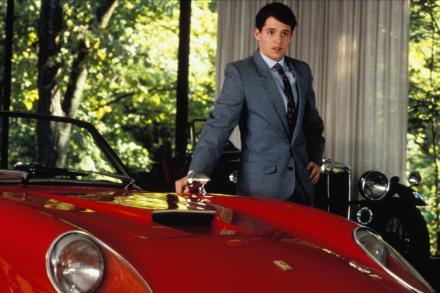
I’ve given up on my dreams… apart from the sports car

They say that, against all expectations, after the age of about 50 you actually get happier, and that much of this happiness is tied in with the merciful death of your dreams. Once over the hill – and I can vouch for this – you feel unrealistic visions that have guided you your whole life simply exit the stage, albeit with a few well-aimed parting kicks. You don’t lament their passing – young people may want an emotional switchback, but in maturity (well, relative maturity) you’ll happily (well, relatively happily) swap it for solid ground under your feet and a little stability of mind. Hope, thankfully, doesn’t always spring eternal. After your first half-century, it’s more like the stubborn dripping of a wonky tap.

I hated counsellor training

In practically every respect, I’m a useless human being. This is not the vanity of false modesty – I really am worse than most people at most things. I've never picked up a musical instrument, a golf club or a foreign language; I can barely boil an egg and would find it almost impossible to paint a wall without stepping back and kicking two and a half litres of emulsion all over the carpet. The course was not for me or anyone remotely like me. In fact, it was all a bit public sector Yet I thought, in terms of life experience, that I’d make quite a good counsellor. I was one of five children with a father too sick to work. We lived on benefits, had free school meals and our clothes arrived in bin bags from the local church.

My favourite restaurant serves rubbish food – and I still love it

One of my favourite restaurants of all time serves mediocre food, has a limited menu, and occasionally brings a dish containing none of the advertised ingredients.  Why do I love it so? Because the service and the ambience are both a delight. The warm greeting from the proprietor who always remembers his customers’ names; the attentive (but not fawning) waiter who immediately produces menus and water without being asked; and the sommelier who recommends a perfect aperitif before talking us through the wines in a matter-of-fact way that belies the usual ‘You can really taste the terroir,’ and ‘This one is like a summer’s day in Provence.

Dodgy developments deserve the wrecking ball

It used to be that an ‘artist's impression’ of a proposed building development was just that; an architectural drawing designed to give planners an idea of what to expect. Then along came CGI and a new era of photorealistic visualisations. On the surface, these glossy new artist's impressions are anything but impressionistic. Indeed the renderings are so lifelike it's virtually impossible to tell if they are actual photographs. Ironically, as we are now discovering with AI, hyperrealism is rarely as real as it purports to be.

The genius of John Betjeman’s Metro-Land

‘Over the points by electrical traction, out of the chimney pots into the openness, till we come to the suburb that’s thought to be commonplace, home of the gnome and the average citizen.’ Fifty years ago, the BBC documentary Metro-Land aired for the first time. These free-flowing dactyls, which mimic the motion of a train, were delivered over the footage by the newly appointed poet laureate, John Betjeman, as he rode the Metropolitan line out into the middle-class Arcadia of Middlesex. They don’t write voiceovers like that anymore.  The entire movement of poetry in the 20th century was towards finding beauty in unexpected places Hailed as a masterwork right off the buffers, Metro-Land was a hymn not only to Betjeman’s suburbia but also to the Tube that took him there.

Flavour of the month: October – MI6, guillotines and a Spectator lunch

This month’s trivia takes in the reason football became known as ‘soccer’, the reason iPhones have virtual keyboards rather than real ones, and the reason Spiro Agnew once made a hurried departure from a Spectator lunch. Agnew once attended a Spectator lunch at which one of the other guests was Barry Humphries 1 October 1909 – the Secret Service Bureau was founded. This soon became the Secret Intelligence Service (or MI6), its first head being Mansfield Cumming, who operated out of his apartment in the building that now contains the Royal Horseguards Hotel. He signed his documents in green ink with a ‘C’ (both colour and initial are still used by the head of MI6).

My smart Volvo has managed to scrap itself

For much of the past few years, car production has been compromised by a global shortage of microchips. Why no manufacturer has seized the opportunity to market a microchip-free car (i.e. like all cars manufactured before the 1980s) I don’t know. I would certainly swap my too-clever-for-its-own-good Volvo V60 for such a model. I haven’t met anyone outside a Volvo dealership who thinks this is anything other than absurd In fact, I would happily swap my Volvo for a pair of walking boots. They would be of far greater use. Over the past four months my boots have taken me 200 miles across Iceland and 120 miles (as well as ten miles vertically) across Corsica.

I never thought I’d be a wild camper

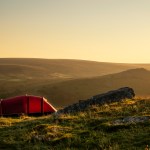
Wild camping is ‘a modish phrase meaning camping overnight in a place which is not a dedicated campsite’, according to Lord Justice Underhill in a Court of Appeal judgment in July – and isn’t it wonderful that there are still judges carrying on the fine judicial tradition of handling the colloquial as if were radioactive waste? The point at issue was whether wild camping came within the definition of ‘open-air recreation’ – which is legally protected on Dartmoor, even without the landowner’s permission, under the Dartmoor Commons Act 1985 – or not.

Did my wife, 56, really need an emergency pregnancy test?

A team of nurses was trying to ascertain whether my wife was pregnant. It didn’t seem very likely. She’ll be 57 in a couple of months, went through the menopause over a decade ago and has been on HRT for several years. And she hasn’t had IVF. Insofar as one can be certain about such matters, I believe I have been her only sexual partner for two decades – and I’ve had a vasectomy. Furthermore, were she to be pregnant and go on to give birth she would leap straight into the global top 100 oldest mothers of all time list. So, no, it didn’t seem likely.   A team of three assembled to put screens around her so that she could urinate on her trolley.

What we lost with the fallen sycamore

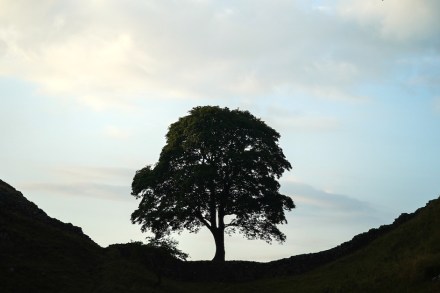
I don’t know about you, but my reaction to learning about the felling of that tree in Northumberland was, well, weird. For a start, unlike many others, I’ve never hugged this lovely tree, never picnicked beneath it, never proposed next to it, never seen it after a long satisfying hike along Hadrian’s Wall, so I do not have much personal connection. In fact, I’ve never even been there. My only knowledge of the sycamore gap sycamore is seeing it in the Hollywood movie, Robin Hood: Prince of Thieves, which in turn – along with some later, pretty images of snowbound hills and auroral lights – slowly induced this extremely vague sense that up there, in far northern England, there was this splendid tree that one day I might visit, maybe, who knows. I mean, it is just a tree.

A second Cambridgeshire tip and one for Ascot

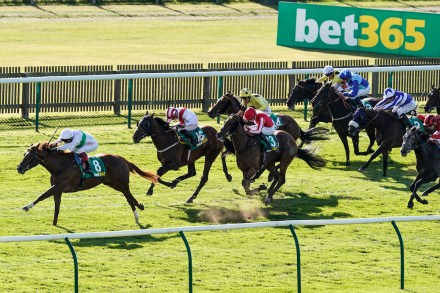
The last three winners of the Bet365 Cambridgeshire have triumphed at odds of 40-1, 40-1 again and 25-1. Earlier this century there were even bigger priced winners: 100-1 in 2004 and 50-1 in 2017. So don’t be surprised if the race throws up another shock result tomorrow (Newmarket 3.40 p.m.). I have already put up one horse – Oviedo – for the race and Ed Bethell’s three-year-old colt looks almost certain to have his perfect ground conditions of ‘good to firm’. However, just as things were looking promising, the big downside is that he has now seemingly been given the worst draw of all in stall one (high numbers are usually favoured on the straight course).

The timeless beauty of a French apple tart

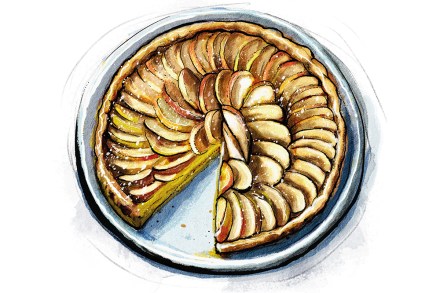
There is, as the saying goes, more than one way to skin a cat. The same could be said – although rather more appealingly – about the number of ways to make a French apple tart. French apple tarts are ubiquitous in their home country but, despite the umbrella name, no two recipes are the same. Usually it is made without a recipe, seemingly without thought – just by muscle memory, passed down from family member to family member, an inheritance in pastry. It follows, therefore, that an apple tart is as individual as the cook who makes it.

Fine food in a fine restaurant: Origin City reviewed

Origin City is a good name for this restaurant, whether it knows it or not. It is at West Smithfield, the only surviving wholesale market in the City of London (I do not count Borough, which is a snack shack impersonating a greengrocers and is only spiritually in the City). Covent Garden sells face cream – Eliza Doolittle didn’t need it – and Billingsgate awoke one morning to find itself on the Isle of Dogs. Somehow the cows hung on in West Smithfield. We owe them a lot but I would say that, I am a restaurant critic. Somehow the cows hung on in West Smithfield. We owe them a lot This is the most interesting part of the City of London: St Bartholomew the Great, of God and Four Weddings and a Funeral – the one where Charles was punched, fairly – and Cloth Fair.

Will the US catch the birdie at the Ryder Cup? 

At last the Ryder Cup is here – well, in Rome – and with it Europe’s biennial chance to stick it to the Americans in a sport that matters in a format that we can all relate to. Even if you regard golfers as extremely well-off people largely determined to make themselves better off, the frenzied emotions and belting patriotism of the Ryder Cup should be enough to challenge even the most surly of gloomsters. And while Americans have to seek solace and comfort in the company of other Americans, it takes something special and inspiring when an Irishman can join forces with a Swede and be cheered on by an Austrian and a Dane.

Save our cigars!

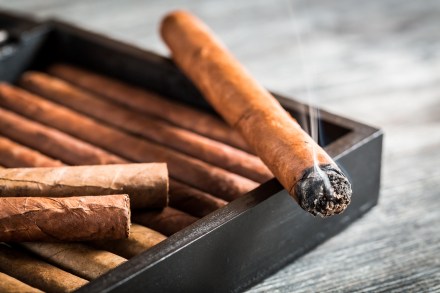
There’s nothing new about Rishi Sunak’s reported proposals to phase out smoking in Britain. His plan has been borrowed from New Zealand’s former leader Jacinda Ardern, whose shamefully illiberal legacy includes the complete illegalisation of tobacco sales to those born after 1 January 2009.    There’s nothing progressive about it, either. The Anglosphere’s elite war on tobacco is at least 400 years old. It can be traced back to James I in 1604, and his A Counterblaste to Tobacco, a sanctimonious treatise in which he denounced the new-world leaf ‘blacke stinking fume thereof, neerest resembling the horrible Stigian smoke of the pit that is bottomelesse.

Arsene Wenger is no philosopher

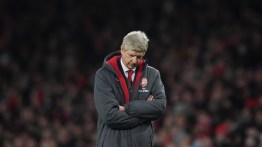
It’s now five years since he finally stepped down as the manager of Arsenal FC after two decades at the helm – an occasion marked by the recent unveiling of a statue outside the Emirates Stadium of a triumphant Arsene Wenger holding aloft the Premier League trophy. The occasion made me reflect on his tenure at the club and return to one particular aspect of the Frenchman who became such a high-profile character in England: was Wenger really an intellectual? There is scant evidence of great intellect in any of his post-match utterances He was certainly popularly portrayed as one. The sports writing fraternity was so invested in the idea that Wenger was a man of considerable depth that they nicknamed him ‘Le Professeur’.

The night I accidentally saved a baby

I was writing a thriller in northeast Laos about 15 years ago near a town called Phonsavan, researching a mysterious megalithic site known as the Plain of Jars. When my research was done, I realised I had to devise a route home to the quaint Laotian capital of Vientiane. As I was driving one of only three rentable four-wheel-drives in the country, I decided to make the most of my mobility and take a more exciting route than the singular main road down the middle of the country (whereby I had arrived). I was particularly tantalised by a sentence in the Lonely Planet guide to Laos which claimed ‘there is theoretically an alternative route from Phonsavan back to Vientiane, which is said to be very beautiful, but we haven’t tried it’. I kept thinking: is the baby dying?

Why Europe needs wolf hunting

In the German state of Hesse, the Christian Democrats have announced that, if they win next month’s state elections, they’ll back hunting licenses for wolves. The centre-right Free Democratic party has promised to do the same. Germany has around 1,000 wolves. Last year, the EU president Ursula von der Leyen’s pony was killed by one. Dolly was a 30-year-old pony and a beloved member of the family, who live in German state of Hannover. Von der Leyen is now proposing to relax regulations for wolves’ protection throughout the EU and animal rights activists are accusing her of seeking revenge on Europe’s wolf population for the death of her beloved pony.

My mistaken Balkan raid

It was September 2001 and I was in Zagreb, Croatia, at the end of two weeks in the Balkans. I was there to train law enforcers in counter-trafficking initiatives: the importation of women from that region into Western European sex markets was rife following the war in the 1990s. Police in the UK had disrupted several trafficking rings originating in the Balkans, and stories were emerging as to the horror their victims had endured. Well into our second bottle, I spotted a group of leather-jacketed men leading several women, each tottering on spike heels, through to the ballroom To put this trip in context, I had been sitting and talking with men in windowless rooms in Kosovo, Moldova, Albania and Macedonia for up to ten hours a day while they smoked and drank white spirits (from 8 a.

So long, summer!

Summer is now officially over and who laments its passing? Some may rhapsodise about the period between June and September, but for many of us, it is a hiatus and trial, the period of the year we most dread. It’s the bill for autumn and winter, the season we’d live better without.   The pavements of cities seem to fizz and reek, your feet balloon in work shoes, the underground turns into a cattle truck I cannot understand why so many people like summer. It unites some truly awful things: nocturnally whining mosquitoes, hot, sleepless nights, oozing sweat, high blood pressure, and above all, bright, unforgiving light, so you feel you’re constantly being observed in some bizarre lab experiment by hostile scientists.

The quiet thrill of moss hunting

Did you know that an expert on mosses is called a bryologist? And did you know that there are 754 species of moss in The British Isles? No? Well then you can be forgiven for not knowing that my brother, Mark, I write with pride, recently discovered another moss – number 755 – new not only to The British Isles but also to science. Only about 40 naturalists actively study mosses in Britain Poking around along the banks of the River Camlad (the only river, I’m told, that flows from England into Wales) in Montgomeryshire, Mark came across an unfamiliar plant growing in dispersed patches on a riverbank at the edge of a pasture.

I’ve abandoned my useless British passport

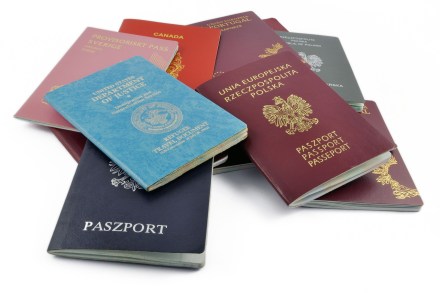
‘Vous êtes anglais, je suppose?’ A question frequently posed to me in France. To which I reply: ‘C’est compliqué.’ To be honest, I’m not sure. If one passport is good, two are better. I have three. Crise d'identité. In France, I am Irish, thanks to my grandmother, born in County Antrim. In Canada, I am Canadian, having been born there. Albeit I left aged ten months. In Britain, where I spent much of my childhood, I am British, as my parents were. My British passport is essentially useless. It’s in a drawer somewhere. I don’t need it to fly to Britain It’s the nationality equivalent of a multi-phasic personality disorder. I suppose I could now even get a French passport, but this seems greedy.

Why do cyclists insist on making drivers angry?

Picture the scene. I’m in the New Forest, riding in a bicycle race. It looks like I’m on course for a personal best, perhaps even first place. I’m well-fuelled and feeling strong. Then I hit traffic. The road is too narrow to slip alongside the line of five or six cars in front of me. I stand on the pedals and crane my neck for a view of the holdup. There it is: a bunch of my fellow competitors, riding quite slowly, two abreast. Nobody honked, revved or attempted a dangerous overtake. But a fair few of them must have cursed into their windscreens Now this wasn’t exactly a race. It was a sportive, which is timed, but supposed to be non-competitive. You couldn’t get any more amateur than that. But to a middle-aged man like me, with a boy’s imagination, it was a race.

Welcome to the pub of 2030

In 2030 I will turn 30. I hope to be in the pub, but maybe a little less often than I am now. Judging by the way things are going, that might be easier than we’d like to admit. And not just because we lost 383 pubs between the start of the year and the end of June.  I’ll set the scene: it’s seven years from now. Off I go, to one of the last four pubs in London, and park my e-bike next to three thousand others. I walk through the entrance, the etched Victorian glass door replaced by government-mandated energy-efficient double glazing, and there they are: eight 0 per cent beers on draught.  Human beings like pork scratchings and a fag and a pint, and will do forever ‘Do you have anything alcoholic?’  ‘What?

Who to have a flutter on at Longchamp

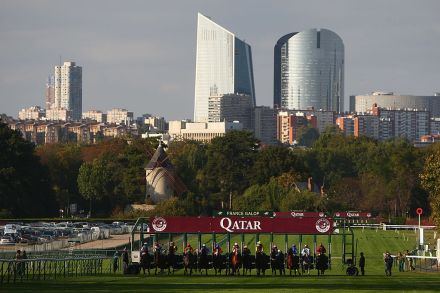
The Arc weekend at Longchamp – well worth a visit if you have never been racing in France – is just over a week away and now seems a good time to place a couple of bets at this most prestigious of meetings. Set on the outskirts of Paris in the Bois de Boulogne, Longchamp hosts two big races that British trainers love to target: the Grade 1 Qatar Prix de l'Arc de Triomphe, Europe’s richest race over a mile and a half, and the Grade 1 Prix de l’Abbaye, for the continent’s best sprinters over five furlongs. Both races will take place on Sunday October 1.

The unspeakable truth about Russell Brand

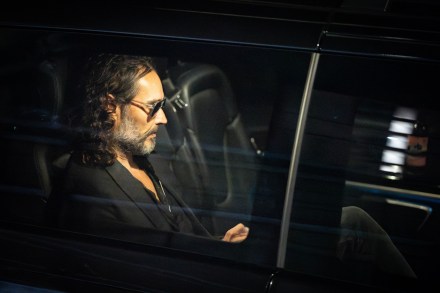
Before the accusations of being a Bad Feminist start, can I say that I am inclined to believe the women who claim to have been sexually assaulted and raped by Russell Brand. Nevertheless, I found another of the complaints about him featured in the Dispatches documentary – that sexual partners would telephone Brand's employees ‘in tears’ after being ‘treated poorly’ – somewhat trivialising of a serious situation. Insult is never the same as injury, especially in the arena of sex. The problem with shagging culture is that young women in particular find that casual sex is rarely casual and that catching feelings is common Look at Brand. He’s vile. You can tell he smells.